Thursday, January 29, 2026

The State of Central Hemodynamics in Patients with Neuroischemic Form of Diabetic Foot Syndrome is Associated with Chronic Heart Failure


The State of Central Hemodynamics in Patients with Neuroischemic Form of Diabetic Foot Syndrome is Associated with Chronic Heart Failure

Relevance

As is known, cardiovascular diseases(CVD) are the leading non-violent deaths in the world. At the same time, coronary heart disease (CHD) is leading among CVDs. So, according to the authors, in 2020 it affected 126 million people worldwide, which is 16% of all deaths [1]. men suffer from coronary artery disease more often than women[1]. According to WHO, mortality from coronary artery disease is highest in Russia, Ukraine and USA [2]. According to Rosst at, in 2018, 28.4% of all deaths in Russia were due to coronary artery disease [3]. The clinical manifestations of coronary artery disease are varied and include: asymptomatic myocardial ischemia, angina pectoris, acute coronary syndromes (unstable angina, myocardial infarction) and sudden cardiac death [4]. Definitions and classifications of types of CAD may vary between countries and guidelines, but a common criterion is the degree of narrowing (stenosis) coronary artery [5].

There are three types of coronary heart disease:

a. Obstructive: blood vessels are severely constricted (≥50%) or blocked.

b. Non-obstructive: Blood vessels constrict (<50%) because they branch into smaller vessels or due to the way the heart muscle works.

c. Spontaneous dissection of the coronary arteries i.e. rupture of blood vessels in the heart [6].

Cardiovascular disease is often associated with type 2 diabetes mellitus (T2DM) and can become life-threatening, especially coronary disease, stroke, and heart failure. Their clinical picture is sometimes atypical and asymptomatic for a long time. Type 2 diabetes should be considered as an independent cardiovascular risk factor. In this series, diabetic foot syndrome (DFS) is a severe complication secondary to microangiopathy, microangiopathy, and neuropathy. It can be considered as a super complication of several complications [7]. Elevated triglycerides have been shown to be an independent risk factor for lower limb amputation in diabetic patients [8]. Most patients with diabetic foot ulcers also have insulin resistance, central obesity, dyslipidemia, and hypertension, which characterize the metabolic syndrome, which in turn is associated with an increased risk of serious cardiovascular events. According to a German-Austrian multicentric study in 2017, new concepts are needed to prevent amputations caused by DFS and to reduce cardiovascular risk factors before the onset of DFS. Hypertension, nephropathy, peripheral vascular disease, stroke, or myocardial infarction were more common than in patients without DFS (all P<0.0001) [9]. Several studies have reported that rates of mortality and morbidity from cardiovascular disease are 2 to 4 times higher among patients with type 2 diabetes than among non-diabetics. Various studies also show that foot ulcers in diabetic patients are associated with higher mortality. In fact, diabetic foot is the main cause of morbidity in patients with type 2 diabetes, and the mortality rate is approximately twice as high as in patients without foot ulceration [10-12]. In a study [13] by Pinto et al., these authors hypothesized that type 2 diabetic patients with DFS may have a worse prognosis in terms of faster progression of cardiovascular damage and higher cardiovascular morbidity.

They showed a higher prevalence of the main cardiovascular risk factor, subclinical CVD markers, and previous and new cardiovascular and cerebrovascular events in diabetic patients with foot complications. At the same time, there are practically no works in the literature devoted to the study of issues of peripheral vascular hemodynamics in patients with DFS associated with IHD and CHF. However, we did not find in the available literature data on a comprehensive assessment of the microcirculatory bed (MCR) of the vessels of the lower extremities, which allow us to determine the nature of changes in micro vessels in patients with neuroischemic (NI) form of DFS, and coronary vessels of the heart, brain, which is of great interest. The conducted retrospective analysis reported that the diagnosed severity of primary diabetic ulcer is the main predictor of mortality, despite the risk of death from transient ischemic attacks (TIA), strokes, coronary heart disease (CHD) and peripheral arterial atherosclerosis. Despite the progress made in the treatment of ulcerative defects in DFS over the past 25 years, the survival rate in this group of patients remains low. The organization of interdisciplinary interaction is necessary for the implementation of care for patients who have undergone amputations of the lower extremities, which are carried out in the age period of 50-80 years [Gurieva I.V., 2001]. Of course, today an integrated approach to the treatment of SDS requires the provision of timely medical care in a single specialized and multidisciplinary institution, as well as improving the evidence base for evidencebased interventions [Jeffcoate WJ et al., 2018]. All of the above motivated the present study.

Purpose of the study

Study results of ultrasound dopplerography of the heart in patients with neuroischemic form of diabetic foot syndrome associated with chronic heart failure.

Material and Research Methods

During 2022, we examined 64 patients with DFS in the neuroischemic form on the basis of the Department of Surgery of the AndesMI. The patients were divided into 4 groups: 1 gr -patients with type 2 diabetes and neuroischemic form of DFS and CHF– 15 patients, group 2 - patients with type 2 diabetes and neuroischemic form of DFS without CHF - 18 patients, Group 3 - patients with type 2 diabetes and neuroischemic form of DFS, CHF and dyscirculatory encephalopathy stage 2-3 - 16 patients. group 4 - persons with CHF without type 2 diabetes - 15 patients. All patients were subjected to general clinical, biochemical (glycemia, glycated hemoglobin, PTI, ALT, AST, bilirubin, urea, blood creatinine), hormonal (IRI, C-peptide, inflammation marker-pro-inflammatory cytokine TNF-a, vascular endothelial growth factor (VEGF-A),and instrumental research methods - Doppler ultrasound of the vessels of the brain, lower extremities, ECG, Echo-ECG, bacteriological analysis of discharge from the wound, as well as statistical methods. The obtained data were processed using computer programs Microsoft Excel and STATISTICA_6. Differences between groups were considered statistically significant at P<0.05. Mean values (M), standard deviations of means (m) were calculated Significance of differences in the level between rgroups was estimated by the value of the confidence interval and Student’s test (p). Differences were considered statistically significant at p<0.05.

Results

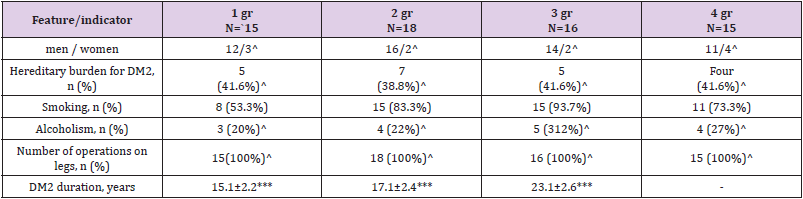
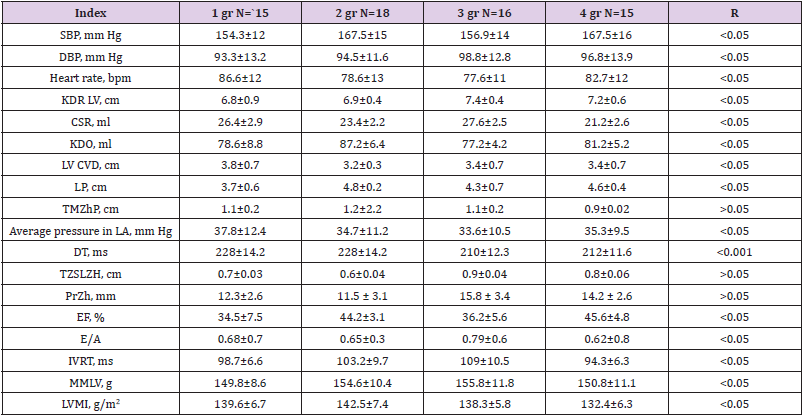
Table 1 shows the distribution of examined patients by sex and age. As can be seen from Table 1, patients in the age group from 45 to 74 years prevailed, both among men and women - 30/17 cases, respectively. Table 2 gives initial clinical characteristics of patients of the studied cohort – patients of the studied groups. As can be seen from Table 2, there were no special clinical and anamnestic differences in the groups. Among the risk factors, hereditary burden for DM dominated - only 21 cases out of 60 (35%), smoking - only 49 cases (81.6%), alcoholism - 16 cases (26.6%). The next step in our research was to study indicators of structural and functional parameters of the heart in patients (Table 3). As can be seen from Table 3, there is a significant difference in the indicators of central hemodynamics in the studied groups compared with the norm: for example, LV EDR, ESV, EDV, LV ECR(p<0.05), mean pulmonary artery pressure, early diastolic filling blood flow deceleration time, LVTL (p<0.001), EF, ratio of peak E and A wave velocities, LV isovolumic relaxation time, LVMI, LVMI (p<0.001) 0.05). Thus, in patients of the studied groups, significant deviations of the Echo- ECG, which requires further study.

biomedres-openaccess-journal-bjstr

Table 1: Distribution of patients by sex and age (WHO, 2017).
biomedres-openaccess-journal-bjstr

Table 2: Clinical and anamnestic characteristics of patients included in the study.

Note: *-p<0.05 with groups 1 and 2., ** – p<0.05 with groups 2 and 3, *** p<0.05 with groups 1 and 3. ..^ - p>0.05
biomedres-openaccess-journal-bjstr

Table 3: Indicators of structural and functional parameters of the heart in patients included in the study (M ± m).

Note: *Differences are significant, p < 0.05, < 0.001 in comparison with the norm.

Conclusion

one. Among the risk factors, hereditary burden for DM dominated - only 21 cases out of 60 (35%), smoking - only 49 cases (81.6%), alcoholism - 16 cases (26.6%). 2) Significant deviations of central hemodynamic parameters were revealed in the studied groups.

For more Articles on: https://biomedres01.blogspot.com/

Monday, January 26, 2026

Does Being Grateful Help? The Construct of Gratitude as an Index of Psychological Well-Being


Does Being Grateful Help? The Construct of Gratitude as an Index of Psychological Well-Being

Introduction

Many of us express gratitude by saying “thank you” to someone who helped us or gave us a gift. From a scientific standpoint, however, gratitude isn’t just an action: it’s also a positive emotion that serves a biological purpose. Like most words, gratitude appears to have different meanings depending on the context. For example, gratitude has been conceptualized as a moral virtue, attitude, emotion, habit, personality trait, and coping response [1]. Some researchers have defined gratitude as a positive emotional reaction in response to receiving a gift or benefit from someone [2]. Gratitude has also been conceptualized both as a mood phenomenon (that is, an emotional reaction to an event or experience) and as a dispositional feature or a trait phenomenon [2]. For our purposes, we would like to define gratitude in a much broader sense. Gratitude is the appreciation of what is valuable and meaningful to oneself and represents a general state of gratitude or appreciation. This proposed definition transcends the interpersonal nuances attributed to the term (i.e. the construct of receiving something from someone) and allows for a more inclusive meaning (e.g., being grateful for experiences, such as being alive, connecting with nature, and countless others). Positive psychology states that gratitude and its effects can be measured by scientists, thus arguing that gratitude is more than feeling grateful: it is a deeper construct that produces lasting positivity.

The correlation between the Gratitude construct and the Locus of Control was measured, however, no relevant research was found in the literature to compare the results of the relationship measured in this study. Regarding the relationship between Gratitude and Coping, a study by Wood, Joseph and Linley [3] showed that the person’s gratitude is linked to coping styles: in our research we examined the same relationship between constructs. For Nourialeagha, Ajilchi and Kisely [4] gratitude correlates with attachment and our research aims to examine the same relationship. With regard to the last correlation under consideration, it was hypothesized that the construct of Gratitude correlated negatively with the inventory of psychopathological symptoms (BSCL), based on the confirmation of this hypothesis by Southwell [5].

Methodology and Tools

This survey consists of an exploratory study conducted on a sample of Italian citizens.

Sampling Approach

A snowball sampling approach was used. For the purpose of administering the battery of questionnaires, Google Forms was used, an open-source tool for the development and administration of ad hoc online questionnaires / surveys. Due to the sampling procedure used, we were unable to calculate the response rate. There were no missing elements to deal with and, as such, no imputation analysis was required.

The Gratitude Questionnaire (GQ-6)

McCullough’s (2013) The Gratitude Questionnaire (GQ-6) scale was used to measure the independent variable (Gratitude). The six items that make it up are classified on a seven-point Likert scale, ranging from 1 (strongly disagree) to 7 (strongly agree).

Locus of Control of Behavior (LCB)

The Locus of Control of Behavior (LCB) by Craig, Franklin and Andrews [6] was used to measure the first dependent variable (Locus of Control). It is a self-report questionnaire of 17 items with responses on a six-point Likert scale (from completely disagree to completely agree). It measures, in fact, the Locus of Control (internal or external) of the behavior that the subject usually finds himself using in various situations. Some questions underline the role of the subject in controlling situations (internal LoC), while the other group indicates how events are relatively independent from the actions of the subject (external LoC). Differentiate people based on continuous characteristics rather than discrete styles.

Brief Cope

Carver’s Brief COPE [7] was used to measure the second dependent variable (Coping). It is a self-report questionnaire of 28 items with responses on a five-point Likert scale from 0 (never) to 4 (always).

The scale measures two modes of coping:

a) Active Coping: Characterized by the subscales of active coping, positive reformulation, planning, acceptance, seeking emotional support, and seeking information support. The approach to coping with adversity is associated with more active responses to adversity, including practical adaptive adjustments, better physical health outcomes, and a more stable emotional response.

b) Avoidant Coping: characterized by the subscales of denial, substance use, release, behavioral disengagement, selfdistraction, and self-blame. Avoidant coping is associated with poorer physical health among people with medical conditions. Compared to Active Coping, Avenger has been shown to be less effective in managing anxiety.

Attachment Scale Questionnaire (ASQ)

The Attachment Scale Questionnaire (ASQ) by Feeney, Noller and Hanrahan [8] was used to measure the third dependent variable (attachment). It is a self-report questionnaire of 40 items with responses on a six-point Likert scale (from totally disagree -1- to totally agree -6-). It detects the individual differences in the attachment of the adult and is aimed at adolescents and adults who are not necessarily engaged in a couple relationship. The questionnaire differentiates the participants in reference to characteristics of a continuous type, not on the basis of discrete styles. The dimensions that are evaluated are five and constitute as many subscales: Trust, Discomfort with intimacy, Secondary relationships, Need for approval, Concern for relationships.

Brief Symptoms Checklist (BSCL)

The Derogatis [9] Brief Symptoms Checklist (BSCL) was used to measure the fourth variable (psychopathological symptom construct). The scale consists of 53 items on a five-point Likert scale, from 0 (never) to 4 (always). These items cover nine psychopathological dimensions: Somatization, Obsession- Compulsion, Interpersonal Sensitivity, Depression, Anxiety, Hostility, Phobic Anxiety, Paranoid Ideation and Psychoticism; three global indices of distress: global severity index, distress index positive symptom and total positive symptom. Global indices measure the current or past level of symptoms, symptom intensity, and number of symptoms reported.

Statistical Analysis

Once the data was collected, before starting any treatment and processing of these, they were visually inspected to find outliers. The normality of the data distribution was verified on the basis of the size of the sample recruited. Subsequently, some descriptive analyzes were conducted with the aim of providing information on the general characteristics of the study groups in terms of reported scores. Finally, Cronbach’s alpha coefficients were calculated as estimates of the instrument’s internal reliability and consistency. The following rule of thumb was used to interpret the magnitude of the coefficient: it was found to be unacceptable if it was less than 0.5, poor in the 0.5-0.6 range, questionable in the 0.6-0.7 range, acceptable in the range 0.7-0.8, good in the range 0.8-0.9 and, finally, it was considered excellent if greater than 0.9. A correlation analysis was performed between the GQ-6 scores and the LCB, Brief COPE, ASQ, BSCL scales. The size of the Pearson coefficient was interpreted following the rule of thumb developed by Hinkle, et al. [10], the strength of the correlation was considered negligible if the coefficient r ranged from 0.00 to 0.30, low from 0.30 to 0.50, moderate from 0.50 to 0.70, high from 0, 70 to 0.90 and very high from 0.90 to 1.00. All statistical analyzes were conducted using the commercial software “Statistical Package for Social Sciences” (SPSS for Windows, version 26.0, IBM, Armonk, NY, USA).

Studio Esplorativo

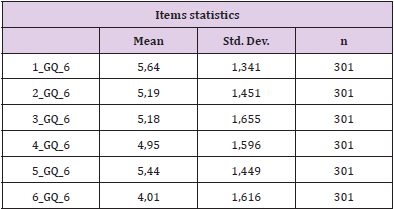
The Gratitude Questionnaire [2]: 301 subjects were recruited. The mean scores for each item on The Gratitude Questionnaire (GQ- 6) scale are shown in (Table 1). For the GQ-6, the mean score was 30.40 ± 6 with a minimum score of 14 (the minimum achievable score on the continuum line of the scale is 6) and a maximum of 42 (the maximum achievable score on the continuum of the scale). The values measured in the sample extracted from the population are at medium-high levels. In terms of internal consistency, Cronbach’s alpha was acceptable, producing a value of 0.72 which, based on the conventional cut-off, indicates that the level of reliability and internal consistency of the construct under exam is more than satisfactory (Table 2).

biomedres-openaccess-journal-bjstr

Table 1: Average values of the GQ-6 questionnaire per item.

biomedres-openaccess-journal-bjstr

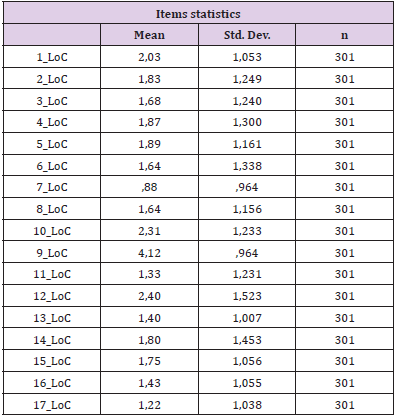
Table 2: Average values of the LCB questionnaire per item.

Locus of Control of Behavior [6]:

a) The mean score of the internal Locus of Control score was 11 ± 4.53

b) The mean score of the external Locus of Control was 20.20 ± 6.5

In terms of internal consistency, Cronbach’s alpha was acceptable, producing a value of 0.73 which, based on the conventional cut-off, indicates that the level of reliability and internal consistency of the construct under exam is more than satisfactory (Table 3).

biomedres-openaccess-journal-bjstr

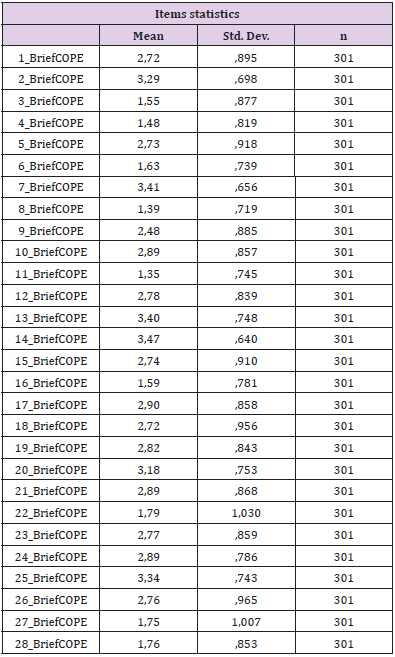
Table 3: Average values of the BriefCOPE questionnaire per item.

Brief Cope [7]: In the sample under exam, active coping presented an average score of 44.42 ± 5.7, while avoidant coping totalized an average of 34.1 ± 4.9. In terms of internal consistency, Cronbach’s alpha was questionable, yielding a value of 0.62 (Table 4).

biomedres-openaccess-journal-bjstr

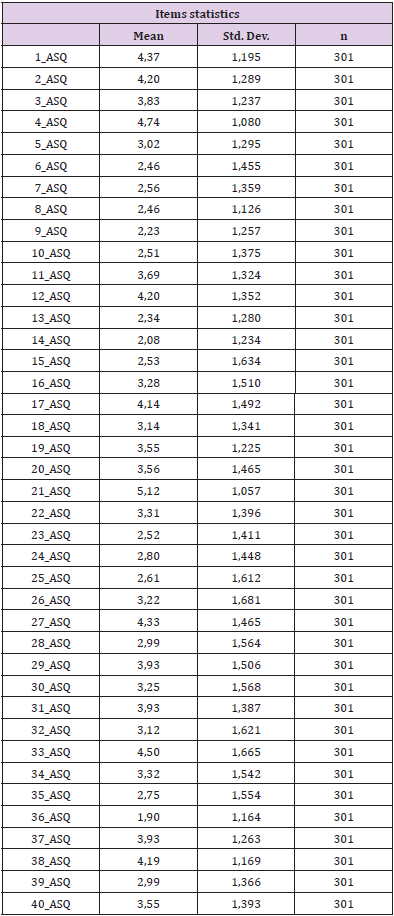
Table 4: Average values of the ASQ questionnaire per item.

Attachment Scale Questionnaire [8]: The scores of the various dimensions were:

a) Confidence: the average score was 32.5 ± 6.1 with reference values 32.25 ± 5.74 it can be observed that the score obtained is within the established average.

b) Discomfort with Intimacy: the average score was 35.5 ± 7.7 with reference values 37.95 ± 7.12 it can be observed that the score obtained is below the established average but not significantly.

c) Secondary Relationships: the average score was 16.2 ± 5.4 with reference values 16.71 ± 5.96 it can be observed that the score obtained is within the established average.

d) Need for approval: the average score was 22.6 ± 6 with reference values 20.82 ± 5.99 it can be observed that the score obtained is above the established average but not significantly.

e) Concern for Relationships: the mean score was 26.3 ± 6.5 with reference values 28.81 ± 6.08 it can be observed that the score obtained is below the established average but not significantly.

In terms of internal consistency, Cronbach’s alpha was acceptable, producing a value of 0.71 which, based on the conventional cut-off, indicates that the level of reliability and internal consistency of the construct under exam is more than satisfactory (Table 5).

biomedres-openaccess-journal-bjstr

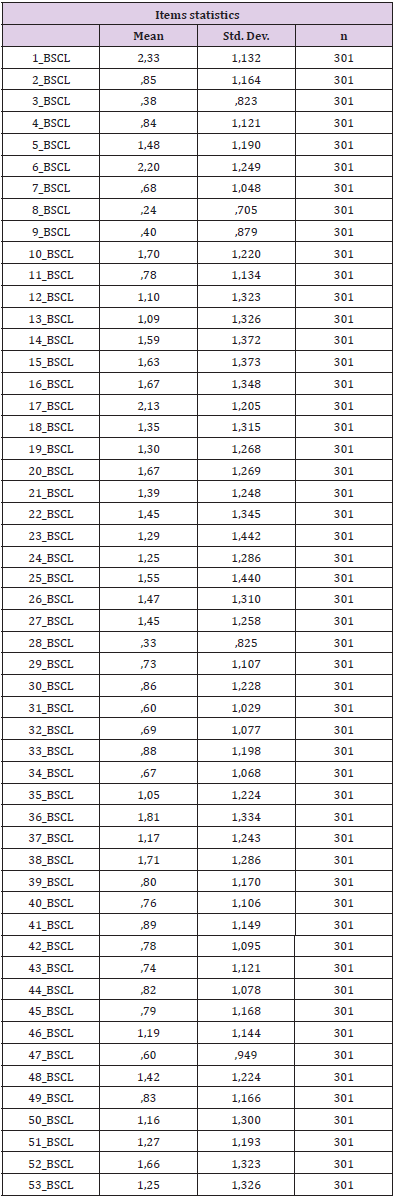
Table 5: Average values of the BSCL questionnaire per item.

Brief Symptoms Checklist [9]: The mean score was 60.7 ± 38.3. The values measured in the sample extracted from the population are on average levels. Scores of 63 and above are considered clinical cases. In our sample, therefore, we can conclude that the average is within the norm. In terms of internal consistency, Cronbach’s alpha was excellent, producing a value of 0.96 which, based on the conventional cut-off, indicates that the level of reliability and internal consistency of the construct under consideration is more than satisfactory (Table 6).

biomedres-openaccess-journal-bjstr

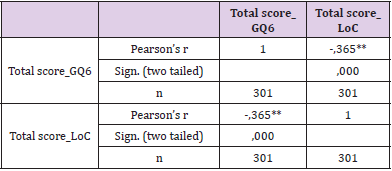
Table 6: Pearson’s r correlation between GQ-6 and LCB.

Correlations

biomedres-openaccess-journal-bjstr

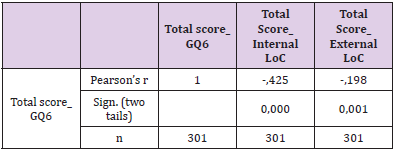
Table 7: Pearson’s r correlation between GQ-6 and internal/ external Locus of control measured by LCB.

Correlation Between Gq-6 and LCB: There is a significant (-, 365) relationship between the GQ-6 questionnaire and LCB. Based on the conventional cut-off, it indicates that the correlation strength is low (Table 7). Correlations with external Locus of Control are as follows: The results showed that there is a negative correlation between Gratitude and the Locus of Control construct itself (internal and external), however a more positive correlation emerges between External LoC and Gratitude, which could suggest that those who have achieved higher score in the questionnaire that measures gratitude levels, most likely have a more external Locus of Control (r = -, 198 versus r = -, 425) (Table 8).

biomedres-openaccess-journal-bjstr

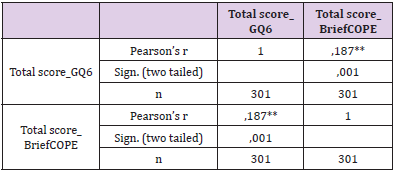
Table 8: Pearson’s r correlation between GQ-6 and BriefCOPE.

Correlation Between Gq-6 and Brief Cope: There is a significant relationship (.187) between the GQ-6 questionnaire and BriefCOPE. Based on the conventional cut-off, it indicates that the strength of the correlation is negligible. Here are the correlations with the various dimensions (Table 9). The results showed that there is a positive correlation between Gratitude and active coping, and a negative correlation between Gratitude and avoidant coping, translated into a practical aspect these results suggest that:

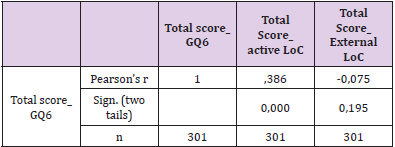
a) Those with the highest levels of gratitude have an active coping style (r = .386).

b) Consistent with the above point, the higher the level of gratitude in a person, the more rarely that person will have an avoidant coping style (r = -, 075) (Table 10).

biomedres-openaccess-journal-bjstr

Table 9: Pearson’s r correlation between GQ-6 and active/ avoidant coping style measured by BriefCOPE.

biomedres-openaccess-journal-bjstr

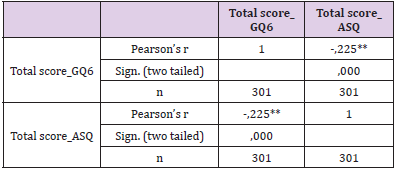
Table 10: Pearson’s r correlation between GQ-6 and ASQ.

Correlation Between GQ-6 and ASQ: There is a significant relationship (-, 225) between the GQ-6 questionnaire and the ASQ. Based on the conventional cut-off, it indicates that the strength of the correlation is in any case negligible. Here are the correlations with the various dimensions (Table 11).

biomedres-openaccess-journal-bjstr

Table 11: Pearson’s r correlation between GQ-6 and the dimensions measured by ASQ.

Considering the various dimensions present in the ASQ questionnaire, the results showed that:

a) Those who have higher levels of gratitude will likely also have higher levels of confidence in themselves and in interpersonal relationships (r =, 500).

b) Those who have higher levels of gratitude will probably also have a lower discomfort with intimacy, considering that, in fact, the correlation between the constructs is negative (r = -, 260).

c) Those with higher levels of gratitude will likely also have a lower tendency to view social relationships as a minor factor (r = -, 261).

d) Those who have higher levels of gratitude will probably also have a lower need for approval from significant others, this translates into greater autonomy in the person (r = -, 193).

e) Those who have higher levels of gratitude will probably also have a lower sense of apprehension regarding the relationship with the significant other (r = -, 323) (Table 12).

biomedres-openaccess-journal-bjstr

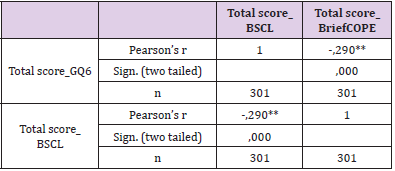
Table 12: Pearson’s r correlation between GQ-6 and BSCL.

Correlation Between GQ-6 and BSCL

There is a relationship (-, 290) between the GQ-6 questionnaire and BSCL. Based on the conventional cut-off, it indicates that the strength of the correlation is negligible. The findings therefore suggest that those with the highest levels of gratitude are also less likely to develop psychopathological symptoms, such as somatization, obsession and compulsion, interpersonal sensitivity, depression, anxiety, hostility, phobic anxiety, paranoid ideation, and psychoticism.

Discussion

In this study we examined the correlations between different psychological constructs as independent variables in relation to the construct of gratitude. The tests used demonstrated solid and robust psychometric characteristics. The aim of this study was to establish what were the relationships between the Locus of Control, coping, individual differences in adult attachment and, considering the exploratory and preliminary nature of the research, it can be said that the set goal was achieved and the publication of this will provide the basis for further research by the scientific community. Regarding the hypothesis that there was a significant negative correlation between the construct of gratitude and a wider spectrum of psychopathological symptoms measured with the BSCL, as already noted by the scholar Southwell in 2012, it can be said that this result was reiterated in our study, confirming the hypothesis we initially formulated.

Conclusion

Gratitude can be defined as appreciation of what is valuable and meaningful. It represents a general state of appreciation. Tendentially, from the results that emerged, the psychological construct of Gratitude seems to belong to more autonomous and active individuals. Research also indicates that there are a number of potential nuances in the relationship between gratitude and constructs that could possibly be relevant to the effective integration of gratitude techniques into psychotherapeutic treatment. According to some authorities [11-13], the techniques available to increase gratitude are relatively simple and easy to integrate into psychotherapeutic practice, although the characteristics of these techniques in terms of effectiveness and continuous change remain largely unknown. Only future research will clarify the many questions about valuing and raising gratitude.


For more Articles on: https://biomedres01.blogspot.com/

Comparison of Two Types of Dual Resin Cements in Cantilever Dental Bridge Compressive Stress Distribution: Finite Element Analysis

  Comparison of Two Types of Dual Resin Cements in Cantilever Dental Bridge Compressive Stress Distribution: Finite Element Analysis Introdu...