Showing posts with label American medical journal Journals on Medical Research Top medical open access journal Medical and Medicinal journal Open access clinical and medical journal. Show all posts

Friday, September 22, 2023

Stress Prevalence in College Students During COVID-19 Pandemics: Evidence from Economics Undergraduates in a Developing Country


Stress Prevalence in College Students During COVID-19 Pandemics: Evidence from Economics Undergraduates in a Developing Country

Introduction

On December 31, 2019, the Wuhan Municipal Health Commission reported a cluster of pneumonia cases caused by a new coronavirus. As of March 11, 2020, the WHO determines COVID-19 as a pandemic due to the disease’s levels of spread and severity. On March 14, 2020, the Secretary of Public Education, Esteban Moctezuma, reported on suspending primary and upper secondary school classes. By March 30, Mexico enters a health emergency, and new measures against the coronavirus are announced, including the suspension of non-essential activities. Studies show that a long period of confinement during a pandemic can negatively affect children’s physical and mental health [1]. Furthermore, university students appear to be particularly susceptible to the adverse effects of quarantine [2]. Learning through online platforms has given rise to depressive and anxiety disorders among university students [3]. The fact that students face various challenges when entering university is added. Authors such as Martínez-Otero and Torres (2005) mention that academic work and time dedicated to studying can affect the students or generate concerns. The objective of this study is to analyze the difference in academic stress levels among first-year students of the Bachelor of Economics of the Faculty of Economics of the Autonomous University of Nuevo León (FAECO-UANL), who began their university studies virtually, and the generation that experienced classes face-to-face before the COVID-19 pandemic. This methodology permits identifying the possible impact of starting university studies on students’ mental health during the pandemic.

Background

Rivas Espinosa, et al. [4] find that the level of academic stress between groups of students who studied the semester with online lectures and face-to-face classes is different, being moderately high in the first group. Acevedo, et al. [5] show that students who took the semester online presented more severe manifestations of stress, anxiety, and depression. Among the stressors presented by students during the COVID-19 pandemic are the overload of tasks and the work that must be completed within the deadlines established by teachers [6], the resolution of online exams, academic work deadlines and waiting for a teacher’s response [7]. Lovón, et al. [8] analyze the repercussions of the COVID-19 quarantine on the mental health of two groups of students: one with adequate technological resources and the other lacking quality technologies, finding that the main consequence for the first group is the stress due to academic overload, while for the second group, in addition to stress, they result in frustration and university dropout.

Method

Participants

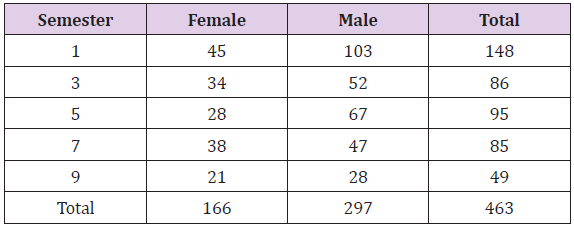
The sample design framework was created considering the representative university student in the total population of the Faculty of Economics at UANL as the unit of study. For this purpose, an unrestricted random sample was designed, stratified in two dimensions: semester of study (first, third, fifth, seventh, and ninth semesters) and gender (male and female), giving a total of 10 classification strata. Thus, the student composition of the FAECOUANL for the semester August-January 2020-2021 was taken as a database. Therefore, the composition observed in Table 1 was considered as the target population.
biomedres-openaccess-journal-bjstr

Table 1: Composition of target population: economics students, FAECO-UANL.

Data

The data presented in this research work comes from a survey prepared with a set of instruments that allow knowing: the student’s cognitive abilities, vocational academic aptitudes, socioeconomic, family and home context, consumption habits, and metrics of selfconcept perfectionism and multiple intelligences.

Instruments

Socioeconomic questionnaire. The instrument consists of six parts: identification data, personal data, housing data, domestic equipment, scholarship program and resources to carry out the studies. In addition, questions related to the place of study, privacy at the time of studying, as well as questions about the previous knowledge of the faculty and opinions about studying economics were included, which were written by Brenda Medina (psychologist of the Faculty of Economics, UANL). SISCO Inventory of Academic Stress [9]. This instrument recognizes the stress characteristics that usually accompany upper secondary, higher, and postgraduate students during their studies [10]. It is made up of 45 items, 15 for each of the three dimensions of academic stress: stressors, symptoms, and coping strategies, to measure students’ academic stress. Academic stress is classified into 5 levels: very low stress levels (.01 to 1), low stress levels (1.01 to 2), moderate stress levels (2.01 to 3), strong stress levels (3.01 to 4) and very strong stress levels (4.01 to 5) of academic stress. The response scale has six values: never, hardly ever, rarely, sometimes, almost always, and always, to indicate the frequency with which stressors, symptoms, and coping strategies occur.

Procedure

Brenda G. Medina Soto, the psychologist from the Faculty of Economics, oversaw the application of questionnaires and the design of the informed consent that the students had to sign before answering. The questionnaires were administered virtually with prior authorization from the Directorate of the Faculty of Economics during October and November 2020. Multiple application sessions were held via the Microsoft Teams platform. Participation was entirely voluntary and anonymous. The importance of answering honestly was highlighted to the students and the fact that the data would be treated confidentially by the psychologist of the Faculty of Economics.

Results

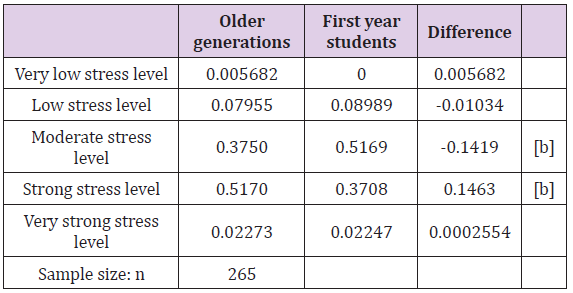
Table 2 shows the means and mean differences of each level of academic stress, according to whether the student started their university studies during the pandemic (this means first-year students that started with online classes) or if they experienced face-to-face classes before the pandemic (older generations). The Table 3 shows that first-year students are 14.19% more likely to experience moderate stress levels than older generations. On the other hand, older generations are 14.63% more likely to experience intense stress than first-year students.

• Each column presents the sample mean of each variable conditional on whether the student began their university studies virtually or if the student experienced classes face-toface before the COVID-19 pandemic, and the mean difference.
• The third column shows the difference in means corresponding to the test (Student’s t) of differences with unknown and different variance.
• In variables of the dichotomous type (1=Yes 0=No), the interpretation of the average is the percentage of declared response: for example, 0.78 is interpreted as 78% of affirmative response.
• The statistical significance indicators of the statistical test (p-value) are: [a] p<0.10, [b] p<0.05, [c] p<0.01, [d] p<0.001. Source: Own estimation.
biomedres-openaccess-journal-bjstr

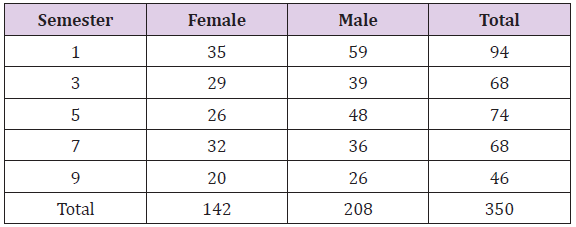
Table 2: Sample composition by stratified random unrestricted design: students surveyed by semester and gender.
biomedres-openaccess-journal-bjstr

Table 3: Means and differences in means between first year students and older generations.

Conclusion

This study analyzes the difference in academic stress levels between generations of the Faculty of Economics of the Autonomous University of Nuevo León (UANL) in the context of the COVID-19 pandemic. The results show that students that started their university studies with online lectures during the pandemic are more likely to have moderate academic stress levels. In contrast, students who experienced face-to-face learning are more likely to have strong academic stress levels. This suggests that older generation students present a higher level of academic stress, possibly caused by the transition from face-to-face to virtual education. However, one limitation of the study is that there is no information regarding the mental health situation of students prior to the pandemic, so it cannot be concluded that there has been a change in the levels of stress as consequence of confinement. In addition, the results are limited to the student population of the Faculty of Economics, so they cannot be generalized to the student population in general. Finally, Dewi, et al. [11] show that implementing teaching materials to develop coping strategies to manage stress during the pandemic becomes beneficial for students. Therefore, it is recommended that counseling be strengthened for students regarding stress management and the possibility of receiving professional support from a psychologist. Teachers should also consider offering virtual office hours and supporting students to process and address academic concerns [12-16].


For more Articles on: https://biomedres01.blogspot.com/

Tuesday, May 2, 2023

Comparative Analysis of Pattern of Dermatological Disorders Treated During 2019 and 2020 at Benazir Bhutto Hospital Rawalpindi and Hospital Statistics: A Rapid Review of Effect of Covid-19


Comparative Analysis of Pattern of Dermatological Disorders Treated During 2019 and 2020 at Benazir Bhutto Hospital Rawalpindi and Hospital Statistics: A Rapid Review of Effect of Covid-19

Introduction

About 1.9% billion of our global population is suffering from diverse skin problems [1]. Skin problems constitute the fourth commonest etiology of human ailments; about one third of global illness is attributed to dermatological diseases [2]. Apart from ethnicity and genetics, occurrence of skin disorders in any region are also attributed to dietary habits, hygienic practices, social class and climate [3]. COVID-19 has led to a very critical scenario across the globe due to confrontation with grave consequences. Apart from clinical symptoms suggestive of respiratory syndrome, SARS-CoV-2 also contributed to the development of depression and anxiety among our people [4]. Moreover, cutaneous lesions or changes have also determined now as one of the COVID related clinical presentations [5]. Pre-existing skin diseases like eczema and dermatitis among some patients got intensified due to COVID-19 [6]. A systematic review by Jamshidi et al revealed that presence of only dermatological lesions does not guarantee the severity of COVID-19 and patients with urticaria like manifestations had approximately 2.2% mortality rate [7].

The highest Disability Adjusted Life Years (DALY) rate for skin and subcutaneous infections was determined in New York; however, the difference in frequency of various dermatological problems between various American states was insignificant [8]. According to the results of screening program run among Germany inhabitants during 2019, about 64.5% of the populates had skin disorders; the commonest among them was actinic keratosis (26.6%) followed by rosacea (25.5%) and eczema (11.7%). Skin diseases were found to be more prevalent among elderly males [9]. The present study is intended to analyze the variations in frequency of skin problems by comparing the record of Dermatology department at BBH during 2019 and 2020. This will not only enable us to determine the differences in frequency of skin problems among our population during pre-COVID (2019) and COVID pandemic (2020); but will also facilitate us to comprehend the impact of COVID-19 on skin related ailments. This research will sufficiently guide our strategic planners towards taking necessary steps in order to combat COVID-19 associated skin disorders.

Materials and Methods

A cross-sectional hospital record-based study was done by comparing the dermatological problems managed at BBH during 2019 and 2020. The data was collected pertinent to age, gender, number of patients visiting OPD, number of patients admitted and type of skin disorders among admitted. Data was analyzed by Microsoft Excel 2010. Bed Occupancy Rate (BOR) was also computed. However, statistically significant gender-based variations in Average Length of Stay (ALOS) of the patients in hospital during 2019 and 2020 were determined by Independent sample t-test. P-value <0.05 was taken as significant. 95% CI was also measured.

Results

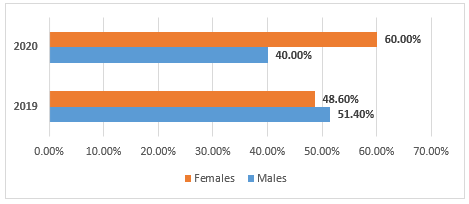
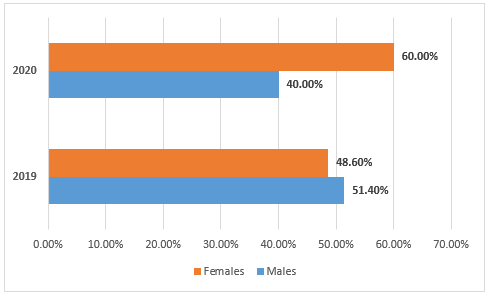
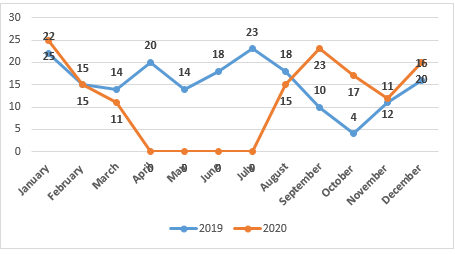
A total of 63,649 and 75,280 patients with diverse dermatological problems visited Benazir Bhutto Hospital (BBH) Rawalpindi during 2019 and 2020 respectively. Mean age of the patients visiting the dermatology department both during 2019 & 2020 was determined to be 39 ± 7.2 years. Gender-wise distribution of these patients is reflected below in Figure 1. Most of the patients presenting with skin diseases at BBH during 2019 and 2020 were 15-49 years old as illustrated below in Table 1. About 185 and 138 patients with dermatological problems were admitted in Dermatology ward of BBH through OPD and Accident & Emergency department during 2019 and 2020 respectively. Gender based distribution of admitted patients is revealed below in Figure 2. Maximum number of patients 23 were admitted during July 2019 while least frequency of dermatological patients was reported in October 2019.

biomedres-openaccess-journal-bjstr

Figure 1: Gender based distribution of the patients with skin problems during 2019 and 2020.

biomedres-openaccess-journal-bjstr

Figure 2: Gender wise differences in frequency of admissions during 2019 & 2020.

biomedres-openaccess-journal-bjstr

Table 1: Age distribution of patients with skin problems.

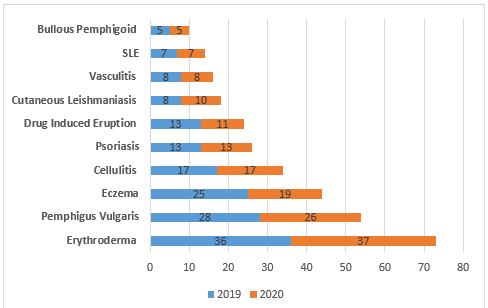
On the other hand, highest number of admissions during 2020 was in the month of January and there was closure of Dermatology ward in April, May, June and July due to COVID pandemic as portrayed in Figure 3. The most commonly seen skin problem was erythroderma (22.5%) among our patients followed by pemphigus vulgaris (17.5%) and eczema (15.6%). Top ten dermatological problems prevailing among our patients during 2019 and 2020 are depicted below in Figure 4. Bed Occupancy Rate was determined to be 49%. Mean differences in ALOS of male and female dermatological patients was determined to be statistically insignificant as elucidated below in Table 2.

biomedres-openaccess-journal-bjstr

Figure 3: Trend of admissions in Dermatology ward during 2019 and 2020 at BBH.

biomedres-openaccess-journal-bjstr

Figure 4: Top 10 dermatological problems reported at BBH during 2019 & 2020.

biomedres-openaccess-journal-bjstr

Table 2: Statistical significance of gender-based variations in ALOS of admitted patients during 2019 (n = 185).

Discussion

Skin diseases are frequently transmitted from infected individuals to the surrounding population. Comprehensive understanding of the global disease burden attributable to skin disorders is of paramount significance to mitigate cutaneous infections [10]. Skin problems can adequately be avoided by proper washing of hands, avoidance of contact with irritants and consultation with specialist in particular for chronic diseases [11].The present study revealed the maximum occurrence of skin problems among 15-49 years old females. The highest frequency (76%) was among females who presented to Dermatology OPD of BBH during 2020 (Table 1). Although Dermatology department of Benazir Bhutto Hospital remained closed from April – July 2020, still patients visiting BBH were more (75,280) than those (63,649) who came to BBH with skin problems during 2019. This shows the confrontation of the population more with skin problems amidst COVID pandemic than during pre-pandemic era.

However, type of skin diseases remained same during both calendar years. A similar study carried out among dermatological patients attending primary healthcare facility of Karachi illustrated the mean age of the patients about 25 years; however, 87% of them were females. Approximately 43% had chronic skin ailments while 36.4% presented with infectious disorders. Life style factors that were significantly associated with onset of skin problems were sharing of fomites and contact with pet animals [12]. Role of lifestyle factors towards inception of skin problems should further be justified by doing systematic reviews. In ours study, erythroderma constituted the greatest magnitude of skin diseases both during 2019 and 2020 followed by pemphigus vulgaris, eczema and cellulitis. A similar cross-sectional study carried out in Tanzania revealed that eczema was the most frequent dermatological problem followed by papulosquamous disorders, fungal infections and tumors [13]. Likewise, a research among general public attending the Dermatology OPD of a tertiary healthcare facility of Lahore disclosed that most of the patients were 20-40 years old and eczema constituted the greatest magnitude (31.07%) of dermatological illnesses. In addition, pigmented ailments were observed to be 3.82%, psoriasis 3.80% and bullous disorders were 1.6% [14].

Skin problems among the residents of any geographical region vary from those residing in other territories; moreover, these differences also exist among people belonging to unlike age groups. In addition, the incidence of mortality from various skin disorders reflect much variation among developed and resource constrained countries [15]. A study by Huang K et al explored skin common diseases among Chinese inhabitants as both malignant and benign tumors, erythema papule scale, bullous, allergic and connective tissue problems that were brought to the attention of stakeholders by artificial intelligence [16]. Another similar multi-center study by Yong et al among populates of Singapore concluded that eczema was the most persistent skin disease (54.2%) followed by tenia infection (20%), cellulitis (11.4%) and bullous pemphigoid (8.6%) [17].

Identification of modifiable risk factors leading to rise in dermatological problems in our society are of paramount significance to our strategic planners in rational decision making for lessening the incidence of these cutaneous diseases. In our study, about 185 patients with diverse dermatological presentation got admitted in Dermatology ward during 2019 while admissions were diminished to total 138 during 2020. Males outnumbered females during 2019 while relatively less males were admitted during 2020 (Figure 2). Likewise, in a retrospective data analysis done by Sen a et al based on 2011 – 2014 record of admissions in Dermatology ward, males were comparatively more than females [18].

Many of the skin damaging and irritating effects nowadays are substantially attributed to ultraviolet radiations, oxides and particulate matter [19]. No doubt, exposure to environmental pollutants is also posing our population to the risk of developing skin diseases. Strategic planning to reduce Air Quality Index (AQI) by mitigating the proportion of pollutants is the need of hour in order to lower the occurrences of skin related issues globally. In present study, Average Length of Stay (ALOS) among our male and female patients during 2019 was 8.25 ± 2.45 days and 48.7 ± 15.63 respectively. Bed Occupancy rate during 2019 was 49%. These Hospital statistics for 2020 were not computed due to closure of Dermatology department from April-July 2020. Bed Occupancy rate (BOR) of any healthcare facility is likely to exceed 100% in case of disaster or disease outbreak [20]. However, our study does not reflect any significant impact of COVID-19 on proportion of dermatological cases than those reported during 2019 (pre- COVID era). Studies on dermatological statistics of other healthcare settings can facilitate us to great extent in situational analysis.

Conclusion and Recommendations

Erythroderma constituted the most prevalent skin disease of our community followed by pemphigus vulgaris and eczema; however, the frequency of these dermatological problems was not substantially influenced by COVID-19. The true picture in response to COVID pandemic can better be appraised by multi-center study.


For more Articles on: https://biomedres01.blogspot.com/
Friday, February 18, 2022

Designing an Adjustable Head Frame for Surgery Using Mixed Reality Technology Hololens 2

Designing an Adjustable Head Frame for Surgery Using Mixed Reality Technology Hololens 2

Introduction

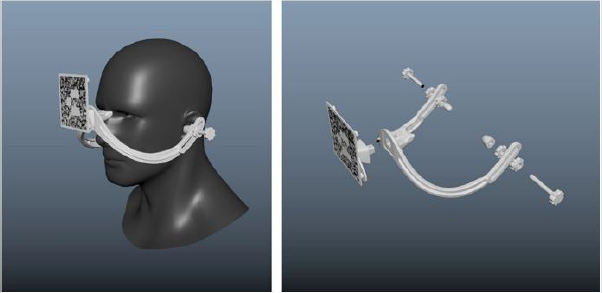
To position three-dimensional holograms to a strictly defined point in space, it is necessary to use special markers, which can be represented in the form of images [1], QR codes [2] or geometric objects [3]. In the case of using mixed reality technology in surgery, these markers must be rigidly linked to the patient’s anatomy in order to accurately position the 3D model of the anatomical structures. This can be achieved through the use of special frameholders of the marker [4], which are based on the individual anatomy of the patient and are made using the 3D printing method. The main disadvantage of such marker-holders is that for each patient it is necessary to design and manufacture a new marker-holder, which is time-consuming and expensive. To solve this problem, we have developed an adjustable frame (Figure 1), which is intended for performing operations on the head using mixed reality glasses [5]. This frame fits over the patient’s head and adjusts to his individual parameters. This device is entirely made of polyamide, which allows it to be sterilized before each procedure and used repeatedly in various operations related to neurosurgery and maxillofacial surgery [6].

Figure 1: Adjustable frame design.

Design and Basic Principle of Use

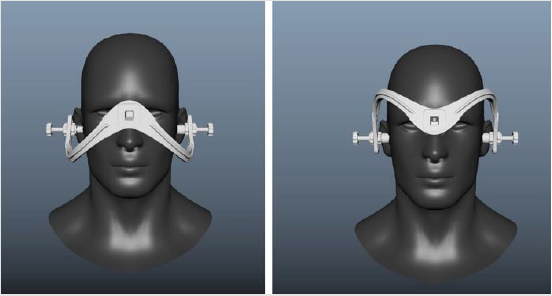
The design of the frame is designed in such a way that it rests on the fixed parts of the patient’s anatomy, namely the bridge of the nose and ear canals. All adjusting elements are near the ears. As a result of their adjustment, the frame is firmly adhered to the patient’s head due to the tension created between the support on the bridge of the nose and the ears. The original fitting position of the frame is designed neurosurgery, however it can be placed upside down in order to open access to the face for maxillofacial surgery (Figure 2). The frame also contains radiopaque markers, which can be used to compare the position of the frame relative to the CT scan and thus calculate the exact position and orientation of the hologram relative to the marker when using mixed reality glasses. The marker itself is inserted into a special slot in the frame, which allows you to set markers of various configurations depending on the surgical access and the position of the patient during surgery.

Figure 2: Two different fitting positions of the frame. For neurosurgery (left) and maxillofacial surgery(right).

Iterative Design Approach

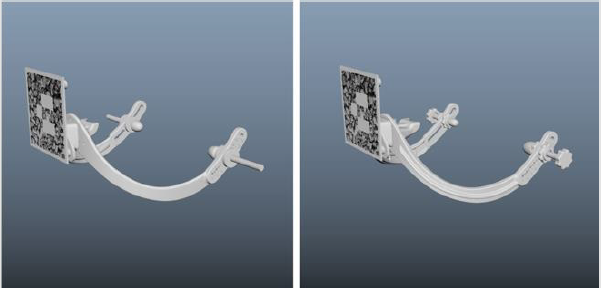
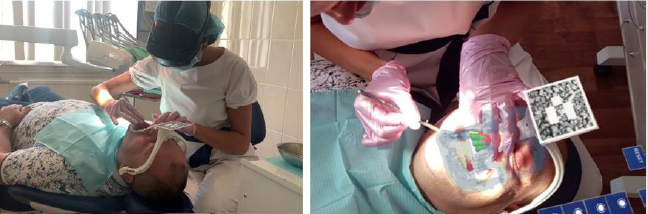
At the moment, the design of the frame has undergone 2 major development iterations. On each of them, various design changes were made to improve the ergonomics and quality of positioning of the holograms (Figure 3). The first version used plastic adjusting clips with metal rods. Despite the small length and size of the threads, they gave very strong interference in CT scans; as a result, the retainers were replaced with polyamide screws with nuts from the same material. In the second version, in addition to screws, polyamide plugs were made, which were put on over the screws and increased convenience in the process of adjusting the position of this frame. Also, the frame was reinforced with stiffening ribs to reduce possible deformation as a result of tightening the screws in the ears. In addition, the design of the installation of radiopaque markers has been revised. Now they are represented by small 2x2 mm set screws. This made it possible to significantly improve the quality of calibration and the positioning accuracy of the holograms. The result of using the frame during surgery with mixed reality glasses can be seen on the Figure 4.

Figure 3: Two versions of the frame. Old design (left) and new design (right).

Figure 4: Doctor wearing Hololens 2 glasses during the procedure (left) and picture from first point of view through glasses (right).

Conclusion

The adjustable frame allows surgeons to perform multiple surgeries using the same rig without creating custom system for each procedure. The latest version of the design is not final and requires some improvements. In particular, it is planned to revise the regulation mechanism to increase compactness in order to fit portable dental CT scans. We are also considering an option in which has an additional emphasis on the forehead to increase the rigidity of fixation.

For more Articles on : https://biomedres01.blogspot.com/
On the Poaching of and the Threats Facing the Chukar Partridge (Alectoris Chukar J.E. Gray, 1830) in Palestine

  On the Poaching of and the Threats Facing the Chukar Partridge ( Alectoris Chukar J.E. Gray, 1830) in Palestine Introduction Palestine ...