Showing posts with label biomedical journal impact factor. Show all posts

Friday, May 27, 2022

Diagnosis of Psoriasis in Hard-To-Treat Body Locations

Diagnosis of Psoriasis in Hard-To-Treat Body Locations

Introduction
Inflammatory pathology represented by psoriasis vulgaris is much more than a simple skin condition and is a global health problem. Psoriasis for many patients results in a marked functional, psychological and social morbidity. The concept of psoriasis severity refers to many different aspects of psoriasis, including the extent of the disease, the location of the lesions, the degree of inflammation, the ability to respond to treatment and the impact on quality of life. Thus, patients with any type of psoriasis require an assessment of the severity of the disease, the impact of the disease on physical, psychological and social condition, diagnosis of the existence of psoriatic arthritis or other comorbidities. Overall assessment of the patient, assessment of the affected body surface, nail damage, affected areas with high impact and difficult to treat, or any systemic disorder such as fever, malaise, which are common in unstable forms of psoriasis such as erythroderma or generalized pustular psoriasis [1].

Psoriasis is a chronic, multisystemic disease with many comorbidities, which is often difficult to treat, and some cases may be refractory to treatment. Total eradication of plaques is difficult to achieve, and the remission time is short. Recurrence is inevitable and is often preceded by poor adherence to topical therapy. Forms of gouttate psoriasis may resolve spontaneously or may progress to chronic plaque psoriasis. Erythrodermic psoriasis and generalized pustular psoriasis can be life-threatening if left untreated and recurrences are common [2]. The clinical form of psoriasis in plaques refers to the form of well-defined erythematoussquamous plaques, “salmon-pink” to bright red, covered with thick, multilayered, non-adherent silvery white or gray-white scales. Brocq’s methodical maneuver highlights the whitening and fragmentation of the scale, and the detachment of the last layer of scales can objectify a punctiform bleeding (Auspitz sign) due to the phenomenon of papillomatosis. The annular or arched appearance may appear through the central resolution of the plaques and the confluence of the small plaques may determine the appearance of a geographical map.

The common locations are represented by the extension areas of the limbs (knees, elbows), the lumbosacral area, the scalp or the umbilical region. Clinically form of gouttate psoriasis presents multiple, round, small lesions (0.5-1 cm in diameter) (Figures 1a-1f), particularly on the trunk and upper limbs, with rapid extension, being a common form in children and young adults. Inverted (flexural) psoriasis has erythematous plaque lesions, with fine scales, in the major genito-crural, axillary and submammary folds [3]. Healthcare professionals and patients using the term psoriasis usually refer to plaque psoriasis and unless otherwise stated. The term “difficult-to-treat areas” usually refers to the face region, flexion areas, genitals (affected in 45% of cases), scalp, palmoplantar region and are so named because psoriasis in these places can have a significant impact and can lead to functional impairment and require carefully selected topical therapy, which may be resistant to treatment [4].
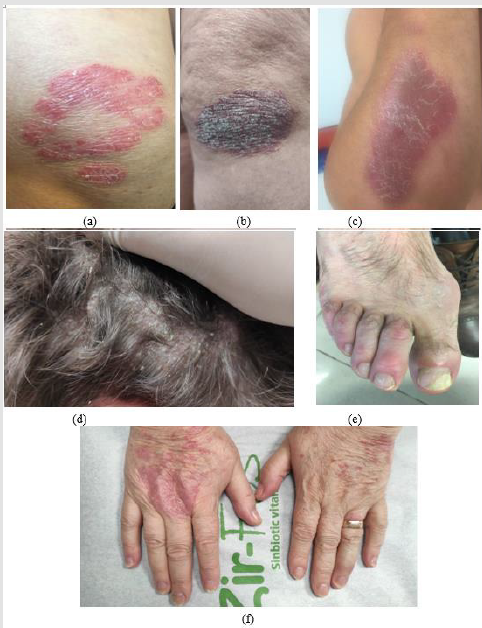
Figure 1: Clinical aspects of psoriasis vulgaris: erythematous-squamous plaques located on the extension areas of the ulnar region (a), knee (b), forearm (c), scalp (d) and psoriatic onychopathy with leuconiquia, distal onycholysis and longitudinal ridges (e), with the appearance of “oil stains” index and middle accompanied by skin lesions on the dorsal faces of the hands (f).

The scalp is one of the most common sites for psoriasis, usually with well-defined individual erythematous-squamous plaques, which often which usually extend about 1 cm beyond the hairline and advance to the cervical, retroauricular and facial regions, accompanied by pruritus and discomfort. Scalp psoriasis does not usually induce alopecia and the most common differential diagnosis of scalp psoriasis includes seborrheic dermatitis, tinea capitis and lichen planopilaris [5]. In addition, dermatomyositis involving the scalp may have lesions similar to psoriasis [2]. Flexural or inverse psoriasis is characterized by erythematous, shiny, smooth, well-defined plaques, the scales are not clearly visible due to the characteristic moisture in the folds and common topographic areas include the axillary area, sub mammary folds, groin and intergluteal fold. Inverse psoriasis is less common than plaque psoriasis and is estimated to affect 3-36% of patients [6]. In infants, it can often occur in the diaper area, with a typical damage to the groin folds, also known as napkin psoriasis. Common differential diagnoses include bacterial or Candidiasis intertrigo, tinea cruris, contact dermatitis, fold eczema and Hailey-Hailey disease [1].

Genital psoriasis affects up to 60% of patients throughout life [7] and can have a significant impact on patients’ psycho-social function due to physical symptoms such as itching and local pain, with a negative impact on sexual health [1]. As with inverse psoriasis, the scales are discrete or absent, and painful fissures in the intergluteal fissure and intense erythema can be a diagnostic argument. Vulvar psoriasis requires differential diagnosis with atopic dermatitis, contact dermatitis, sclero-atrophic lichen, lichen planus and premalignant lesions [8]. In men, irritative balanitis, Zoon balanitis, Queyrat erythroplasia or extramammary Paget’s disease can mimic genital psoriasis [8]. When nail changes or typical erythematous-squamous lesions of psoriasis are missing elsewhere in the body, skin biopsy may be helpful in establishing a certain diagnosis. The motivation of the study is given the importance of the need to outline the epidemiological profile of psoriasis which affects the quality of life through psycho-emotional impact and hard to treat body locations.

Materials & Methods

We performed a retrospective epidemiological study of 527 hospitalized patients diagnosed with psoriasis vulgaris in the Dermatological Clinic of the Emergency County Clinical Hospital “Saint Spiridon”, Iasi in order to establish the frequency of major forms of psoriasis and describe the characteristics demographics such as gender distribution, age group and hard to treat body locations in psoriasis. The collection of information from the observation sheets complied with both the type of information collected for each patient and the time intervals at which they were obtained. Criteria for inclusion in the group of patients with inflammatory pathology included patients with main clinical and/ or histological diagnosis with psoriasis vulgaris hospitalized in the Dermatology Clinic within the County Emergency Hospital “Saint” Spiridon in Iasi, during 1.01.2016-31.12.2019 for 4 years, patients whose observation sheets or electronic files contained sufficient information to make them relevant to the study. Exclusion criteria were represented by patients whose observation sheets or electronic files did not contain sufficient information to make their inclusion in the study possible.

After applying the selection criteria, a series of 527 patients was created that met all the specified conditions. The information was collected from computer databases and patient observation sheets and included a number of variables relevant to the research. Variables analyzed in the group with psoriasis vulgaris were represented by gender (female or male), age, clinical form of psoriasis (plaque psoriasis, gouttate psoriasis, palmoplantar pustular psoriasis, generalized pustular psoriasis, erythrodermic psoriasis, inverse psoriasis, plaque and gouttate psoriasis, pustular psoriasis, inverse and gouttate psoriasis, psoriasis vulgaris in plaques, gouttate and inverse psoriasis, pustular and inverse psoriasis vulgaris, gouttate psoriasis and pustular psoriasis). Similarly, hard to treat locations distribution such as scalp, palmoplantar area, nails, genital region, large folds, face were analyzed. Quality of life was assessed using standardized Daily Life Quality Index (DLQI) severity score through questionnaire which revealed following values: 0-1 = no effect on the patient’s quality of life; 2-5 = low effect on the patient’s quality of life; 6-10 = moderate effect on the patient’s quality of life; 11- 20 = important effect on the patient’s quality of life; 21-30 = very important effect on the patient’s quality of life.

In order to carry out retrospective studies subsequently, we coded this information in order to be able to enter it in a database with parametric and non-parametric data that we analyzed statistically. The statistical analysis of the data was performed with the software STATISTICA ver. 7.0. Depending on the needs of the statistical analysis, the data were used either in the original version or were grouped according to some classification criteria imposed by methodologies, or established according to the type and particularities of the variables included in the analyzes. We analyzed the differences between the mean values according to the grouping variables, using the t test for independent samples according to the grouping variables sex and environment of origin, appreciating as significant the differences located at a significance threshold p <0.05. The significance of the differences between the frequencies was evaluated with the help of the χ2 test, appreciating as significant the differences when the calculated value of the χ2 test will be higher than the critical value corresponding to the significance threshold p = 0.05. If percentages were compared, the significance of the differences was assessed using the Z test, assessing as significant the differences located at a significance threshold p <0.05.

The present study was carried out in accordance with the 1964 Helsinki Declaration and subsequent amendments and was approved by the Ethics Commission of the University of Medicine and Pharmacy “Grigore T. Popa” Iasi and by the Ethics Commission of the Emergency County Clinical Hospital “Saint Spiridon”, Iași, through the ethics opinion in accordance with the Research Law no. 206 of 27 May 2004 on good conduct in scientific research, technological development and innovation, as well as with the European legislation in force (European Regulation 679) on the processing of personal data. The rights to integrity and confidentiality of the subjects included in the study were respected.

Results

Frequency of Cases with Special Impairment, Depending on Age Groups

To compare the frequency of cases by age groups by sex, the Z test was used to compare the percentages of two different populations (in our case men and women), at the minimum significance threshold p <0.05. The study included a number of 527 patients diagnosed with psoriasis vulgaris, with a distribution by age groups showing 229 women and 298 men, with 49.15% of the total number of the group , respectively 288 patients with urban background. After comparing the frequency with which special impairments occurred by age groups, the following (Tables 1 & 2) significant differences were obtained:
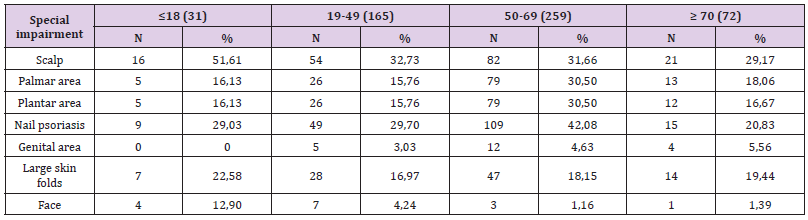
Table 1: Frequency of cases with special impairment, depending on age groups.
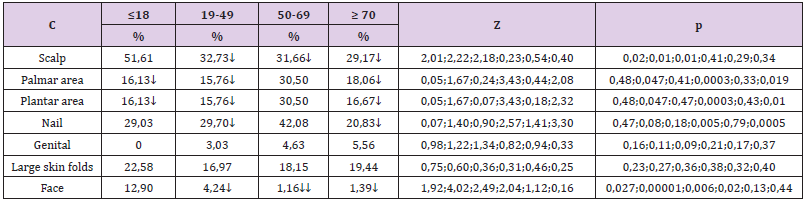
Table 2: Differences of frequency of cases with special impairment, depending on age groups.

a) The frequency of scalp psoriasis was significantly higher in patients aged ≤18 years (51.61% compared to 32.73% aged 19-49 years, Z = 2.01, p = 0.02; compared to 31 , 66% aged between 50-69 years, Z = 2.22, p = 0.01; compared to 29.17% aged ≥ 70 years, Z = 2.18, p = 0.01);

b) The frequency of palmar involvement was significantly higher in patients aged 50-69 years (30.5% compared to 16.13% aged ≤18 years, Z = 1.67, p = 0.047; compared to 15.76 % aged 19- 49 years, Z = 3.43, p = 0.0003; compared to 18.06% aged ≥ 70 years, Z = 2.08, p = 0.019);

c) The frequency of plantar involvement was significantly higher in patients aged 50-69 years (30.5% compared to 16.13% aged ≤18 years, Z = 1.67, p = 0.047; compared to 15.76 % aged 19- 49 years, Z = 3.43, p = 0.0003, compared to 16.67% aged ≥ 70 years, Z = 2.32, p = 0.01);

d) The frequency of nail psoriasis was significantly higher in patients aged 50-69 years (42.08% compared to 29.7% aged 19-49 years, Z = 2.57, p = 0.005 and compared to 20 , 83% aged ≥ 70 years, Z = 3.30, p = 0.0005);

e) The frequency of facial extension was significantly higher in patients aged ≤18 years (12.9% compared to 4.24% aged 19- 49 years, Z = 1.92, p = 0.027, compared to 1.16 % aged between 19-49 years, Z = 4.02, p <0.00001 and compared to 1.39% aged ≥ 70 years, Z = 2.49, p = 0.006); it was found that the frequency in patients aged 19-49 years was significantly higher than that of patients aged 50-69 years (4.24% compared to 1.16%, Z = 2.04, p = 0.02). 3.2. The relationship between the clinical form of psoriasis and the special condition:

To see if a particular clinical form of psoriasis is significantly associated with a particular special condition, it was necessary to compare the frequencies of each special condition with all the others in each clinical form of psoriasis. In order to be able to make those comparisons, it was necessary to convert the gross frequencies of each special affectation into percentage frequencies by relating them to the total cases of each corresponding special impairment, the result of which was then multiplied by 100. The differences between the percentages were tested with Z test, being considered significant those differences that were located at a significance threshold p <0.05.

Comparison of the incidence of special conditions in patients with plaque psoriasis (Table 3, Figure 2) showed that:

a) Facial psoriasis (100% of cases) was significantly more common compared to: 73.17% in the palmar area, Z = 2.3, p = 0.01; 72.13% in plantar area, Z = 2.36, p = 0.009 and 82.29% in large folds, Z = 1.77, p = 0.038;

b) Scalp involvement (93.64% of cases) was significantly more common compared to: 73.17% in the palms, Z = 4.88, p <0.00001; 72.13% in plants, Z = 5.06, p <0.00001; 87.91% for nails, Z = 1.86, p = 0.03 and 82.29% for large folds, Z = 2.92, p = 0.0017;

c) Nail psoriasis (87.91% of cases), was significantly higher than: 73.17% in palms, Z = 3.28, p = 0.0005 and 72.13% in plants, Z = 3, 48, p = 0.00025;

d) The involvement in the area of large folds (82.29% of cases) was significantly higher than 72.13% in plants, Z = 1.76, p = 0.04.
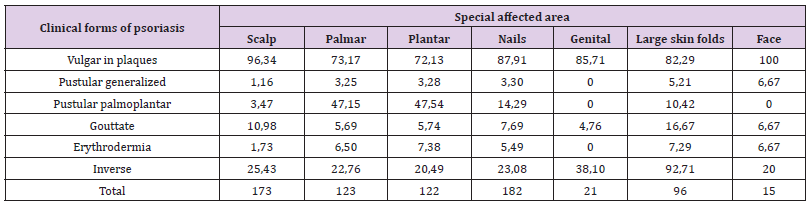
Table 3: Percentage frequency of clinical forms of psoriasis and special condition.
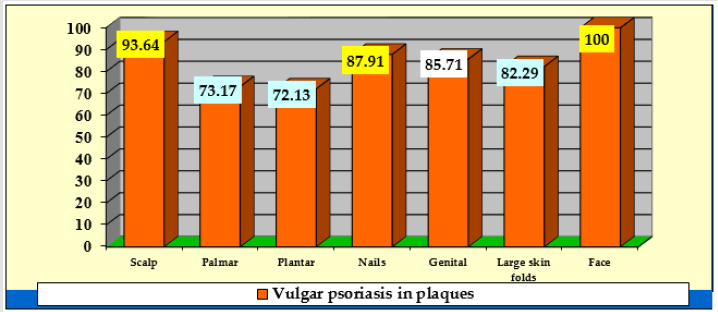
Figure 2: Glucose levels behavior.

In patients with inverse psoriasis it was also observed that the frequency of cases with psoriasis of genital area was significantly higher, 38.1%, compared to 20.49% with plantar area, Z = 1.77, p = 0.038. 3.3. Comparison of the frequency of cases with DLQI scores <10, between 10-20 and higher than 20 (Tables 4 & 5): In the four age groups, the results highlighted the following significant differences:

a) The frequency of cases with DLQI scores <10, was significantly higher in patients aged 50-69 years (38.22% compared to 22.58% of those aged ≤18 years, Z = 1.71, p = 0.04 and compared to 29.09% of those aged 19-59 years, Z = 2.10, p = 0.017) and those aged ≥ 70 years (44.44% compared to 22.58% of those aged ≤18 years, Z = 1.93, p = 0.027 and compared to 29.09% of those aged 19-49 years, Z = 2.3, p = 0.01); the frequency of cases with DLQI scores between 10-20, did not differ significantly depending on the age groups;

b) The frequency of cases with DLQI scores> 20, was significantly lower in patients aged ≤18 years (6.45% compared to 30.03% of those aged 19-49 years, Z = 2.76, p = 0.0028, compared to 25.48% of those aged 50-69 years, Z = 2.36, p = 0.009, compared to 36.11% of those aged ≥ 70 years, Z = 3.10, p = 0.001); the frequency of cases with DLQI scores> 20 was significantly higher in patients aged ≥ 70 years compared to those aged 50-69 years (36.11% compared to 25.48%, Z = 1.78, p = 0.037 ).

Table 4: Frequency of cases after DLQI score, depending on age groups.

Table 5: Differences by DLQI score depending on age groups.

Discussion

Psoriasis is a major global health problem with an increased prevalence with values ranging from 0.09% [9] to 11.4% [10] with a significant impact on patients’ quality of life. Clinical examination and evaluation through several tools that quantify the quality of life, such as the Dermatology Life Quality Index (DLQI). Cutaneous involvement of the scalp, face, palms, soles, nails and mucosal involvement such as genitals can be particularly debilitating [11]. Few available research on patients with psoriasis in hard-to-treat locations were based on large study populations with psoriasis. The main objective of this study was to describe patients’ clinical and demographic characteristics, disease severity, and quality of life impacts in patients with hard-to-treat body locations of psoriasis. We investigated the prevalence of hard-to-treat body locations of psoriasis, and similarly we described patients’ clinical and demographic characteristics. In the current retrospective study, the analysis of the total number of hospitalizations (527) in relation to the distribution by sex showed that each year the percentage was higher in men, the percentage frequency differences between the sexes being due to the higher number of men (298) compared with that of women (229).

Gender differences in the characteristics of skin conditions can be influenced by complex interactive mechanisms involving the effect of anatomy, physiology, immunity, genetics, epigenetics, sex hormones, ethnic background, as well as geographical, sociocultural and environmental factors. Epidemiological data reported in the literature show that psoriasis is considered equally prevalent in both sexes [12]. However, of all the studies that reported prevalence by sex, some indicated that psoriasis is more common in men [13], but the values quoted are not statistically significant, and others indicate that psoriasis appears to be less common or more widespread among women than among men [14], so further studies and investigations are needed to differentiate genetic and behavioral factors. The age distribution of the clinical forms of psoriasis vulgaris in the group of patients analyzed showed that the frequency of gouty psoriasis associated or not with erythematoussquamous plaque lesions appeared significantly higher in patients aged 18 years or less, aspects confirmed in the literature as well [15].

Psoriasis was subclassified according to the age of onset and thus psoriasis with early onset (also called type I) can occur before the age of 40, with maximum onset at the age of 16-22. Late-onset psoriasis, also called type II psoriasis, has onset at or after the age of 40, with a maximum age of onset between 57 and 60 years [16]. Other epidemiological studies indicating that the average age in patients with pustular psoriasis is reported between 48 and 50 years [17]. Another significant difference was found in patients aged ≥ 70 years in whom the frequency of reversed psoriasis appeared significantly higher with vulgaris and pustular psoriasis (98.61% compared to 92.28% in those aged 50-69 years). There is a relationship between plaque and pustular psoriasis, as some people may have episodes of plaque psoriasis that precede or follow pustular lesions, the most common trigger factors being viral or bacterial infections or improper use of corticosteroid therapy. This higher frequency may also be due to the fact that as the population of people over the age of 65 in the world continues to grow, the incidence of older people suffering from psoriasis will also increase proportionately.

Patients with the clinical form of plaque psoriasis had as the most common special location to the scalp (93.64% of cases) compared to the palmo-plantar, nail or flexural region. Psoriasis located in areas difficult to treat has a negative impact on quality of life. Thus, studies show that up to 80% of psoriasis patients develop scalp psoriasis and up to 97% of affected individuals reported that the disease affects their daily lives [18]. The frequency of facial and scalp damage was significantly higher in patients younger than 18 years and aged 19-49 years than in patients aged 50-69 years. Scalp is one of the most common sites for psoriasis and facial damage occurs at one time in about half of those affected by psoriasis. Thus, in young, active patients, the damage to these special areas by the unsightly presence of erythematous-squamous lesions on very visible areas often causes psychosocial problems. Common chronic conditions such as psoriasis may be associated with increased psychological distress [19]. Psoriasis is associated with low selfesteem, anxiety (30%) and depressive disorders (60%) [20].

The treatment of psoriasis can promote the relief of depression both due to decreased psychodynamic problems and the production of tumor necrosis factor alpha (TNF-alpha), aspects that need to be considered during therapeutic decision-making [21]. In the presence of these multiple possible comorbidities, the optimal management of the patient with psoriasis vulgaris consists in the holistic approach and the interdisciplinary approach [22]. After comparing the frequency with which special impairments occurred by age groups, it was obtained that the frequency of palmoplantar involvement was significantly higher in patients aged 50-69 years. Although palmoplantar psoriasis is a disabling variant of psoriasis and therapeutically challenging condition its epidemiology is poorly defined [23,24]. Palmoplantar psoriasis can occur at any age. Statistically analyzed data are according to available data from a systematic review and meta-analysis [25] which included a total of 2083 patients with palmoplantar psoriasis (1072 men and 841 women) and the ages of the patients ranged from 8 to 87 years, while the mean age ranged from 37.4 years to 58.5 years. With the exception of two studies, all studies reported a clinical type of palmoplantar psoriasis with hyperkeratosis, pustular or mixed plaques, and the most common was the type of hyperkeratosis plaque [25].

Also in this age group between 50-69 years the frequency of nail damage was significantly higher than those aged 19-49 years (42.08% compared to 29.7%). Literature review shows that men and women are equally affected by nail psoriasis, and its prevalence increases with the age of the study population [26]. Results from a Danish skin cohort with a total of 4016 adults with psoriasis showed that the most frequently affected hard-to-treat area was the scalp (43.0%), followed by the face (29.9%), nails (24.5%), soles (15.6%), genitals (14.1%), and palms (13.7%) [27]. Similarly to our study results, higher prevalence was generally seen with increasing psoriasis severity and patients with involvement of certain hard-totreat areas such as hands, feet, and genitals had clinically relevant DLQI impairments. Psoriasis is no longer considered just a skin disease, but rather a chronic systemic inflammatory disease that presents a substantial risk in increasing the rate of comorbidities [28]. Nail damage is an important problem in dermatological practice, and nail psoriasis may be present alone or may be associated with other skin lesions.

The nail involvement (87.91% of cases) was significantly higher than the palmoplantar area, and the damage in the area of large folds (82.29% of cases) was significantly higher than 72.13 % of the plantar area. Nail psoriasis has been reported in 10-80% of patients with psoriasis, with nails psoriasis on the upper limbs being more often affected than those on the lower limbs. Moreover psoriasis is a common cause of disturbance of the nail morphology and may be associated with all clinical forms of disease [29]. The importance of nail psoriasis was studied, and in a survey in the Netherlands, 79% of patients reported nail involvement, 52% suffering from associated pain and 14% having major restrictions in daily life due to changes in the nail apparatus [2]. Currently, the association of an inflammation of the nail bed has a prevalence between 10-80% recorded in patients with psoriasis [2]. The anatomical connection between the last phalanx and the nail unit determines the correlation between arthropathic psoriasis and nail changes [30].

Some manifestations of psoriasis are associated with an increased risk of developing other manifestations, for example, psoriatic arthropathy in patients with psoriasis with manifestations on the scalp and nails [31]. Psoriatic arthritis is a chronic systemic inflammatory disorder characterized by joint inflammation with a prevalence of 0.05% - 0.25% of the population and 6% to 41% of patients with psoriasis [32]. Although nail psoriasis is usually investigated by clinical examination, the diagnosis of incipient form of disease is needed. Patients with nail damage appear to have an increased incidence of psoriatic arthritis [33]. In the present study, out of the 527 patients with psoriasis, 98 patients presented different clinical forms of onychopathy (18.6%), a result that falls within the range reported in the literature. In our study the frequency of cases with psoriasis of genital area was significantly higher, 38.1% in patients with flexural psoriasis compared to 20.49% with plantar area, Z = 1.77, p = 0.038. Similarly, Kelly, et al. [34] reported that psoriasis involving the genital area occurs in up to two-thirds of psoriasis patients but is often overlooked by physicians.

Furthermore, often the impact this small area of psoriasis can have on a patient is neglected. It can have a significant impact on patients’ psychosocial function due to intrusive physical symptoms such as genital itch and pain, and a detrimental impact on sexual health and impaired relationships. Analysis of the distribution of DLQI values according to age groups showed a higher quality of life impairment in patients older than 70 years.

Conclusion
Hard-to-treat areas in psoriasis are represented by the scalp, face, palms, soles, nails and genital areas. The burden of disease may be due to high frequency of hard to treat body locations such as the facial and scalp regions at early age. Inverse psoriasis has frequently genital area involvement and consequently leads to a negative impact on patiens quality of life. Author Contributions: All authors contributed to the acquisition of the data and critical revision of manuscript for important intellectual content. AIP, DTO conceived review on dermoscopy. IAH and LGS conducted the retrospective study and contributed to statistical analysis and results interpretation. LS, IAP, DV and EPA wrote and conceived the manuscripts. All authors read and approved the final version of the manuscript.

For more Articles on : https://biomedres01.blogspot.com/

Friday, May 20, 2022

Estimation of Geographical Origin of Amfissis Cultivar Olive Oil Based on GC-FID/MS and Chemometrics

Estimation of Geographical Origin of Amfissis Cultivar Olive Oil Based on GC-FID/MS and Chemometrics

Introduction
Virgin olive oil (VOO) is produced from the fresh, immaculate olive fruits of Olea europaea L. employing mechanical and physical techniques [1]. VOO has grown in popularity amongst consumers due both to its pleasant qualities and its health benefits. These qualities are derived from the primary characteristics of olive oil such as phytosterols, tocopherols, and polyphenols, and the fact that VOO has elevated levels of monounsaturated fatty acids (MUFA), the principal element being oleic acid [2]. Disparities in geography, agronomy, and technology all contribute to variations in the chemical configuration of VOO. Moreover, geographically based compositional differences inform legislative initiatives, such as those designed to safeguard both the denomination of origin (PDO) and the protected geographical indication (PGI) [3,4]. The PGI and PDO certifications not only allow consumers to identify the areas where olive oil products were produced but also secures economic advantages for olive growers in regions that have been accorded specific designations.

VOO can be categorized according to both the region in which it is produced [5,6] and the cultivar of olive involved [7,8]. This classification is achieved using chemometrics combined with an array of data related to the composition of the oil, including its fatty acid (FA) content [9-11]. The profiles of FAs are primarily influenced by the relevant plant variety [12,13]. From the perspective of genetic diversity, monovarietal olive oils derived from specific varieties possess defined physical and biochemical characteristics that imbue the resultant oil with distinguishing qualities. Hence, FAs are highly important in the determination of the character and authenticity of VOO. The unique aromas of different VOOs are shaped by the presence of volatile compounds (VCs). The unique characteristics of different VOO volatiles are the consequence of both the ripening process and the enzymatic and chemical reactions which transpire during oil extraction and production. Volatile character and content are the product of an array of variables, including plant variety, geographical location, altitude, regional climate and temperatures, and technological considerations [14-17].

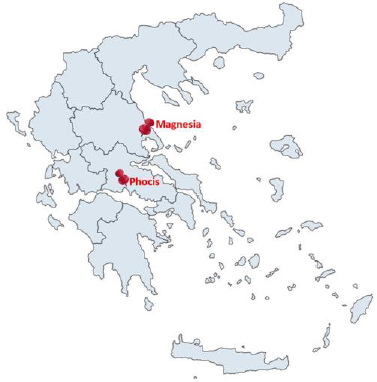
Greece is a major producer of olive oil. Figures published by Eurostat indicate that this country is the fourth largest olive oil exporter in the European Union [18]. Therefore, ensuring that the nation’s olive oil products accord with quality controls through effective regulatory and measuring processes is of immense economic significance to Greece. Moreover, it is essential that Greek olive oil retains consumer confidence by being accurately checked and authentically labeled since VOO is a product for which the value is closely allied to the manner in which it is produced and processed. The most frequently researched olive oil cultivar in Greece is the Koroneiki cultivar [5,9,19,20]. This means that other economically significant varieties have been overlooked including the Amfissis (or Konservolia) cultivar (Olea europaea var. med. rotunda) that is popular across large parts of Thessaly and Central Greece [21]. For this reason, the current study investigates the FA and VC content of VOO samples produced from the Amfissis cultivar originated from the Phocis region of Central Greece and the Magnesia region of Thessaly (Figure 1) using chemometrics. The aim of this study is to make a comparative evaluation of the samples from these two areas to identify the VOOs by their region, thereby rendering it possible to establish the regional authenticity of VOO in Greece.

Figure 1: Map of Greece showing the location of Phocis and Magnesia regions of VOOs samples from the Amfissis olive oil cultivar.

Materials and Methods

Samples

A total of 29 VOO samples were obtained from local olive oil mills under the framework of the research program QuaAuthentic_ GR, during the 2018-2019 harvesting period. The VOO samples were originated from the geographical regions of Magnesia (16 samples) and Phocis (13 samples). Olives were picked by hand or collected in nets at the stage of maturity index 5–6 and processed in selected local olive mills using the three-phase system technology. Samples were collected from November to the end of January and stored in dark glass bottles of 500 mL. The analyses of VOOs were performed soon after the production of olive oil.

Determination of Quality Indices

All the quality indices were determined according to the official method of the Commission Regulation (EEC) No 2568/91 [22]. Free acidity was expressed as % oleic acid and peroxide value was expressed as meq O2/kg. K232, K270 and ΔK were calculated from the absorption at 232–270 nm.

Determination of Fatty Acids

Fatty acid methyl esters (FAME) were prepared according to the official method of the Commission Regulation (EEC) No 2568/91 [22]. FAME were prepared in a screwcap vial, by vigorous shaking of the olive oil solution in hexane (0.1 g in 5 mL) with 0.5 mL of 2 N methanolic KOH. The analysis was performed by gas chromatography utilizing a Perkin Elmer Clarus 500 chromatograph (Perkin Elmer, Waltham, MA, USA) with a flame ionization detector. The column used was Supelco SP-2560 capillary column (75 m × 0.18 mm id × 0.14 μm film thickness) (Supelco, Bellefonte, PA, USA). Helium was used as the carrier gas with a flow rate of 1.5 mL/min. The injection volume used was 1 μL and the injector was operated at 250°C in split mode (20:1 split ratio). The column was maintained at 140°C held for 5 min, heated to 170°C at a rate of 8°C/min, heated to 210°C at a rate of 2°C/min held for 2 min, heated to 250°C at a rate of 20°C/min and held to 250°C for 10 min. The FAs were identified based on their retention times, utilizing a FAME standard mixture (Sigma-Aldrich, St. Louis, MO, USA). The FA content was expressed as a percentage m/m from the peak area.

Analysis of Volatile Compounds

The volatile compounds of VOOs were determined by solid phase microextraction-gas chromatography-mass spectrometry (SPME/GC-MS) in accordance with the method of [19] with few modifications. Five grams of VOO and 1 μL of β-ionone (Alfa Aesar, Ward Hill, MA, USA) along with a micro-stirring bar were introduced into a 15 mL screw top glass vial with PTFE/silicone septa. The SPME procedure was carried out using a divinylbenzene/carboxen/ polydimethylsiloxane (DVB/CAR/PDMS) fiber (Supelco, Bellefonte, PA, USA) with 1 cm length. The vial was placed in a 50˚C water bath and stirred at 700 rpm. The VOO sample was equilibrated for 30 min. Subsequently, the needle of the SPME fiber was inserted into the vial and exposed to the headspace. After 15 min, the fiber was retracted from the vial and inserted into the gas chromatograph. The volatile compounds were analyzed using a Thermo GC-TRACE ultra, coupled with a Thermo Mass Spectrometer DSQ II (Thermo Scientific Inc., Waltham, MA, USA). The desorption conditions were as follows: GC inlet temperature of 260˚C for 3 min in the splitless mode with a 0.8 mm injector liner (SGE International Pty Ltd, Australia).

The column used was a Restek Rtx-5MS, 30 m x 0.25 mm x 0.25 μm (Restek, Bellefonte, PA, USA). Helium carrier gas flow rate was 1.0 mL/min. The column was maintained at 40˚C held for 6 min, then heated to 120˚C at a rate of 5˚C/min, then heated to 160˚C at a rate of 3˚C min, then heated to 250˚C at a rate 15˚C/min and held to 250˚C for 1 min. The conditions of mass spectrometer were: quadrupole temperature: 150˚C; source temperature: 240˚C; transfer line temperature: 290˚C; acquisition mode: electron impact 70 eV and mass range m/z: 35-650. The identification of VC was conducted by the comparison of spectral data and arithmetic index of the VC to those of the Wiley 275 mass spectra library and Adams [23]. Retention index (RI) values of VC were calculated using n-alkane (C8–C20) standards (Supelco, Bellefonte, PA, USA). Quantification of VC was accomplished by dividing the peak areas of the compounds by the peak area of the internal standard (β-ionone) and multiplying this ratio by the initial concentration of the internal standard. The peak areas were obtained from the full scan chromatograph using the total ion current.

Statistical Analysis

Prior to the performance of statistical analysis the data were standardized by the XLSTAT ver. 2020.3.1.0 software (Addinsoft Deutschland, Andernach, Germany). Shapiro-Wilk normality test, Spearman’s rho correlation coefficients and Principal Component Analysis (PCA) were accomplished utilizing the JMP software version 13.0 (SAS Institute Inc., Cary, NC, USA). The mean values and standard deviation of each parameter from the quality indices, FAs, and VCs were calculated in Microsoft Excel based on the samples of each region (n=16 for Magnesia and n=13 for Phocis).

Results

Conventional Quality Parameters

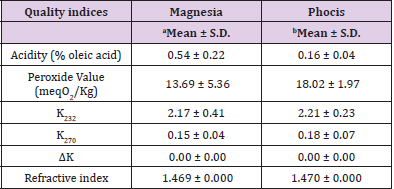
The analysis of conventional quality parameters is presented in Table 1. Free acidity of olive oil samples ranged from 0.54±0.22 to 0.16±0.04 and the peroxide values were between 13.69±5.36 to 18.02±1.97 meq O2/kg oil. K232 spectroscopic value of the samples used in this study ranged from 2.17±0.41 to 2.21±0.23, and the K270 values were between 0.15±0.04 and 0.18±0.07. ΔK was 0.00±0.00 for all samples analyzed. The refractive index of olive oil samples ranged from 1.469±0.000 to 1.470±0.000.

Table 1: Mean values and standard deviation (S.D.) of conventional quality indices of VOO samples from the Magnesia (n=16) and Phocis (n=13) regions.

Note: an= 16 samples; bn=13 samples.

Fatty Acid Composition

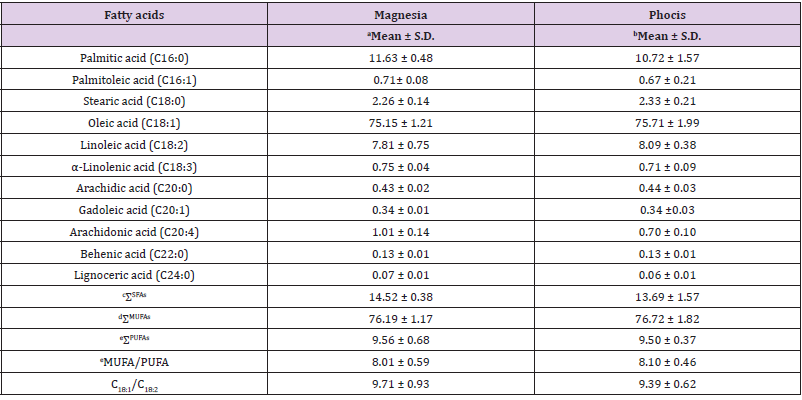
The analysis of FA composition revealed the presence of eleven FA (Table 2), with a small variance in composition as a result of the different geographical origin of VOOs. Oleic acid (C18:1) was the dominant FA for both Magnesia (75.15% ± 1.21) and Phocis (75.71% ± 1.99) regions. Slightly higher concentrations of palmitic acid (C16:0), α-linolenic acid (C18:3) and arachidonic acid (20:4) were observed in Amfissis VOO samples from the Magnesia region. The major saturated fatty acids (SFA) were palmitic acid (C16:0) determined in highest concentration in Magnesia (11.63% ± 0.48) and stearic acid (C18:0) with the highest concentration observed in the samples from the Phocis region (2.33% ± 0.21).

Table 2: Mean values and standard deviation (SD) of fatty acid composition (%) of VOO samples from the Magnesia (n=16) and Phocis (n=13) regions.

Note: an= 16 samples; bn=13 samples; cΣSFAs= Sum of Saturated Fatty Acids; dΣMUFAs = Sum of Monounsaturated Fatty Acids; eΣPUFAs: Sum of Polyunsaturated Fatty Acids; eMUFA/PUFA: Monounsaturated Fatty Acids/Polyunsaturated Fatty Acids.

Analysis of Volatile Compounds

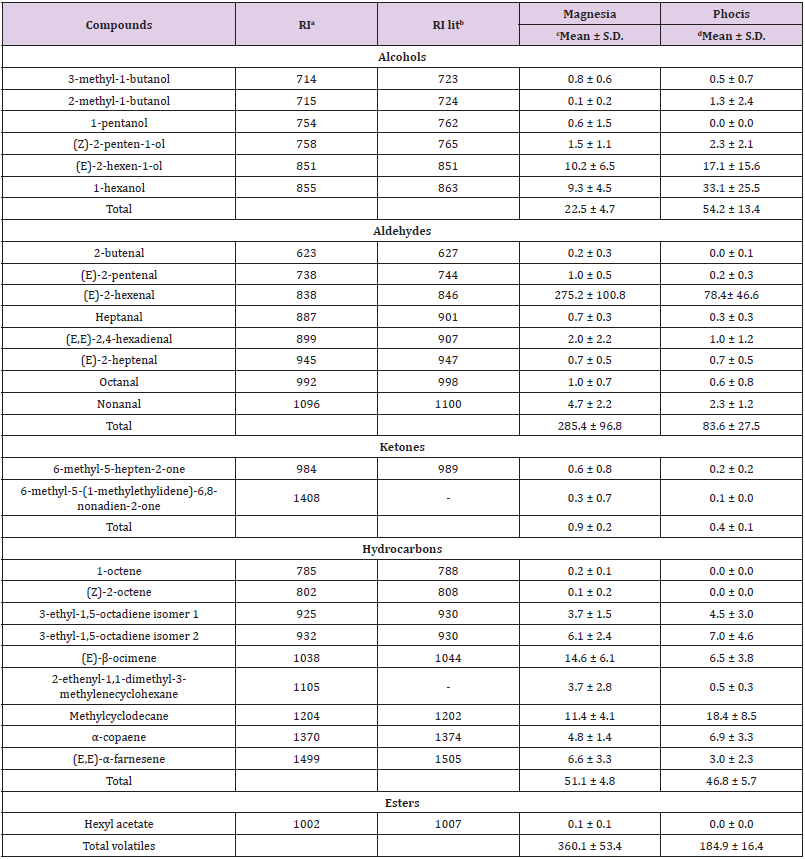
The results from the determination of volatiles is presented in Table 3. Twenty six VCs (6 alcohols, 8 aldehydes, 2 ketones, 9 hydrocarbons, 1 ester) were identified and semi-quantified using the SPME-GC-MS technique. The prominent VCs from both geographical regions (Magnesia and Phocis) were (E)-2-hexenal, (E)-2-hexen-1-ol, 1-hexanol, (E)-β-ocimene and methylcyclodecane.

Table 3: Mean values (mg kg-1) and standard deviation (S.D.) of identified volatile compounds in Amfissis VOO samples originated from the Magnesia (n=16) and Phocis (n=13) regions.

Note: aRI = tentative identification by retention index; bRI lit. = literature retention index; cn= 16 samples; dn= 13 samples

Spearman’s rho Correlation Coefficients

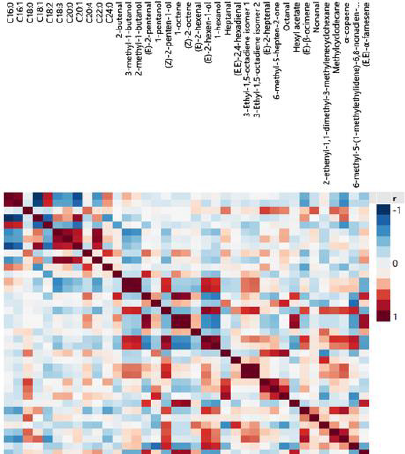
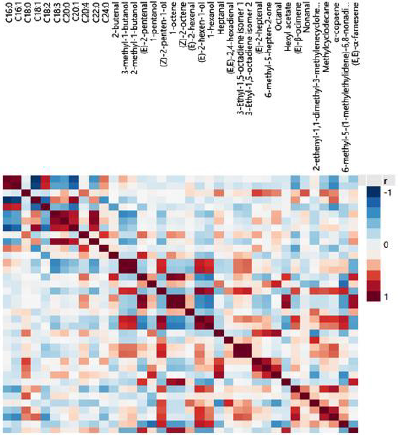
Correlations among the FA and VC concentrations from the regions of Magnesia (Figure 2) and Phocis (Figure 3) were studied using Spearman’s rho correlation coefficients in order to highlight similarities and differences between the samples. The Spearman’s rho correlation coefficients were selected over Pearson correlation coefficients as small deviations from normality were observed using the Shapiro-Wilk normality test. Strong positive (p ≤ 0.01) correlation patterns were observed for the FA arachidic acid (20:0) – α-linolenic acid (18:3) and arachidic acid (20:0) – behenic acid (22:0), whereas strong negative correlation patterns were observed between gadoleic acid (20:1) – palmitic acid (16:0) in both regions. Regarding VCs, strong positive correlation patterns were observed between the two isomers of 3-ethyl-1,5-octadiene, as well as for (E)-2-hexen-1-ol and 1-hexanol, for the VOOs from Magnesia and Phocis regions. In the VOOs from the Phocis region, strong antagonistic relationship was recorded between palmitic acid (16:0) – oleic acid (18:1) and strong positive correlations were observed for the FA, α-linolenic acid (18:3) – behenic acid (22:0) and the VCs (E)-2-pentenal – 1-octene, (E)-2-pentenal – (Z)-2-octene, hexyl acetate – 1-octene, hexyl acetate-(Z) – 2-octene, α-copaene – methylcyclodecane and (E)-2-hexen-1-ol-(Z) – 2-penten-1-ol. Differences were observed in the VOOs from the Magnesia region. Strong positive correlations were recorded among the compounds: stearic acid (18:0) – arachidic acid (20:0), stearic acid (18:0) – behenic acid (22:0), behenic acid (22:0) – 6-methyl-5-hepten-2- one, 6-methyl-5-hepten-2-one – 1-pentanol, 6-methyl-5-hepten-2- one – hexyl acetate, hexyl acetate – 1-pentanol, (E)-2-hexen-1-ol – 1-hexanol, (E)-2-hexen-1-ol – heptanal and (E)-2-hexen-1-ol – methylcyclodecane. Strong negative correlation was found between palmitic acid (16:0) and hexyl acetate.

Figure 2: Color map on correlations among fatty acids and volatile compounds from Amfissis VOOs originated from the Magnesia region.

Figure 3: map on correlations among fatty acids and volatile compounds from Amfissis VOOs originated from the Phocis region.

Principal Component Analysis

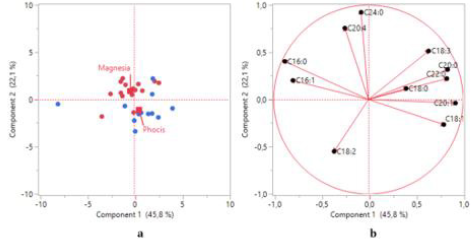
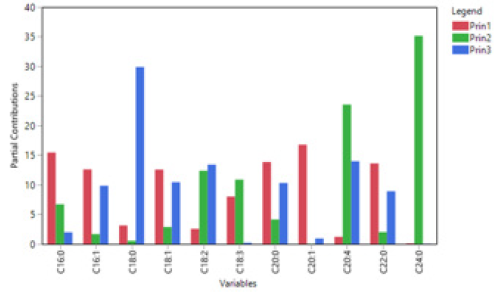
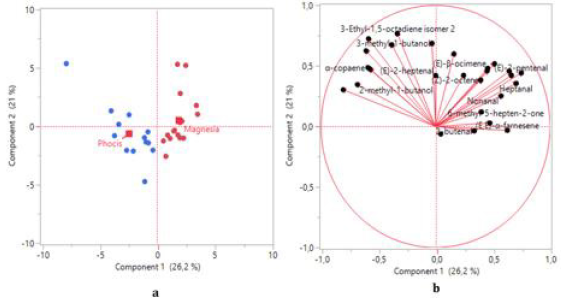
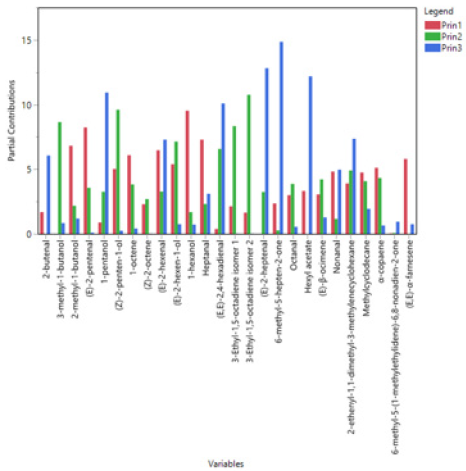
PCA was used to study possible grouping of VOO samples according to their geographical origin. Based on the data obtained from the FA composition the first two principal components (Figure 4) explained 67.9% of the total variance. According to the scores plot (Figure 4a), a separation of samples to a certain extent has been achieved, although it is evident that several VOOs from Phocis are classified in Magnesia region. The first two principal components contribute in the differentiation of samples, though the second principal component distinguishes the VOOs to a greater extent (Figure 4a). The FAs that mainly contribute in the separation of samples at the first principal component (Figures 4b & 5) are gadoleic acid (20:1), palmitic acid (16:0), behenic acid (22:0), palmitoleic acid (16:1), arachidic acid (20:0) and oleic acid (18:1). In the second principal component the most important FAs are lignoceric acid (24:0) and arachidonic acid (20:4). Strong negative correlations between palmitic acid (16:0) – oleic acid (18:1) and palmitic acid (16:0) – gadoleic acid (20:1) were observed in the loadings plot (Figure 4b), confirming the Spearman’s rho correlations reported in this study. An efficient separation was observed from the application of PCA on the concentrations of VCs (Figure 6a). The first two principal components explained the 47.2% of the total variance. From the scores plot (Figure 6b) we observed that the majority of the VCs are positively correlated which also confirms the Spearman’s rho coefficients reported previously. The first principal component is the most important for the separation of VOOs. The VCs that mainly contribute in the separation of samples are 1-hexanol, (E)-2-pentenal, heptanal, (E)- 2-hexenal and (E,E)-α-farnesene (Figures 6b & 7).

Figure 4: a) Scores plot and

b) loadings plot obtained from principal component analysis of VOO samples based on fatty acid composition.

Figure 5: Partial contribution of fatty acids in the first three principal components.

Figure 6:

a) Scores plot and

b) loadings plot obtained from principal component analysis of VOO samples based on volatile compounds.

Figure 7: Partial contribution of volatile compounds in the first three principal components.

Discussion

Conventional Quality Parameters

The quality parameters of samples (Table 1) were within the limits described in Commission Regulation (EEC) No 2568/91 [22] for extra virgin olive oil (EVOO) and VOO. Free acidity of samples was within the limits of ≤ 0.8 and ≤ 2.0 for EVOO and VOO, respectively, while the peroxide values were in accordance with the limits of ≤ 20 meq O2/kg for EVOOs and VOOs. Limits for the spectroscopic values K232, K270, and ΔK according to EEC No 2568/91 are ≤ 2.50, ≤ 0.22, and ≤ 0.01 for the EVOO, and ≤ 2.60, ≤ 0.25, and ≤ 0.01 for VOO. Therefore the samples were classified as VOOs.

Fatty Acid Composition

The % mean values of FA of VOO samples were within the limits of the international olive oil council [24]. High levels of MUFA/ PUFA and oleic/linoleic acid (C18:1/C18:2) were observed in both regions indicating the high performance of VOOs against oxidative deterioration [25]. Limited research exists for the FA composition of olive oil from Amfissis cultivar. In a study from Andreou, et al. [26] the shelf-life of VOO extracted by non-thermal pretreatments from Amfissis, Tsounati and Manaki cultivars was evaluated. The oleic acid (18:1) and linoleic acid (18:2) levels for the olive oil samples from the Amfissis cultivar using the traditional olive oil extraction technology were 70.68% and 12.66%. In our study higher levels of oleic acid (18:1) and lower levels of linoleic acid (18:2) were observed in VOOs from both Magnesia and Phocis regions.

Analysis of Volatile Compounds

The flavor of VOO is attributed to a wide range of VC important for its quality assessment. Previous research reports indicated that the aldehydes exist in higher concentrations in olive oil compared to other flavor compounds [27]. This fact is confirmed in the current study since the total concentration of aldehydes determined in this study was 285.4 ± 96.8 mg kg-1 for Magnesia region and 83.6 ± 27.5 mg kg-1 for Phocis region, which is mainly attributed to the high levels of (E)-2-hexenal, a C6 aldehyde formed through the lipoxygenase pathway (LOX) pathway. This compound is responsible for the characteristic “green note” of olive oil [28]. The high levels of (E)-2-hexenal has been previously observed. In an earlier study of Greek olive oil it is reported that Amfissis olive oil samples had the highest concentration of (E)-2-hexenal compared to Koroneiki and Megaritiki olive oil samples [7]. However, the flavor of olive oil is not exclusively defined from the high concentrations of VCs. Other constituents, such as alcohols, ketones and esters are contributing in the flavor as well. The C6 alcohols (E)-2-hexen-1-ol and 1-hexanol were the most prominent alcohols in this study which are produced through the LOX pathway and provide the characteristic “green” aroma and astringent-sour flavor of olive oil [29]. The fruity, sweet flavor is a result of the hexyl acetate whereas the presence of 6-methyl-5-hepten-2-one, formed from the degradation of terpenic alcohols, is responsible for the pungent and fruity odor of olive oil [28,29]. High levels of the terpenes (E)-β-ocimene and (E,E)-α-farnesene were detected in VOOs from Magnesia. These compounds are biosynthesized via the mevalonic acid pathway and are highly dependent on the botanical origin [30,31].

Spearman’s rho Correlation Coefficients

The results obtained from the Spearman’s rho correlation coefficients of FA may be attributed to the variance of activity of the enzymes called fatty acid desaturases that regulate the biosynthesis of FAs during the maturation of olives. Oleic acid (18:1) and linoleic acid (18:2) are inversely connected in a way that the increase of the one FA will induce the decrease of the other. The first FA that is produced during biosynthesis of FAs is palmitic acid (16:0), which is converted to stearic acid (18:0). Subsequently, the FAs oleic acid (18:1), linoleic acid (18:2) and α-linolenic acid (18:3) are produced by the catalyzing activity of FA desaturases (stearoyl-ACP Δ9-desaturase, oleate desaturase, linoleate desaturase) [32-34]. The strong positive correlation between arachidic acid (20:0) and stearic acid (18:0) has been previously reported from Stefanoudaki, et al. [9] and Kritioti, et al. [35] who studied olive oil samples from Koroneiki, Mastoides and Cypriot cultivars.

Principal Component Analysis

PCA is a multivariate chemometric tool that is commonly used in classification problems. Gurdeniz, et al. [11] effectively applied the PCA method for the geographical separation of olive oil samples of Turkish origin, based on FA composition. The authors reported the FAs palmitoleic acid (16:1), oleic acid (18:1), linoleic acid (C18:2) and α-linolenic acid (C18:3) as the most significant for the differentiation of samples. In a study of Sicilian olive oils the PCA method was also successfully applied for the geographical differentiation and the FAs palmitoleic acid (16:1), oleic acid (18:1) and linoleic acid (C18:2) were the most influential variables for the separation of samples [10]. The high contribution of palmitoleic acid (16:1) for the geographical differentiation of samples is also confirmed in the present study. As previously mentioned, efficient separation of VOO samples from Phocis and Magnesia regions has been achieved in the current study based on the aldehydes (E)-2-pentenal, (E)-2-hexenal, and the alcohol 1-hexanol. These compounds are produced through the LOX pathway which involves the enzymes lipoxygenase and hydroperoxide lyase that oxidize and cleave, respectively, polyunsaturated fatty acids such as linoleic acid (18:2) and α-linolenic acid (C18:3) to yield aldehydes. The aldehydes are then reduced to alcohols by the enzyme alcohol dehydrogenase [36]. 1-hexanol is produced from the polyunsaturated FA linoleic acid (18:2), while the aldehydes (E)-2-pentenal and (E)-2-hexenal are produced from the oxidation of α-linolenic acid (C18:3).

Aldehydes are considered as important compounds for the authentication of olive oil. Şişik Oğraş, et al. [6] reported an effective geographical separation of olive oil samples of Turkish origin from various locations (Mediterranean, Aegean, Southeastern Anatolia, Marmara, and the Black Sea) based on volatile composition. Aldehydes, and especially (E)-2-hexenal were the most significant compounds for the separation of samples. Vichi, et al. [37] used PCA for the differentiation of VOOs from two geographical areas of Northern Italy. The authors concluded that aldehydes, including (E)-2-hexenal, exhibited a strong dependence on geographical origin of samples, therefore indicating the influence of environmental growth conditions on the activity of the enzyme alcohol dehydrogenase. The aldehyde heptanal, a product derived from the oxidation of linoleic acid (18:2) [38], was also a significant VC for the classification of VOOs. The sesquiterpene hydrocarbon (E,E)-α-farnesene is another important VC for the geographical differentiation of VOOs in the current study which is produced through the mevalonic acid pathway [31]. Terpenes can be useful markers for the authentication of geographical origin [39]. Terpenoid hydrocarbons have been effectively used for the geographical separation of extra virgin olive oils from West Liguria with the application of the PCA method [40].

Conclusion
In the present work, the analysis of the fatty acid composition and the volatile compounds profile of VOO samples of Amfissis cultivar originated from the Magnesia and Phocis regions was performed and studied using chemometrics. The high levels of MUFA (76.19% for Magnesia and 76.72% for Phocis) and MUFA/ PUFA ratio (8.01% for Magnesia and 8.10% for Phocis) indicate the potent high oxidative stability of the VOOs from this cultivar. The volatile compounds profile from both regions was characterized by the high concentration of aldehydes, especially (E)-2-hexenal, a compound that provides the characteristic “green note” of olive oil. The determination of Spearman’s rho correlation coefficients between fatty acids and volatile compounds was performed separately for the two regions and eventually revealed various differences and similarities possibly associated with the enzymes responsible for the metabolism of fatty acids and the production of the volatile compounds by different metabolic routes. The application of PCA algorithm on FAs content was not very effective for the geographical separation of samples. However, a clear separation of VOOs was obtained based on the composition of the volatile compounds. The aldehydes (E)-2-pentenal, heptanal, (E)-2-hexenal, the alcohol 1-hexanol, and the sesquiterpene (E,E)- α-farnesene had the highest contribution for the differentiation of VOOs according to geographical origin. The present research study highlights the unique characteristics of Greek olive oil and promotes the endeavors for its authentication.

For more Articles on : https://biomedres01.blogspot.com/
Tuesday, May 17, 2022

Acceptance of COVID 19 Vaccine in India

 Acceptance of COVID 19 Vaccine in India

Short Communication
The COVID-19 pandemic caused by severe acute respiratory syndrome coronavirus 2 (SARS-CoV-2) has infected more than 108 million people in over 150 countries. In Malaysia, as of February 15, 2021, more than 261,805 confirmed cases with 958 deaths had been reported [1,2]. The pandemic continues to threaten the healthcare system with catastrophic economic, education, and social consequences worldwide [3,4]. Currently, no curative treatment exists for COVID-19 infection [5-7]. Therefore, a safe and effective prophylactic vaccine is urgently needed to contain the pandemic, which has had devastating medical, economic, and social repercussions [8]. To date, several vaccines have been developed and approved for emergency immunisation [9-11]. This has given a glimpse of hope for preventing the spread of COVID-19 infection. This study sought to assess the acceptance of the COVID-19 vaccine among the general population of Kashmir.

Objective

The acceptance of the COVID-19 vaccine among the general population of Kashmir

Methods

This cross-sectional study was conducted from May 15-30, 2021. A door-to-door survey in conducted in two areas (one rural and one urban) following all standard operating procedures. The data was collected according to a predesigned checklist and entered in Excel sheets. Data was analyzed by SPSS 20 software.

Inclusion Criteria

The target participants were adults aged 18 years and above.

Exclusion criteria

Those who did not gave informed consent and refused to participate in the survey.

Results

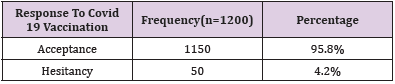
A total of 1200 completed responses were collected. Most respondents acquired information regarding COVID-19 through social media (85.0%), mass media (90%), friends and family (70.3%) and HCWs (79.0%). COVID-19 vaccine acceptance (95.8%) was substantially higher than hesitance (4.2%). Hesitant respondents reported they were concerned about the side effects (40%), safety and lack of information regarding the vaccine (20%). Some were not willing to accept vaccination due to religious (8.8%) and cultural (4.8%) reasons, belief in traditional remedies (3%) and fear of injection (16.1%).

Discussion

Herd immunity is also known as ‘population immunity’. For herd immunity to occur, the population coverage required through vaccination varies across diseases and is dependent on the basic reproduction number (R0), vaccine efficacy and duration of immunity [12]. The proportion of the population that must be vaccinated against COVID-19 to begin inducing herd immunity is unknown. Thus, the challenge to determine the sufficient proportion of the population to create such immunity by mass vaccination remains. Nevertheless, the larger the number of vaccinated individuals, the better the immune coverage. Vaccination is recognized as an effective way to reduce and eliminate the burden of COVID-19. However, the success of a vaccination programme depends on the willingness of the population to be vaccinated. Out of 1200 respondents, the acceptance rate of the COVID-19 vaccine was 95.8%, much higher than the hesitance rate (4.2%). (Table 1) This acceptance rate corresponds to studies conducted among the general population in Indonesia, China, Europe, and Saudi Arabia [13-16].

Table 1: COVID-19 vaccine acceptance (95.8%) was substantially higher than hesitance (4.2%).

Conclusion
The acceptance rate of the COVID-19 vaccine among the Kashmiri population who participated in this study was high.

For more Articles on : https://biomedres01.blogspot.com/
On the Poaching of and the Threats Facing the Chukar Partridge (Alectoris Chukar J.E. Gray, 1830) in Palestine

  On the Poaching of and the Threats Facing the Chukar Partridge ( Alectoris Chukar J.E. Gray, 1830) in Palestine Introduction Palestine ...