Showing posts with label Family medicine Physical medicine and Rehabilation Preventive medicine Regenarative medicine Journals on Psychology. Show all posts

Thursday, August 19, 2021

Immunochemical Characterization of Licorice Root Proteins and Assessment of Their Effects on Proliferation of Cancer Cells


Immunochemical Characterization of Licorice Root Proteins and Assessment of Their Effects on Proliferation of Cancer Cells 

Introduction

Cancer is a serious pathological state and is regarded as the first line causative mechanism of death in developed nations and also as the second primary agent of mortality in developing countries [1,2]. Epidemiological studies show that increasing the life expectancy in patients with end stage cancers is almost impossible at the present time, even though, great promotion was achieved in treatment regimens [3]. On the other hand, Ethno medicinal herbs, such as Licorice (Glycyrrhiza glabra), as low-cost plant medicinal therapeutics could be used to prevent or aid in healing of low-grade cancers. Licorice can even be regarded as an operative botanical dietary for chemoprevention. An improving number of evidences confirm that licorice exhibits anti-carcinogenic properties. The root of licorice has been one of promising medicinal plants and were globally applied as natural medication, thus could be pointed out as ‘The grandfather of herbs’ [3]. It grows naturally in China, Japan, Russia, Iran, Spain, and India [4]. It was shown that Licochalcone A isolated from licorice showed in vitro inhibitory activity in HeLa cells [5], and induced apoptosis in human cervical cancer cells [6] and can prevent skin tumor initiation in mice [7].

One of the active components of Licorice, 18β-Glycyrrhetinic acid, suppresses cell proliferation through inhibiting thromboxane synthase in non-small cell lung cancer [8]. Furthermore, oral administration of 1.0% aqueous solution of licorice to female A/J mice in drinking water caused significant inhibition of tumor incidence [9]. The medicinal outcome of licorice, involving antiinflammatory, antiviral, and hepato-protective results, was demonstrated previously. Recently anti-cancer features of several chemical components of licorice, with proteinous or flavonoids structures were approved both in vitro and in vivo [10-12]. Evaluation of the apoptotic effects of licorice extract and its derivatives on a number of cancer cells were encouraging [13]. Studies on rats showed that some components of licorice could reverse PI3K, MMK4, MMK7, JNK1, mTOR, and Cdk2 functionalities by minimizing carcinogenesis [14]. Recently, it was shown that some protein fractions and total extract of licorice root can significantly prevent the proliferation of a couple of colon cancer cell lines (HT 29 and CT 26) and induce apoptosis [10]. Hemo-preventive approach using non-toxic botanicals is a novel therapeutic strategy for cancer management which may reduce morbidity and mortality of the patients or at least increase their life quality. In this study, we investigated the growth inhibitory effects of the protein fractions of licorice root extract on cancer cell lines.

Materials and Methods

Materials

Powder of Licorice root extract was prepared as previously described (REF). The reagents and chemicals were purchased from Sigma-Aldrich, Orange, Invitrogen, or Nunc companies. Buffers used for fast protein liquid chromatography analysis were of analytical grade. Gastrointestinal cancer cell lines including AGS, KYSE-30, and HCT-116, were purchased from National Cell Bank of Iran (Pasture Institute, Tehran, Iran) and aseptically propagated in RPMI 1640 medium (Invitrogen, USA), supplemented with 10% fetal bovine serum (Invitrogen, USA), 1X penicillin/streptomycin (Invitrogen, USA), and then the culture flasks were kept in a humidified CO2 incubator in standard conditions.

Extract Preparation

To prepare a standard protein extract, 1g of the fine powder of licorice root extract was mixed in phosphate buffered saline (PBS) pH 7.0 and stirred for 48 h at 4°C, on an orbital shaker at 800 rpm [10]. Then the homogenate was clarified by centrifugation at 13000 x g for 10 minutes and the clear supernatant was collected as raw extract. The pigments were removed by dialysis against PBS, overnight and the protein concentration of the extract was determined by Bradford method.

Protein Fractionation by FPLC

Licorice protein extract was fractionated by ion exchange chromatography using fast protein liquid chromatography (FPLC) system. In briefly, GE Healthcare Biosciences, AKTA Prim Plus FPLC system equipped with a CL-6B DEAE-Sepharose 6B column (Sigma Aldrich, USA) was used for fractionation of the extract. First of all, the column washed and equilibrated with starting buffer (20mM Tris-HCl pH 8.0), then the dialyzed extract loaded onto the column following filtration through a 0.45μm filter. When the optical density of the elutes in 280 nm reached to the baseline, an increasing gradient of NaCl (prepared in the starting buffer) was added and the flow rate was adjusted to 1ml/min and typical peaks were isolated. The purity and protein contents of the peaks were checked by sodium dodecyl sulphate polyacrylamide gel electrophoresis (SDS-PAGE).

SDS-PAGE and Electro-Elution

Fractionated proteins were further resolved on 10% SDS-PAGE. Following colloidal Coomassie blue staining the desired protein bands were cut and removed from the gel and after destining were subjected to mass spectrometry analysis [10].

Protein Characterization by Mass Spectrometry

Following in gel digestion, Mass spectrometry analysis was performed using an ABI 4800 MALDI TOF/TOF analyzer (Applied Biosystems, Foster City, CA, USA). Mass spectra were recorded in reflector positive mode with a scanning range of 900-4000 Da. Five monoisotopic precursors from each purified fraction with signal/noise (S/N) ratios greater than 200 were selected for mass spectrometry (MS/MS). Peptide mass fingerprinting (PMF) of the target proteins were determined by searching MASCOT database and employing Biotools software (Bruker Daltonik GMBH, Germany).

Cytotoxicity Assay

The anticancer activity of the fractionated proteins was determined by MTT dye assay (Sigma- Aldrich, Germany). The cancer cell lines and peripheral blood mononuclear cells (PBMC) were seeded in triplicate in 96 well plates with cell densities of 5x10³ and 5x10⁴ cells/well in 200μl volume, respectively. Following an overnight incubation, cells were treated with each of protein fractions in different concentrations (2,5, and 10μg/ml). Then 20μl of MTT stock solution (5mg/ml) was added to each well and incubated for 4h. Afterward, 100μl of DMSO was added to each well and the plates incubated for further 15 minutes on a shaker. Finally, the absorbance was measured at 570 nm using microplate reader (Bio-TEK, USA).

Apoptosis Assay

To determine cytotoxic effects of the fractions, cancer cell lines as well as PBMC were seeded with cell densities of 4x10⁴ and 1.5 x10⁵ cells/well in 24-well culture plate in 1ml volumes, respectively and the cells were treated as described above and incubated overnight in standard conditions. For detection of apoptosis, cells were stained simultaneously with FITC-conjugated Annexin V and propidium iodide (PI; Invitrogen, USA) according to the manufacturer’s instructions. Total numbers of apoptotic cells were determined by calculation of Annexin V+ and PI- cells (Q3, as early apoptosis events) together with Annexin V+ and PI+ (Q2, as late apoptosis events) cells.

Statistical Analysis

All experiments were performed in triplicate. Data from cell viability and flow cytometry analysis were illustrated as mean ± standard deviation (SD). SPSS version 24 (IBM) were used for statistical analysis and Graph Pad Prism software (Version 6) was used to draw the plots. Student’s t-test used for comparison of the difference between the results and finally, difference with P value less than 0.05 regarded as statistically significant.

Results

Identification and Characterization of Licorice Proteins by Mass Spectrometry

The peptide mass fingerprinting (PMF) of the SDS-PAGE resolved proteins (Figure 1) were obtained by MALDI-TOF-MS. The spectrum was emitted from in-gel trypsin digestion. The spectra of five protein fractions were searched against the NCBInr database using MASCOT. We restricted the quest to Viridiplantae (4046923 sequences) which finally yielded just three matches. In brief, beta-amylase-like isoform X1(67kDa), chitinase A(30kDa), and dirigent protein 21-like (20kDa) were detected. During the protein identification and characterization procedure for our 5 protein fractions, the spectra were searched against the NCBInr database restricted to Viridiplantae (4046923 sequences) and yielded just three matches. The detected peptides matched to dirigent protein 21-like, a protein which is found in the plant is known as Arachis duranensis, beta-amylase-like isoform X1, a protein which is found in Cucumis melon plant and chitinase A which is also found in the plant called Ananas comosus, respectively (Table 1). But we did not get any significant matches from the other two fractions, (fraction 3 and 4) by MASCOT Search engine in the NCBInr database.
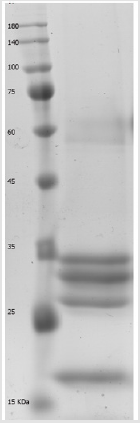
Figure 1: Separated protein fractions from licorice root extract by 12% SDS-PAGE polyacrylamide gel electrophoresis. M; molecular weight marker.
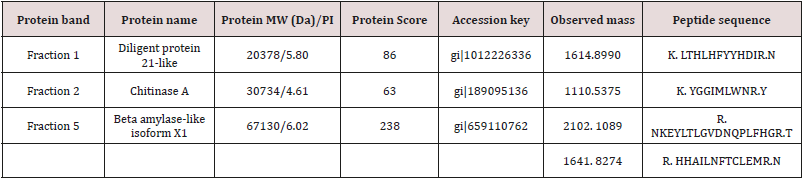
Table 1: The three characterized protein fractions result from MALDI-TOF-Ms and MASCOT Search engine in the NCBInr database.

Anti-Proliferative Effects of The Licorice Protein Fractions

The MTT assay demonstrated that 2-5μg/ml concentrations of beta amylase-like isoform X1 (67kDa) have a significant antiproliferative effect on AGS and KYSE-30 (P<0.05) cells, without any adverse effects on normal PBMC (P > 0.05). Furthermore, 2μg/ml of dirigent protein 21-like (20kDa) showed a significant inhibitory effect on each of the studied cancer cell lines (P<0.05). While, Chitinase A (30kDa) showed anti-proliferative effects on both cancerous cells and normal PBMCs (P<0.05). Statistically, at 2μg/ml the anti-proliferative effect of dirigent protein 21-like was more significant on cancerous cells than other simultaneously characterized proteins. Treatment with 2μg/ml of dirigent protein 21-like proved that the viability of the cancerous cells was considerably less than control PBMC and they were more prone to apoptosis (Figure 2).
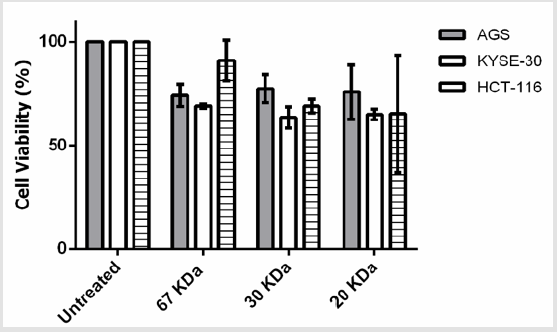
Figure 2: Effects of the three characterized protein fractions on the viability of the AGS, KYSE-30, HCT-116 cells in vitro. Cells were treated with 2μg/ml for 24 hr.

Licorice Proteins Induce Stimulated Apoptosis of Cancer Cells

After proving that fraction containing 30, 20 and 67kDa proteins were capable to decrease the viability of cancerous cells; we checked their effect on stimulated apoptosis. To achieve this, the cells were incubated for 24h with the same concentration (2μg/ml) of the aforementioned protein fractions. Purified dirigent protein 21-like, beta-amylase- X1 like isoform and chitinase A were capable to induce apoptosis in the target cancer cell lines (Figure 3). Table 2 showed the comparison of the mean ± standard deviation and p-values of the treated (2μg/ml) and the untreated cancer cell lines and PBMCs in induction of apoptosis. As shown in Figure 4, very similar to the results of anti-proliferative assay, only 30 KDa protein induced apoptosis in normal PBMC cells (Figure 4).
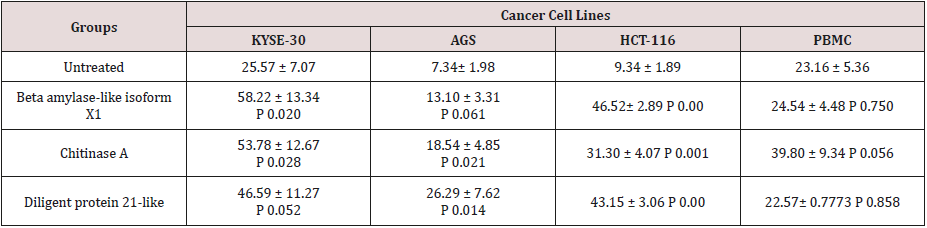
Table 2: Comparison of the mean μ standard deviation and p-values of the treated (2g/ml) and the untreated cancer cell lines and PBMCs in apoptosis assay.
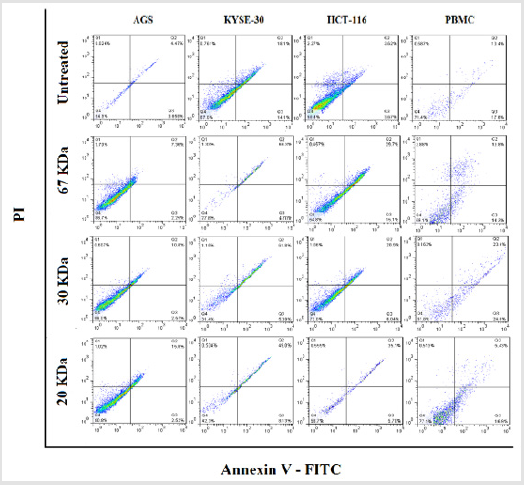
Figure 3: The three characterized protein fractions from licorice root extract induced apoptosis in gastro intestinal cancer cell lines. Cells were treated with 2μg/ml for 24hr.
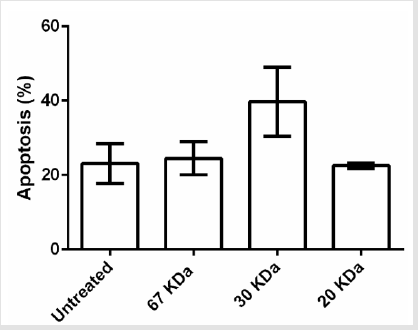
Figure 4: Effects of fractions on PBMC apoptosis. Based to results, just 30 KDa fraction was induced apoptosis in PBMC normal cells.

Discussion

Since gastrointestinal cancer is seriously affecting a large number of people annually, introducing consumable plant sources and advocating a novel anti-cancer treatment might be helpful. In spite of an up-to-date improvement in control of carcinogens agents, the growing frequency and comparatively poor efficacy of chemotherapy have pushed the researchers for development of unique and promising methods. The majority of chemically cytotoxic medications which are commonly applied for cancer treatment have considerable adverse effects. So, it is ideal to look for development of innovative formulations from natural plant sources with significance functionality and minimal side effects [15]. Licorice is a well-known herbal medicine with considerable anti-inflammatory, anti-microbial, anti-fungal, antiviral and anticancer activities [16].

A number of herbal medicinal compounds have been assessed as anti-cancer agents versus HCT 116, esophageal and AGS cancer cells. Alsheri et al. [17] shown that Cichorium endivia L. phenolic extracts which involve a mixture of phenolic compounds have antiproliferative property on HCT-116 cancer cells. Bandopadhyaya et al. [18] have demonstrated that methanolic extracts of C. camphora, C. roseus and E. officinalison shows anti-proliferative activity on human colorectal cancer cells (HCT116) [18]. Sheng Li et al. [19] also showed that Crocetin applies a significant chemo-preventive upshot towards esophageal cancer via stopping cell proliferation, dissemination, and initiation of apoptosis [19]. In another study, Faried et al. [20] confirmed that the Gallic acid obtained from Indonesian medicinal plant, Phaleria macrocarpa, has antitumor outcomes on TE-2 as human esophageal cancer cells [20]. Heidari et al. [21] have reported Ferulago angulata Boiss extract has the anti-proliferative role and induces apoptosis on gastric cancer cell line (AGS) [21]. Kim et al. [22] also shown that ethanol extract of Rhus verniciflua Stokes brought on a dose-dependent reduction in the cell viability (IC50: 50μg/mL) and activated apoptosis through the intrinsic apoptosis pathway in human gastric cancer cells [22].

In another research, a couple of ingredients isolated from licorice named glycyrrhetinic acid and glycyrrhizic acid could increase death of cancer cells, following 24 and 48 hours of incubation and initiate apoptosis and cell cycle arrest in G1 phase. This might be because of an elevation in the PARP (Poly ADPribose polymerase) and caspase-3 expression and the reduction of Bcl-xl, BCL2, cyclin D1 and cyclin E expression [23]. Khazraei- Moradian et al. [10] also showed that the licorice protein fractions brought the growth inhibition effect and induction of apoptosis in gastrointestinal cancer cell lines such as CT 26 and HT 29 [10]. Various non-protein licorice compounds most certainly revealed to acquire a good number of valuable activities which can include antioxidant [24], and antitumor [25] capabilities. The final result of non-protein licorice constituents on combating cancer was already explored quite a lot [26] and well indicated that it could cut back tumor growth and increase the lifelong of cancer victim mice [27].

Quite a lot of researchers have proven that non-protein ingredients obtained from the licorice root such as flavonoid, and polysaccharides have the ability to induce apoptosis in cancer cells, consequently being able to reverse the growth of cancer cells [28]. Aside from that, a number of investigations revealed that licorice and its bioactive constituents restrain cancer cell growth through induction of apoptosis, cell cycle arrest, and autophagy [29,30]. In brief, in this research, we characterized three proteins from the licorice root. A couple of them namely; dirigent protein 21-like and beta amylase-like isoform X1 showed a significant anti-proliferative effect and could induce apoptosis on the aforementioned cancerous cells with non-significant side effects on the normal cells at lower concentrations (up to 2μg/ml). This result was in consistency with our previous findings [10].

Conclusion

Our findings revealed that some protein fractions of licorice root extract could block proliferation of gastrointestinal cancer cells and induce their apoptosis. Furthermore, the application of FPLC together with sequencing data from MALDI-TOF mass spectrometry (MS) may open a new horizon for production pf recombinant forms of the characterized proteins for future studies.

Acknowledgement

This study was financially supported by The International Campus of Tehran University of Medical Sciences (Grant # 32518). We would like to convey our gratitude to Immunology, Asthma & Allergy Research Institute personnel.

 For more Articles: https://biomedres01.blogspot.com/


Wednesday, August 11, 2021

Assessment of Patient Satisfaction with Nursing Care in Selected Wards of the Lagos University Teaching Hospital (Luth)


Assessment of Patient Satisfaction with Nursing Care in Selected Wards of the Lagos University Teaching Hospital (Luth) 

Introduction

Health care is changing rapidly and the need to improve quality in its delivery is increasing. Patient satisfaction is a central indicator for health care quality and reflects the ability of the provider to meet the patients’ needs [1]. Patient satisfaction is defined as the extent of the resemblance between the expected quality of care and the actual received care. Patient satisfaction with nursing care is of great importance to any health care agency because nurses comprise most health care providers and they provide care for patients 24 hours a day [2]. Patients are easier to serve if they feel their needs are being met. Patient satisfaction has been used as an indicator of quality services provided by health care personnel in tertiary hospitals. The most important predictor of patient’s overall satisfaction with hospital care is particularly related to their satisfaction with nursing care [3] Studies of the quality of nursing care are increasing in importance as a component of health care research. The consumer’s appraisal of services is being considered in assessments of quality. Thus, evaluating the quality of nursing care involves the measurement of its benefits to patients and the society at large [4] Assessing to what extent patients are satisfied with health services is clinically relevant, as satisfied patients are more likely to comply with treatment, take an active role in their own care, to continue using medical care services and stay within a health provider (where there are some selections to be made) and maintain with a specific system [5]. Consequently, the nurse patient relationship has a powerful impact on patient satisfaction.

Patient’s satisfaction is now a critical variable in any calculation of quality or value and therefore in the assessment of corporate/ individual accountability. It is a reliable and essential measure of quality of care [6]. The greater focus on patient satisfaction has meant a shift away from depending solely on clinical outcomes such as pressure ulcers, falls, mortality, and morbidity and this has led to a need for more research on the other components of patient satisfaction [7]. Patient satisfaction is one of the ultimate’s validates of effectiveness and quality of care as the patient’s opinion of the care received from nursing staff who working in hospitals with care services [8]. Given this link between patient satisfaction and quality nursing care, it is not surprising to learn that patient satisfaction is generally found to be high in organizations where there are good relationships between nurses and patients [9]. This demonstrated importance has made satisfaction with nursing care a critical issue in today’s competitive health care environment, which places a premium on demonstrated effectiveness and public accountability [3]. However, few studies have specifically been done on opinion of patients on their hospital experiences. In response, this study assessed patient satisfaction with nursing care in selected wards of the Lagos University Teaching Hospital (LUTH).

The study also compared patient satisfaction with nursing care in different selected wards and measure overall satisfaction with nursing care in selected wards of the hospital. Patient satisfaction has gained the attention from global scholars. Researches in the developed countries such as United States (US), United Kingdom (UK) and Canada have pointed out the importance of patients’ satisfaction as the core quality indicator, particularly in the area of nursing care [10]. Nurses are the frontline people that patients most likely meet up with, spend the highest amount of time with and rely upon for recovery during their hospitalization. Nursing care plays a prominent role in determining the overall satisfaction of patients’ hospitalization experience [3]. Assessing patient satisfaction with nursing care is important in evaluating whether patients’ needs are fulfilled and subsequently facilitating in the planning as well as implementing appropriate nursing interventions for patients. Determining factors contribute most to patient satisfaction can further assist nurses in improving the quality of nursing care. Hence, patient satisfaction with nursing care is an imperative determinant of quality of care particularly in the clinical/ healthcare facility settings [11]. In the marketing perspectives, patient satisfaction is considered as the intermediary between patients’ perspectives of service quality and future intention of re-using or commending the healthcare service [12].

Patient Satisfaction

Patient’s satisfaction is a person’s feeling of pleasure or disappointment resulting from a service’s perceived performance or outcome in relation to his or her expectations. As this definition makes it clear, satisfaction is a function of perceived performance and expectations. [13] conducted a cross sectional study in 1100 bed hospital in Turkey. The aim of the study was to assess patient satisfaction with nursing care and relationship between patient characteristics. The study was conducted between February and September 2006 within 12 different services in the Hospital, each with a 20-25 bed capacity and 6-7 nurses. Seven internal medicine wards and 5 surgical wards were included in the study. Twohundred- and twenty-nine adult patients (98 surgical, 131 medical) recruited to the study. The participants who were eligible for recruitment were patients of at least 18 years of age who had been hospitalized for at least 2 days were due to be discharged.

Data were collected using the Newcastle satisfaction with nursing care scale and a patient information form. Overall data indicated a high level of patient satisfaction. Hospitalization affected the Experience of Nursing Care Scale independently, while the type of ward, sex, income, and education independently affected the satisfaction with Nursing Care Scale. Patient who underwent surgical procedures, male patients, the 40-59-year-old age group those who had low levels of education or income, and patients who were hospitalized for longer periods were most satisfied. Patients age, sex, income, ward type were important factors that affected their satisfaction with nursing care.

Patient Satisfaction and Quality of Care

Patients should be allowed to define their own priorities and evaluate their care accordingly, rather than having those criteria selected by professionals. Satisfaction studies can function to give providers some idea of care how they would have to modify their provision of services in order to make their patients more satisfied. The extent to which consumer opinion can influence policy makers and health care personnel is not only dependent upon collecting the right kind of data, it also requires that policy makers and health personnel accept the value of the consumer’s point of view. Consumer Satisfaction studies can be used for three related but distinct purposes: as evaluations of the quality of care, as outcome variables, and as indicators of which aspects of a service need to be changed to improve patient response [14].

[15] conducted a descriptive study was to determine helpless patients‟ satisfaction with quality of care received at tertiary hospitals in Enugu in Nigeria. Total populations of 105 helpless patients, those that need assistance with the activities of daily living were studied. Tools for data collection were questionnaire and interview guide. Data were analyzed using descriptive statistics. Results showed that helpless patients were satisfied with physical and psychological care but satisfaction with spiritual care was marginal. Nurses seemed to lack skills for meeting spiritual needs of the patients. Patients’ satisfaction with nurses’ attitude was marginally positive. The study showed that there was need for improvement in the care nurses provide for helpless patients in the spiritual dimension.

Nursing Care and Patient Satisfaction

Patient satisfaction with nursing care is considered an important factor in explaining patients’ perceptions of service quality. The patient’s perspective is increasingly being viewed as a meaningful indicator of health services quality and may, in fact, represent the most important perspective [16]. A research study was conducted in Sweden using a prospective, descriptive survey, to identify patient’s perceptions of quality of care at an emergency department and areas for quality improvement [17]. Study design was adopted, and the study took place in one emergency department at a Swedish university hospital in 2002. The participants were 99 women and 101 men, with an average age of 51 years. The emergency department version of the questionnaire Quality from the Patient’s Perspective was used for data collection. The result of the study was patients estimated quality of care at the emergency department as fairly good, but there were areas in need of improvement. A high percent of inadequate quality was related to the environment in the emergency department. About 20% of patients reported that they did not receive effective pain relief. More than 20% estimated that nurses did not show an interest in their life situation and patients did not receive useful information on self - care and about which physician was responsible for their medical care.

[18] conducted a study on Nursing care quality and adverse events in US hospitals, to examine the association between nurses’ reports of unmet nursing care needs and their reports of patients’ receipt of the wrong medication or dose, nosocomial infections and patient falls with injury in hospitals. Secondary analysis of crosssectional data collected in 1999 from 10,184 staff nurses and 168 acute care hospitals in the US. The proportion of necessary nursing care left undone ranged from 26% for preparing patients and families for discharge to as high as 74% for developing or updating nursing care plans. Most nurses reported that patients received the wrong medication or dose, acquired nosocomial infections, or had a fall with injury infrequently. The adverse events occurred frequently varied considerably [i.e. medication errors (15%), patient falls with injury (20%), nosocomial infection (31%)]. After adjusting for patient factors and the care environment, there remained a significant association between unmet nursing care needs and each adverse event.

Applications of the Theory

Jean Watson’s Theory on Human Caring can be used as a guide and applied to many different aspects of nursing [19]. Caring is one of the fundamental pillars of nursing [20]. When caring behavior is not portrayed in patient care, it may generate negative perception in healthcare delivery and this in turn affects patient satisfaction with nursing care [21]. Jean Watson’s theory of human caring was used to form the theoretical foundation for this study due to its emphasis on the caring process and the relationship between the nurse and the patient.

Method

The research was carried out in Lagos University Teaching Hospital (LUTH), Idi-Araba, Lagos State. It was founded and established in the year 1912 in the outskirts of Surulere, Lagos in Mushin Local Government Area. It bond on the North by Agege Motor road, on the south by Ishaga road. The targeted populations of this study were male and female in-patients in the selected of the hospital. A convenient non-probability sampling technique employed for the study. The sample size was estimated using the total enumeration method, which means that the total population of the selected wards were used, aged eighteen and above. Each wards having a total of 30 patients.

Data Collection

Data was collected by means of questionnaires which were administered to eligible participants after obtaining permission from the chief nursing officers of each selected ward. Respondents were briefed on the purpose of the study before they are asked to fill in their responses to the questionnaire as appropriate.

Instrument for Data Collection

The data collection questionnaire was self-administered, and it comprises close-ended, open-ended, multiple choice questions divide into four sections as follows:

Section A: Demographic Data

Section B: Patients’ satisfaction with quality of nursing care in medical wards

Section C: Patients’ satisfaction with different dimensions of nursing care

Section D: Patients’ overall satisfaction with nursing care in medical wards

Ethical Consideration

Permission to collect data was received from the ethical committee of the Lagos University Teaching Hospital. Details of the study were explained verbally, and informed consent was obtained from all participants before their participation in the study. Participants received assurance of confidentiality. Permission sought from all the chief nursing officers of the selected wards beforehand.

Presentation of Results

Socio-Demographic Characteristics

A total of 120 standard questionnaires were distributed among patients in the wards of LUTH Idi-araba Lagos. All 120 questionnaires were administered successfully and were adequate for analysis. Sixty (50%) of the participants were female while the other sixty (50%) were male with ages ranging from 21-80 years. Eighty-two (63.3%) were married, three (2.5%) were separated, thirty-one (25.8%) were single while four (3.4%) were widowed. Majority of the respondents, sixty-seven (55.8%) were from the ethnic group Yoruba followed by the Igbos which comprised thirty-four (28.3%) of the respondents, two (1.7%) of the respondents were Hausa while the remaining seventeen (14.2%) participants were from other ethnic groups. Their level of satisfaction was scored using a likert scale. Excellent was given a score of 5. Very good was given a score of 4. Good was given a score of 3. Fair was given a score of 2. Poor was given a score of 1. Respondents with scores less than 27.5 have poor satisfaction, respondents with scores between 27.5 and below 38.5 have good satisfaction, and respondents with scores of 38.5 and above have excellent satisfaction. Table 1 shows patient level of satisfaction with quality of nursing care. Only 1.7% rated poor, 25(25.8%) rated good and 93(77.5%) rated their satisfaction with quality of care as excellent (Figure 1, Tables 1-3).

Figure 1: Bar diagram showing patient level of satisfaction with quality of nursing care.

Table 1: Socio-demographic Characteristics of Respondents.

Table 2: Medical History 0f Respondents.

Table 3: Patient satisfaction with quality of nursing care.

The level of satisfaction was scored using a likert scale. Excellent was given a score of 5. Very good was given a score of 4. Good was given a score of 3. Fair was given a score of 2. Poor was given a score of 1. Respondents with scores less than 17.5 have poor satisfaction, respondents with scores between 17.5 and below 24.5 have good satisfaction, and respondents with scores of 24.5 and above have excellent satisfaction. Table 4 shows patient satisfaction with dimensions of nursing care. 9(7.5%) rated poor, 65(54.2) rated good while 46(38.3%) rated their satisfaction with dimensions of nursing care as excellent (Figure 2, Table 5). The level of satisfaction was scored using a likert scale. Excellent was given a score of 5. Very good was given a score of 4. Good was given a score of 3. Fair was given a score of 2. Poor was given a score of 1. Strongly agree was given a score of 5. Somewhat agree was given a score of 4. Agree was given a score of 3. Somewhat disagree was given a score of 2. Strongly disagree was given a score of 1. Respondents with scores less than 10 have poor satisfaction, respondents with scores between 10 and below 14 have good satisfaction, and respondents with scores of 14 and above have excellent satisfaction. Table 5 shows the overall level of patient satisfaction among patients in medical wards of LUTH. 0.9% rated satisfaction as poor, 30.8% rated satisfaction as good while the majority (65.3%) rated their satisfaction as excellent (Figure 3).

Figure 2: Bar diagram showing patient satisfaction with dimensions of nursing care.

Figure 3: Patient overall level of satisfaction with nursing care in medical wards of LUTH.

Table 4: Patient Satisfaction with Dimensions of Nursing Care.

Table 5: Patient Overall Satisfaction with Nursing Care.

Discussion of Results

Socio-Demograhic Characteristics

Fifty percent of the respondents were female, and fifty percent of the respondents were male this is in similitude with a study carried out in China to develop an understanding of caring in nursing in which fifty per of the respondents were male and fifty percent were female22. The age range of participants was between 21 and 80 years which are in consonance with a study done by Gurdogan, Findik and Arslam (2014) in which the age of participants ranged from 18 to 80 years. Eighty-two (63.3%) were married, three (2.5%) were separated, thirty-one (25.8%) were single while four (3.4%) were widowed. Majority of the respondents, sixty-seven (55.8%) were from the ethnic group Yoruba followed by the Igbos which comprised thirty-four (28.3%) of the respondents, two (1.7%) of the respondents were Hausa while the remaining seventeen (14.2%) participants were from other ethnic groups.

Assessing Patients’ Satisfaction with Quality of Nursing Care

The findings of this study revealed that majority of the patients (77.5%) showed excellent satisfaction with the quality of nursing care received during their stay on the ward.25(25.8%) reported good satisfaction with the quality of nursing care received while only 1.7% rated quality of nursing care as poor. This agrees with a study on patient satisfaction with nursing care carried out by Muhodwa, Leshabari, Mwangwu, Mbembati and Ezekiel (2008) which showed that 3.5% rated satisfaction as poor, 18.0% of the respondents expressed good satisfaction while 78.5% of them rated their satisfaction with quality of nursing care as excellent.

Assessing Patients’ Satisfaction with Dimensions of Nursing Care

The research findings show that in terms of several dimensions of nursing care patients had different levels of satisfaction. In the area of helpfulness, nurses were found to be very helpful with 7.5% rating them excellent, 52.5% rating them very good, 35.8% rating them good, 4.2% rating them fair and none rating them poor. Nursing staff response time was also rated very highly, the skills and competence of the nurses was also rated very good however in terms of providing privacy for patient the rating became more average. The dimension of giving discharge instruction was rated as unsatisfactory with 6.7% rating them excellent, 12.5% rating them very good, 30.0% rating good, 31.7% rating them fair and 19.1% rating them poor. The dimension of coordination of care was also rated very poorly in fact most patient commented that the nurses seemed to ignore them once they had been discharged. 2.5% rated them as excellent, 3.3% rated them very good, 12.5% rated them as good, and 27.5% rated them fair while the majority (54.2%) rated their satisfaction with that dimension as very poor.

Conclusion

The results of the study emphasized the role of patient satisfaction as one of the indicators for measuring quality of nursing care and also their willingness to return to the same facility for their healthcare needs. Patient satisfaction is often used in planning and evaluation of care. It is therefore necessary for nurse administrators and policy makers to include patients’ views and opinions in the planning and evaluation of care. In this study, factors that were found to affect patient satisfaction significantly are: quality of care, communication and information professional-technical skills and competence as well as environmental factions and not necessarily the socio demographic background of the patients. Nurses should therefore be made more sensitive to and aware of the importance of patients’ feelings, opinions, right to information and autonomy. It is also clear that evaluating patient satisfaction should be constant so as to reformulate the baseline and to be able to assess interventions and changes in nursing care provision.

Nursing Implication of Findings

The findings of the study have implications for nursing practice, nursing education, nursing administration and nursing research.

Nursing Practice

The findings of the study indicate that there is need to evaluate quality nursing care for better improvement. All health care workers, especially nurses should be made aware of it by regular in-service training programs conducted to refresh and update knowledge and skill on different aspects of patients care. Evidenced based nursing practices can go a long way in improving the quality of nursing care delivered to the patients admitted in various units of hospital.

Nursing Education

This study highlighted the importance of nurses’ professional technical skills and competence as critical to, and the backbone of, provision of quality care. The knowledge of patient feelings and expectations may be utilized in nursing education programs and curricula to create awareness and prepare nurses to better understand patients of feelings about care. It is also believed that nursing education programs should be able to raise awareness contributing to patients’ vulnerability and poor-quality ssscare. The nursing curriculum of Medical-Surgical nursing should include learning experiences. a planned teaching program should be organized for staff nurses about quality care and nursing audit for appraisal of health care in workshops can be organized frequently to update the knowledge, skill and practices for nurses.

Nursing Administration

The nurse administrator plays vital role in nursing practice and education. To bring about any changes in nursing, administrator should take the responsibility and take up the challenges, which will improve, standard of care. The Patient satisfaction with nursing care quality questionnaire adapted by the researcher may be utilized by the ward supervisor or the chief nursing officers to assess the patients’ satisfaction with nursing care. The Administrator should motivate the staff nurses, to learn new methods about providing quality care. The administrator should aware of resent research findings, professional conferences and in service education opportunities.

Nursing Research

Patient satisfaction is very complex and even patients are not able to determine what constitutes patient satisfaction. It is therefore important that health care organizations take note of this study and embark on research investigating factors contributing to patient satisfaction with nursing care and report on how these factors affect patient satisfaction and quality of care. Nursing research is an essential part of nursing as it uplifts the profession and develops new nursing norms and a body of knowledge. It should be done on preparation of innovative methods of nursing care practices. Many more innovative studies can be conducted on patient satisfaction with nursing care using the research design, findings and the tool as avenues for further research. Conducting research studies on the different modalities will help to develop nursing knowledge and upliftment of the nursing profession.

Recommendations

The results of the study showed knowledge regarding patient satisfaction from the patients’ perspective of care encountered during their hospitalization. The results highlighted some of the experiences encountered by patients, how patients’ perceived behavior or attitudes of nurses, how they were treated and how they wanted to be treated, how they wanted to be communicated with, how they valued nurse-patient relationship and finally how they perceived the organizational and environmental factors. It is upon this premise that the following recommendations have been made.

a) Each patient should be called after discharge for their opinion regarding satisfaction with nursing care while on admission.

b) Patients’ opinion for improving quality of nursing care should be taken into considerations to improve the quality of nursing care.

c) Annual mandatory educational program for nurses should be established to updates their knowledge on patient satisfaction.

d) A program should be established to award nurses with quality nursing care per patient recommendation.

For more Articles: https://biomedres01.blogspot.com/


On the Poaching of and the Threats Facing the Chukar Partridge (Alectoris Chukar J.E. Gray, 1830) in Palestine

  On the Poaching of and the Threats Facing the Chukar Partridge ( Alectoris Chukar J.E. Gray, 1830) in Palestine Introduction Palestine ...