Showing posts with label Journals on Medical Case Reports Journals on Biomedical Imaging Behavioral Medicine Journals Journal on medical science Open access medical journal. Show all posts

Wednesday, April 6, 2022

The Characteristics of Patients who have Undergone Total Vaginal Hysterectomy Procedure at Dr. Sardjito Hospital Yogyakarta

The Characteristics of Patients who have Undergone Total Vaginal Hysterectomy Procedure at Dr. Sardjito Hospital Yogyakarta

Introduction

Total Vaginal Hysterectomy (TVH) procedure are recently used as one of surgical procedure in gynecology field to totally remove the uterus. Compared to Total Abdominal Hysterectomy (TAH), TVH is more further reduce the risk of genitourinary tract trauma. TVH procedures is recommended by American College of Obstetricians and Gynecologists to minimize surgical injury, reduce blood loss and costs of the surgery. At Dr Sardjito Hospital, TVH procedures have been carried out as a procedure for uterine prolapse surgery. An evaluation of the patient’s background characteristics and a diagnosis that underlies the selection of TVH procedures for these cases is needed.

Subjects and Methods

The subjects in this study were patients who have undergone the TVH procedure within 11 months (November 2018 – September 2019). This research is a descriptive analysis using secondary data obtained from medical records at Dr Sardjito Hospital, Yogyakarta, Indonesia. Three characteristics were taken namely age, parity, and diagnosis.

Results

The characteristics of patients who have undergone TVH procedures at Dr Sardjito Hospital Yogyakarta mostly were the same age as or more than 65 years old, multiparous, and with the underlying diagnosis was grade 3-4 of uterine prolapse.

Discussion

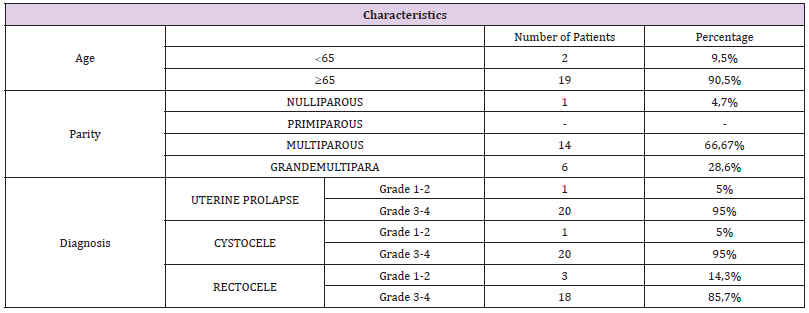
According to the secondary data analysis performed on patients undergoing the TVH procedure within 11 months (November 2018 – September 2019) it was found that there were 21 patients who have undergone the TVH procedure. In Ercan, et al. [1], it is stated that TVH procedures is recommended by American College of Obstetricians and Gynecologists to minimize surgical injury, blood loss, and cost. The following are the results obtained through the secondary data analysis based on medical records at Dr. Sardjito Hospital (Table 1). There were 2 patients at the age below 65 years old (9.5%), nineteen patients were 65 years old or older (90.5%). Based on the parity, there was 1 nulliparous patient (4.7%), 14 multiparous (66.67%), and 6 grandemultipara patients (28.6%). There was no primiparous patient [2]. According to the diagnosis, there was 1 patient (5%) with grade 1-2 uterine prolapse, 20 patients (95%) with grade 3-4 uterine prolapse. Accompanying diagnosis in patients who have undergone this procedure was 1 patient (5%) with grade 1-2 of cystocele, 20 patients (95%) with grade 3-4 of cystocele, 3 patients (14.3%) with grade 1-2 of rectocele, and 18 patients (85.7%) with grade 3-4 of rectocele [3]. In other words, the characteristics of patients who have undergone TVH procedures at Dr Sardjito Hospital Yogyakarta mostly were the same age as or more than 65 years old, multiparous, and with the underlying diagnosis was grade 3-4 of uterine prolapse.

biomedres-openaccess-journal-bjstr

Table 1: The Result of the Characteristics of Patients who Have undergone TVH Procedure November 2018 – September 2019.

Conclusion

The characteristics of patients who have undergone TVH procedures at Dr Sardjito Hospital Yogyakarta almost all of them were the same age as or more than 65 years old, multiparous, and with the underlying diagnosis was grade 3-4 of uterine prolapse.


For more Articles on : https://biomedres01.blogspot.com/

Tuesday, April 5, 2022

Actions Against COVID-19, Are They All Effectively Carried Out?

Actions Against COVID-19, Are They All Effectively Carried Out?

Introduction

A new disease has become a threat to health in all nations, making this planet an unsafe place for the perpetuity of the human species. Since COVID-19 was declared a pandemic by the World Health Organization (WHO), [1] it has been a priority for the different governments of all countries, how to achieve its arrest. The actions have been multiple, but in the opinion of the authors, it would be pertinent to ask, have the targeted measures been fully complied with, to achieve all the necessary effectiveness with their implementation? Confinement has been generalized to prevent the transmission of this disease; it has undoubtedly been one of the most used means of protection. Self-isolation is an effective way that has been demonstrated since ancient times and in time, [2] it is the possibility of avoiding contact with affected people or with inanimate objects that can transmit the disease, thus avoiding the multiplication of the disease. Staying at home for a long time can bring psychological changes in people. While confinement is effective, it must be in a responsible manner. Vulnerable groups of the population are the ones that must use this protective mechanism the most, extreme ages (adults over 60 and pediatric ages), pregnant women, people with chronic non-communicable diseases, among others, are at high risk from COVID -19.

It is essential that those who must maintain their extra-home activities, have the perception of risk at a level that allows them to know the responsibility they assume for the health of their relatives that they leave at home. The high virulence of this novel virus, makes it increasingly dangerous, respiratory viruses cause infections that are classified as acute and localized, causing alteration or necrosis of the epithelium between one to two weeks during which they remain localized in the respiratory tract. SARS-CoV-2 resembles viruses that cause generalized infections, in which the respiratory system represents the route of entry, in which it may or may not produce apparent lesions [3]. The rapid isolation of positive cases to the disease is another of the measures that are adopted. This also involves both medical services and different social entities. Truthful and timely information from patients by not hiding symptoms, or time of their appearance, is vital. It is also very important to make known the close contacts that the affected person has had in order to determine possible transmitters and cut the chain of patients that it may generate. There are protocols for action against the disease that currently keep the scientific community engaged in the search for solutions for its detection. The management of each affected person is clearly established according to their level of contagion, how to act in any situation related to the care and direct or indirect management of the personnel under medical observation.

Every health system must be dynamically organized, to guarantee the transition through the different stages and transformations of what to do and how to do it better, with the purpose of improving the health of the population, the system’s response capacity and adaptation to epidemiological and demographic situations. But it is not only the responsibility of the health system to maintain the indicators in the population in a healthy way. The interrelation between business, social and government sectors with health services must be strong. Although all the measures that must be applied to guarantee the necessary biosecurity are listed, it must be recognized that they are not always carried out in the best way to achieve their main objective, to preserve human health. Examples that can be brought up would be multiple and it is not objective to list them, only to call for reflection on what is not being done correctly. The so-called caregiver syndrome is described, [4] I end this widely used when pointing to the picture that caregivers of the elderly or terminal patients present for a long time. The current pandemic has been going on for more than a year, during which the health personnel and the person in charge of maintaining the insurance around the patient, have been developing a very similar picture of fatigue. The inclusion of actions for the psychological biosafety of health personnel, as a special part of the actions to be developed in the intervention strategies in this pandemic is of utmost importance [5].

Despite these symptoms caused by accumulated stress, health personnel have the responsibility to provide a quality service that can raise the level of satisfaction of those in need of this care. It is essential to comply with the protocol for taking samples of the different diagnostic tests used, PCR (polymerase chain reaction), antigen and serological tests [6]. A bad manipulation in the taking of sample can cause the contamination of the same giving a false positive or a negative that is not real, either of the two variants would endanger the health of the patient and could lead to countless infections super-added. Health personnel who are in close relationship with positive or suspected patients must strictly comply with the established biosafety measures. When they delve into the causes that caused the contamination of a health professional, they find failures in adequate individual protection. Self-care is a very effective weapon in the control of this disease. To achieve this effectively, it is necessary to provide the most up-todate information possible, giving the veracity of the situation that affects people, so that in this way they can acquire the knowledge that will help them make changes in their personal actions, aimed at raise your health. It is the criteria of the authors, the confrontation with COVID-19, is an arduous battle to be carried out by the entire society, led by health personnel. This would guarantee that all the efforts and resources that are put into this cause can give the desired response, the control of the disease. This situation of a social nature will have to be faced with the participation of everyone, so that everyone can protect themselves.


For more Articles on : https://biomedres01.blogspot.com/


Monday, April 4, 2022

Brain-Inspired Computing Research: DARPA HIVE Project for Developing Next-Generation AI Platforms


Brain-Inspired Computing Research: DARPA HIVE Project for Developing Next-Generation AI Platforms

Introduction

As described by DARPA, main HIVE goal is creation of a “graph analytics processor” which incorporates the power of graphical representations of relationships in a network more efficiently than traditional data formats and processing techniques according to DARPA. In combination with emerging machine learning and other artificial intelligence techniques that can categorize raw data elements. By updating the elements in the graph as new data becomes available, a powerful graph analytics processor could discern otherwise hidden causal relationships among the data elements in the graph representations [1]. DARPA suggests such a graph analytics processor might achieve a “thousand-fold improvement” in processing efficiency over today’s best processors, enabling the real-time identification of strategically important relationships as they unfold in the field rather than relying on after-the-fact analyses in data centers. Current software includes algorithms exposed via API, internal graph representation of data and hardware “backends” (GPU, CPU, ASIC). Chinese specialist Wang explained that under the current AI platforms major tradeoffs must be made, whether it is optimizing for a certain type of hardware or optimizing for certain algorithms. He said: “If you specialize in graph representation, then you will be disconnected from the data science ecosystem because you are “cut off” from some important libraries” [2]. As part of the second phase of HIVE, they are developing a modular architecture framework. Existing software is being reintegrated into their components so that they can be inserted into the framework according to the best features of the software.

The structure includes Workflow Scheduler and Dispatch Engine. They use the DASK task scheduler to perform scheduler and dispatch operations. In fact, they are fully targeted at a wide range of hardware so that data scientists can immediately span CPUs, GPUs and ASICs to take full advantage of the same software infrastructure. So, we can use PUMA graph processor to accelerate the load processes. Framework must include a set of converters that can convert data in different formats [2,3].

Basic Targets

In Russia we also promote proactive development of domestic massively parallel processors. Objectives of the project also include information and analytical work and the development of technical solutions for creating high-speed element and design base. The basic component of the processor is a tile formed by a 64-thread core, connected by specialized accelerators (SFU). The massively parallel processor must include connected by an on-chip network hundred tiles, several links of an on-chip interaction, PCI-e interface with the host processor. The ideology of massively parallel architecture is similar to processor “Colossus” (company Graphcore) [4], focused on machine learning tasks. But the domestic massively parallel systems are hybrid and reconfigurable platforms. Now we will look at the basic principles for the development of innovative AI systems. DARPA project includes five key technologies:
a) Intelligent scheduling to manage the set of domain resources in the context of specific applications. This should be a technical focus of this project, and it is also the basis for the realization of the project’s goals. Only by realizing runtime intelligent scheduling can software and hardware be decoupled. The performance of smart scheduling is directly related to the efficiency of the final system. For the implementation of this part, there are some further discussions in the technical description, such as adding a processor dedicated to scheduling in the system, allowing each PE to analyze and report its own running status.
b) Software tools to enable a development ecosystem that exercises the full capability of the highly programmable system. Software tools include development tools, such as compilers and debuggers, algorithm libraries, applications and examples. Software tools should be the most important part of whether specific calculations can truly be implemented. A basic requirement is that they can also support new designs in the field. DARPA strongly encourages the use of existing software tools and also supports Open-source work.
c) Forming domain representations as ontologies. This is a job worthy of attention, how to describe a “Domain”. For Domain-Specific software and hardware design work, the premise of the design is a good description of the characteristics of this field. However, these definitions are still too simple to reflect the relationship between different groups.
d) Medium access control (MAC) to interconnect the PEs and to allow the data throughput, taking into consideration latency, power, and other domain constraints. In HIVE project the MAC layer is the medium for exchanging data structures between PEs, including physical structure, topology and a standard programming interface.
e) Hardware integration of the right set of PEs on the MAC layer with the operating scheduler and software into a fabricated socket. The final result of this project also includes a heterogeneous SoC hardware, but this does not seem to be the focus of this project. According to the description of this project, PE is a concept with a relatively large granularity, such as CPU, GPU, TPU, Neuromorphic Unit, DSP and hardware accelerators.

Testing Results

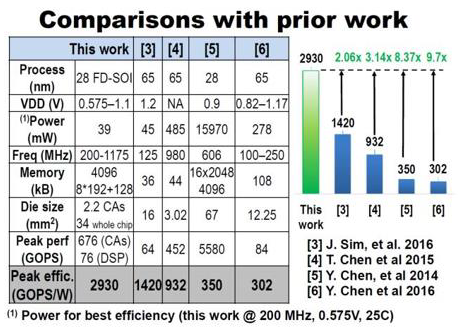
In the field of dedicated processor and accelerator design the performance competition is fierce. It has even become an international-level scoring contest. Usually, international high-level publications (such as ISSCC) publish the latest “scoring results”, such as the performance comparison result of a CNN acceleration chip shown in Figure 1 [5]. The scoring result does not represent an absolute advantage, but it also becomes a measure of whether the design can be recognized as a good design. But the benchmarks obtained from the references are not completely comparable, because each design has its own special features. In the article [6] author hopes that readers can jump out of the thinking mode of “mutual scoring” and get the best design possible in theory (from the point of view of extreme design).
Analysis is traditionally divided into four parts:
a) Performance indicators of digital logic chips.
b) Checks and balances between indicators and trade-off methods.
c) Limit quantitative design method.
d) Investigation and analysis of the reasons for not reaching the optimal performance.
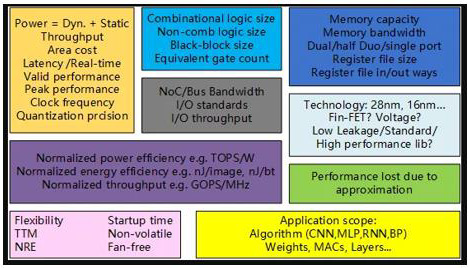
When we analyze chip architecture, we mainly need to consider the following indicators, as shown in Figure 2 [4]:

biomedres-openaccess-journal-bjstr

Figure 1: A “ scoring “ report announced at the ISSCC2017 meeting.

biomedres-openaccess-journal-bjstr

Figure 2: Collection of digital circuit performance indicators.

Single Standard (Orange Part)

a) Power consumption: static power consumption, dynamic power consumption.
b) Energy consumption: the energy for processing a task.
c) Throughput: such as communication speed (bps), images per second.
d) Delay: the time difference between input and output. For real-time systems, latency is very critical.
e) Effective computing capacity: when performing a certain calculation, the total number of operations per second is calculated.
f) Peak computing capacity: the sum of computing operations per second in the chip structure.
g) Clock frequency: adjustable clock frequency/voltage, peak clock frequency.
h) Quantization accuracy: the data quantization width of input/output/intermediate levels.

Normalization Standard (Purple Part)

Due to the checks and balances between indicators, an increase in an expected indicator may lead to an increase in other undesired indicators, so it needs to be measured by a normalized scale. This is often related to the application of the chip, such as: computing power normalized to power consumption; throughput normalized to energy; computing power normalized to the clock frequency and etc.

Comprehensive Results (Light Blue Part)

In the preliminary evaluation or sub-assessment, some comprehensive key indicators given by the comprehensive tool. These indicators are based on netlists and therefore do not include connections and can only be used for initial chip cost evaluation. Including: combinatorial logic resource cost, non-combination logic resource cost; device cost (such as RAM), combinatorial logic cost can also be measured by the number of equivalent gates. The difference is that the combinatorial logic overhead is related to the process library, while the number of equivalent gates is independent of the process library.

Memory Related (Dark Blue Part)

Memory is often represented as a black box. The number of memory chips, the capacity, depth and width of each memory chip. Whether it is dual-port or single-port (the size of dual-port is about twice as large as single-port). For small-scale memory less than 1KB or memory with many read and write ports, it is often implemented by register file size. When a smaller memory is needed or a storage device with a complex read-write interface is required, the register array is generally used to build it directly. The difference between the realization of the register array and the register file is that the register file often needs to be realized by a dedicated compiler, while the register array is directly realized by the hardware description language. The area of the register file will be much smaller than the equivalent function of the register array.

Interface and Bus Related (Grey Part)

Including the process library used, the number of wiring layers, operating voltage, low power consumption or high-performance process and etc.

Design Cost and Special Features (Pink Part)

a) For engineering research and development, it is also necessary to consider the software/application development cost and the ability to map new algorithms and parameters: Time to market (TTM), non-refundable engineering expenses (NRE) and etc.
b) Some chips tend to have advantages in other areas, such as: boot time optimization, non-volatile, no fan requirements (less than 4W), dynamic voltage frequency adjustment, gated clock and other functions.

Conclusion

Similarly, integrating a new user API only needs to add an interface to one of the hardware and use at least one algorithm. Ultimately, the overall goal of HIVE is to unify and simplify the process of “optimizing the communication between graph software and hardware”. Reconfigurable hardware often needs to support multiple operating modes or operating parameters. Configurability and programmability are ultimately the need to add some redundancy to the original dedicated circuit to improve flexibility. But the efficiency of “ordinary” processors is not consistent. With proper ASIC design we can demonstrate good indicators for a limited class of “hard” logic algorithms. For a successful “breakthrough in the field of microelectronics” it is necessary to start developing a mass-parallel processor based on of multithread cores with specialized accelerators.


For more Articles on : https://biomedres01.blogspot.com/


Friday, April 1, 2022

Reproductive Hormones and Implication of Synthetic Hormonal Preparations: Current Status

Reproductive Hormones and Implication of Synthetic Hormonal Preparations: Current Status

Introduction

A woman of 24yrs old had no problem in conceiving just after married but she couldn’t maintain her pregnancy due to unknown reasons. After 11 weeks of pregnancy, she had started spotting which leads to miscarriage. In second pregnancy she experienced a same threat of abortion and doctor prescribed her Gravibinan inj (hydroxyprogesterone) 4 times weekly along with Duphaston (Dydrogesterone) tablet once in a day for 1 month and advised her for taking bed rest which leads to a successful pregnancy. Advancement in science of medicine creates more chances for a woman to reproduce. Reproductive hormones are usually produced in the ovaries (females) and in testes (males) and these hormones are responsible to control reproductive cycles [1]. Estrogen and Progesterone are considered as main female sex hormones and Testosterone as main male hormone [2]. Other reproductive hormones include follicle-stimulating hormone (FSH), luteinizing hormone (LH), human chorionic gonadotropin hormone (hCG), gonadotropin releasing hormone (GnRH), Oxytocin [3]. Some of these hormones can be synthetically prepared now for use in various aspects [4]. Before the development in the synthetic production of reproductive hormones, there were many complexities in reproduction like difficulty in conceiving, stability of pregnancy, complexities at the time of birth and others but now it has minimized due to advancement in the field of hormonal therapy [5].

Infertility can be explained as not having pregnancy after 1yr of trying and it may be related to either one of the partners or other combination of factors that resist pregnancy [6]. Follicle stimulating hormone (FSH) is a reproductive hormone, glycoprotein in nature, produced in several isoforms by anterior pituitary gland are used in assisted reproductive technologies (ART) [7]. Recombinant follicular stimulating hormone (r-hFSH) has widely been used in the treatment of infertility [8]. If the infertility in man is due to gonadotropin deficiency, then gonadotropin replacement therapy is highly effective in producing spermatogenesis and fertility [9]. In vitro fertilization (IVF) is a process to overcome infertility in women, in this process a woman’s egg is taken and fused with a sperm in a lab setting and a fertilized egg is implant back into a woman’s uterus to make her pregnant [10]. Long-acting gonadotropin releasing hormone (GnRH) analogues has been giving to woman, who is willing for a baby through IVF process, before ovarian stimulation results in better outcomes of treatment by increasing the number and quality of oocytes recovered and by decreasing the rate of cycle cancellation [11]. Stability of pregnancy has now become most common issue, less than 30% of women experience threatened abortion, it is the most serious problem in the first trimester of pregnancy, in order to support pregnancy and avoid threat of abortion different therapies given to pregnant woman including hormonal therapy like human chorionic gonadotropin (hCG) or 17-α-hydroxyprogesterone. Treatment with hCG has more better outcomes than with hydroxyprogesterone [12]. Unconstrained preterm labor leads to more than half of preterm birth which is a cause of neonatal morbidity and mortality [13]. A hormone derivative called hydroxyprogesterone caproate is available in injection form, used to reduce the risk of recurrent pre-term delivery in high risk patients [14]. Buserelin is a synthetic analogue of GnRH which is an agonist at pituitary GnRH receptors [15]. The GnRH agonist buserelin be regarded as a development in the treatment of a variety of gynaecological, andrological, paediatric and oncological conditions, infertility and other reproductive hormone dependent conditions, with a low chances of adverse treatment effects [16]. Menopause or stopping of menstrual cycle in women brings a lot of effects on an individual including their skin. Women can avoid side effects of menopause by taking hormonal replacement therapy (HRT) along with estrogen-replaced therapy (ERT) with an appropriate cosmetology [17]. Estrogen and progesterone were previously considered as primary hormones in controlling reproductive cycles in females, are now being researched as protective and regenerative agents in neurological dysfunctions like stroke, traumatic brain and spinal cord injuries [18].

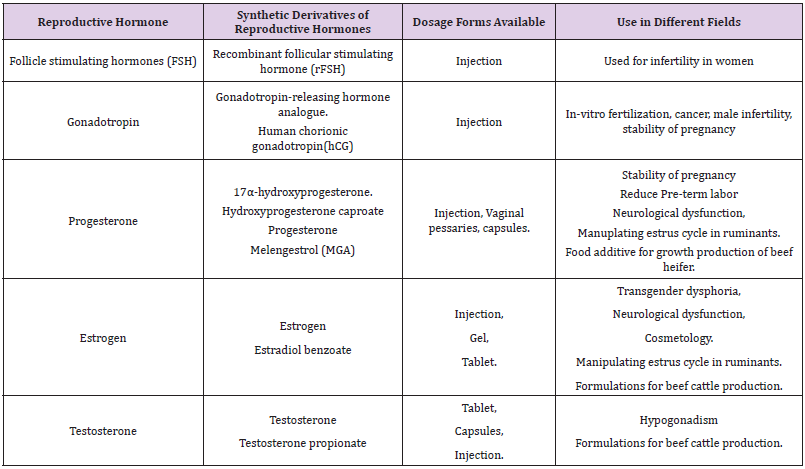
Hypogonadism in men is a clinical syndrome results from either unable to produce desired level of testosterone in a body or to produce normal amount of sperm or both [19]. Testosterone therapy is used to treat this deficiency and has found no unfavourable risks in healthy young men [20]. Hormonal implants has been used by researchers to enhance growth, feed intake and reproductive efficiency in animals to satisfy the increasing demand of food supply [21]. Melengestrol (MGA) is available as a food additive for growth enhancement but approved only for used in beef heifers [22]. Estradiol benzoate along with progesterone used for manipulating estrus cycle and ovulation in ruminants [23,24], estradiol benzoate either used alone or along with progesterone, testosterone propionate, or trenbolone acetate used in implant formulations for beef cattle production [25]. Although these methods are useful in providing sufficient food supply to humans but in the recent studies we have observed that as the consumption of milk, meat and egg increased in the last few years we have also observed decreases in semen quality [26], increase in the chances of cryptorchidism, hypospadias and some cancers associated with hormones which includes testicular, breast, prostate and endometrial cancers [27]. Gonadotropins have been extensively studied for their function in maintaining balance between cell proliferation and differentiation, and therefore in cancer [28,29] (Table 1).

biomedres-openaccess-journal-bjstr

Table 1: Marketed reproductive hormones and their uses.

Breast cancer is most common in women, tamoxifen is a selective estrogen receptor modulator used as a standard of care in treating breast cancer but gonadotropin releasing hormone analogues (GnRHa) used as an additional treatment option by suppressing ovarian function [30]. Transgenders, whose deepseated belief differs from the sex they were assigned at the time of their birth [31]. Medical help as well as surgeries for changing gender like male to female or female to male are practicing now days. Hormonal therapy plays a role of backbone in terms of medical help for patients undergoing gender transition [32]. Most of transgender women encounter gender dissatisfaction and to line up with a more feminine gender role they take estrogen [33] and anti-androgen therapy to reduce body and facial hair, decreased muscle mass, increase in breast size and fat distribution [34]. As we know that sex steroids induce some changes in breast tissue during hormonal therapy taken by transwomen, therefore it has been found that there is an increased risk of breast cancer in those transwomen who received hormonal treatment [35,36]. There are many aspects of synthetic reproductive hormones other than its effect on human reproductive system; researchers are finding new implementations of them in future. One of those future researches involve finding ways to treat male infertility without harming women as until now women has to face all the circumstances of assisted reproductive technologies (ART) even in cases where female is normal but infertility factor is due to male [37].

Conclusion

The increasing demand of hormonal therapy found by researchers were once considered for the reproductive purposes only but now it has been implicated in achieving artificial fertilization. New approaches in the implication of synthetic steroidal hormones include treatment of stroke, traumatic brain and spinal cord injuries, as well as in satisfying gender dysphoria and hormonal implants has been used to enhance growth, feed intake and reproductive efficiency in animals to satisfy the increasing demand of food supply.


For more Articles on : https://biomedres01.blogspot.com/


Tuesday, March 29, 2022

Quality of Life of Child Labor with a Focus on Developing World: A Sociological Appraisal

Quality of Life of Child Labor with a Focus on Developing World: A Sociological Appraisal

Introduction

Child labor is what is done by the children under the age of 15, or even 10 in the developing world. It is mainly the result of migration, urbanization and high birth rate. Sociologically speaking, it overall happens due to poverty. Many developing countries are facing it, and take it for granted. The children involved, while having disastrous life, widely affect the next generations. Child labor as exploitation of children was prohibited by legislation worldwide earlier [1]. Although laws do not consider all works by children as child labor, exceptions include work by child artists, family duties, supervised training and the like (Labor laws, 2004); Council Directive, 1994) [2,3]. With the rise of household income, availability of schools and passage of child labor laws, the incidence rates of child labor fell [3-5]. Child labor is highest in Asia; with over 30 million in India. As the world population will reach above 10 billion by the year 2050, child labor is projected to be on increase in the same way in the developing world [6]. According to the concept of working children; That means working for wages by children under working age (less than 15 years old), and even in some developing societies (10 years old and younger). This phenomenon itself has consequences that are very important from the perspective of sociology and social work. Due to the changes that have occurred in societies over the last half century, following the urbanization of a large part of the population in these societies, as well as the rising cost of living, and on the other hand, due to the increase of children in families, in many societies The evolving phenomenon of child labor has found its appearance, meaning and concept today. Working children, while providing for their daily expenses to some extent, also help their families financially and in condemning the phenomenon of working children, Marx and Engels added more than 160 years ago (1848) that the family was the core of child exploitation, and that this phenomenon should be abolished [7]. Tasks that used to be performed by the family have now been replaced by social work.

It is noteworthy that the exploitation of children took place before and at the beginning of the Industrial Revolution in European societies. The best example of this phenomenon is the Khmer Rouge (1979-1975) in Cambodia, during which children were forcibly taken from their families to be raised and exploited by the governing body. While public perceptions of child labor are strongly and seriously negatively charged, it is not clear theoretically how harmful this phenomenon is. For some communities, child labor is a routine; That is, individuals in society and even officials do not react negatively to it, while in industrialized and developed societies, this phenomenon generally has a negative impact, and it is dealt with seriously. In societies where chronic and general poverty prevails, the phenomenon of working children does not seem unusual. While in the West the phenomenon of child labor is an unacceptable face of Third World poverty, child labor is commonplace in many societies. As a result, in Pakistan, for example, many children work full-time outside the family, and do not go to school [8]. While the flow of working children generally occurs worldwide, especially in developing countries in rural areas; That is to say, the quiet and moderate activities carried out by children, which are not very disturbing, are some form of which has been considered by the International Labor Organization (ILO) and many mass media. The phenomenon of working children is more common in rural areas than in urban areas. In developing countries, this phenomenon is generally considered normal, especially in rural areas; That is, places that do not have enough educational centers for such children. Children in these communities under the age of 10 engage in many activities that are usually performed by adults.

Social work searches for and investigates the phenomenon. Child labor under the age of 10, and in many societies under the age of 15, has many social, economic, cultural, and biological consequences. This phenomenon in industrialized countries has generally been recognized and stopped for decades. While in developing societies, due to the structure of these societies and the existing constraints, it still continues. In general, among other sciences, there are sociologists and social workers who need to address this issue more.

The consequences of child labor are very complex and contradictory. While this may lead to fewer children “going to school”, it may also lead to more work experiences between them, which in itself neutralizes the effects and disadvantages of children’s lack of school attendance. There are two views in this regard; Some criticize the separation of children from school and their entry into the labor market, calling it the beginning of many social consequences and deviations, while others justify the separation of children from school in such a way that Such people gain more experience in the labor market. It depends on the social, economic and cultural conditions of the communities. While the phenomenon of working children is common, for example, in a country like Bangladesh, in an industrial society like Japan, it is known to be very unusual and destructive.

Method of Research

Methodology used in the present article is of qualitative type. In that, various paradigms have been used to find out about the facts regarding pandemics during the history. Qualitative research usually studies people, events or areas in their natural settings. In finding facts for the research, the researcher engaged in careful data collection and thoughtful analysis of what was relevant. In the documentary research applied for the present research, printed and written materials were widely regarded. The research was performed as a qualitative library-type in which the researcher had to refer to the relevant and related sources. In the current research, various documents were thoroughly investigated, and the needful inferences were made.

Challenge Working Children

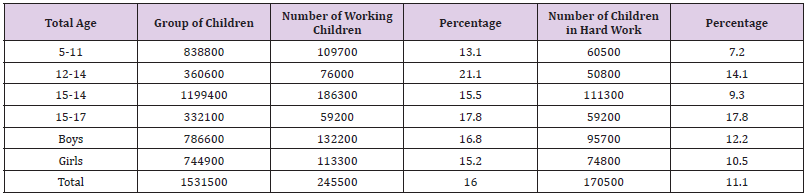
Identifying the consequences of child labor is challenging in terms of analysis. Working children cause future generations to face unforeseen challenges and problems. One of the immediate and immediate consequences of this trend is the frequency of marriages at a young age and, consequently, the further growth of the population in these societies, which again provides the basis for working children in the new generation. Thus the cycle of social, economic and cultural anomalies continues. This even jeopardizes social security in a given society. This is generally the case in Southeast Asia and many African and Latin American communities; That is, a situation that leads to street children, criminal gangs, gangsterism, and the like. Therefore, this phenomenon should not be underestimated. The difference in income in families due to the work of their children not only shows the accidental effect, but also the social, economic, cultural effects, etc., while causing problems for the current generation, it also has many effects on the next generation. Therefore, adjusting income in families as a key factor in preventing the increase and incidence of working children. The phenomenon of working children is often specific to countries with poverty in various dimensions; For example, this phenomenon is widespread in African and Latin American countries. The decision to send children to work involves many observable factors; That is, many non-objective factors cause children to deviate from a certain path at the age of 7 to 12 years. In rural areas, they are used to a limited extent, and in contrast, in urban areas, they are widely used; In a way that many dangers threaten them, especially in urban areas. Therefore, the poverty factor itself has an effective role in the emergence of child labor in societies. This phenomenon can be prevented if the family income is improved (Table 1).

Likewise, the consequences of the phenomenon of working children expand over time. Due to the urban life in the present age, working children, especially in urban areas, face many future disorders in their lives. These types of children generally do not have easy access to formal and legal jobs in later years (aged 18 and over) due to lack of education and specialization. At the same time, many deviations from the working life of this type of child during their working period before the age of 15, in some cases, provide them with a bad record, which itself acts as a kind of barrier to their employment in later years. A child who works today is consequently less likely to attend school. He himself may have made less progress in his education in later years. Therefore, as has been proven, children cannot easily pursue their work and education at the same time. Therefore, academic failure is very likely for this type of children. Therefore, welfare organizations, municipalities, etc. should always monitor the child labor community, and, if necessary, provide social assistance, counseling and guidance to them; In a way that separates them from working at a young age, and leads them more to education. Likewise, relevant authorities should always be aware of the oppression, vulnerability, and need to protect children, and prevent / protect them from abnormal and plague-like conditions [9].

biomedres-openaccess-journal-bjstr

Table 1: Picture of the number of working children by age and sex in the early 2000s (number per thousand).

Evaluating such a process itself requires extensive and longterm information. As mentioned, relevant institutions such as welfare organizations or municipalities should be able to collect information about such children. However, in such situations, social workers can play an effective role in correcting these children. Therefore, in relation to the increase in the number of working children, as well as in relation to the increase in the divorce rate in a given society, the number of social workers and the increase in their ratio should also be considered. Studies on work and childhood in 1991-94, and the results obtained among the same people at a young age, in 2004, show that they remained generally agricultural, especially in rural areas, and did not have much social change and mobility. . Many sociologists have conducted this type of research using the follow-up method. In this way, children have studied and studied work for a relatively long period of time, and have achieved remarkable results. It is also noteworthy that children gain more opportunities and development at older ages when they are not in a working position at a young age (around 10 years old and the like). In other words, not being able to work in childhood and subsequently continuing their education usually provides the grounds for their social mobility at a young age and above. Children who do not fit into the global model; That is, they do not choose the path to school, they are abnormally classified and defined [10]. The activities of working children in rural areas are mainly agricultural activities including sowing seeds, processing crops, keeping livestock and the like. The day-to-day activities that children do include things like; Carrying firewood, cooking, house cleaning and the like. Such children typically work more than 16 hours a week, and girls typically work 2.5 hours or more than boys. Hence, the concept of child labor in rural areas, while widely occurring, is itself considered a common phenomenon by rural people in many countries. At the same time, this phenomenon causes the backwardness of these societies in comparison with advanced societies.

Results of the Phenomenon of Working Children

In examining the potential effects of working children, some results can be noted as follows: The indicators of going to school (primary education and completing at least seven classes) are declining. The World Bank has conducted various studies in this field in South American countries, and finally reached the following results:

1) It is also worth mentioning that not going to school or lack of education of rural children, even in the following years, affects the health status of citizens in urban areas. While many rural children migrate in adulthood, their drop in education at this age causes many harms to and between them.

2) In rural areas, child labor activities in and around agriculture are summarized, and thus children do not have specific rights. It should also be noted that the definition of working children in urban and rural areas is very different from each other. In rural areas, due to the small size of society, limited activities, limited variety of work and the like, children are more observed in agriculture and other related activities, while in urban areas, a variety of different activities of these children can be seen. Likewise, the vulnerability of working children is less in rural areas than in urban areas; Simply because working children in these areas, while getting acquainted with agricultural affairs and activities in accordance with local and traditional norms and contracts, are attracted to the same activities and occupations at later ages. Therefore, the vulnerability of such children in rural areas does not seem significant.

3) The process of rural working children itself leads to migration from rural to urban areas; It means providing a kind of social mobility among this type of children. Therefore, the origin of the phenomenon of working children in urban areas is mainly working children in rural areas. This situation is somewhat visible in Iran today and to a large extent in many other less developed societies.

4) It is also worth considering how much the work of children affects their age of marriage. To date, the phenomenon of working children has largely contributed to the low age of marriage. This phenomenon is worth studying from the perspective of sociology and social work, considering the consequences that follow.

5) Early marriage at an early age, which is largely related to the phenomenon of working children, has consequences for women and children, including health risks. Working children, which in turn lead to early marriage, greatly endanger the health of both, especially girls. Issues such as premature fertility, multiple children at an early age, inexperience of mothers and the like, endanger the health of women and girls to a large extent. For this reason, in many societies, fertility and population experts recommend fertility at the age of 18 and older.

6) Working children may be proud of their work in some ways; Because of the help they provide to support the family’s food, because of the rental allowance, the scholarships for other siblings, and so on [11].

Objective Effects of Child Labor

The consequences of such conditions are evidence of the level of education of children in addition to their marriage patterns. Research shows that there is a close relationship between children’s work and cases of early marriage at a later age. In many cases, this situation even leads to divorce. At the same time, children’s work affects their educational levels (the amount and quality of education among children). Even if children work only 6 hours a week on average; The result in the coming years (over 10 years); Reducing their schooling for about a year reduces them. Therefore, academic failure has a significant relationship with child labor; They even work a few hours a week. Therefore, educational authorities, families and other relevant agencies should, as far as possible, prevent children from entering work with or without pay (wages), so that academic failure is less likely. It should also be noted that the start of 6 hours of work by children per week is even more likely to increase. Income motivation, friends, workplace algebra and other incentives are very effective in increasing children’s working hours. Also, if children work about 17 hours a week, children will lose a 20% chance of completing elementary school. Research shows that there is a link between children’s part-time work during the week and how well they succeed in school.

Many social welfare researchers, while examining such cases, recommend a planning system, stating that it is possible to prevent working children under the age of 15 from gaining employment in various economic sectors in society. Such research has recently been conducted by the World Bank in South American countries. While in the West, appropriate and timely legislation separated children from factories, this time owes the number of working children to compulsory education and increased family incomes in those communities (Neuwenhuys: 1996) [12]. As noted, the more children enter the labor market before the age of 15, the more likely they are to marry at an early age; That is, conditions that lead to higher fertility, the frequency of fertility in adolescence (Teens), before the age of 19 and the like. Therefore, the entry of boys and even girls into the labor market at the age of less than 15 years brings many potential problems and challenges for the following years of these people. The special sexual effects of child labor can also be designed and analyzed. In such circumstances, the negative effects of child labor are more on the academic failure of boys than girls. As mentioned, the abundance and increase of child labor is reflected more in agriculture than in other occupations. In most societies, especially among less developed countries, the phenomenon of working children and its consequences are more focused on boys. While the phenomenon of child labor is present in developing societies, the phenomenon of youth unemployment is also evident in these societies, due not only to high population growth but also to many other causes [13]. The youth unemployment rate is also related to how the economy is growing and the labor market.

However, they generally marry girls at a young age (even less than 15 years old) who seek to enter the labor market while losing their educational opportunities, which in itself has adverse effects in various ways in the present age. At the same time, regardless of the urban and rural nature of the community, children are generally employed in the agricultural sector at an early age. Although this move is considered insignificant in rural communities, sociological analysts consider the development of this phenomenon to be contrary to and an obstacle to development. One of the reasons for the rapid population growth in developing societies, especially in rural areas, is the employment of boys and girls at an early age; That is, the phenomenon that follows early marriage. At the same time, and as far as the conditions of Third World societies are concerned, the work of girls at a young age does not have much of an effect on their entry into the formal labor market in later years. This means that in many cases they do not have the opportunity to enter the labor market even in the conditions of entering adulthood and puberty; It means that they get married, raise children, etc. It is also worth mentioning that the entry of girls into the labor market and agricultural affairs at a young age is not very attractive for them; Simply because they remain in activities, sales and the agricultural market after gaining a lot of experience and less in adulthood. While such experiences are very helpful and definite for boys in their adulthood. However, the phenomenon of child labor poses many challenges for both sexes (girls and boys) in both urban and rural areas.

As far as community service is concerned, and from the point of view of this method of assistance, such arrangements should be made so that girls and boys are less out of the ordinary and enter the labor market at an early age. One of these methods in a forward-looking format is to limit the birth rate, especially in rural areas, which is the source of migration. The phenomenon of working children, which in the Third World countries is mainly due to rural poverty and rural migration to urban areas, has its own social, economic, environmental, cultural, health and the like consequences; That is, the current that leads to the phenomenon of working children, especially in rural areas. Resolving such phenomena depends on reducing rural poverty in its various dimensions. To prevent the spread of child labor in the long run, the theory is: when we make a man literate, we make a person literate, but when we make a woman literate, we make a family literate; And that in itself inspires the policy of educating girls. In general, the efficiency and outcome of girls’ education help to reform society at its macro level [14]. While the spread of literacy and education, or in other words, access to education itself, causes cultural dissemination [15], its cessation or slowdown leads to cultural and material poverty (non-cultural), and ultimately the emergence of the phenomenon of working children [16].

Conclusion

Child labor as a public disorder appearing everywhere with high birth rate. It used to exist in the present industrial world in the 19th century. Currently it is available in the developing countries. The best way to avoid it is to apply family planning programs, to increase the educational system, increase industrialization, enact new laws and to enforce work at age plus 15. To plan an appropriate scheme would also help in controlling child labor in any developing country. International Labor Organization and Unicef which play a determining role in leading the child labor, need to increase their part to manage the problem of child labor. Social work also plays a decisive role to bring about a better reaction between the families and the children who work. However, the existing child labor in developing countries needs to supervise the children concerned not to turn to street children, criminal gangs and the like.
 

For more Articles on : https://biomedres01.blogspot.com/


Prevalence of Tuberculosis in Workers from the Department of Huila, Colombia

  Prevalence of Tuberculosis in Workers from the Department of Huila, Colombia Introduction Tuberculosis is an infectious disease that usual...