Showing posts with label Biomedical Journal Articles Biomedical Journal Impact Factor Scientific Research Articles on Biomedical Journal of Biomedical Research and Review Biomedical Research Articles. Show all posts

Wednesday, November 12, 2025

Influence of the Ratio of Tritical-Rye Grain Grinding Mixture on the Grain-Forming Ability and Yield of Tritical-Rye Flour


Influence of the Ratio of Tritical-Rye Grain Grinding Mixture on the Grain-Forming Ability and Yield of Tritical-Rye Flour

Introduction

Triticale is a new type of cereal, the production and processing of which will contribute to solving the problem of expanding the range of bakery and flour confectionery products to meet the needs of the population in high-quality food products [1,2]. The chemical composition and biochemical properties of the triticale grain are typical for cereals such as wheat and rye, but the protein content exceeds, on average, by 2% the protein content in wheat grain and by 4% the protein content in rye and is at a level of more than 12%. In terms of fractional composition, the proteins of the triticale grain mainly occupy an intermediate position between the proteins of rye grain and wheat [3]. Existing traditional technologies for processing grain into food provide for mandatory technological operations, as a result of which biologically valuable anatomical parts of the grain are removed: the embryo, the aleurone layer and shells that are a source of dietary fiber, vitamins, minerals, protein substances, fats, which leads not only to a decrease in nutritional value, but also to the output of the finished product, and the operations themselves are characterized by high energy intensity. In the modern market of the grain processing industry, the range of grain processing products is represented mainly by various varieties of flour produced from wheat and rye [4,5]. Products of processing grain triticale and spelt are practically absent, since industrial technologies for processing these crops have not been developed. Triticale is used mainly for feed to farm animals in the form of grain mass, or feed based on triticale grain. Part of the triticale grain is also used in human nutrition. In Poland, 63% of the gross harvest of triticale goes to animal husbandry, 22% to bakery and confectionery production.

In Belarus, approximately 50% of triticale grain is consumed in animal husbandry and 50% in fermentation production for beer, alcohol [6,7]. In Russia, triticale is used mainly for the production of mixed fodder and ethyl alcohol. The use of triticale flour as a component of raw materials in the production of confectionery products: cookies, biscuits, muffins, crackers is promising. It is possible to use tritical flour in the production of quick breakfasts or in the manufacture of dietary varieties of bread. Bakery products from several cereals are becoming popular, including those using triticale [8,9]. The biochemical composition of the triticale grain is characterized by a high content of carbohydrates (68.8%) and proteins (12.8%), it contains 3.1% fiber, 2.0% ash and 1.5% fat. In terms of protein content, it surpasses not only rye grain, but also soft wheat grain [10,11]. (The endosperm of the triticale grain contains 27–28% water-soluble proteins, 7–8% salt-soluble, 25– 26% alcohol-soluble. The content of essential amino acids, such as lysine, valine, leucine, etc., is higher than in wheat, and the amount of the most important essential amino acid - lysine, significantly exceeds its content in wheat and is close to corn. Three-quarters of the weight of the triticale grain is starch with a low content of amylose (23.7%), in contrast to the starch of wheat and rye [12]. (The purpose of our research is to establish the influence of the different ratio of the grinding mixture of triticale grain and rye on the yield of tritical-rye intermediates of grinding and the yield of triticale-rye flour.

Materials and Methods of Research

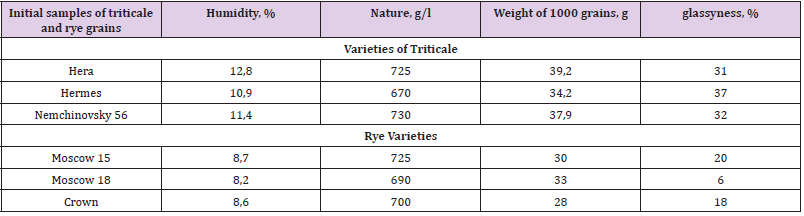
As an object of research, 3 varieties of winter triticale grains were used - Gera, Hermes, Nemchinovskaya 56 and 3 varieties of winter rye grain - Moskovskaya 15, Moskovskaya 18 and Krona of the harvest of 2021. The presented varieties of triticale and rye were bred by breeders of the laboratory of selection and seed production of field FGBNU “Federal Research Center “Nemchinovka”. The main physical and physicochemical indicators of the objects of study of the initial 3 varieties of triticale grain and 3 varieties of rye are presented in (Table 1). The study of the establishment of the effect of a different ratio of the grinding mixture of triticale grain and rye on the yield of tritical-rye intermediate milling products and the yield of tritical-rye flour was carried out according to the abbreviated laboratory technological scheme developed at the FSBEI HE “MGUPP” and including 5 deran and 5 grinding systems. Grinding of the initial samples of triticale grain was carried out at laboratory grinding mills (MLP-4) with rifled (for dredged systems) and micro-rough rollers (for grinding systems). The mechanical and kinematic parameters of the threaded rollers of the MILL MLP-4 are as follows: the location of the grooves - the back along the back, the speed of the fast-rotating roller - 5 m / s, the differential - 1.5, the number of grooves per 1 cm - 8, the slope of the grooves - 7%. Sieving of intermediate grinding products and sowing of flour was carried out on the sieving of the mill MLP-4, consisting of a set of 3 sieves, including 2 grits and one flour sieve. The inter-shaft clearance on the I drain system was 0.5 mm, on the II drana system - 0.25 mm, on the III drana system - 0.15 mm, on the IV dranaya system - 0.1 mm and V in the span system - 0.09 mm. As a hydrothermal treatment (GTO) in the preparation of a grinding grain triticale-rye mixture for laboratory grinding, cold conditioning was used as the most common method and the cheapest method.
biomedres-openaccess-journal-bjstr

Table 1: Physical and physico-chemical indicators of the quality of the initial samples of triticale and rye grain.

Results of the Study

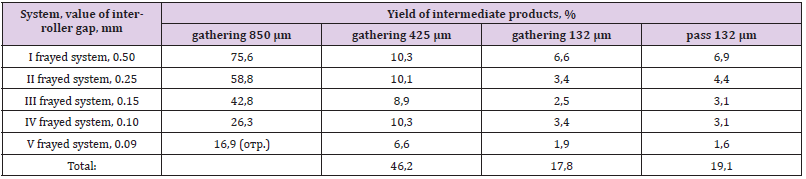
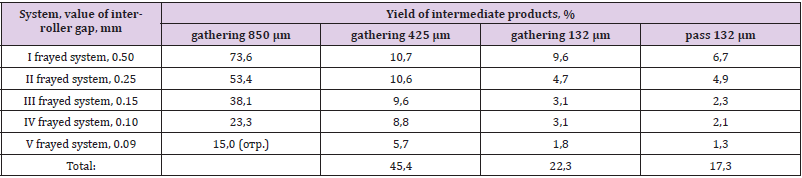
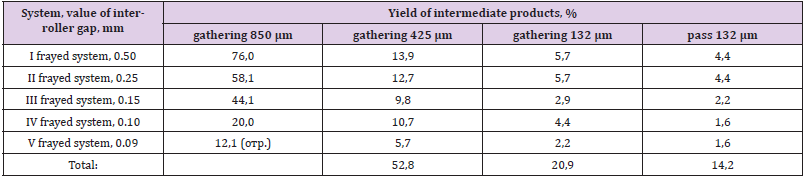
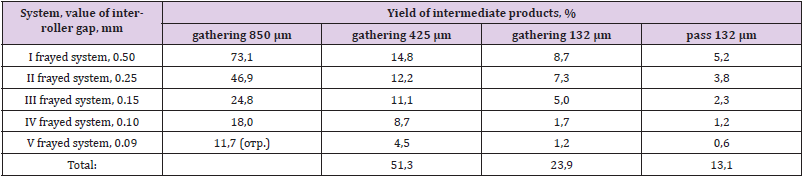
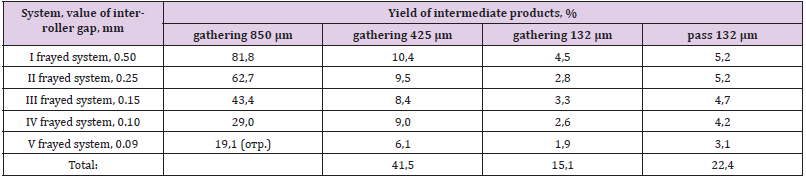
At the first stage of research to determine the effect of different ratios of the grinding triticale-rye mixture on the cereal-forming ability of intermediate grinding products, laboratory grindings of triticale-rye grain grinding mixtures were carried out in the ratios of 50/50%, 60/40%, 70/30% and control samples of the original triticale grain and rye. Preparation for laboratory grinding of tritical-rye grain grinding mixtures was carried out according to the previously established parameters of hydrothermal treatment [5]. During laboratory grinding of triticale-rye grain grinding mixtures, all 5 dredged, cereal-forming systems were modeled. Table 2 presents the obtained experimental data on the yield of intermediate grinding products and triticale-rye flour during grinding of triticale-rye grain grinding mixture in the ratio of 50%:50%. As can be seen from (Table 2), when 50% of rye grain was added to the grinding triticale-rye grain mixture, the yield of intermediate grinding products in the form of cereal products was 83.1%, including 19.1% of triticale-rye flour (Table 3). presents the experimental data obtained on the yield of intermediate grinding products and triticale-rye flour during grinding of triticale-rye grain grinding mixture in the ratio of 60%:40%. As can be seen from (Table 3), when 40% of rye grain was added to the grinding triticalrye grain mixture, the yield of intermediate grinding products in the form of cereal products was 85.0%, including 17.3% of triticalerye flour. (Table 4) presents the experimental data obtained on the yield of intermediate products of grinding and tritical-rye flour during grinding of tritical-rye grain grinding mixture in the ratio of 70%:30%.As can be seen from Table 4, when 30% of rye grain was added to the grinding triticale-rye grain mixture, the yield of intermediate grinding products in the form of cereal products was 87.9%, including 14.2% of triticale-rye flour(Table 5). presents the experimental data obtained on the yield of intermediates of grinding and tritical flour from the control grain triticale. As can be seen from Table 5, when grinding the control grain triticale, the yield of intermediate grinding products in the form of cereal products was 87.9%, including 14.2% triticale flour (Table 6). presents the experimental data obtained on the yield of intermediate products of grinding and triticale flour from the control grain of rye.
biomedres-openaccess-journal-bjstr

Table 2: Yield of intermediate products of grinding triticale-rye grain grinding mixture in the ratio of 50%:50%
biomedres-openaccess-journal-bjstr

Table 3: Yield of intermediate products of grinding triticale-rye grain grinding mixture in the ratio of 60%:40%.
biomedres-openaccess-journal-bjstr

Table 4: Yield of intermediate products of grinding triticale-rye grain grinding mixture in the ratio of 60%:40%.
biomedres-openaccess-journal-bjstr

Table 5: The yield of intermediate products of grinding from the control grain of triticale.
biomedres-openaccess-journal-bjstr

Table 6: The yield of intermediate products of grinding from the control grain of rye.

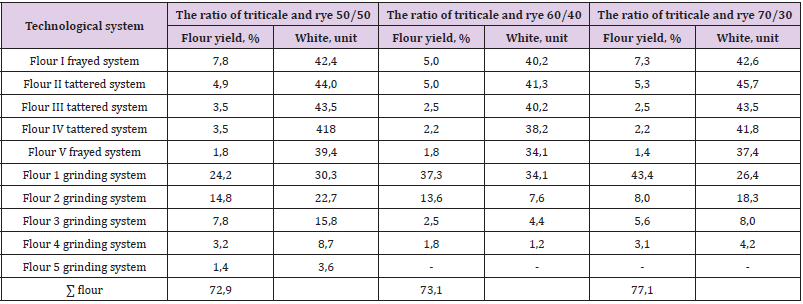
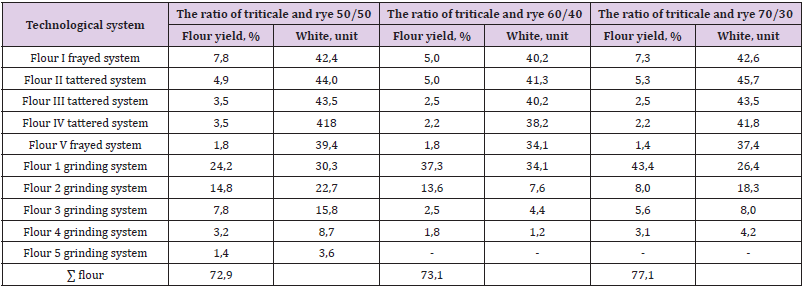
As can be seen from (Table 6), when grinding the control grain of rye, the yield of intermediate grinding products in the form of cereal products was 81.9%, including 22.4% of triticale flour. Thus, the largest yield of intermediate grinding products from the presented samples was obtained from the control grain triticale, which amounted to 87.9%, including 14.2% of triticale flour. The lowest yield of intermediate grinding products was obtained from the control grain of rye, which is 81.9%, including 22.4% rye flour. At the second stage of the research, comparative laboratory grindings of triticale-rye grinds of different ratios were carried out in comparison with control samples of triticale and rye with the determination of the yield and whiteness of individual flour flows from all 10 technological systems. The results are presented in (Tables 7 & 8). As can be seen from (Table 7), when 50% of rye grain was added to the grinding triticale-rye grain mixture, the yield of triticale-rye flour was 72.9%, when 40% of rye grain was added to the grinding triticale-rye grain mixture, the yield of triticale-rye flour was 72.9%, when 30% rye grain was added to the grinding triticale-rye grain mixture, the yield of triticale-rye flour was 77.1%. As can be seen from Table 8, when grinding the original triticale control grain, the yield of triticale flour was 77.9%, when grinding the initial control grain of rye, the yield of triticale flour was 70.3%, which is 6.9% less than from triticale grain.
biomedres-openaccess-journal-bjstr

Table 7: Yield and whiteness of triticale-rye flour flows of various ratios from all technological systems.
biomedres-openaccess-journal-bjstr

Table 8: Yield and whiteness of flour flows from the control grain of triticale and rye from all technological systems.

Conclusion

a) Thus, according to the results of the conducted studies, it was established that the greatest yield of intermediate grinding products from the presented samples was obtained from the control grain triticale, which amounted to 87.9%, including 14.2% of triticale flour. The lowest yield of intermediate grinding products was obtained from the control grain of rye, which is 81.9%, including 22.4% rye flour.

b) It was established that when 50% of rye grain was added to the grinding triticale-rye grain, the yield of intermediate grinding products in the form of cereal products was 83.1%, including 19.1% of triticale-rye flour, when 40% rye grain was added to the grinding triticale-rye grain mixture, the yield of intermediate grinding products in the form of groats tone products was 85.0%, including 17.3% triticale-rye flour, when added to the grinding triticale-rye grain mixture of 30% grain The yield of intermediate grinding products in the form of cereal products was 87.9%, including 14.2% of triticale-rye flour.

c) It was revealed that when grinding the initial control grain of triticale, the yield of triticale flour was 77.9%, when grinding the initial control grain of rye, the yield of triticale flour was 70.3%, which is 6.9% less than from the triticale grain. When 50% of rye grain was added to the grinding triticale-rye grain mixture, the yield of triticale-rye flour was 72.9%, when 40% of rye grain was added to the grinding triticale-rye grain mixture, the yield of triticale-rye flour was 72.9%, when 30% rye grain was added to the grinding triticale-rye grain mixture, the yield of triticale-rye flour was 77.1%.

d) A direct dependence of the yield of triticale-rye flour on the content of rye grain in the grinding mixture has been established. At the same time, it was revealed that the addition of rye grain to the grinding triticale-rye mixture leads to a decrease in the yield of triticale-rye flour.


For more Articles on: https://biomedres01.blogspot.com/

Tuesday, July 26, 2022

Effectiveness of Shock Wave Therapy in Injuries of Tendons and Ligaments of the Osteomyoarticular System


Effectiveness of Shock Wave Therapy in Injuries of Tendons and Ligaments of the Osteomyoarticular System


Introduction

For more than 20 years, medical technology with great potential to improve or replace some invasive procedures has been successfully applied in the world, such is the case of Extracorporeal Shock Wave therapies. In 1997 the European Society for Muscleskeletal Shock Wave Therapy was established in Vienna, due to the rapid diffusion of the method, in 1999 it was renamed the International Society for Muscle-skeletal Shock Wave Therapy [1]. The application of this therapy has proven to be safe and effective, as it has avoided surgical procedures. Shock wave therapy is acoustic waves present in everyday situations (the sound of thunder, clapping in an auditorium, or an airplane breaking the sound barrier). The wave generates a sudden pressure variation that propagates in the three planes of space; it goes from ambient pressure to the maximum pressure peak at the wave front. In the case of its therapeutic application, the wave is transmitted through a coupling pad that is a liquid medium that, having an acoustic consistency similar to that of the human body, favors its transfer. It is essential that there is a transitional medium between the docking pillow and the body, such as ultrasound gel. The shock waves are directed towards a focal point in the tissue to be treated. For the shock wave to have an adequate therapeutic effect, the energy must be focused on the point to be treated. The depth of penetration of the shock wave focus into the tissues can be varied by modifying the thickness of the coupling pillow [1,2]. At present in Cuba the number of elderly people has increased, this brings a series of progressive physiological and functional deteriorations with the consequent acquisition of chronic degenerative diseases. Diseases that cause joint pain are chronic and often disabling. Between 50-80% of the population over 65 years of age present pain [3]. Medical care for osteomyoarticular conditions that end in a surgical procedure is high, every day the number of patients who need specialized medical assistance in search of a solution to their health problem is greater.

Thus, it is necessary to use a new technology that manages to improve, replace or replace some old invasive procedures compared to new technologies, such is the case of Extracorporeal Shock Wave therapies, with the aim of improving the quality of life of patients. the Cuban population and treat conditions of the osteomyoarticular system. In Cuba, at the “Frank País” International Orthopedic Scientific Complex, it began to be applied in 2001. This therapy has been used until now as a method of treating chronic pain in patients who do not improve with other conservative treatments. The use of this equipment in musculoskeletal conditions enables a wave disintegrating effect to treat calcifications, has analgesic effects and allows stimulation of the repair process in tendons, soft tissues and bones [4]. The treatment unit produces, by means of an external piezoelectric source, high-energy sound waves, which have a great depth of penetration. This maximum energy in the affected area allows exact location of the area to be treated, low risk of bruising and very little irritation to the skin. It facilitates the outpatient treatment of the patient, short sessions [3-5], without risk of allergy or the need for anesthesia [5].

The number of patients who have received physiotherapeutic treatment with shock waves for this cause has increased in recent years at our institution. The objective then of our research was to evaluate the effectiveness of extracorporeal shock wave therapy in patients with injuries to the tendons and ligaments of the osteomyoarticular system.

Methods

A descriptive, cross-sectional study was carried out with patients who presented tendon and ligament injuries (supraspinatus tendinis, epicondylar insertions, calcified achillean tenosynovitis, calcaneal spur and plantar fasciitis). For the therapeutic treatment, the Well Wave equipment (extracorporeal shock waves) was used, in the International Orthopedic Scientific Complex “Frank País”, in the period from March 2019 to April 2020. The selection of patients in the sample was carried out through a convenience sampling and was made up of 107 cases. To determine the effectiveness (real benefit), the medical and physiological effects that occur when applying this therapy were analyzed.

Inclusion criteria

a) Patients of both sexes, aged over 18 years.

b) Patients with persistence of pain in a period of six months or more.

c) Patients undergoing failed previous surgery.

d) Patients who received at least three of the following treatments:

e) Medications

f) Infiltrations

g) Laser

h) Therapeutic ultrasound

i) Magnetotherapy

j) Supports

Exclusion criteria

k) Patients who refuse to continue in the study.

l) Patients with decompensated chronic diseases (severe cardiovascular disorders, neurological disorders).

m) Patients with bleeding disorders.

n) Pregnant patients.

o) Patients with polyneuropathies.

p) Patients with epiphysiolysis.

q) Patients with pacemakers.

r) Patients with primary or metastatic malignant tumors.

s) Patients with acute or chronic tissue infections.

t) Patients with severe arthritic changes.

In the initial consultation, all patients underwent a detailed interrogation, physical examination, radiographic study in anteroposterior views and ultrasound of the soft tissues of the affected area. Once the clinical radiological diagnosis was made that they had some injury to the tendons and ligaments (supraspinatus tendinis, epicondylar insertions, calcified achillean tenosynovitis, calcaneal spur and plantar fasciitis) and taking into account that the patient had used other conservative and surgical methods and had not presented improvement, he began with the therapeutic treatment of extracorporeal shock waves in the affected area with the Well Wave equipment, consisting of a piezoelectric shock wave source mounted on a mobile arm with a full range of motion. All patients were asked for their informed consent to participate in the study (Annex 3).

Process

a. Patient lying or sitting in right or left lateral decubitus, depending on location, on a stretcher in the shock wave unit.

b. Localization of the painful point by palpation and lubrication of the treatment area with gel on the skin and on the coupling membrane of the equipment for the transmission of shock waves.

c. Energy density from 0 mj / mm2 to 20 mj / mm2 . Progressive application of shock waves from low intensity to maximum intensity according to tolerance.

d. Frequency 0 - 4

e. Maximum pressure 6 to 126 Mpa.

f. Depth of penetration 0 mm to 165 mm

g. Sessions: 3 to 5 (once a week).

h. Duration of treatment: 20 to 30 min.

i. No sedation or pain relievers

The patients were evaluated by the authors before and after treatment. The following variables were taken into account: age, sex, pain and disability. In addition, specific scales were used for musculoskeletal diseases, supported by studies collected in the scientific literature. For the assessment of pain (VAS analog scale) (Annex 1). The DASH scale (arm, shoulder and hand disabilities) (Annex 2) was used for a global assessment of symptoms and disability; This measures the ability to carry out activities of daily life and work, composed of 30 items, measures different dimensions: functionality, symptoms, social role and psychological state. The score ranges from 0 in those patients in the absence of disability to 100 total disabilities. Its authors proposed a criterion for the qualitative interpretation of the results (Absence: 0, mild disability: 1-10, moderate disability: 11-40, severe disability: 41- 80 and total disability: 81-100) that, despite having received some criticism, it is still used.

The criteria for evaluating response to treatment:

1. Good evolution when there is remission of pain (EVA-0), restoration of joint mobility and incorporation of patients to their usual activities.

2. Regular evolution when there is a conspicuous improvement in pain (EVA ≤3), improvement in joint range of motion, requirement of some conservative treatment and incorporation to their usual activities.

3. Poor outcome when there was no remission of pain (EVA >3), no improvement in mobility and no incorporation to usual activities.

The information processing was carried out in EXCEL and using the statistical package SSPS 11.5. The frequency analysis of the variables contemplated in the study was carried out, the absolute and relative frequencies were obtained. In addition, measures of central tendency (mean, median) and dispersion (standard deviation) were used. Likewise, the Chi square test of independence was performed to determine the existence of statistically significant differences between the proportions obtained. In each case, the value corresponding to the probability of occurrence p; an alpha error of 0.05 and a confidence of 95% were prefixed. It was determined, as a critical or rejection region, when the value associated with p was less than 0.05 and, in this case, the null hypothesis of independence was rejected, and it was concluded that the variables were dependent on each other.

Ethical Considerations

The study was carried out following the ethical principles set out in the Declaration of Helsinki. The Ethics Committee for research in humans, of the International Orthopedic Scientific Complex “Frank País”, ensured compliance with these requirements and approved the research. The information obtained was kept confidential and was only used for investigative purposes. Similarly, to obtain personal information from each patient, their consent was requested, and the reserved nature of the information provided and its scientific use was explained (Annex 3).

Results

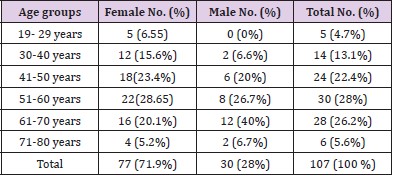
As can be seen in Table 1, in the sample there was a predominance of females with 77 patients (71.9%) and the age group of 51-60 years (28%). The median age of the patients seen was 58 years of age. There were no significant differences in terms of age and sex distribution (p = 0.253).

Table 1: Patients with tendon and ligament injury according to age and sex.

p= 0,253

Table 2 shows the distribution of patients with tendon and ligament injury according to sex. 40.2% of the patients were treated for presenting supra spinous tendonitis, followed by patients who were diagnosed with a calcified Achillean Tenosynovitis, 22.4% of the sample. There were no significant differences (p = 0.345).

Table 2: Patients with tendon and ligament injury according to sex.

AF: Absolute frequency p = 0.345

As can be seen in Table 3, all the patients had pain before the application of the shock wave, inclusive, it was the main indication for performing this non-invasive technique. After treatment, this situation was reversed, 78.5% of the patients were without pain. Only 8.4% had pain while walking and 7.5% at rest. These differences in pain before and after therapy were statistically significant (p = 0.0000).

Table 3: Patients with tendon and ligament injury, according to visual analog scale, before and after treatment.

AF: Absolute frequency p = 0.0000

Table 4 shows the results obtained after applying the DASH Scale. 43% of the patients studied had total disability before starting treatment. Only 4.7% were found in the category of absence of disability. After five sessions of therapy, according to the procedure described, 71% had no disability and only 5.6% remained in the category of total disability. Significant results were obtained (p = 0.0000).

Table 4: Patients with tendon and ligament injury, according to the DASH scale, before and after treatment.

AF: Absolute frequency p = 0.0000

Table 5 shows the analysis of the evaluation criteria for response to treatment, where good and fair results were considered satisfactory and bad, unsatisfactory. There was a higher percentage of satisfactory results (56% and 23.4%). Only 20.6% of the sample had a poor response, persisting symptoms of pain and functional limitation. The results were significant (p = 0.0000).

Table 5: Evaluation criteria of the response to the treatment given to the patients.

Discussion

According to the literature reviewed, tendinopathies of the shoulder injury to the supraspinatus, tennis elbow (epicondylitis) are common between 40 and 60 years of age. The literature states that 2 to 50% of the population have shoulder pain, accompanied by common symptoms such as atrophy of the muscles and limitation of movements. It is common in both sexes, with a 4: 1 ratio, in favor of women associated with jobs such as seamstresses, housewives, hard workers, athletes and musicians. In the case of Epicondylitis, its prevalence is 10% [6]. Calcaneal spur, plantar fasciitis and calcific achillean tenosynovitis are diseases that have a high prevalence that increases with age. It is of multifactorial origin, although a history of repetitive microtraumas is collected, being more common in runners, overweight people and tasks that require standing for long periods of time. It affects 10% of the population throughout their life between the fourth and sixth decade of life, also causing functional disability. The aforementioned diseases are common conditions in women, which coincided with our study, including age [7]. Age can be considered a risk factor in itself for the suffering of these conditions, since in the aging process itself changes occur in our body that favor the appearance of these diseases.

According to Mirallas Martínez, pain, limited movement and disability is a frequent symptom, characteristic of all these conditions and can be present in all cases [8]. This result could be corroborated in our investigation. The pain can be present, even in a state of rest, and it can make it impossible to sleep at night if you sleep on the affected side. Night pain can be severe enough to prevent sleep or wake the patient at night. Extracorporeal shock waves pass through tissues and can trigger absorption, reflection, refraction and energy transmission phenomena (direct effect). The negative phase is the cause of the indirect effects on the cellular tissue. These types of waves increase metabolism in the body and favor the reduction of inflammation in the area affected by the production of endorphins, causing a triggering analgesic action. In this way, the process of stimulation of inflammation mediators by induced hyperemia and the release of free radicals is accelerated.

The reversal of chronic inflammation is another advantage of the use of extracorporeal shock waves, since this persistent inflammation requires components (called mast cells), whose activity increases with acoustic waves, allowing the production of chemokines and cytokines that improve the inflammatory process [9]. The DASH questionnaire was developed in 1994 in English at the initiative of the American Academy of Orthopedic Surgeons (AAOS), as a consequence of this, from 1994 to the present, more than 48 validated and culturally adapted versions of the DASH have been developed (website of Institute for Work & Healt: http://www. dash.iwh.on.ca) is specific for musculoskeletal conditions. Although it is an instrument used to evaluate only disability in the upper limbs, it was of great value to the authors, since a greater number of patients with these conditions were diagnosed in the sample, which was essential to use. In addition, this specific instrument made it possible to detect the clinical changes of interest in the patients’ status, it allowed to functionally assess the joint of the shoulder, elbow, wrist and fingers and the quality of life of the patients [10].

Indications for shock wave therapy encompass a wide range of conditions, including (Supraspinatus tendinis, Epicondylar insertions, Calcific Achillean Tenosynovitis, Calcaneal spur, and Plantar fasciitis), among others. Its effectiveness lies in the physiological effects that occur in the body when applying this wave. It causes a regulation of the inflammatory cascade where it decreases the levels of substance P, bradycin and other local factors of inflammation. In addition, it stimulates the phenomenon of angiogenesis, all these changes finally activate and modulate the healing cascade, thus turning a chronic wound into an acute wound that will have a normal physiological healing process [11]. Wang CJ and others in their clinical studies have shown increased blood flow and growth factors that induce angiogenesis and consequent neovascularization in the calcaneal tendinous insertion [12]. It was manifested in the clinical improvement of the patients after applying it, which coincided with our investigation.

Effectiveness was demonstrated in the treatment of supraspinatus tendonitis and epicondylitis [13]. The improvement is significant in pain intensity, with good or excellent functional gain in 56% of patients treated with extracorporeal shock wave therapy. There are significant differences between patients in the treatment and placebo groups in pain and function, and it is concluded that treatment using this therapy is a pre-surgical alternative. The improvement in pain and function is good or excellent in 48% and acceptable in 42%, with a significant difference in favor of patients in the treated group compared to those in the placebo group. The improvement in pain and function is good or excellent in 52% of those treated compared to 6% of those in the placebo group [14]. Similar results to ours were observed.

In the case of plantar fasciitis and achillean tenosynovitis, Gollwitzer H, et al. [15] Conducted the study that used the largest sample size, with 250 subjects for the trial obtaining satisfactory results. This effectiveness or benefits are reflected in an improvement in the patient’s symptoms, especially in the decrease in pain and improvement in functional capacity, and in a decrease in the thickness of the plantar fascia based on the studies reviewed, as these are the variables more measures together [15]. The main weakness of this study is the small sample size, but with results similar to those found in other studies where a similar response to both treatments could be observed, this fact supports the strength of our findings.

Conclusion

Some of the sociodemographic characteristics of the patients studied do not differ much from those indicated by other authors, such as: the predominance of female sex and age. Treatment with extracorporeal lithotripsy (shock wave therapy), with the Well Wave equipment, was an effective method. It is a modern and noninvasive technique, which has enabled a rapid recovery of patients, their incorporation into daily activities, promotes rehabilitation, early return to work activities and better use of the working day.

For more Articles on : https://biomedres01.blogspot.com/


Friday, July 22, 2022

Idiopathic Thrombocytopenic Purple: Purpose of a Case


Idiopathic Thrombocytopenic Purple: Purpose of a Case


Introduction

Thrombotic thrombocytopenic purpura (TTP) also known as Moschcowitz disease, since it was mentioned for the first time by Eli Moschcowitz in 1924, is a disease that is part of thrombotic microangiopathies together with hemolytic uremic syndrome, atypical hemolytic uremic syndrome and microangiopathies of pregnancy [1]. Thrombotic thrombocytopenic purpura is a rare hematologic disorder of immune origin. characterized by microangiopathic hemolytic anemia, thrombocytopenia, fever, renal and neurological involvement. It affects women to a greater extent and has a poor prognosis, with a mortality close to 90% without treatment. It can be acquired or congenital. Its incidence is estimated at 1 to 10 cases per 3.4 million inhabitants [2]. It is mainly caused by the deficiency or malfunction of the ADAMTS13 protein [2]. The basis of its treatment is based on daily plasmapheresis. Although plasmapheresis associated with the use of corticosteroids is the priority treatment [3]. In this article we present the case of a pediatric patient with a diagnosis of idiopathic TTP [3].

Clinical Case

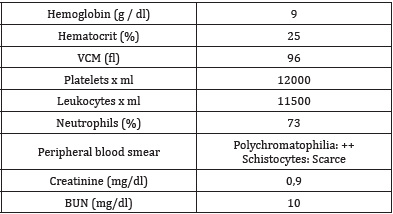
A 17-year-old female patient with a history of plaquetopenia and generalized weakness who was admitted due to a 5-day history of symptoms consisting of asthenia, adynamia, vertigo and headache of mild to moderate intensity. The patient consulted the Rio Grande health center, where a hemogram was performed in which moderate plaquetopenia was documented, for which they were referred to our hospital. Upon admission to our institution, it was documented that he had presented disorientation, without evidence of an infectious clinical focus in the physical examination or alterations in the neurological examination, no focalization, or other abnormalities. Moderate thrombocytopenia anemia is documented in admission paraclinics. Multiple schistocytes are documented in the peripheral blood smear. without impaired renal function (Table 1). Given the data of a patient with non-immune hemolytic anemia classified as microangiopathic due to the presence of schistocytes in peripheral blood, associated with moderate thrombocytopenia, fever and neurological alterations, the diagnosis of thrombocytopenia secondary to idiopathic purple thrombocytopenia is considered, for which ADAMTS 13, which were reported as under 40%. Management was started with methylprednisolone and 2 units of platelets were transfused. Patient who later presented platelet count in 22,000, without alterations in the red line, with manual platelet count in 32,000, without data of active bleeding, without indication of platelet transfusion, for which it was decided to give medical discharge with follow-up for pediatric hematology and management with outpatient methylprednisolone.

Table 1: Paraclinical admission report.

Discussion

Idiopathic purple thrombocytopenia, due to the rarity of its presentation, creates a challenge for its diagnosis because its clinical manifestations do not always begin with the known clinical pentad: fever, thrombocytopenia, microangiopathic hemolytic anemia, neurological abnormalities and kidney involvement, making it difficult timely treatment [4]. The case presented shows us an atypical presentation of idiopathic purple thrombocytopenia characterized by the absence of renal involvement and without alterations in the central nervous system, which is usually the most common presentation of the disease, without a triggering cause [5]. In addition, it makes known the importance of establishing a timely therapy with plasmapheresis, which allowed adequate clinical evolution and a favorable prognosis for the patient, which shows that it is essential to recognize the clinic as a valuable element for the diagnostic approach of this disease [6].

For more Articles on : https://biomedres01.blogspot.com/


Wednesday, June 15, 2022

Cassava Food balanced in Protein and Free of HCN


Cassava Food balanced in Protein and Free of HCN


In his classic, Geography of Hunger (1951), the eminent Agronomist and sociologist Pernambucano, Josué de Castro clearly pointed out the poor protein content of cassava, which is the main food in the entire northern east and north of Brazil. He explained that this crop which feeds more than one hundred million Brazilians and one billion of the humid tropics in Asia, Africa and Latin America is so poor in protein that it does not exceed 1% of its edible roots. He further explained that the crop provides more than 80% of the daily calories consumed by the people of the Northern east and the North. This lack of protein leads to serious illnesses for recent borns and children such as fibrosis of the lungs and liver and even affects the brain.

Castro’s josue suggested adding beans to manioc to northern east food may compensate for the lack of protein in manioc. During our research program we obtained varieties of cassava up to 3 times protein content taking the level up to 4% but this does not resolve the problem as the level is still very low for human needs. The analysis of the leaves of the same crop showed them to be as rich as having 32% protein, and it seems that a radical solution has been reached. The addition of leaf flour to cassava flour with a 20% proportion heating the mixture up to 200 C for 20 minutes increases protein in the mixture by up to 8% protein content and eliminate HCN totally i.e, slighly more than the 7% found in wheat and rice. The addition does not increase the cost of the daily consumption of cassava because its leaves have never been used by farmers and are normally dispensed.

The solution mainly benefits, in addition to adults, more than 20 million children and newborns who are most affected and vulnerable by nutritional disequilibrium. It benefit those who live under the poverty line and those who suffer from lack of protein, which is the basic nutritional element essential for healthy organic and mental growth. In this phase of growth, school meals have an essential role for future citizens because of what they offer in basic food necessary for growth.

The balanced meal mentioned above guarantees the quality needed for healthy growth and at the same time must be economically available and within the budgetary reach of states and cities municipalities. As this is a new idea that should be brought to the attention of the federal government in a way that convinces by its availability and ease of application, our foundation financed extension agencies in two main states of the country which are Mato Grosso and Paraná to implement the idea. This is an example for all states and for the government in the future. Our execution addresses municipalities to use in school lunch.

National attention to the subject is not only important to cover a geographically larger area but also to disseminate an innovative technique and method to enrich and balance popular food whose defective and unbalanced content affects a large part of the population. With new knowledge and new applications, Josué de Castro, if alive, should be able to correct his old concept of the 1950s on hunger geography, as he did not imagine what we have found in the leaves of the plant of so much abundant protein. In addition to balanced food, we also supply the Amazon and Northern east regions with improved varieties with triple productivity. Increasing the productivity of this food culture should be a top priority for our country. An increase in productivity was and can still be achieved by taking advantage of the genetic potentiality of the crop, which promises up to 7 times the current average. The current national and international average is 14 tons per hectare and our improved varieties developed by the University of Brassilia can reach up to 120 tons per hectare.

The use of the rich Brazilian biodiversity will not only allow planting in arid areas that are not yet cultivated but also the development of varieties rich in up to 8 times the vitamin precursor beta-carotene. Other varieties developed by us are adapted too to severe environmental conditions.

 For more Articles on : https://biomedres01.blogspot.com/ 


Thursday, February 10, 2022

Effects of Different Cryotherapy Techniques on Skin Surface Temperature, Agility and Balance - Comparison Between Cold Water Immersion, Game Ready®, And Ice Pack: A Randomised Clinical Trial

Effects of Different Cryotherapy Techniques on Skin Surface Temperature, Agility and Balance - Comparison Between Cold Water Immersion, Game Ready®, And Ice Pack: A Randomised Clinical Trial

Introduction

Cryotherapy is widely used for the treatment of acute soft tissue [1] to reduced pain, slow edema formation, decreased tissue temperature and cell permeability, induced superficial vasoconstriction, and prevention of secondary hypoxic injury [2,3]. However, its results are directly associated with the technique used, application time, decrease in skin temperature, and depth of cold penetration [4]. Among the cryotherapy techniques the ice pack is a low-cost device which is easily accessible, causing a reduction in tissue temperature and physiological changes to at least one centimeter [5,6], the cold water immersion (CWI) allows a greater body area to be exposed to cold [7], maintaining tissue cooling for longer and providing increased analgesia [8] and cryotherapy with intermittent compression can deliver similar results [9,10]. The literature shows that cryotherapy with intermittent compression is widely used for recovery of ligament injuries [11], total knee arthroplasty [12] and reduction in post-operative pain [10].

This form of application is effective in reducing pain [10,13,14], improving tissue oxygenation and microcirculation, and providing faster recovery from ligament disorders [15]. In addition, Murgier at. al. Murgier, et al. [11] reported that pneumatic compression and cryotherapy may reduce pain and postoperative blood loss, and lead to higher functional scores [12]. On the other hand, cryotherapy and intermittent compression equipment are more expensive and less accessible for health professionals. Several studies have aimed to evaluate the differences between the application of cryotherapy techniques, with divergent methods and contradictory results [10,16,17]. In addition, Hawkins and Hawkins [18] reported that sports physical therapists applied cryotherapy with great variability for acute or sub-acute ankle sprain and that efforts need to be made to substantiate the evidence of cryotherapy application [19].

Thus, little is known about the differences between the applications of an ice pack, cold water immersion, and cryotherapy associated with intermittent compression for the purpose of reducing skin surface temperature (related to treatment efficacy) and changing agility and balance. Therefore, new research should include controlled and reproducible different techniques. To contribute to discussions on the effects and indications of different techniques of cryotherapy on the ankle joint, the present study aimed to establish differences between applications of cryotherapy techniques on the ankle superficial skin temperature (SST) in different regions of this joint; the effects on agility and dynamic balance were also evaluated. We hypothesized that the three cryotherapy techniques studied would have the same effects on decreasing skin temperature, agility and balance. In addition, we hypothesized that the anterior, posterior, and lateral regions of the ankle would present different values of cooling. Thus, the results may support clinical decision making and aid choices made according to preference among the techniques.

Methods

This was a randomized clinical study, approved by the Research Ethics Committee of the institution (case N. 2.117.378) and registered at www.clinicaltrials.gov (ID NCT03659474). All procedures were performed at the physiotherapy outpatient clinic of the University. Twenty young and physically active subjects (ten men and ten women), without injuries or complaints in the ankle participated in the study. The women’s evaluations were carried out outside the menstrual period, since when they are menstruating, worsening in agility and dynamic balance can occur [20]. The sample size was calculated based on the results of the manuscript “The Magnitude of Tissue Cooling during Cryotherapy with Varied Types of Compression” [21], considering the SST over the mid-portion of the right gastrocnemius belly in twenty minutes after application of ice only and the elastic wrap. The values used were the means of each group (15.51 and 11.01) with a standard deviation of 4.39 (p <0.05). The program used was the Power and Sample Size, with a 95% confidence interval, 5% alpha level, and test power of 90%. Thus, 20 participants were recruited.

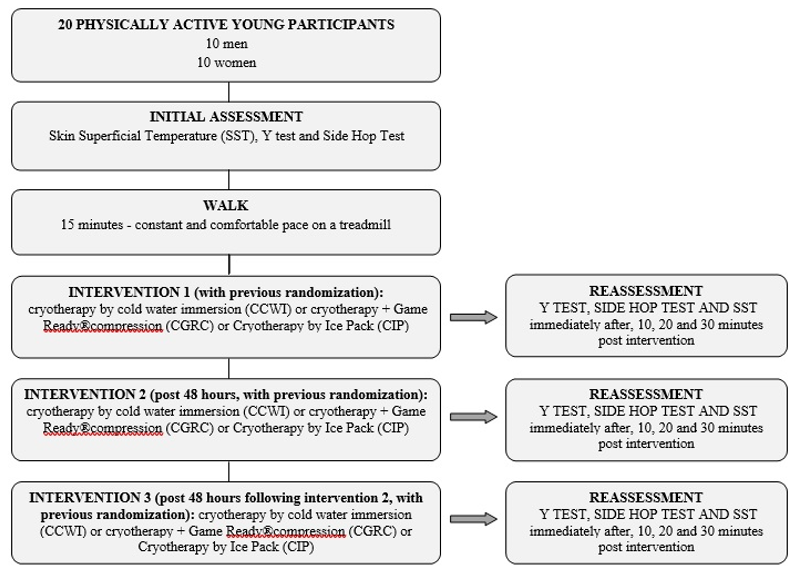
All participants underwent cryotherapy for the ankle with three different applications: cold water immersion (CWI), cryotherapy+Game Ready® compression (CGRC), or icepack (IP). Entries were randomly performed by a researcher not involved in the study through the platform www.ramdom.org and recorded in three different periods, with a 48-hour interval between measurements (Figure 1). All participants performed the three interventions, and there was no sample loss. Initially, a pre-intervention evaluation was performed where the SSTs of the anterior, lateral, and posterior regions of the ankle were collected with a professional Flir C2® thermal camera (FLIR® systems, Inc. Washington, USA). The thermographic camera had automatic ZOOM, it was positioned perpendicularly to the ankle, with a distance of 30 centimeters from the anterior joint line of the ankle, lateral malleolus and midpoint of the calcaneus tendon. In sequence, the Y test and Side Hop Test (SHT) were developed, already used in previous studies for the analysis of dynamic balance (22,23) and agility (24), respectively. Participants were familiarized with the tests prior to conducting the data collection.

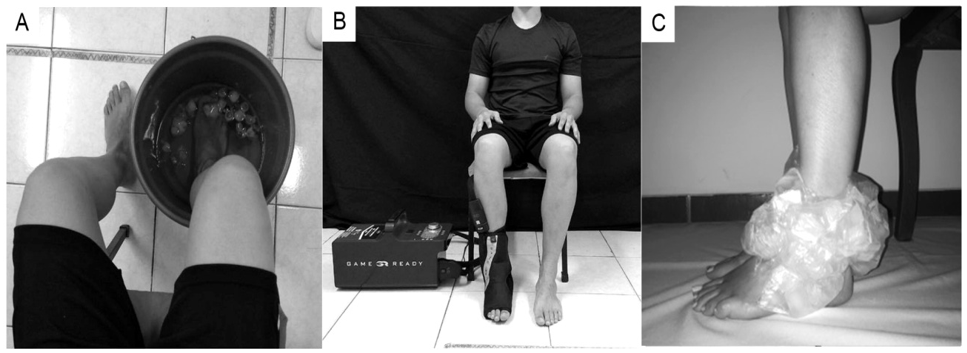
After the baseline assessment, the participants performed a warm-up with a 15-minute walk on the treadmill (Movement®) at a constant and comfortable pace. Immediately after walking, subjects were referred to one of three cryotherapy techniques for testing. For the CWI group, the ankle joint was immersed in cold water up to the mid portion of the tibia, at approximately 4°C [22], controlled by the thermal camera. For the CGRC group, the ankle joint was wrapped (cold wrap) using maximum dynamic intermittent compression (established by the equipment) and programmed to maintain a temperature of 1°C, according to the manufacturer’s instructions. For the IP group, the ankle joint was wrapped with three ice packs, each containing 500g of crushed ice. All treatments were performed for 20 minutes. The ambient temperature was always between 25 and 27 degrees Celsius. During cryotherapy applications, the participants sat on a comfortable chair, with their knee and ankle at 90º (Figure 2).

Figure 1: Flow chart depicting methodology for the assessments and interventions using cryotherapy.

Figure 2: Cryotherapy techniques.
A. cryotherapy using cold water immersion
B. cryotherapy + Game Ready® compression; and
C. cryotherapy using an ice pack.

The same position was adopted for the three interventions to reduce the effects of the peripheral blood flow on the cooling and rewarming of the skin. The SST assessment was performed immediately after, 10 minutes, 20 minutes, and 30 minutes after the cryotherapy techniques. The same procedure was carried out for the functional tests. The participants attended data collection on three distinct days and were randomized into one of the three interventional groups each day. Statistical analysis was performed using SPSS software version 2.2 (SPSS Inc. Chicago, Ill, USA). The level of significance was set at 5%. The Shapiro Wilk test was used to establish the normality of the data. The values obtained were compared using a two-way repeated measure ANOVA, one-way ANOVA, and the Bonferroni post-test. To verify the effect size (d), the following formula was used: d= (x1−x2)/averages of the standard deviations (SDs), where x1 is the average of the analyzed variable in the initial assessment, and x2 is the average of the analyzed variable in the final assessment [23]. The average of the SDs was calculated through the arithmetic mean of the standard deviations related to the initial and final assessments: (SD1+ SD2)/2. The effect size was defined as ≤ 0.5 representing a small effect, between >0.5 and ≤ 0.8, a medium effect, and > 0.8, a large effect [23].

Results

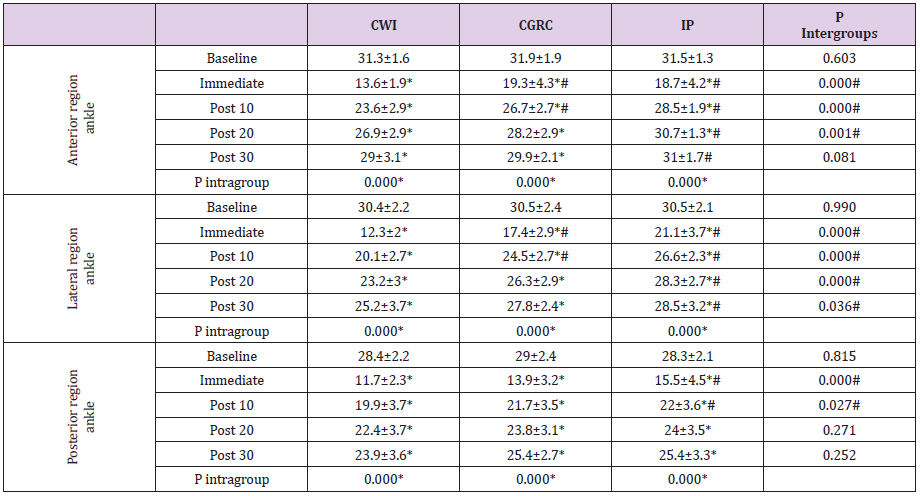
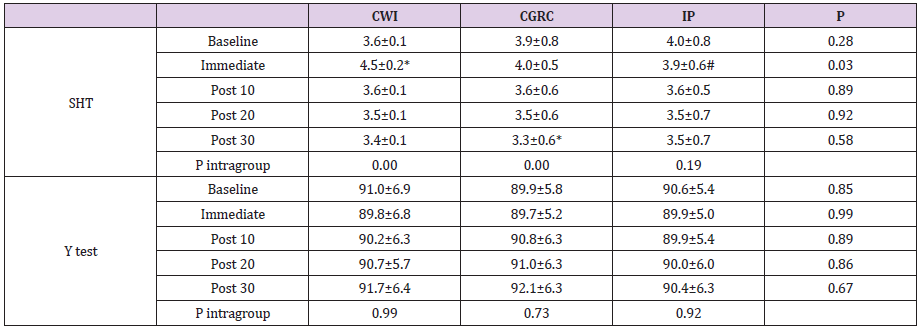
Twenty physically active subjects (10 men and 10 women) with a mean age of 21.4±1.9 years, weight of 70.7±12.4kg, and height of 1.7±0.07 meters participated in this study. The subjects engaged in physical activities (gym, soccer, running and other exercises) three to five times a week and were present at the three different data collection moments; there were no sample losses. The three cryotherapy application techniques significantly decreased the SST in the anterior, lateral, and posterior regions of the ankle when the time periods (baseline, immediately post, post10, 20, and 30 minutes) were compared. However, the IP group showed no significant difference for cooling of the anterior region of the ankle 30 minutes after application. In addition, only the CWI group (anterior, lateral, and posterior region of the ankle) and the CGRC group(posterior region of the ankle) exhibited SST sunder 15ºC (Table 1), related to analgesic effects [24]. The comparisons between the three application techniques showed that the CWI induced lower SST values for the anterior and lateral regions of the ankle at up to 10 minutes after application.

Table 1: Assessment of the SST for the anterior, lateral, and posterior regions of the ankle after the application of different cryotherapy techniques.

Note: SSP: superficial skin temperature. CWI: cold water immersion. CGRC: cryotherapy + Game Ready® compression. IP: Icepack. *Significant difference between baseline and rewarming time using the same cryotherapy technique established by repeated measures ANOVA. #Results established by one-way ANOVA for comparison between groups using CWI at different moments.

Both the CWI and CGRC applied to the posterior region of the ankle were equally effective in reducing SST at 10 minutes after the intervention. However, application of CWI produced the lowest temperature in the evaluated regions, except in the posterior region immediately after the ankle was removed from immersion (Table 1). Analysis of the effect size for SST of the anterior ankle demonstrated larger effect sizes for CWI (d = 0.90) and CGRC (d = 0.80), and a smaller effect (d = 0.20) for IP 30-minutes after application. For the lateral and posterior regions of the ankle all the application techniques demonstrated large effects (d > 0.8) for the reduction in SST at up to 30-minutes post-application. Functional performance based on the SHT indicated that the subjects in the CWI group performed worse immediately after application, with a significantly increased time. The subjects in the CGRC group showed improvement 30-minutesafter application, which was not expected. However, no performance differences were identified in the IP group (Table 2).

In addition, subjects in the IP group, even with no performance differences in the SHT at different moments, obtained better results when compared to the CWI group. For the Y test, no significant differences were identified at any moments or between the techniques used (Table 2). For the effect size produced by the different cryotherapy techniques, the CGRC group presented a large effect (d = 0.8) between the initial assessment and after 30 minutes, with improvement in agility performance (SHT). The CWI group demonstrated a large and negative effect (d = 1) between the baseline and immediately after assessments, with worse functional performance in the same test. The results obtained in the present study demonstrated significant differences between the techniques for the reduction in SST as well as changes in agility performance of the participants.

Table 2: Functional performance in the SHT and Y tests after applying different cryotherapy techniques.

Note: SHT: Side Hop Test. CWI: cold water immersion. CGRC: cryotherapy + Game Ready® compression. IP: Ice pack. *Significant difference between application times using the same cryotherapy technique established by repeated measures ANOVA. #Results established by one-way ANOVA for comparison between groups using CWI.

Discussion

The present study showed the cooling of the anterior, lateral and posterior ankle regions, and the posterior region of the ankle showed the lowest skin surface temperature (SST). All the cryotherapy techniques analyzed significantly decreased the SST; however, local cold water immersion (CWI) was better at decreasing SST when compared to cryotherapy + Game Ready® compression (CGRC) and ice pack (IP), up to 10 minutes after the end of the applications, in all regions. The importance of analyzing SST in different regions is justified by the different sites of injury in this joint (direct trauma, ligament injuries, Achilles tendon ruptures, inflammation of burses, etc.), which may respond unequally to the application of cold. The results revealed that the three techniques of cryotherapy applications significantly decreased the SST for up to 30-minutes of rewarming. The CWI group exhibited lower SST values in the anterior and lateral regions of the ankle (approximately 15 degrees immediately after application and better values at up to 10-minutes of rewarming), which is related to a local analgesic effect through inhibiting nerve conduction velocity [25].

However, 20-minutes after application in the anterior and lateral regions of the ankle, the subjects in the CWI and CGRC groups performed better than those in the IP group, which always exhibited higher SST values. These results contradict those by Kennet, Hardaker, Hobbs, & Selfe [26] and Hawkins, Shurtz, & Spears [9] who found lower temperatures after applying a ice pack compared to compression therapy. It is believed that greater rewarming after ice pack application may have occurred due to the lack of compression and worse contact between the skin and ice [21]. The cooling of the posterior region of the ankle demonstrated lower temperatures in all the techniques used, which may be justified by the decreased blood circulation of the Achilles tendon and bursa located in the posterior region of the ankle, since the connective tissue under the skin has less blood flow than the muscles, which does not favor the reheating of this place. It is worth noting that even after 10 minutes the CWI and CGRC groups presented better cooling results.

The best results associated with CWI application can be explained by the greater cooling area of contact [7], the hydrostatic pressure that redirected the skin blood flow to the central circulation [27], and the local vasoconstriction that reduces the fluid flux into the interstitial space. The intervention with CGRC provided satisfactory results that may be related to cooling associated with compression [12]. The results achieved for the effects of cryotherapy on agility performance, evaluated by SHT, confirmed the findings of previous studies, such as those reported by Macedo, et al. [22] and Furmanek, Słomka, & Juras [28] who showed worse functional performance immediately after CWI application. It has commonly been assumed that reduction in nerve conduction velocity may reduce the sensitivity of the afferent mechanoreceptors and the sensitivity of the muscle spindles with less afferent sensory information, causing damage to both the neuromuscular control and functional performance [4,25,29].

Moreover, Kilby, Molenaar, & Newell [30] and Oba, et al. [31] highlighted that the ankle joint capsule is more superficial than the majority of joints, and therefore, the receptors may be more influenced by cryotherapy application. However, after 10-minutes rewarming following CWI and at all intervention moments after CGRC and IP application, the agility performance returned to baseline values, which should be considered for the planning of physical and functional activities, training,and even for the return to sport after cryotherapy. These findings agree with those of Williams, Miller, Sebastianelli, & Vairo Williams, et al. [32] who reported that a 15-minute application of crushed ice on the ankle was not able to change the function of joint receptors. Finally, the Y test did not demonstrate any change after the application of the cryotherapy techniques, which may have occurred because this is a simple and easy test for young and healthy individuals, such as the participants of this study. Thus, we can infer that CWI was the best technique to reduce SST, followed by CGRC, and the IP provided the worst cooling.

This finding is important for clinical practice, since CWI application is widely used, low cost, and produced better results for the variables analyzed. For the posterior region of the ankle, CWI and CGRC were similar in cooling, and even at high cost the CGRC is an appropriate choice and can be used according to the preference of the physiotherapist or the patient. In addition, 10 minutes after the application of CWI, agility is worse and greater care must be taken. As limitations of this study it should be pointed out that healthy individuals were evaluated, intramuscular temperature analysis would be more reliable regarding the application of these techniques, and a force platform would be more appropriate to evaluate balance. Further research should complement the results obtained in this study.

Conclusion

The present study concluded that there is a difference in the application of the three cryotherapy techniques. The applications of CWI and CGRC were more effective in cooling and maintaining lower SST of the ankle. These two modalities should be the preferred treatment options for the anterior, lateral, and posterior regions of the ankle. CWI reduced agility performance at up to 10 minutes after cooling. Dynamic balance was not altered by any of the cryotherapy techniques tested. Ethics Committee of the State University of Londrina (UEL), Londrina, Paraná (Opinion No. 2.117.378). Clinical Trials (NCT03659474).

 For more Articles on :  https://biomedres01.blogspot.com/

Faba Bean Varieties Response to Phosphorus Application on Yield and Yield Components at Kulumsa Area of Tiyo District, Arsi Zone, South-Eastern Ethiopia

  Faba Bean Varieties Response to Phosphorus Application on Yield and Yield Components at Kulumsa Area of Tiyo District, Arsi Zone, South-Ea...