Showing posts with label Behavioral medicine journals. Show all posts

Saturday, June 25, 2022

Home-Based Mirror Therapy with Individual Set of Exercises Improves Phantom Limb Pain and Phantom Limb Sensation of Lower Extremity Amputees

Home-Based Mirror Therapy with Individual Set of Exercises Improves Phantom Limb Pain and Phantom Limb Sensation of Lower Extremity Amputees

Introduction

Lower limb amputation could be the final decision to solve uncurable disorders due to trauma, infection and other general diseases [1,2]. However, the amputees might suffer lasting phantom limb phenomenon (PLPh) (including phantom limb pain (PLP) and phantom limb sensation PLS [3]) with many negative impacts on their life such as the increasing demand of pain killer, depression and impairment of daily activities and social functions [4]. The rate of PLPh is about 85% [5,6]. A study found that more than 50% of patients with PLP suffered daily pain with the significant intensity rated from moderate to severe [7]. The treatment mainly includes three main groups: pharmacology, non-pharmacology and surgery. Each approach has its own advantages and disadvantages relating to complications and cost benefit. Recently, mirror therapy is emerging and considered as a safe, economic and effective procedure in treatment of PLPh [9-11], although it was first used by Ramachandran VS in 1996 [8]. By placing a mirror parasagittally between the arms or legs and viewing the reflected movements of the intact limb while attempting simultaneous movements with the phantom limb, the intention is that the patient perceives the reflection to be their amputated limb. This phenomenon possibly addresses incongruence between proprioceptive and visual inputs caused by cortical reorganization. Currently, the method is improved with many kinds of exercises so that the patients could do at home by themselves. However, one of the key for success is to select the appropriate exercise for individual.

Objectives

Our study was designed to investigate the improvement of PLP and depression after home-based mirror therapy with personalized exercises for lower limb amputee amputation.

Methods

We conducted the study with any patient who did not reduced the PLP symptoms after a month of surgery

Criteria

Inclusion Criteria

a) Unilateral lower limb amputation

b) Phantom limb pain score (40-100 on VAS)

c) Either gender.

Exclusion Criteria

a) Amputees with psychological/neurological impairments.

b) Amputees having neuropathic pain other than phantom limb pain.

c) Patients having visual-spatial impairments.

d) Patients having residual limb pain.

e) Inability to give informed consent.

f) Infectious stump

g) Severe hearing loss

h) Any condition that restricts the movement of opposite limb, pain or limited range of motion in the intact limb

i) Infectious and systematic diseases.

Research Design

Case -Series Study

Procedures

The patients were initially recorded information and assessed about pain with VAS and their use of pain killer and depression with CESD(Center for Epidemiologic Studies Depression Scale. Each patient also received an appropriate mirror and a booklet that contains guides of basic eleven exercises. In general, the exercise program was based on Netherlands guidelines [12] and the Ministry of Health’s guidelines on mirror therapy for PLPh [13] and included three groups: facilitation of visual illusion, sensory exercises, and basic motor exercises. However, each patient had individual exercises according to their preferences. The patients were asked to try every exercise, note which one made them comfortable and select at least one exercise of each group. That meant each patient had a personal set of exercise.

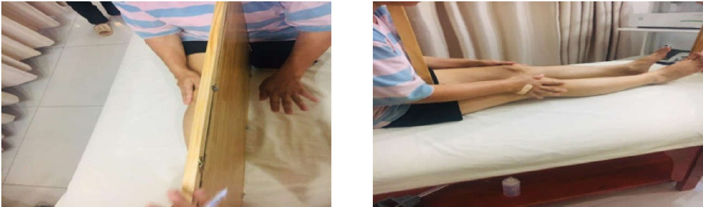
In this study, we used a 3mm thick acrylic glass with a cushion and a wooden frame to enhance its stability and prevent the injuries caused by the edge of the mirror. It had the enough length and width so that the reflection of the normal legs during exercise was complete and clear in the mirror (Figure 1). We recommended they would finish their set twice a day, at least 15 minutes per one time. The investigator would perform video call to check their adherence every two days of the first week and then once a week for 3 weeks. After finishing the one month program, the patients would be reassessed.

Figure 1: Exercises with mirror (Source: Actual pictures).

Data Analysis

All analytical procedures use Stata 14.2 software.

Results

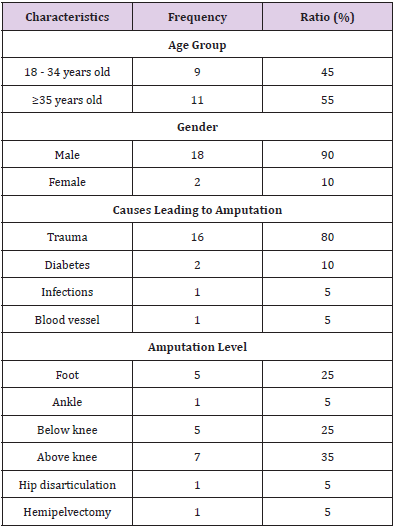
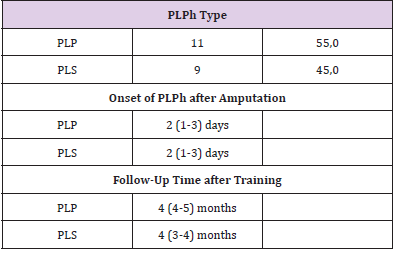
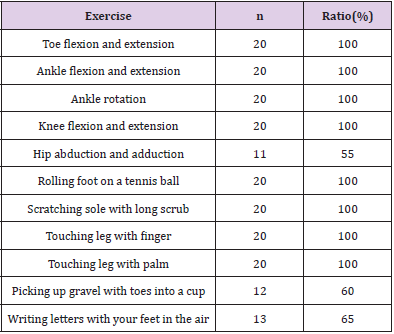
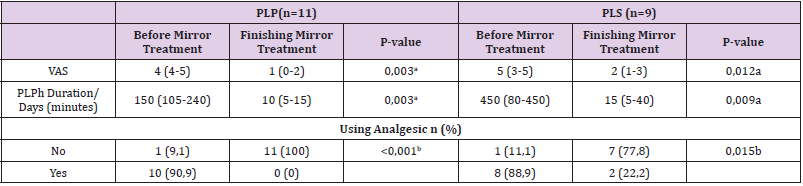
20 patients were recruited in the study from January 2020 to August 2020 at HCMC Hospital for Rehabilitation and Occupational Diseases. More than half of them were 35 years or older (55%). Male was the majority (90%). The cause of amputation mainly was trauma. The level of amputation around knee was met in 60% (Table 1A). The point of time to start the mirror therapy was about 35.5 days after amputation. The average follow-up time was 4 months. The pain characteristics were illustrated in Table 1B. The chief complain was both phantom limb pain(PLP) and phantom limb sensation (PLS). Its onset appeared rather soon from 1 to 3 days after amputation. The pain intensity was significant from moderate to severe. The sorrow lasted long with 150 minutes per day in average (Table 2). The depression condition was illustrated in Table 3. Two third of patients had signs and symptoms of depression with CESD more than 16. 19/20 patients demonstrated their adherence at the time of call. One half said they could finished all the exercises with interesting;nearly50% did not prefer Hip abduction and adduction , picking up gravel with toes into a cup and writing letters with your feet in the air (Table 2).

Table 1A: Demographic of the patients (n=20).

Table 1B: Pain characteristics.

Table 2: The patient’s preference of exercise.

Table 3: PLPh results at the time end of study (n=20).

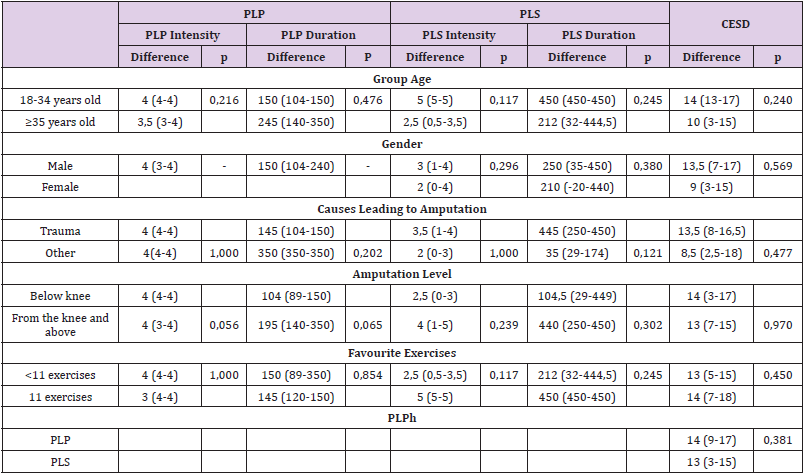
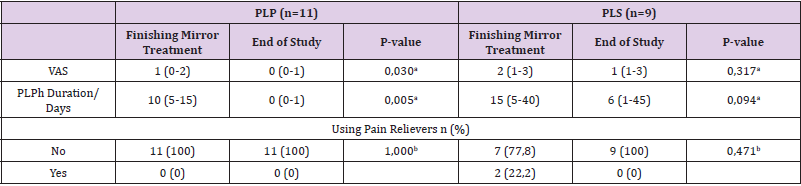
The intensity and the total daily time experiencing pain(TDTEP) of PLP significantly decreased after training mirror exercises in both groups of patients with PLP and PLS (Table 4). The extent of drug use also decreased up to ‘no use’ in patients with PLP and to a rather small extent in patients with PLS (p < 0.05 Table 4). The results was still kept maintenance or improved (Table 3) after finishing the therapy program. Depression scores also decreased after treatment and continued to decline (p <0,001 Table 5). The study results did not find a statistical significance relationship between the effect of reducing the intensity, duration of PLPh, depression score CESD with factors such as age, gender, cause of amputation, degree of amputation with p-values > 0.05 (Table 5). We did not find the relationship between pain and depression improvement with the factors such as age, gender, cause of amputation, level of amputation (Table 6).

Table 4: PLPh results at the time of finishing mirror training (n=20).

Table 5: The results of depression after mirror treatment (n=20).

aAccredit Wilcoxon signed-rank, bAccredit Fisher, cAccredit Chi square.

Table 6: The relation between improved difference PLPh, CESD and other factors (n=20).

Discussion

Post-amputation phantom limb pain (PLP) is highly prevalent and might be very difficult to treat. The high-prevalence, high-pain intensity levels, and decreased quality of life associated with PLP compel scientists to find out the ways to prevent, manage, and reverse this chronic pain condition. Currently, Nonoperative and non-drug PLP interventions include targeted muscle reinnervation (TMR), repetitive transcranial magnetic stimulation (rTMS), imaginal phantom limb exercises, mirror therapy (MT), virtual and augmented reality, and eye movement desensitization and reprocessing (EMDR) therapy. They are reported to be effective , however, no one is widely accepted or clearly superior to the others. Moreover, not one intervention has been found to be consistently effective [16]. Mirror therapy seems to be an suitable way for developing countries with their high rate of amputation because mirror could be available with low cost in anywhere. Mirror therapy is expected to be widely used for the treatment of phantom limb pain since it is easy to use at both home and in outpatient departments.

There are many theories to explain the mechanism of mirror therapy. Despite how the therapy has effect on central nervous system and reduce pain, one of the most important keys for success is the patient’s adherence. It is much easy to strictly follow the treatment program if the program includes simple and feasible exercises. It is also more significant if the patients experience the exercises at least one time and that makes them comfortable. That is the reason why we built a set of exercises basing on the patient’s preference. To our knowledge few study have similar treatment approach. Our encouraging results reinforce the previous studies in which mirror therapy reduced PLP in lower extremity amputees [9-11,16]. However, the “rebound phenomenon” after stopping practicing mirror exercises might be a big concern. In order to evaluate the stability of the effectiveness we still followed up our patients for about 4 months . We found that the intensity and TDTEP of PLPh continued to decrease. We also found some accompanying positive effects such as the decrease of the demand of pain killer and improvement of depression condition. The Darnall BD study also gave similar results [10].

Conclusion

Home based Four- week practice of mirror therapy with an individual set of exercises based on the patient’s result in significant reduction of PLP and PLPh and their improvement of depression condition in lower limb amputees. The interventions are simple and cost- benefit thus appropriate to the low-resource communities.

For more Articles on : https://biomedres01.blogspot.com/
Monday, June 6, 2022

Preventive Practice on Earthquake Preparedness Among Higher Level Students of Dhaka City

Preventive Practice on Earthquake Preparedness Among Higher Level Students of Dhaka City

Introduction
Disaster is a very common phenomenon to the human society. The disaster had been taking place in human society before the evolution of the mankind. And the disaster has been believed to be having its existence and experience since time immemorial. People are becoming more and more vulnerable to disasters of all types. This includes both natural and man-made. Some of the major disaster includes earthquake, flood, cyclones, landslides, droughts, accidents, forests fire, war etc. With the technological advancements and progress, the force of disasters is also changing. When they occur, they surpass all preparedness and eagerness of society and pose bigger challenge to them. This is quite true in case of both developed and developing countries.

Disaster can be grouped under the following headings:

a. Natural disasters, which can be geophysical (e.g., earthquakes, tsunamis and volcanic eruptions), hydrological (e.g., floods, avalanches), climatologically (e.g., droughts), meteorological (e.g., storms, cyclones), or biological (e.g., epidemics, plagues).

b. Man-made emergencies, such as armed conflicts, plane and train crashes, fires and industrial accidents.

c. Complex emergencies, which often have a combination of natural and man-made elements, and different causes of vulnerability and a combination of factors leads to a humanitarian crisis. Examples include food insecurity, armed conflicts, and displaced populations (Coalition).

Earthquake is a violent tremor in the earth crust, sending out a series of shock and aftershock waves (L waves) in all direction from its focus. Earthquakes constitute one of the most terrible natural hazards which often turn into disaster causing extensive devastation and loss of human lives and their properties. [1] As, we know students or youth are one of the best ways of circulating message among the other which includes the family members. The age group being active enough and to implement themselves into development activities are important especially during humanitarian emergency.

Earthquake in Bangladesh

Bangladesh is called a land of natural disasters because almost every year she is attacked by different kinds of natural disasters. Every year some common natural calamities like floods, cyclones, tidal bores, excessive rainfall, earthquake, and drought visit Bangladesh. Among all the natural calamities, floods and cyclones are most common. It visits, especially in the rainy season. It causes great harm to our agriculture, houses, and properties. However, any kinds of natural calamities cause a heavy loss in our country. Many people are killed, many are lost, and many become homeless. Many cattle die. Many houses collapse. Many fatal diseases like cholera, typhoid, diarrhea etc. break out. Educational institutions, trees and communication systems are damaged due to natural calamity. In a word, natural calamities cause untold sufferings to people. However, we cannot protect natural calamities, but we can take some measures to minimize losses of the victims. We can raise awareness among the people and train them in this regard [2].

Bangladesh is geographically located on a seismically active region and highly vulnerable to earthquakes. Its northern and eastern regions are known for experiencing earthquakes that surpass 5 on the Richter Scale; and cities such as Dhaka, Chittagong and Sylhet are particularly vulnerable as a result of rapid urbanization, poor planning, high population density, and innumerable high rises and buildings that are yet to meet National Building Codes [3]. Bangladesh is one of the most vulnerable countries of the world in terms of natural and anthropogenic hazards, is a low-lying deltaic country covering an area of 147,470 sq. km and supporting about 150 million people with population density of 1033 per km. sq. The geographical setting and meteorological characteristics have made the country vulnerable to different geo-hazards and hydrometrological hazards [4].

Dhaka expanded very quickly due its growing importance as the capital. Buildings were being built on the riverside humus soil in the east and west. In the low-lying areas, they were built using the arching method. These attractive, multi-story buildings were constructed using faulty designs. The bottom floor is a parking space, and they are called soft story buildings. Due to earthquakes or even strong winds, the lateral deflection of the building top caused by the ensuing tremors cannot be resisted due to these large, unobstructed spaces on the bottom floor (known as a soft story collapse). These soft story tall buildings are vulnerable to distant earthquakes. Widespread brick masonry, non-engineered and poorly constructed buildings would be hit worse than ever in the history of Dhaka. The catastrophic picture will be beyond our imagination and could even lead to abandonment of the city [5].

The researchers, however, could not say when the earthquake would occur -- whether it is imminent or would occur after 100 years. The study has found evidence that the northeastern corner of the Indian subcontinent is actively colliding with Asia, potentially posing a major earthquake risk to the region. After using ground and satellite GPS monitors to measure surface activity between 2003 and 2013, an international team of researchers has shown Bangladesh is sitting on a huge subduction zone [6]. A strong earthquake of 6.8 magnitude tremors, with the epicenter in central Myanmar’s Chauk was felt in Dhaka as well on August 2016 leaving high-rise buildings shaken in the cities and leading to panic among citizens [7]. The major earthquakes that have affected Bangladesh since the middle of the last century are the Cachar Earthquake of January 10, 1869, the Bengal Earthquake of July 14, 1885, the Great Earthquake of July 12, 1897, the Srimangal Earthquake of 8th July 1918, the Dhubri Earthquake of July 3, 1930, the Bihar-Nepal Earthquake of January 15, 1934 and the Assam earthquake of August 15, 1950. Of these, only the Bengal Earthquake of 1885 and the Srimangal Earthquake of 1918 had their epicenters in Bangladesh [8]. The earthquake disaster risk index has placed Dhaka among the 20 most vulnerable cities in the world. Dhaka with its population of around 13 million and enormous poorly constructed and dilapidated structures signifies extremely vulnerable conditions for massive loss of lives and property in the event of a moderately large earthquake [5].

Justification of the Study

Dhaka is too much vulnerable of earthquake disaster due to some reasons. First of all, the population density is very high in Dhaka city. Secondly, it is predicted that the secondary hazard like fire break out from gas and electricity line will have more disastrous impact after earthquake. Thirdly, not only building codes are not maintain during construction time of most of the high-rise apartment buildings and most garment factory buildings but also they have been constructed without open spaces and most have encroached upon the streets and roadways [9]. A powerful earthquake occurred in Nepal on 25th April 2015 where the tremors were also felt in other South East Asian countries including Bangladesh, India and China. Bangladesh was jolted twice by tremors and, although the tremor was not as severe, it was reported to be between 4 and 5 on the Richter scale. In Bangladesh, six lives were lost, and more than 200 people were injured and were taken to hospital. There were also many buildings that collapsed in the mega city Dhaka and its surrounding areas. This experience and the lessons learnt highlight the importance for national earthquakeproof building regulations and systems to lessen the damage and devastation of any future earthquake [10].

Method and Materials

The Descriptive Cross-sectional study was carried out for the duration of 6 months (December 2016 – May 2017) which the study sample was from Mirpur Cantonment Public School and College, (11 and 12 class). As the institution have good flow of students and the students there were capable of reading and understanding English language easily. Semi-structured both open ended and close ended questionnaire was used for this study. The sample was calculated from the formula.

n= (Z^2*p*q) / d^2

Due to time constrain the sample of 115.

Ethical Considerations

The required permission was taken by the Ethical Review Committee of American International University-Bangladesh (AIUB) to conduct the research. Also, Prior Permission from concerned Authorities was received for conducting study in their premises.

Results and Findings

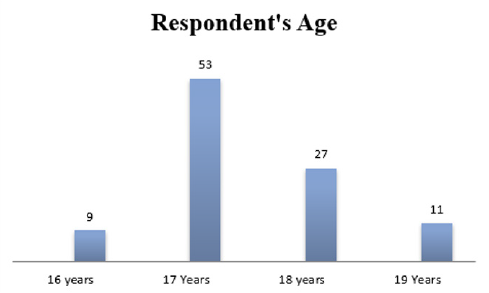
The study was done with 115 participants; 56 (48.7%) were male and 59 (51.9%) were female. Most of the respondents were of the 17 years (Figure 1). Most of the respondents followed Islam religion 111 (97%) and only few respondents were Hindu 4(3%). Majority had their home was in residential area 70 (60.9%) and about 41 (35.7%) had their in commercial area and 4 (3.5%) near to the industrial area. Out of 115 respondent 64 (55.7%) answered they have experience or witnessed the disaster in their locality. Whereas 51 (44.3%) mentioned they have not yet experienced or heard of the disaster. Out of that 64 (55.7%) respondent, 29 (45.5%) of the respondent answered that they have witnessed flood in their locality. Similarly, 19 (29.6%) mentioned that they have experienced earthquake. Out of which only 7 (11%) said that they have experienced witness cyclone. Only, 4 (6.2%) of them answered heavy rainfall. Whereas few i.e., 2 (3.1%) of them answered building collapse as the disaster they heard or knew in their locality.

Figure 1: Age of respondent.

All the respondents 115 (100%) of the respondent has heard about the Earthquake. Out of 115 respondent 89 (77.4%) respondents said that they have heard the term disaster preparedness. Only, 111 (96.5%) of the respondents answered that they know about the cause of earthquake. Out of those 111(96.5%), 80 (69.6%) respondents said that the main cause of the earthquake if movements of the plates. Likewise, 30 (26.1%) of the respondent answered natural occurrence and 3 (2.6%) of the respondent don’t know about the cause. Out of 115 respondents, 41 (35.7%) respondent said unsecured heavy items falling being the main reason for the death of the people at the time of earthquake.

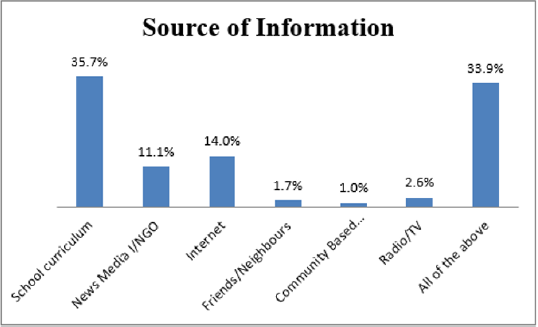
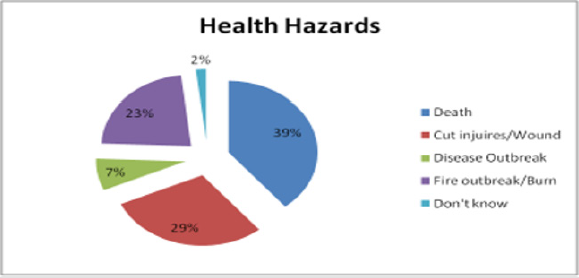
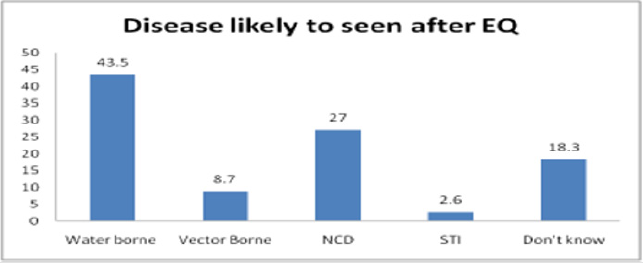
Likewise, 31 (27%) of the respondent answered all of the given options i.e., unsecured heavy items falling, being buried, shattered window, loose opening electric wires, collapsing wall/ceiling. And 14 (12.2%) of them answered collapsing wall/ceiling as the reason. The least answered was a shattered window 2 (1.7%). And 8 (7%) of the people answered that they don’t know. 115 (100%) of the respondent has received the information about the earthquake. Source of the information on earthquake was mainly the school curriculum 40 (35.7%). 37 (33.9%) respondent all the mentioned for the source of information about the earthquake. And 16 (14%) received information Internet. The least was 1% which was from the community-based program (Figure 2). About 45 (39%) of the respondent answered death as the main hazards that could be seen after the Earthquake followed by cut injuries/wound by 33 (29%). The least 3 (2%) did not know about it (Figure 3). Respondents were asked about the disease that are likely to be seen after earthquake, 50 (43.5%) of them have answered water borne disease. Followed by 31 (27%) non-communicable disease, 21 (18.3%) of the respondent answered that they do not know about the situation on what disease could be seen after the earthquake. And 3 (2.6%) respondents have answered STI. We can say that they do not have much knowledge regarding the disease after the earthquake. (Figure 4).

Figure 2: Source of Information.

Figure 3: Knowledge of respondents on the health hazards of EQ.

Figure 4: Disease likely to be seen after earthquake.

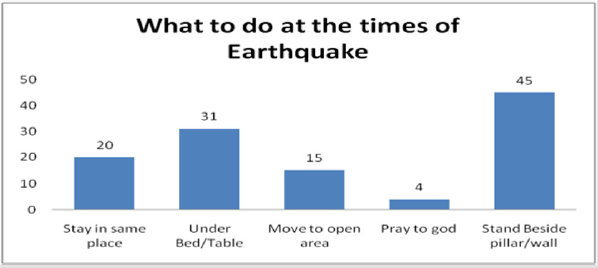
Out of 115 respondents, 55 (48%) has answered beam and pillar, 42 (36.5%) under the bed/Table as the safest place to be at the time of earthquake. Apart from the measure some 5 (4%) answered that they would pray to God at the time of earthquake. Likewise, 17 (15%) of them have answered that they would move to open area for the preventive practices. 23 (20%) preferred to stay in the same place (Figure 5). Out of those 115 respondents 39 (34%) of the total respondent has made the go bag. In which, only 29 (26.1%) of the respondent answered correctly i.e., first Aid, water, torch, dried foods etc to be kept in the Go bag. Whereas 5 (4.3%) of them answered incorrect i.e., they answered clothes or only helmet as an essential thing that needs to be kept in the Go bag. And only 2 (1.7%) of the respondent had answered only first aid as the most important things to be kept in the go bag. 100% of the respondent’s covered Disaster in their curriculum.

Figure 5: Time of Earthquake.

Calculation of Knowledge Score

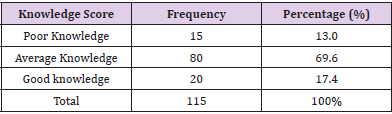
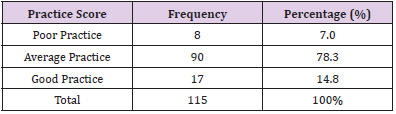
The knowledge score has been calculated by the formula Mean + S.D. And all the right answer to the knowledge related variables were given 1 mark, similarly to all the wrong ones were given 0. From which the total knowledge score has been calculated. 80 (69.6%) of the respondent have an average knowledge, 15 (13%) have poor knowledge score. Only 20 (17.4%) of the respondent had the good knowledge level on the earthquake and its preparedness. With the findings we can say that majority of the respondents have average knowledge regarding earthquake and its preventive measure. Still, many respondents lack basic information on earthquake and its preparedness (Table 1). Similar calculation was done for the practice as well, by using the formula Mean + S.D. giving right answer 1 mark and wrong ones 0. Out of 115, 90 (78.3%) of the respondent has the average practice regarding the earthquake preparedness. Similarly, 8 (7%) respondents had poor practice and only 17 (14.8%) respondents had good practice level out of 115 respondents (Table 2).

Table 1: Knowledge score on the earthquake preparedness among the higher secondary level students.

Table 2: Practice Score on the earthquake preventive measure of the higher secondary level students.

The association of the knowledge about the earthquake and the preventive practices of the earthquake among the higher secondary level’s students were done in above table. Where, from the table above we can clearly see that the respondents who had good knowledge had poor practice i.e., 50 (43%) out of 115 respondents. Similarly, 50 (43%) of the respondents had good knowledge and good practice as well. In the other hand, the respondents with poor knowledge i.e., 8 of the respondents had poor practice but 7 of the respondents had good practice disregarding they fall under the poor knowledge. From the above table it is clearly seen that the good knowledge is higher, but the practice seems poor among the respondents. The above table is the association of the knowledge of the earthquake and practice score of the preventive practices of the respondent. The chi-square has been done to see the association of the knowledge and practice.

Where,

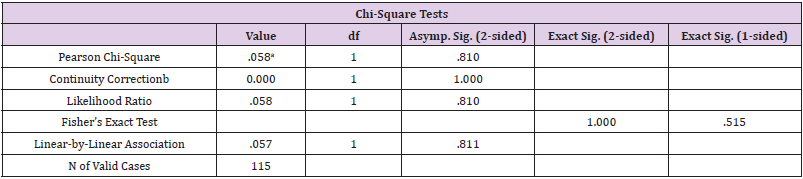
Pearson’s Chi-square ‘P’ value (P) = 0.810

The minimum expected outcome is 7.43.

From the above table we can understand there is no association between Knowledge and practice in regard to earthquake. For the association between knowledge and practice about the earthquake among the higher secondary level students, ‘P’ value was 0.810. i.e., it is not significant. We can say knowledge and practice do not have any association. For association P value should be smaller than 0.05 i.e. (P < 0.05). But here, 0.810 > 0.05. So, we can say that knowledge and practice are not associated. Here, we can also say that the knowledge about the earthquake and the preventive practice on the earthquake among the higher secondary level students of Dhaka city is not associated (Tables 3-6).

Table 3: Association of Knowledge on earthquake and preventive Practice about the earthquake among higher secondary level students.

Table 4: Chi-square tests of the Knowledge on earthquake and preventive Practice about the earthquake among higher secondary level students.

Table 5: Association between knowledge about the earthquake and gender.

Table 6: Association between knowledge about the earthquake and gender.

The association of the knowledge about the earthquake and the gender of the involved participants among the higher secondary level’s students were done in the above table 5. From the table above we can clearly see that the respondents who had good knowledge were mostly females i.e., 56 (48.9%) of the total respondents. Likewise, male had good knowledge with only 44 (38.2%). From the above table 5 it is found that the good knowledge is higher among the female participants than in the male. The above table is the association of the knowledge level about the earthquake and gender of the respondent. The chi-square has been done to see the association of the knowledge and the gender of the respondent. Where, Pearson’s Chi-square ‘P’ value (P) = 0.009, The minimum expected outcome is 7.30. From the above table we can understand there is association between Knowledge and gender of the respondent towards earthquake. For the association between knowledge and gender ‘P’ value was 0.009, i.e., it is significant. We can say knowledge and gender do have association. For association P value should be smaller than 0.05 i.e. (P < 0.05).

Discussion

Earthquake is contingent and unpredicted and can only be dealt by effective disaster management plans. Disaster including earthquake never happened does not mean it can never happen. It can happen at any time and at any moment. The study has aimed at examining the level of knowledge and practice towards earthquake preparedness among higher secondary level students of Dhaka city. The study has been carried out to a small portion of Dhaka City. Dhaka, the capital city of Bangladesh is one of the fast-growing cities in the world. Since its independence, rapid urbanization turned Dhaka as one of the megacities of the world. The rapid growth of Dhaka’s population forced haphazard & unplanned development and speedy construction of new buildings in any and every available space. Due to this, the capital city is now in a serious threat of upcoming massive disaster like earthquake.

In this study the higher secondary student’s knowledge level on earthquake and practice level of the earthquake were analyzed using the chi-square test which after the analysis found not satisfactory. The highest frequency and percentage falls under average score in both knowledge about the earthquake and preventive practice level among the higher secondary level students of the Dhaka city. With that we can say the respondents who are higher level students of age group 16-19 do not have good knowledge on earthquake and practice regarding earthquake and its preparedness. In this study the poor knowledge score was 15 (13%), average 80 (69.6%) and good knowledge score 20 (17.4%) among the 115 respondents.

Out of the 115 respondents most of the respondent has average knowledge and very few 20 (17.4%) has good knowledge about earthquake and the preparedness of it. Similar results were found in the study that was done in India among 540 secondary school teachers in which the teacher’s knowledge was not satisfactory level. In which majority of the teachers 448 (82.96%) had average knowledge, 39 (7.22%) had good knowledge, and 53 (4.26%) had poor knowledge regarding disaster management. It clearly indicates that their gross deficiency in knowledge of disaster management among schoolteachers (India, 2014).

Similarly, results were also found in the study done which was done with 375 undergraduate medical students. Where the findings came out, that undergraduate medical students had little knowledge about disaster and its preparedness (Sinha, 2008). In this study the significant of the knowledge and practice was also done to see and analyze if the knowledge and the practice of the earthquake and its preparedness among the higher-level secondary students are associated or not. For that in this study the cross tabulation of the knowledge score about the earthquake and practice score of was done. To be significant Pearson’s chi square needs to be lesser or equals to 0.05. But in this study, cross tabulation (chisquare) of knowledge and practice of the respondent was done.

Where after the cross tabulation the knowledge and the practice were insignificant towards each other, i.e. 0.89 > 0.05. With the findings of this study, we can say that the knowledge about the earthquake is not significant towards the practice among the higher secondary level students. From the findings it can be said that it is not necessarily needs to be a direct relationship of knowledge level to the practice level.

Similar results were found in the study done among the 540 secondary level students of India. There is gross deficiency observed in relation to knowledge and practices of teachers of the study done in India. The correlation of knowledge and practices of teachers by calculating correlation coefficient (r) between these two parameters were done where it was found moderate correlation. It indicates that knowledge does not bring substantial difference in their practices [11]. Likewise in the crosssectional study that was conducted among 144 nursing educators representing Division of Surgical Nursing, Florence Nightingale Faculty of Nursing, University of Istanbul, and two universities in Miyazaki, Japan showed the similar results. From its finding, regardless of knowledge on disaster preparedness and response, there was no statistical significance on personal preparedness The analysis showed that the education level was not a significant factor for taking precautionary actions against an earthquake (p=0.150) [12].

The knowledge score and the sex of the respondent were cross tabulated to see their significance of knowledge and sex of the respondent i.e., 0.89 > 0.05. The sex was significant to the knowledge level for the earthquake and its preparedness. Similarly, the mean score of female respondents was 20.85 and the male was 18.29 in this study. Which means the knowledge of the female was higher compared to the males. In a way we can say females are higher knowledgeable in terms to male of the higher secondary level students of the study. Similar result was found in the study done in 375 undergraduate medical students where the mean score was 8.77 which was slightly higher in females [13-16].

Conclusion and Recommendation
The knowledge of earthquake and its preparedness among Higher Secondary Student were average. Though they had a good knowledge on disaster, still few students were unable to answer about the preparedness meaning. They knew about the causation about the Earthquake, but few are unaware of the fact if earthquake can ever hit Dhaka city or not. Though the disaster and earthquake knowledge has been provided from the college but still more awareness programmed on earthquake preparedness in school should be carried out focusing on behavioral change of the students.

For more Articles on : https://biomedres01.blogspot.com/
Wednesday, June 1, 2022

The Era of Online Education in Indian Physiotherapy: A Boon or Curse

The Era of Online Education in Indian Physiotherapy: A Boon or Curse

Introduction
Education is an enlightening experience. It is the process that facilitates learning or training of the young minds by imparting knowledge, imbibing values, and morals, encouraging self-thinking and beliefs and most importantly acquiring life lessons and survival skills. To put it in simple terms – education aims to develop completeness in a being by probing the individual to think, feel and act in various situations. The aim of this review is to highlight the road travelled for physiotherapy education during the past year under the influence of the COVID 19 pandemic. The objectives of the study are to enumerate the various methods adopted during these challenging times to ensure continuity of the teaching-learning process on the way to train students from novices to professional physiotherapists.

Ancient Indian Medical Education

India has been the hub of education since ancient times. The Indian education system being culturally advanced and spiritually enriched operated under both formal and informal settings were built on the sole purpose of promoting individual self-realization. The religion-based system slowly evolved to formulate the Gurukul system which were residential schools of learning usually at the teacher’s house or spiritual places. Students gained knowledge through listening, memorizing, assimilation and interpreting fundamental concepts followed by the last stage which included deeper understanding, formulating self-theories and application in daily life. Earliest medicine practiced by sages of ancient India was Ayurveda and Siddha. The other fields and faculties developed consequently. The surgeon Sushruta practiced techniques which are now the base of physiotherapy in India. Medical students completed 7 years of training and vigorous testing before independent practice. This system modified over the following years to accommodate to the changing era and development, leading to the formulation of the modern education system ever advancing to face the digital and global frontiers [1-3].

Physiotherapy in India

Physiotherapy is one of the noble health professions working to improve human movement and function. Therapeutic knowledge and approaches are used by physiotherapists to evaluate, diagnose, and treat patients holistically to improve their physical and mental health, thereby enhancing their quality of life [4]. An epidemic of Poliomyelitis in Mumbai during 1952, initiated the establishment for the first Physiotherapy school in 1953 as a joint collaboration between Indian Government and WHO [5]. With establishment of the Indian association of Physiotherapy in 1962, the field was promoted with many teaching institutes established all across India dedicated to training more and more students. Rules and regulations were established, curriculums were formulated, and the field is blossoming by the day.

Online Physiotherapy Teaching/Learning in India

COVID 19 pandemic has forced countries to adopt measures of safety, social distancing, stay at home directive etc. This has impacted the Indian education system quite hard. Institutes were forced to look out of the box to continue the education process leading teachers to adopt virtual learning tools. Online learning is any learning experience attained by using whichever device with internet access in synchronous or asynchronous environments [6]. Teachers were introduced to various online apparatus, trained to use them, and made to connect with students in this format. This transition from traditional environment to remote virtual format has led to the emergence of blended and hybrid classrooms [7]. Online Pedagogy has become the need of the hour. The pandemic has brought the near future online training to the current now. The anytime-anywhere feature of this mode has proved to be highly beneficial in these trying times. The student educational experience was also open to the fact that each one can now learn at their own pace. Self-directed learning was gaining more importance now more than ever. Connectivity across the globe for various purposes is now possible smoothly. The scope of learning has advanced tremendously breaking geographical, language and many other plausible barriers. Students can learn using devices such as smart phones, tablets, laptops etc. from their place of comfort.

Modes Used for Online Education

The quest for the best mode of delivering information and educating students begins here forth. Both asynchronous and synchronous objectives must be addressed. Multiple platforms and software’s are being currently used to deliver sessions. Few of them are Webinars, Zoom Meetings, Microsoft Teams, Google Meet, Telegram, WebEx, Skype you tube video interactions etc with assignments given on google classroom, WhatsApp, Emails etc. Videos can be uploaded to repositories such as Google drive and shared with the entire class for improving student understanding and thus, learning. A study done by Munjal and Zutshi, using webinar to educate physiotherapy interns showed that students preferred webinar-based teaching to classroom atmosphere with practical skills being a limitation for its regular use [8].

Barriers

Challenges identified during online teaching/learning are quite alarming too. Modifying the environment and getting accustomed to virtual models while feeling equally overwhelmed about the pandemic is one of the biggest trials. The problems range from technology support, infrastructure, funding, curriculum and syllabus planning and designing, universal education programs and reforms, research and innovations etc. The objective of education goals is somewhere lost in understanding and perception and further implementation in actual society. Digital inequality is also a rising factor that needs to be considered. Negative attitudes of both students and teachers towards acceptance of new technology is a serious issue. Kaur et al in their study concluded that even on eliminating various barriers, online learning is not a replacement for traditional teaching methods [9].

Teacher’s Concerns

Physiotherapy is a profession which relies very much on hands on skill which has become difficult to achieve due to a virtual environment. The entire skill based psychomotor domain is now being converted to virtual models. It is a constant worry for the teacher to understand whether the students have actually grasped the concept required to implement both preclinical and clinical skills. Lack of personal and eye to eye contact with students makes it tough to gauge their level of understanding. Guided practise, communication with patients and working with community becomes essential [10]. Dhawan in his study coined the term “Panicgogy” to summarize the situation of the educators who have converted the existing material available into online framework as soon as possible leading to chaos [11]. Creative and innovative teaching to grasp the student attention specially to learn skillbased activities still pose a major concern. It was becoming more and more tiresome to monitor each and every students’ progress over the screen. There is also high level of stress and exhaustion due to lack of a technology enabled environment conducive for conducting sessions. Creating online student appropriate material for independent learning requires meticulous planning and designing. Some teachers find it difficult to construct meaningful content, patient scenarios, practical simulations etc. to complete the learning objectives. The main challenge is to capture and retain the students’ attention. Educators find it hard to connect to students due to lack of face-to-face interactions. Digital divide and digital illiteracy also add to the anguishes for senior faculty who find it difficult to adapt to the technology.

Student’s Woes

Though initially the concept of studying while enjoying the comforts of home was very exciting, soon bitter truths of reality set in. The loss of formal institutional environment affected student concentration, attention, seriousness and eventually learning. Thakur in her study on undergraduate health science students deduced that majority of them were not studying regularly. Selfstudy and self-learning were not achieved during the lockdown period [12]. Home environment though comfortable became a route cause of multiple distractions. The enjoyable learning experience with peers was immensely becoming a burden. Social isolation is an unintended by-product. Kumar et al in their study found that though students were comfortable with online classes, majority of them were eager to begin regular classes once the lockdown was lifted indicating that classroom teaching was more effective especially for learning skill-based lessons [13]. Moreover, the increased screen time is affecting their health as well with symptoms such as eye irritation, headaches, body pains due to sedentary and abnormal postures etc. Sheer boredom to attend sessions are side effects to this mode of learning. They are also losing confidence to develop physical contact and rapport with the patients by the day. Students’ perceptions and mental health need to be considered as well.

Physiotherapy in India - Towards the Bright Future

Physiotherapy is a humble profession providing service to mankind. Learning is a lifelong, continuous process. The pandemic opened the pandora of technology available at our disposal for enriching the teaching/learning. There is a radical transformation observed in all aspects of education. Verma et al in their interaction with academicians, found that majority of the teachers have gracefully accepted online modes of teaching and acknowledge the fact that it is boon in the current situation [14]. Many complex concepts in physiotherapy, biomechanics and biological conditions can be explore and understood better with use of 3-D models and other applications. Smart boards and technology enabled learning solutions need to be encouraged. The entire unexplored arena of telehealth and telerehabilitation can be explored further. We need to remember that education not only increases knowledge but also brings about personality and behavioural changes. We as educators, mentors and policy makers should form an all-inclusive curriculum for professional practice which is built on the roots of the Indian eternal morals and values augmenting all the aspects of education such as intellectual, ethical, biological, socio-cultural, spiritual etc. The ideal system would reflect the perfect incorporation traditional and modern methods with perfect balance between the digital and the human world. It is time to embrace the tech savvy world. E-Learning complements traditional teaching facilitating lifelong learning [15].

Conclusion
A digitalized education system though welcomed with open arms, needs to be streamlined to achieve definitive and positive results. An ideal curriculum should include an amalgamation of online education as well as offline practices to ensure superior student learning. Constant student feedback and digitally evolving faculty are the key features responsible to implement an effective E-Learning System. Teachers need to hone their skills and stay abreast with the recent advances making the classroom technology enabled. With awareness and proper facilities at grassroot levels, online education will flourish exponentially.

For more Articles on : https://biomedres01.blogspot.com/
Tuesday, May 31, 2022

Recent Therapeutic Options in Cancer Therapy

Recent Therapeutic Options in Cancer Therapy

Introduction
Nanotechnology is already widely applicable in medical field by their various drug delivery systems, in the principle of magnetic resonance in cancer treatments and cellular biology [1-3]. Researchers in nanotechnology have carefully monitored and applied its use in creating the best medical and biological equipment’s and devices so as to be beneficial for patient care [4- 6]. This review briefly details the role of nanoparticles in general medicine and then focusing on its application in treating patients with brain and lung cancers [7-9].

Role of Nanotechnology in Medicine

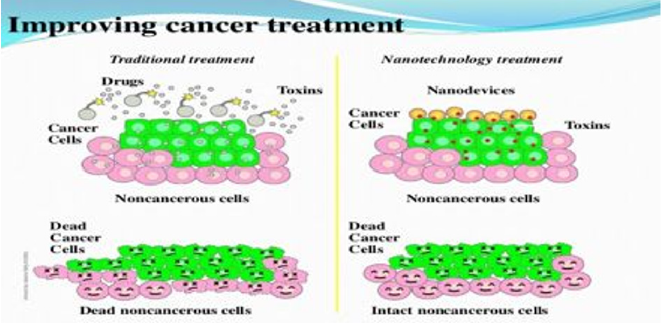
Nanoparticles are used successfully in the deliverance of basic physical substances such as heat, light, and other substances to the target cell of interest [10,11]. This has been beneficial in using nanotechnology as a treatment option for managing cancers [12]. The nanoparticles enter the target cancer cell and produce a cellular arrest and thereby inhibiting the uncontrolled tumor growth [13]. This further interrupt the proto-oncogenes and tumor suppressor genes causing an abrupt interference of the tumor growth cycle [14]. The highly effective tumor cell penetrance property of the nanoparticles has been proven to be beneficial in combatting the tumor cell biology (Figure 1). The adverse effects in the application of nanotechnology in cancer care treatment is very minimal and hence has shown to be widely applicable[15]. The role of gapmer design in downregulating the cancer cells has also been proven recently [16]. This design model has shown to increase the binding capacity of the nanoparticles to the cancer cells and then downregulates the entire tumor environment [17-19].

The role of nanotechnology in treating brain and lung cancers has been formulated with the LMP in vivo and in vitro levels [20-22]. The LMP formulations reach high levels in these cancer types, hence providing a better chemical and physical stability. These properties further enhance the overhaul performance of nanoparticles effect in brain and lung cancers. The antisense oligonucleotide combination with lipid subunit of nanoparticles produces quaternary aminetertiary cation lipid complex. This complex is very efficient and also cost-effective in cancer therapy [23-25]. Nanoparticles can be combined with various elements, however its combination with polymers and lipid component seems to be the most effective formula [26]. This is mainly attributed to its high bioavailability, compatibility, and also higher safety level. These combinations are used in treating varying cancer types, especially the brain and lung cancers [27].

Figure 1: A schematic representation of the nanoparticle effect. The colloidal nanoparticles are accumulated in tumors due to their higher vascular endothelial penetrance.

Role of Nanoparticles in Brain Cancer Treatment

The role of nanoparticles as a therapeutic option in psychosis is well versed. The anti-psychotic drug, haloperidol develops blocks at neuronal level and thereby ensures slow release of the pharmaceutical substances [28]. This has been beneficial as the relevance of psychosis in modern society has been exponential raising [29]. The dendrimers further alter and induced as nanoparticles. The other popular anti-psychotic medication, risperidone is used effectively in treating schizophrenia [30]. As both these basic and common anti-psychotic drugs are already in treatment plans for psychosis, we now move to the role of nanoparticles in treating brain cancers [31]. Brain tumors are mostly glial based. These are classified as Gliomas by the World Health Organization (WHO). Based on its histological features they are further subtyped into grad 1 to 4. Grade 1 been most mild and grade 4 been most aggressive [32-34]. The application of nanotechnology in treating brain cancers has been limited even though there is abundance of nanoparticles available in the market. This is mainly attributed to the aggressiveness of the brain tumor and also the limitations of nanoparticles in arresting the cell cycle of the tumor. However, when nanoparticle is combined with other chemotherapeutic drugs they produce beneficial effects to the patients by reducing the extent of side effects. This occurs due to the in vivo and in vitro effects of nanoparticles in a tumor environment [35,36].

The application of gold nanoparticles has been effective and productive in brain target drug delivery. The gold electrons are conducted on the metal surface followed by light excitation [37]. The Serine-arginine-leucine (SRL) modified dendrimers produce a high transfusion rate and a low toxicity level. These effects have limitations as they can only be applied in less aggressive forms of brain cancers [38]. In Glioblastoma multiforme, a form of brain tumor, is aggressive and makes it difficult for the procedure to turn effective. Fibrin binding peptide can be induced to treat this case [39]. Studies are still underway in applying polymer, lips, and microbubbles form of nanoparticles to treat brain tumors [40]. These forms have shown lower toxicity compared to other forms of nanoparticles. This application is important as there needs to be an equilibrium between the drug delivery and adverse effects during treatment of aggressive forms of brain cancers [41].

Role of Nanoparticles in Lung Cancer Treatment

Lung cancers are mainly adenocarcinomas. These are followed by squamous cells carcinomas and neuroendocrine cancers [42]. The origin of lung cancer has been cited mainly due to its molecular alterations and environmental-host imbalances [43]. The overexpression of an anti-apoptotic gene, Bcl-2 has shown to be a very important cause for lung cancer origin. The expression of Bcl-2 has been controlled by the antisense oligonucleotides (ASOs) therapy [44]. But this control level has been minimal due to problems in tumor-particle binding ratio, immune nature if oligonucleotide and low in vitro and in vivo nanoparticle concentration. This has led to the demand of lipid nanoparticles which can increase the overall nuclease stability and the circulation time of such oligonucleotides [45,46]. The lipid nanoparticles alter the tumor microenvironment by altering the cell cycle, inhibiting proto-oncogenes, and enhancing cell cycle arrest factors [47]. miR-21 plays an essential role in regulating the propagation of tumor and cancer. QTsome nanoparticles are ideal for inducing strong dosage of the therapy without affecting the sensitivity and increasing the invasion pace [48]. However, extensive research is still required in order to use nanoparticles more commonly in lung cancer treatment.

Conclusion

The role of nanotechnology in patient care has been growing every year. The success of these particles has been attributed to its fast drug deliverance systems and its ability to interrupt the cancer microenvironment. The beneficial effects of nanoparticles in treating psychosis have laid a foundation on which its physical and chemical nature cane be more explored. This holds true for treating cancers especially of the brain and the lungs.

For more Articles on : https://biomedres01.blogspot.com/
Friday, May 27, 2022

Interceptive Orthodontic Treatment of Posterior Crossbite using Removable Appliance with Expander Vise: Case Report

Interceptive Orthodontic Treatment of Posterior Crossbite using Removable Appliance with Expander Vise: Case Report

Case Report
Malocclusion is a developmental disorder resulting from the interaction of genetic and environmental factors that affect the craniofacial complex, compromising functional and aesthetic aspects of individuals [1-4]. It is extremely important that the dental surgeon pays attention to the early diagnosis of malocclusions that affect the deciduous and mixed dentition, as well as a careful evaluation to determine the most effective treatment [5]. One of the most prevalent malocclusions in children in mixed dentition is posterior crossbite, with estimates ranging from 7 to 23% [6]. It is characterized by the abnormal position of one or more teeth in the maxilla, in relation to one or more teeth in the mandible, when the arches meet in a centric relationship. It is usually evident during the mixed dentition phase [7,8]. Posterior crossbite can be classified as functional unilateral when the teeth are in occlusion, there is no midline coincidence, and one or more unilateral posterior maxillary teeth are inclined towards the lingual. Another classification is the true unilateral, which occurs due to a deficiency in bone growth asymmetric in the width of the maxillary or mandibular arch, coinciding with the midline and bilateral posterior crossbite, which occurs due to bilateral maxillary atresia [9].

This malocclusion may exhibit dental, skeletal or functional characteristics, requiring a correct diagnosis for planning and effective treatment. When it occurs between canines it is called anterior crossbite and when it occurs between premolars and molars it is called posterior crossbite [10]. Posterior crossbite can affect the development of permanent dentition when not treated early, therefore, an earlier treatment plan is needed, involving expansion of the upper arch when this crossbite is skeletal [11]. Preventive orthodontic intervention allows for the correction or improvement of the present situation, alleviating the need for corrective orthodontic treatment later, preventing malocclusion from appearing in the permanent denture and favoring the harmonious growth of the bone bases. Maxillary expansion appliances can be used to correct unilateral or bilateral posterior crossbites, fixed or removable appliances with expansion screws are indicated for the treatment of this malocclusion. Removable braces have the advantage that they can be removed by the patient when they are in a social environment. However, the possible lack of patient cooperation in the use of the appliance and interrupted tooth movement are the main disadvantages [12]. It can be observed that there are few studies in the literature that report the treatment of these malocclusions with removable appliances. Within this context, the aim of this study is to address the treatment of posterior crossbite, with interceptive orthodontics using a removable appliance with an expander vise, minimizing the complexity of malocclusion and the need for possible future orthodontic and surgical treatments.

Case Report

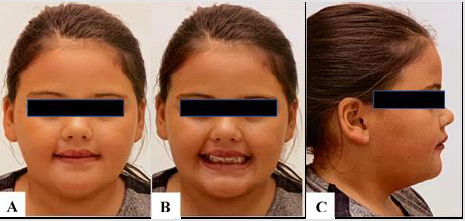
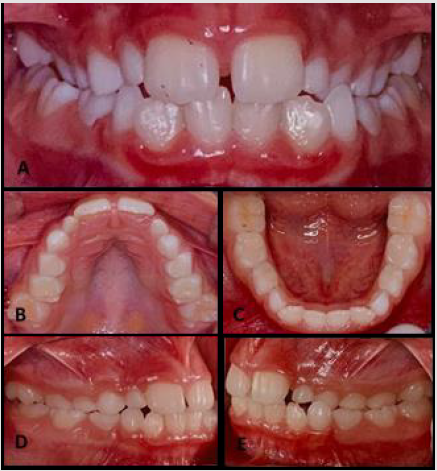
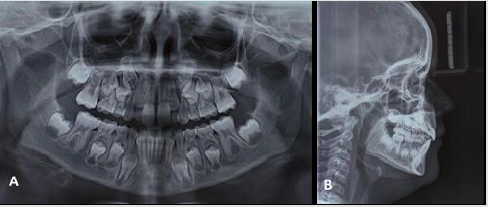
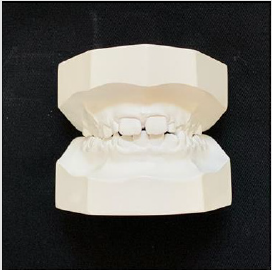
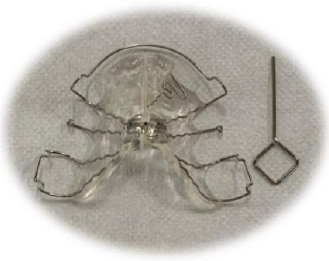
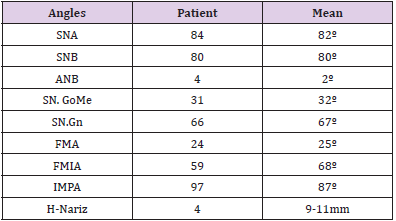
Patient J.B.T. a 9-year-old female sought dental care accompanied by her guardian. The main complaint of the patient and his guardian was the presence of “crooked teeth”. Through the extra-oral examination, in the frontal analysis it was possible to have a symmetrical face and straight profile (Figure 1), in the intraoral clinical examination, we observed mixed dentition, presence of upper dental arch atresia and bilateral posterior crossbite (Figure 2). It was observed that the patient had an Angle Class I molar and canine relationship, competent lip seal, good oral hygiene and normal swallowing. Orthodontic documentation was requested as a complementary exam (Figure 3). The proposed treatment plan was the creation of a removable orthodontic appliance with a maxillary expander (Figure 4 & Table 1), in order to expand the maxillary arch for transverse correction of the maxilla and thus uncross the bite. For the making of the appliance, molding of the arches with alginate was performed and the models were made with type III plaster. The models were sent to the specialized laboratory to manufacture the removable appliance (Figure 5). After installation, the person in charge was instructed to activate with the activating key, performing 1/4 of a turn once a week. Activation is being carried out so far, with weekly visits to the dentist to supervise the expansion. The guardian was informed that it would be normal for the child to feel discomfort in the first few days, with a possible opening of a diastema between the upper incisors, but that would soon be corrected naturally. A pastier diet was recommended in the first days and that sticky and/or hard foods were avoided in order to preserve the quality of the expander device.

Figure 1: a) Frontal extraoral initial photo

b) Initial extraoral photo of the smile

c) Initial extraoral profile photo.

Figure 2:

a) Intraoral photo of the smile

b) Intraoral photo of the maxillary arch

c) Intraoral photo of the mandibular arch

d) Intraoral photo of the right side with presence of posterior crossbite

e) Intraoral photo of the left side with posterior crossbite.

Figure 3:

a) Initial panoramic radiograph

b) Initial profile teleradiograph.

Figure 4: Early plaster models.

Figure 5: Removable orthodontic appliance with expander vice made for the patient.

Table 1: Initial cephalometric measurements.

Discussion

Problems caused by crossbite show a progression in terms of severity, so early intervention is essential in order to stimulate growth and balance occlusal development. Most treatments reported in the literature are performed during mixed dentition, an adequate period for occlusal orientation and malocclusion intercept. During this period, the dental surgeon has a greater possibility of treatment and a better opportunity to correct the crossbite. If delayed, treatment can become more complex. According to Ghersel (1992), the treatment of choice for posterior crossbites in deciduous and mixed dentition is slow maxillary expansion, which is usually performed with a removable appliance and an expander screw or a quad-helix appliance. For the treatment of posterior crossbite in the present study, it was decided to use a removable appliance with an expander vise. In the literature, the influence of this type of appliance in the upper interchained and intermolar distances is proven, in order to promote an increase in these dimensions, positive results are found in the slow expansion of the maxilla in deciduous and mixed dentition [11]. During the anamnesis and during the treatment, it was noticed that the patient is collaborative, thus the choice of the adopted therapy is justified, since the removable appliance with expander vise can be removed for cleaning, in addition to situations in which the environment social demand, unlike fixed braces, which can also cause tissue irritation. In addition, treatment with a removable expansion device is a simple, easy-to-manufacture, low-cost, and efficient treatment option. The role of the dental surgeon, especially the pediatric dentist, is fundamental in motivating the child and the family in relation to the treatment, as parents usually seek dental care seeking caries prevention, without knowing the importance of preventing orthodontic problems at this stage.

Conclusion
The clinical case presented in the present study highlights the importance of early diagnosis and treatment in posterior crossbites through the use of removable orthodontic appliances with expanders that effectively solve malocclusion, allowing for growth, development and favoring the establishment of a balanced occlusion.

For more Articles on : https://biomedres01.blogspot.com/
Friday, May 20, 2022

High Throughput Chemical Quantification of Pyruvate in Sweat in Response to Modulation by Nutritional Supplementation and Exercise

High Throughput Chemical Quantification of Pyruvate in Sweat in Response to Modulation by Nutritional Supplementation and Exercise

Introduction
Pyruvate is a commonly occurring organic keto-acid found in various food-associated items and many biological fluids. In particular, pyruvate is responsible for imparting distinct flavor attributes to food and is recognized for its association with pungency in onions and garlic, and the enhanced flavor profiles in common fruits [2-5]. Interestingly, pyruvate quantification in onions is of central importance for the selection of breeding stock that imparts lower pungency and enhanced sweetness, which correlate to consumer preference [6-8]. The determination of pyruvate concentration is also of central importance in diagnostics and represents a useful and easily quantified biomarker present in various human biological fluids (sweat, saliva, and urine), or cell culture supernatants. For example, it has been used in conjunction with lactate levels to infer cellular redox state in vitro and in vivo, it has been evaluated in saliva as a quantitative biomarker for head and neck cancers and thus simplifies patient monitoring for individuals at risk [9].

Pyruvate levels have also been used to identify mitochondrial metabolism impediments as reflected by an altered pyruvate to lactate ratio [10,11]. Concordantly, pyruvate levels in blood are modulated by exercise, generally increasing during exertion and decreasing post-recovery [12]. Modulation of pyruvate in other body fluids, particularly sweat, has not been addressed or considered as reflecting intracellular or blood metabolite levels. Pyruvate ingestion influences blood lactate parameters during and post-exercise [13,14, and reviewed 15]. Johnson and Edwards [13] further demonstrated that urine exhibited a similar profile of lactate and pyruvate increase during exercise, both of which then remained elevated 90 minutes post-recovery [13], although sweat or other bodily fluid levels were not considered in this study. As such, various enzymatic, analytical, and chemical methods have been used to quantify the abundance and distribution of pyruvate [6,16]. High performance liquid chromatography (HPLC) and capillary electrophoresis (CE), represent gold standard techniques for the separation, detection, and quantification of this molecule [5,17,18].

Although reliable, HPLC instrumentation may be of limited availability in certain research or educational settings. In addition, such specialized instrumentation is expensive to acquire, run, and maintain. Fluorescence methods are also prevalent and offer analyte sensitivity. Fluorescence methods often couple the reaction of pyruvate to the formation of lactate in the presence of lactate dehydrogenase and fluorometrically follow the change of NADH+H to NAD+ according to the following reaction:

Pyruvate + NADH → L − lactate + NAD+ [19,20].

Again, this is a sensitive and specific reaction, but it requires a fluorimeter and expensive enzymes to drive the reaction. To address the shortcomings of the methods described above, a reliable and sensitive assay utilizing chemical detection to determine pyruvate levels in sweat, a readily available biological fluid, was initially proposed by Maclean [16] and subsequently modified by Schwimmer and Weston [1]. This assay was further optimized in terms of sample and reagent volumes and implemented to follow the changes in pyruvate concentrations in sweat samples derived from a group of athletes consuming a Health Canada approved onmarket health supplement that contains pyruvate. This enabled the rapid and sensitive detection of pyruvate level modulation in sweat with simple high throughput spectrophotometric detection of the colored product and may be suitable for use with other biological fluids or matrices.

Procedures

Sweat Collection

Informed consent was obtained from each athlete following Regulatory Ethics Board approval which included the consumption of a Health Canada approved on-market nutritional supplement (NPN80070757) containing a pyruvate as described by Badulescu, et al. [15]. Sweat pyruvate concentrations were determined chemically according to Sharma, et al. [4], which is a modification of the method proposed by MacLean [17]. This chemical approach was further modified to accommodate a sweat sample matrix obtained from athletes following a prescribed exercise protocol as described in Figure 1. Both the sample and reagent volumes were miniaturized and optimized to accommodate a 96-well plate assay format. Additionally, the linearity and performance at specific wavelengths were determined to enable sensitivity within the pyruvate concentration ranges relevant to the sample matrix.

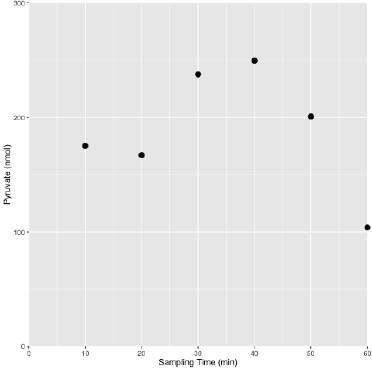
Figure 1: A representative pyruvate profile in sweat obtained from a pyruvate supplemented (Dosed) athlete following the prescribed Dosed exercise protocol.

The general profile of pyruvate levels tended to increase over the course of exertion and decrease towards the end of the assessment period, likely reflecting uptake of available pyruvate to meet metabolic demands and foster recovery. The lower complexity of metabolites in sweat relative to blood or serum permits accurate quantification using chemical quantitative techniques. It was determined that the simple collection technique used, a BandAidTM absorptive pad, offered a substantial recovery volume (400 - 1000 μL) and was determined to be void of interfering substances.

Pyruvate Chemical Determination

Pyruvate concentration was determined using freshly prepared reagents according to the following setup in a 96 microwell plate using 8-channel pipettes for additions and mixing. To each well was added either 50 μL sweat or water and 125 μL of 0.0125% v/v 2,4-dinitrophenyl hydrazine (DNPH) prepared in 2 M HCl. The components were mixed and incubated at room temperature for 10 minutes. Subsequently, 63 μL of 3 N NaOH was added and mixed. The plate held at room temperature for 5 minutes before performing spectrophotometric assessment at the following wavelengths: 420 nm, 450 nm, and 515 nm. Optical densities at each wavelength were compared to a standard curve to obtain corresponding pyruvate concentrations. Pyruvate standards in the range of 0 nM - 500 nM were prepared fresh in milliQ-water and used on the same plate as the experimental samples to ensure consistency. Three replicates for each sample and control were performed.

Results and Discussion

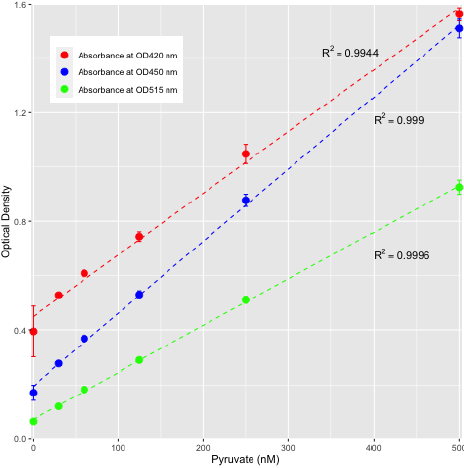
The small volume, high throughput, and low-cost assay presented enables the direct chemical determination of pyruvate concentrations in sweat associated samples and may be suitable for other sample types such as saliva or cell culture supernatants if unpigmented. The assay exhibits linearity at different wavelengths as reflected by the absorption maxima assessed at 420 nm, 450 nm, and 515 nm (Figure 2). Interference from commonly encountered matrix associated compounds such as sugars do not impact accurate quantification [2,21], but it is anticipated that pigmented matrices such as blood and potentially urine may be influenced in a manner akin to the interference of pigments in plant-derived samples [22]. In such cases, alternative, albeit more labor intensive, methodology can be implemented [19]. Alternatively, a suitable wavelength maxima may be selected to minimize interference from pigmented substances. For example, for serum or urine derived samples, wavelengths of 450 nm or preferably 515 nm can be used for standard curve generation.

Figure 2: Standard curve for pyruvic acid as determined by assessing various absorption maxima peaks at 420 nm, 450 nm, and 515 nm.

All three wavelengths assessed exhibited linearity across a concentration range of 0 nM - 500 nM pyruvate. Replicates n = 3 for each concentration.

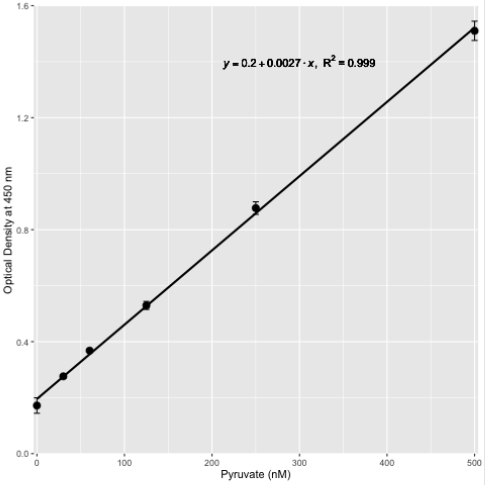
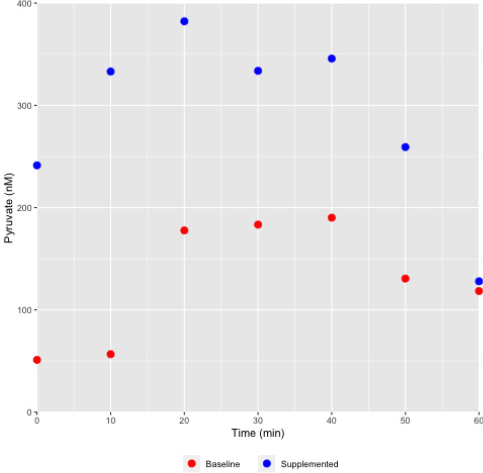
Generally, for sweat samples, a wavelength of 450 nm was used (Figure 3) which permitted the evaluation of timed sweat collected samples to be effectively analyzed from various athletes (Figure 1) as well as the assessment of pyruvate supplementation to be observed over the collection periods, pre- and postpyruvate supplementation (Figure 4). Volume optimization for plant-, specifically onion-derived samples has been proposed [21], but the assessment of pyruvate from mammalian samples has not been attempted. The simple chemical methodology is readily applicable to various settings, scalable, and can be used in a teaching environment with appropriate precautions in place. Additionally, the utility of assessing sweat as a suitable biomarker to infer metabolic status was determined to be implementable and useful post-pyruvate intervention by supplementation and may be extended to the use of pyruvate assessments in tissue extracts [23] once solids have been removed by centrifugation.

Figure 3: Standard curve for the chemical determination of pyruvate at 450 nm.

Pyruvate levels were determined chemically as described in the text in the range of 0 nM - 500 nM and represented by the mean and standard deviation of n = 3 replicates.

Figure 4: Differential pyruvate concentration profile in sweat collected from a female athlete monitored during the course of exercise.

Sweat was collected at various time points as indicated and the pyruvate concentrations assessed using the chemical method described. As shown, pyruvate concentrations in a representative female athlete were elevated during supplementation with a pyruvate containing nutraceutical supplement (Health Canada NPN80070757), and under both baseline and supplemented states the level would increase with increasing exertion (exercise) time.

For more Articles on : https://biomedres01.blogspot.com/
On the Poaching of and the Threats Facing the Chukar Partridge (Alectoris Chukar J.E. Gray, 1830) in Palestine

  On the Poaching of and the Threats Facing the Chukar Partridge ( Alectoris Chukar J.E. Gray, 1830) in Palestine Introduction Palestine ...