Showing posts with label Journals on Emergency medicine. Show all posts

Friday, June 24, 2022

The Era of Online Education in Indian Physiotherapy: A Boon or Curse

The Era of Online Education in Indian Physiotherapy: A Boon or Curse

Introduction

Education is an enlightening experience. It is the process that facilitates learning or training of the young minds by imparting knowledge, imbibing values, and morals, encouraging self-thinking and beliefs and most importantly acquiring life lessons and survival skills. To put it in simple terms – education aims to develop completeness in a being by probing the individual to think, feel and act in various situations. The aim of this review is to highlight the road travelled for physiotherapy education during the past year under the influence of the COVID 19 pandemic. The objectives of the study are to enumerate the various methods adopted during these challenging times to ensure continuity of the teaching-learning process on the way to train students from novices to professional physiotherapists.

Ancient Indian Medical Education

India has been the hub of education since ancient times. The Indian education system being culturally advanced and spiritually enriched operated under both formal and informal settings were built on the sole purpose of promoting individual self-realization. The religion-based system slowly evolved to formulate the Gurukul system which were residential schools of learning usually at the teacher’s house or spiritual places. Students gained knowledge through listening, memorizing, assimilation and interpreting fundamental concepts followed by the last stage which included deeper understanding, formulating self-theories and application in daily life. Earliest medicine practiced by sages of ancient India was Ayurveda and Siddha. The other fields and faculties developed consequently. The surgeon Sushruta practiced techniques which are now the base of physiotherapy in India. Medical students completed 7 years of training and vigorous testing before independent practice. This system modified over the following years to accommodate to the changing era and development, leading to the formulation of the modern education system ever advancing to face the digital and global frontiers [1-3].

Physiotherapy in India

Physiotherapy is one of the noble health professions working to improve human movement and function. Therapeutic knowledge and approaches are used by physiotherapists to evaluate, diagnose, and treat patients holistically to improve their physical and mental health, thereby enhancing their quality of life [4]. An epidemic of Poliomyelitis in Mumbai during 1952, initiated the establishment for the first Physiotherapy school in 1953 as a joint collaboration between Indian Government and WHO [5]. With establishment of the Indian association of Physiotherapy in 1962, the field was promoted with many teaching institutes established all across India dedicated to training more and more students. Rules and regulations were established, curriculums were formulated, and the field is blossoming by the day.

Online Physiotherapy Teaching/Learning in India

COVID 19 pandemic has forced countries to adopt measures of safety, social distancing, stay at home directive etc. This has impacted the Indian education system quite hard. Institutes were forced to look out of the box to continue the education process leading teachers to adopt virtual learning tools. Online learning is any learning experience attained by using whichever device with internet access in synchronous or asynchronous environments [6]. Teachers were introduced to various online apparatus, trained to use them, and made to connect with students in this format. This transition from traditional environment to remote virtual format has led to the emergence of blended and hybrid classrooms [7]. Online Pedagogy has become the need of the hour. The pandemic has brought the near future online training to the current now. The anytime-anywhere feature of this mode has proved to be highly beneficial in these trying times. The student educational experience was also open to the fact that each one can now learn at their own pace. Self-directed learning was gaining more importance now more than ever. Connectivity across the globe for various purposes is now possible smoothly. The scope of learning has advanced tremendously breaking geographical, language and many other plausible barriers. Students can learn using devices such as smart phones, tablets, laptops etc. from their place of comfort.

Modes Used for Online Education

The quest for the best mode of delivering information and educating students begins here forth. Both asynchronous and synchronous objectives must be addressed. Multiple platforms and software’s are being currently used to deliver sessions. Few of them are Webinars, Zoom Meetings, Microsoft Teams, Google Meet, Telegram, WebEx, Skype you tube video interactions etc with assignments given on google classroom, WhatsApp, Emails etc. Videos can be uploaded to repositories such as Google drive and shared with the entire class for improving student understanding and thus, learning. A study done by Munjal and Zutshi, using webinar to educate physiotherapy interns showed that students preferred webinar-based teaching to classroom atmosphere with practical skills being a limitation for its regular use [8].

Barriers

Challenges identified during online teaching/learning are quite alarming too. Modifying the environment and getting accustomed to virtual models while feeling equally overwhelmed about the pandemic is one of the biggest trials. The problems range from technology support, infrastructure, funding, curriculum and syllabus planning and designing, universal education programs and reforms, research and innovations etc. The objective of education goals is somewhere lost in understanding and perception and further implementation in actual society. Digital inequality is also a rising factor that needs to be considered. Negative attitudes of both students and teachers towards acceptance of new technology is a serious issue. Kaur et al in their study concluded that even on eliminating various barriers, online learning is not a replacement for traditional teaching methods [9].

Teacher’s Concerns

Physiotherapy is a profession which relies very much on hands on skill which has become difficult to achieve due to a virtual environment. The entire skill based psychomotor domain is now being converted to virtual models. It is a constant worry for the teacher to understand whether the students have actually grasped the concept required to implement both preclinical and clinical skills. Lack of personal and eye to eye contact with students makes it tough to gauge their level of understanding. Guided practise, communication with patients and working with community becomes essential [10]. Dhawan in his study coined the term “Panicgogy” to summarize the situation of the educators who have converted the existing material available into online framework as soon as possible leading to chaos [11]. Creative and innovative teaching to grasp the student attention specially to learn skillbased activities still pose a major concern. It was becoming more and more tiresome to monitor each and every students’ progress over the screen. There is also high level of stress and exhaustion due to lack of a technology enabled environment conducive for conducting sessions. Creating online student appropriate material for independent learning requires meticulous planning and designing. Some teachers find it difficult to construct meaningful content, patient scenarios, practical simulations etc. to complete the learning objectives. The main challenge is to capture and retain the students’ attention. Educators find it hard to connect to students due to lack of face-to-face interactions. Digital divide and digital illiteracy also add to the anguishes for senior faculty who find it difficult to adapt to the technology.

Student’s Woes

Though initially the concept of studying while enjoying the comforts of home was very exciting, soon bitter truths of reality set in. The loss of formal institutional environment affected student concentration, attention, seriousness and eventually learning. Thakur in her study on undergraduate health science students deduced that majority of them were not studying regularly. Selfstudy and self-learning were not achieved during the lockdown period [12]. Home environment though comfortable became a route cause of multiple distractions. The enjoyable learning experience with peers was immensely becoming a burden. Social isolation is an unintended by-product. Kumar et al in their study found that though students were comfortable with online classes, majority of them were eager to begin regular classes once the lockdown was lifted indicating that classroom teaching was more effective especially for learning skill-based lessons [13]. Moreover, the increased screen time is affecting their health as well with symptoms such as eye irritation, headaches, body pains due to sedentary and abnormal postures etc. Sheer boredom to attend sessions are side effects to this mode of learning. They are also losing confidence to develop physical contact and rapport with the patients by the day. Students’ perceptions and mental health need to be considered as well.

Physiotherapy in India - Towards the Bright Future

Physiotherapy is a humble profession providing service to mankind. Learning is a lifelong, continuous process. The pandemic opened the pandora of technology available at our disposal for enriching the teaching/learning. There is a radical transformation observed in all aspects of education. Verma et al in their interaction with academicians, found that majority of the teachers have gracefully accepted online modes of teaching and acknowledge the fact that it is boon in the current situation [14]. Many complex concepts in physiotherapy, biomechanics and biological conditions can be explore and understood better with use of 3-D models and other applications. Smart boards and technology enabled learning solutions need to be encouraged. The entire unexplored arena of telehealth and telerehabilitation can be explored further. We need to remember that education not only increases knowledge but also brings about personality and behavioural changes. We as educators, mentors and policy makers should form an all-inclusive curriculum for professional practice which is built on the roots of the Indian eternal morals and values augmenting all the aspects of education such as intellectual, ethical, biological, socio-cultural, spiritual etc. The ideal system would reflect the perfect incorporation traditional and modern methods with perfect balance between the digital and the human world. It is time to embrace the tech savvy world. E-Learning complements traditional teaching facilitating lifelong learning [15].

Conclusion

A digitalized education system though welcomed with open arms, needs to be streamlined to achieve definitive and positive results. An ideal curriculum should include an amalgamation of online education as well as offline practices to ensure superior student learning. Constant student feedback and digitally evolving faculty are the key features responsible to implement an effective E-Learning System. Teachers need to hone their skills and stay abreast with the recent advances making the classroom technology enabled. With awareness and proper facilities at grassroot levels, online education will flourish exponentially.

For more Articles on : https://biomedres01.blogspot.com/

Monday, June 6, 2022

Preventive Practice on Earthquake Preparedness Among Higher Level Students of Dhaka City

Preventive Practice on Earthquake Preparedness Among Higher Level Students of Dhaka City

Introduction
Disaster is a very common phenomenon to the human society. The disaster had been taking place in human society before the evolution of the mankind. And the disaster has been believed to be having its existence and experience since time immemorial. People are becoming more and more vulnerable to disasters of all types. This includes both natural and man-made. Some of the major disaster includes earthquake, flood, cyclones, landslides, droughts, accidents, forests fire, war etc. With the technological advancements and progress, the force of disasters is also changing. When they occur, they surpass all preparedness and eagerness of society and pose bigger challenge to them. This is quite true in case of both developed and developing countries.

Disaster can be grouped under the following headings:

a. Natural disasters, which can be geophysical (e.g., earthquakes, tsunamis and volcanic eruptions), hydrological (e.g., floods, avalanches), climatologically (e.g., droughts), meteorological (e.g., storms, cyclones), or biological (e.g., epidemics, plagues).

b. Man-made emergencies, such as armed conflicts, plane and train crashes, fires and industrial accidents.

c. Complex emergencies, which often have a combination of natural and man-made elements, and different causes of vulnerability and a combination of factors leads to a humanitarian crisis. Examples include food insecurity, armed conflicts, and displaced populations (Coalition).

Earthquake is a violent tremor in the earth crust, sending out a series of shock and aftershock waves (L waves) in all direction from its focus. Earthquakes constitute one of the most terrible natural hazards which often turn into disaster causing extensive devastation and loss of human lives and their properties. [1] As, we know students or youth are one of the best ways of circulating message among the other which includes the family members. The age group being active enough and to implement themselves into development activities are important especially during humanitarian emergency.

Earthquake in Bangladesh

Bangladesh is called a land of natural disasters because almost every year she is attacked by different kinds of natural disasters. Every year some common natural calamities like floods, cyclones, tidal bores, excessive rainfall, earthquake, and drought visit Bangladesh. Among all the natural calamities, floods and cyclones are most common. It visits, especially in the rainy season. It causes great harm to our agriculture, houses, and properties. However, any kinds of natural calamities cause a heavy loss in our country. Many people are killed, many are lost, and many become homeless. Many cattle die. Many houses collapse. Many fatal diseases like cholera, typhoid, diarrhea etc. break out. Educational institutions, trees and communication systems are damaged due to natural calamity. In a word, natural calamities cause untold sufferings to people. However, we cannot protect natural calamities, but we can take some measures to minimize losses of the victims. We can raise awareness among the people and train them in this regard [2].

Bangladesh is geographically located on a seismically active region and highly vulnerable to earthquakes. Its northern and eastern regions are known for experiencing earthquakes that surpass 5 on the Richter Scale; and cities such as Dhaka, Chittagong and Sylhet are particularly vulnerable as a result of rapid urbanization, poor planning, high population density, and innumerable high rises and buildings that are yet to meet National Building Codes [3]. Bangladesh is one of the most vulnerable countries of the world in terms of natural and anthropogenic hazards, is a low-lying deltaic country covering an area of 147,470 sq. km and supporting about 150 million people with population density of 1033 per km. sq. The geographical setting and meteorological characteristics have made the country vulnerable to different geo-hazards and hydrometrological hazards [4].

Dhaka expanded very quickly due its growing importance as the capital. Buildings were being built on the riverside humus soil in the east and west. In the low-lying areas, they were built using the arching method. These attractive, multi-story buildings were constructed using faulty designs. The bottom floor is a parking space, and they are called soft story buildings. Due to earthquakes or even strong winds, the lateral deflection of the building top caused by the ensuing tremors cannot be resisted due to these large, unobstructed spaces on the bottom floor (known as a soft story collapse). These soft story tall buildings are vulnerable to distant earthquakes. Widespread brick masonry, non-engineered and poorly constructed buildings would be hit worse than ever in the history of Dhaka. The catastrophic picture will be beyond our imagination and could even lead to abandonment of the city [5].

The researchers, however, could not say when the earthquake would occur -- whether it is imminent or would occur after 100 years. The study has found evidence that the northeastern corner of the Indian subcontinent is actively colliding with Asia, potentially posing a major earthquake risk to the region. After using ground and satellite GPS monitors to measure surface activity between 2003 and 2013, an international team of researchers has shown Bangladesh is sitting on a huge subduction zone [6]. A strong earthquake of 6.8 magnitude tremors, with the epicenter in central Myanmar’s Chauk was felt in Dhaka as well on August 2016 leaving high-rise buildings shaken in the cities and leading to panic among citizens [7]. The major earthquakes that have affected Bangladesh since the middle of the last century are the Cachar Earthquake of January 10, 1869, the Bengal Earthquake of July 14, 1885, the Great Earthquake of July 12, 1897, the Srimangal Earthquake of 8th July 1918, the Dhubri Earthquake of July 3, 1930, the Bihar-Nepal Earthquake of January 15, 1934 and the Assam earthquake of August 15, 1950. Of these, only the Bengal Earthquake of 1885 and the Srimangal Earthquake of 1918 had their epicenters in Bangladesh [8]. The earthquake disaster risk index has placed Dhaka among the 20 most vulnerable cities in the world. Dhaka with its population of around 13 million and enormous poorly constructed and dilapidated structures signifies extremely vulnerable conditions for massive loss of lives and property in the event of a moderately large earthquake [5].

Justification of the Study

Dhaka is too much vulnerable of earthquake disaster due to some reasons. First of all, the population density is very high in Dhaka city. Secondly, it is predicted that the secondary hazard like fire break out from gas and electricity line will have more disastrous impact after earthquake. Thirdly, not only building codes are not maintain during construction time of most of the high-rise apartment buildings and most garment factory buildings but also they have been constructed without open spaces and most have encroached upon the streets and roadways [9]. A powerful earthquake occurred in Nepal on 25th April 2015 where the tremors were also felt in other South East Asian countries including Bangladesh, India and China. Bangladesh was jolted twice by tremors and, although the tremor was not as severe, it was reported to be between 4 and 5 on the Richter scale. In Bangladesh, six lives were lost, and more than 200 people were injured and were taken to hospital. There were also many buildings that collapsed in the mega city Dhaka and its surrounding areas. This experience and the lessons learnt highlight the importance for national earthquakeproof building regulations and systems to lessen the damage and devastation of any future earthquake [10].

Method and Materials

The Descriptive Cross-sectional study was carried out for the duration of 6 months (December 2016 – May 2017) which the study sample was from Mirpur Cantonment Public School and College, (11 and 12 class). As the institution have good flow of students and the students there were capable of reading and understanding English language easily. Semi-structured both open ended and close ended questionnaire was used for this study. The sample was calculated from the formula.

n= (Z^2*p*q) / d^2

Due to time constrain the sample of 115.

Ethical Considerations

The required permission was taken by the Ethical Review Committee of American International University-Bangladesh (AIUB) to conduct the research. Also, Prior Permission from concerned Authorities was received for conducting study in their premises.

Results and Findings

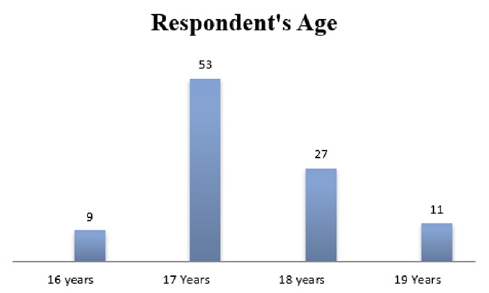
The study was done with 115 participants; 56 (48.7%) were male and 59 (51.9%) were female. Most of the respondents were of the 17 years (Figure 1). Most of the respondents followed Islam religion 111 (97%) and only few respondents were Hindu 4(3%). Majority had their home was in residential area 70 (60.9%) and about 41 (35.7%) had their in commercial area and 4 (3.5%) near to the industrial area. Out of 115 respondent 64 (55.7%) answered they have experience or witnessed the disaster in their locality. Whereas 51 (44.3%) mentioned they have not yet experienced or heard of the disaster. Out of that 64 (55.7%) respondent, 29 (45.5%) of the respondent answered that they have witnessed flood in their locality. Similarly, 19 (29.6%) mentioned that they have experienced earthquake. Out of which only 7 (11%) said that they have experienced witness cyclone. Only, 4 (6.2%) of them answered heavy rainfall. Whereas few i.e., 2 (3.1%) of them answered building collapse as the disaster they heard or knew in their locality.

Figure 1: Age of respondent.

All the respondents 115 (100%) of the respondent has heard about the Earthquake. Out of 115 respondent 89 (77.4%) respondents said that they have heard the term disaster preparedness. Only, 111 (96.5%) of the respondents answered that they know about the cause of earthquake. Out of those 111(96.5%), 80 (69.6%) respondents said that the main cause of the earthquake if movements of the plates. Likewise, 30 (26.1%) of the respondent answered natural occurrence and 3 (2.6%) of the respondent don’t know about the cause. Out of 115 respondents, 41 (35.7%) respondent said unsecured heavy items falling being the main reason for the death of the people at the time of earthquake.

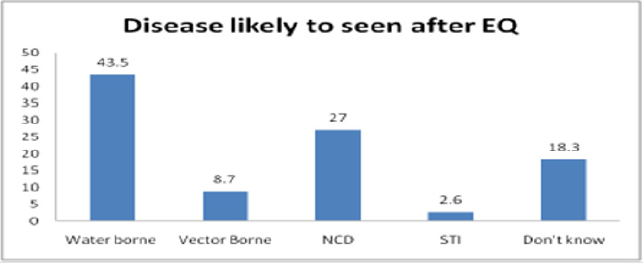
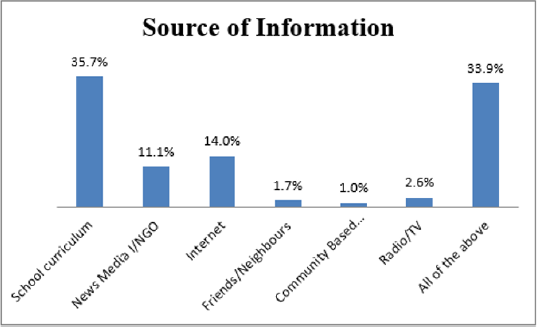
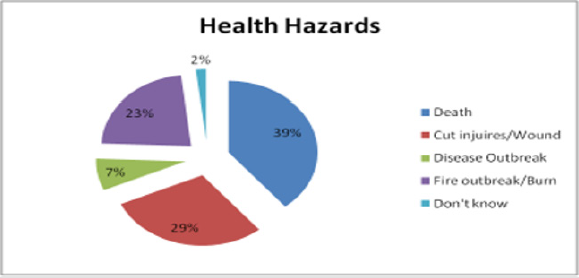
Likewise, 31 (27%) of the respondent answered all of the given options i.e., unsecured heavy items falling, being buried, shattered window, loose opening electric wires, collapsing wall/ceiling. And 14 (12.2%) of them answered collapsing wall/ceiling as the reason. The least answered was a shattered window 2 (1.7%). And 8 (7%) of the people answered that they don’t know. 115 (100%) of the respondent has received the information about the earthquake. Source of the information on earthquake was mainly the school curriculum 40 (35.7%). 37 (33.9%) respondent all the mentioned for the source of information about the earthquake. And 16 (14%) received information Internet. The least was 1% which was from the community-based program (Figure 2). About 45 (39%) of the respondent answered death as the main hazards that could be seen after the Earthquake followed by cut injuries/wound by 33 (29%). The least 3 (2%) did not know about it (Figure 3). Respondents were asked about the disease that are likely to be seen after earthquake, 50 (43.5%) of them have answered water borne disease. Followed by 31 (27%) non-communicable disease, 21 (18.3%) of the respondent answered that they do not know about the situation on what disease could be seen after the earthquake. And 3 (2.6%) respondents have answered STI. We can say that they do not have much knowledge regarding the disease after the earthquake. (Figure 4).

Figure 2: Source of Information.

Figure 3: Knowledge of respondents on the health hazards of EQ.

Figure 4: Disease likely to be seen after earthquake.

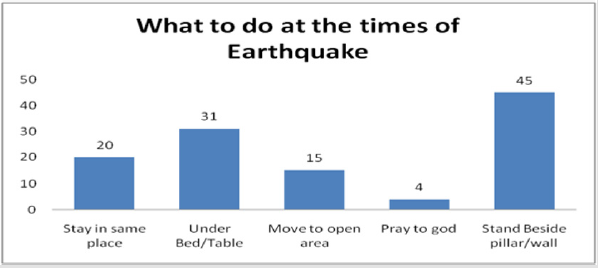
Out of 115 respondents, 55 (48%) has answered beam and pillar, 42 (36.5%) under the bed/Table as the safest place to be at the time of earthquake. Apart from the measure some 5 (4%) answered that they would pray to God at the time of earthquake. Likewise, 17 (15%) of them have answered that they would move to open area for the preventive practices. 23 (20%) preferred to stay in the same place (Figure 5). Out of those 115 respondents 39 (34%) of the total respondent has made the go bag. In which, only 29 (26.1%) of the respondent answered correctly i.e., first Aid, water, torch, dried foods etc to be kept in the Go bag. Whereas 5 (4.3%) of them answered incorrect i.e., they answered clothes or only helmet as an essential thing that needs to be kept in the Go bag. And only 2 (1.7%) of the respondent had answered only first aid as the most important things to be kept in the go bag. 100% of the respondent’s covered Disaster in their curriculum.

Figure 5: Time of Earthquake.

Calculation of Knowledge Score

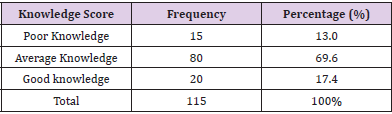
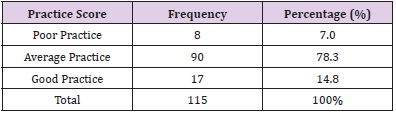
The knowledge score has been calculated by the formula Mean + S.D. And all the right answer to the knowledge related variables were given 1 mark, similarly to all the wrong ones were given 0. From which the total knowledge score has been calculated. 80 (69.6%) of the respondent have an average knowledge, 15 (13%) have poor knowledge score. Only 20 (17.4%) of the respondent had the good knowledge level on the earthquake and its preparedness. With the findings we can say that majority of the respondents have average knowledge regarding earthquake and its preventive measure. Still, many respondents lack basic information on earthquake and its preparedness (Table 1). Similar calculation was done for the practice as well, by using the formula Mean + S.D. giving right answer 1 mark and wrong ones 0. Out of 115, 90 (78.3%) of the respondent has the average practice regarding the earthquake preparedness. Similarly, 8 (7%) respondents had poor practice and only 17 (14.8%) respondents had good practice level out of 115 respondents (Table 2).

Table 1: Knowledge score on the earthquake preparedness among the higher secondary level students.

Table 2: Practice Score on the earthquake preventive measure of the higher secondary level students.

The association of the knowledge about the earthquake and the preventive practices of the earthquake among the higher secondary level’s students were done in above table. Where, from the table above we can clearly see that the respondents who had good knowledge had poor practice i.e., 50 (43%) out of 115 respondents. Similarly, 50 (43%) of the respondents had good knowledge and good practice as well. In the other hand, the respondents with poor knowledge i.e., 8 of the respondents had poor practice but 7 of the respondents had good practice disregarding they fall under the poor knowledge. From the above table it is clearly seen that the good knowledge is higher, but the practice seems poor among the respondents. The above table is the association of the knowledge of the earthquake and practice score of the preventive practices of the respondent. The chi-square has been done to see the association of the knowledge and practice.

Where,

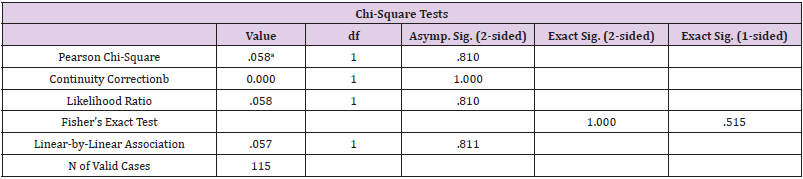
Pearson’s Chi-square ‘P’ value (P) = 0.810

The minimum expected outcome is 7.43.

From the above table we can understand there is no association between Knowledge and practice in regard to earthquake. For the association between knowledge and practice about the earthquake among the higher secondary level students, ‘P’ value was 0.810. i.e., it is not significant. We can say knowledge and practice do not have any association. For association P value should be smaller than 0.05 i.e. (P < 0.05). But here, 0.810 > 0.05. So, we can say that knowledge and practice are not associated. Here, we can also say that the knowledge about the earthquake and the preventive practice on the earthquake among the higher secondary level students of Dhaka city is not associated (Tables 3-6).

Table 3: Association of Knowledge on earthquake and preventive Practice about the earthquake among higher secondary level students.

Table 4: Chi-square tests of the Knowledge on earthquake and preventive Practice about the earthquake among higher secondary level students.

Table 5: Association between knowledge about the earthquake and gender.

Table 6: Association between knowledge about the earthquake and gender.

The association of the knowledge about the earthquake and the gender of the involved participants among the higher secondary level’s students were done in the above table 5. From the table above we can clearly see that the respondents who had good knowledge were mostly females i.e., 56 (48.9%) of the total respondents. Likewise, male had good knowledge with only 44 (38.2%). From the above table 5 it is found that the good knowledge is higher among the female participants than in the male. The above table is the association of the knowledge level about the earthquake and gender of the respondent. The chi-square has been done to see the association of the knowledge and the gender of the respondent. Where, Pearson’s Chi-square ‘P’ value (P) = 0.009, The minimum expected outcome is 7.30. From the above table we can understand there is association between Knowledge and gender of the respondent towards earthquake. For the association between knowledge and gender ‘P’ value was 0.009, i.e., it is significant. We can say knowledge and gender do have association. For association P value should be smaller than 0.05 i.e. (P < 0.05).

Discussion

Earthquake is contingent and unpredicted and can only be dealt by effective disaster management plans. Disaster including earthquake never happened does not mean it can never happen. It can happen at any time and at any moment. The study has aimed at examining the level of knowledge and practice towards earthquake preparedness among higher secondary level students of Dhaka city. The study has been carried out to a small portion of Dhaka City. Dhaka, the capital city of Bangladesh is one of the fast-growing cities in the world. Since its independence, rapid urbanization turned Dhaka as one of the megacities of the world. The rapid growth of Dhaka’s population forced haphazard & unplanned development and speedy construction of new buildings in any and every available space. Due to this, the capital city is now in a serious threat of upcoming massive disaster like earthquake.

In this study the higher secondary student’s knowledge level on earthquake and practice level of the earthquake were analyzed using the chi-square test which after the analysis found not satisfactory. The highest frequency and percentage falls under average score in both knowledge about the earthquake and preventive practice level among the higher secondary level students of the Dhaka city. With that we can say the respondents who are higher level students of age group 16-19 do not have good knowledge on earthquake and practice regarding earthquake and its preparedness. In this study the poor knowledge score was 15 (13%), average 80 (69.6%) and good knowledge score 20 (17.4%) among the 115 respondents.

Out of the 115 respondents most of the respondent has average knowledge and very few 20 (17.4%) has good knowledge about earthquake and the preparedness of it. Similar results were found in the study that was done in India among 540 secondary school teachers in which the teacher’s knowledge was not satisfactory level. In which majority of the teachers 448 (82.96%) had average knowledge, 39 (7.22%) had good knowledge, and 53 (4.26%) had poor knowledge regarding disaster management. It clearly indicates that their gross deficiency in knowledge of disaster management among schoolteachers (India, 2014).

Similarly, results were also found in the study done which was done with 375 undergraduate medical students. Where the findings came out, that undergraduate medical students had little knowledge about disaster and its preparedness (Sinha, 2008). In this study the significant of the knowledge and practice was also done to see and analyze if the knowledge and the practice of the earthquake and its preparedness among the higher-level secondary students are associated or not. For that in this study the cross tabulation of the knowledge score about the earthquake and practice score of was done. To be significant Pearson’s chi square needs to be lesser or equals to 0.05. But in this study, cross tabulation (chisquare) of knowledge and practice of the respondent was done.

Where after the cross tabulation the knowledge and the practice were insignificant towards each other, i.e. 0.89 > 0.05. With the findings of this study, we can say that the knowledge about the earthquake is not significant towards the practice among the higher secondary level students. From the findings it can be said that it is not necessarily needs to be a direct relationship of knowledge level to the practice level.

Similar results were found in the study done among the 540 secondary level students of India. There is gross deficiency observed in relation to knowledge and practices of teachers of the study done in India. The correlation of knowledge and practices of teachers by calculating correlation coefficient (r) between these two parameters were done where it was found moderate correlation. It indicates that knowledge does not bring substantial difference in their practices [11]. Likewise in the crosssectional study that was conducted among 144 nursing educators representing Division of Surgical Nursing, Florence Nightingale Faculty of Nursing, University of Istanbul, and two universities in Miyazaki, Japan showed the similar results. From its finding, regardless of knowledge on disaster preparedness and response, there was no statistical significance on personal preparedness The analysis showed that the education level was not a significant factor for taking precautionary actions against an earthquake (p=0.150) [12].

The knowledge score and the sex of the respondent were cross tabulated to see their significance of knowledge and sex of the respondent i.e., 0.89 > 0.05. The sex was significant to the knowledge level for the earthquake and its preparedness. Similarly, the mean score of female respondents was 20.85 and the male was 18.29 in this study. Which means the knowledge of the female was higher compared to the males. In a way we can say females are higher knowledgeable in terms to male of the higher secondary level students of the study. Similar result was found in the study done in 375 undergraduate medical students where the mean score was 8.77 which was slightly higher in females [13-16].

Conclusion and Recommendation
The knowledge of earthquake and its preparedness among Higher Secondary Student were average. Though they had a good knowledge on disaster, still few students were unable to answer about the preparedness meaning. They knew about the causation about the Earthquake, but few are unaware of the fact if earthquake can ever hit Dhaka city or not. Though the disaster and earthquake knowledge has been provided from the college but still more awareness programmed on earthquake preparedness in school should be carried out focusing on behavioral change of the students.

For more Articles on : https://biomedres01.blogspot.com/
Wednesday, June 1, 2022

Diaphragmatic Eventration in Nf1 Microdeletion Syndrome: A Rare Association Unmasked by Pregnancy

Diaphragmatic Eventration in Nf1 Microdeletion Syndrome: A Rare Association Unmasked by Pregnancy

Introduction
Neurofibromatosis type 1 (NF1), also known as von Recklinghausen disease, is a neurocutaneous condition with an estimated prevalence between 1 in 2000 to 1 in 4000, characterized by a great variability in its clinical presentation. Clinical hallmarks such as café au-lait macules, neurofibromas, axillar or inguinal freckling, optic pathway glioma and iris hamartomas (Lisch nodules) represent the main NF1 diagnostic criteria set by the U.S. National Institutes of Health (NIH) in 1988 [1]. Beside these typical signs, the possible association with skeletal, endocrine, cardiovascular and oncologic complications make NF1 a multi-systemic disorder [2]. A similar broad spectrum of clinical manifestation is caused by mutations occurring in the Neurofibromin on co suppressor gene, on chromosome band 17q11.2, and inherited in an autosomic dominant manner [3]. In about 5–10% of cases takes place a large deletion involving the NF1 gene and its flanking regions which results in the “NF1 microdeletion syndrome” [4]. Despite the lack of genotype–phenotype correlations in NF1, patients with Type 1 microdeletion (1.4 Mb encompassing about 14 genes) typically present a serious illness, mainly characterized by dysmorphic facial features and developmental delay [5]. During pregnancy, NF1 women should be monitored because they are more prone to complications such as hypertension, preeclampsia, fetopelvic disproportion, poor fetal growth and oligohydramnios [6]. Furthermore, pregnancy for NF1 women is related to an increased number and size of cutaneous neurofibromas [7]. Regarding pregnancy in women with NF1 microdeletion, no specific literature data are available, possibly due to their low fitness and to the rarity of the condition.

Diaphragmatic defects have never been described before as a pregnancy complication in NF1 women. Similar conditions are also unusual in general population, with only 56 reported cases until 2018 [8]. The increased abdominal pressure experienced by women during pregnancy might represent a risk factor for unmasking hidden congenital diaphragmatic defects (CDD). Among these defects, diaphragm eventration (DE) represents an uncommon finding, defined as the upward displacement of a portion or the entire diaphragm, otherwise intact. Congenital DE (CDE) diagnosis is often an incidental finding in adults, as it can remain completely asymptomatic. Even if scarcely described first presentation of CDD during pregnancy, owing to the risk of rupture, represents a lifethreatening complication both for mother and fetus [9]. Here we report a case of (CDE) complicating the pregnancy of a 30-year-old patient with NF1 Type 1 Microdeletion Syndrome.

Case Report

The patient is a 30-year-old pregnant woman, affected by NF1 type 1 microdeletion syndrome, followed since the age of 24 at our Clinical Reference Centre for NF1. She has undergone numerous clinical and instrumental evaluations over the years; the main clinical issues that have emerged are summarized here: mild intellectual disability, typical NF1 cutaneous features (cafè au laits spots and diffuse cutaneous neurofibromas) and two plexiform neurofibromas on the scalp and on the left hemiabdomen. Furthermore, multiple spinal neurofibromas were reported at the age of 26, involving all the conjugation foramina, especially in the thoracic and lumbar tracts of the spine. At the age of 28 due to a suspected diagnosis of pheochromocytoma, the patient underwent left adrenalectomy; histological examination diagnosed a ganglioneuroma and steroid replacement therapy was therefore introduced. In addition, a nonfunctioning pituitary microadenoma was detected on routine brain magnetic resonance imaging (MRI), steady in size on control MRI in the following years. In view of these comorbidities, as the patient got pregnant, she was followed by a multidisciplinary team, consisting of gynecologists, endocrinologists, neurologists and medical geneticists. Regular ultrasound evaluations were performed throughout the entire pregnancy. The patient and her partner decided not to proceed with any invasive tests for prenatal diagnosis.

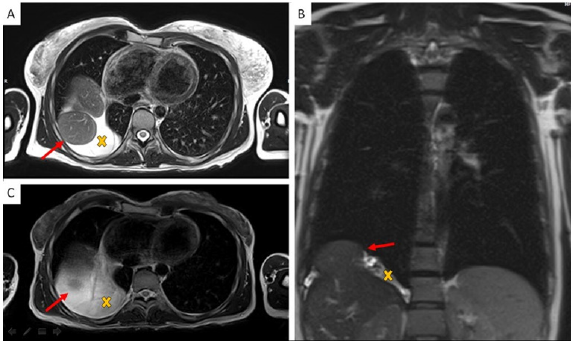
The pregnancy progressed regularly. In preparation of spinal anesthesia, a spine MRI was performed to monitor the wellknown spinal neurofibromas that appeared to be steady in size and number. Serendipitously, three round-shaped images at the base of right chest were reported and interpreted as possible diaphragmatic hernia (DH) with partial displacement of the liver to the chest. A right-sided pleural effusion was also reported, which retrospectively appeared to be present and unchanged since the previous control. An echocardiogram and an abdominal ultrasound were performed as follow-up investigations. The former reported mild mitral and tricuspid insufficiency, but no pericardial effusion was observed. The second examination showed a moderate pleural effusion on the right side with thin fibrinous septae and gross outpouchings of the liver parenchyma, the largest of almost 4cm. Thus, the previous suspicion of DH was confirmed. In view of the numerous comorbilities, a caesarean section was performed and the patient gave birth to a female newborn. Genetic NF1 analysis performed after birth revealed the transmission of the maternal NF1 microdeletion to the baby. Since both the mother and the newborn were in good health, they were discharged five days after delivery, once DH-related complications were excluded. Computed Tomography (CT) of the upper abdomen performed two months later showed three diaphragmatic bulges, with a maximum diameter of 4.2cm on the VIII segment of the liver and of 4.8-2.8cm on the VII segment. The right-sided pleural effusion was still present and, as the diaphragm was not clearly visible over hepatic protrusions and appeared worsen from previous imaging, the hypothesis of hernias was corroborated (Figure 1). Therefore, surgical correction of the defect was planned after the weaning of the child. The patient underwent video-assisted thoracoscopic surgery (VATS), which revealed an intact but very thin diaphragm, consistent with a diagnosis of DE. There was no evidence of occult neurofibromas nearby, nor adjacent lesions that might be the very first cause of the diaphragmatic eventration. In addition, a voluminous pleuro-pericardial cyst was found, explaining the pleural effusion previously reported. Finally, a diaphragm plication and cyst excision were performed. The removed tissue was biopsied and this examination revealed the presence of a cystic wall, covered by a single stratified cubic-cylindrical epithelium. No atypia was found. The post-operative course was uneventful.

Figure 1: Chest MR Imaging:

A. Two round shape images with partial liver shift in right pleural space (red arrow) and surrounding fluid collection (yellow X);

B. Coronal plane;

C. MR imaging three years before pregnancy.

Discussion

Diaphragmatic weakness became clinically relevant during pregnancy, when the rising abdominal pressure pushes the diaphragm upwards while the muscle itself contracts downwards. In our patient, these two opposing forces probably enlarged a preexisting diaphragmatic defect, resulting in liver herniation. To our knowledge this is the first reported case of a patient with NF1 microdeletion showing a DE and a pericardial cyst, three extremely rare conditions. Fortunately, the liver was the only organ involved in herniation and the patient remained asymptomatic, even during pregnancy. As mentioned, among NF1 population, patients with type 1 microdeletion generally display a more severe phenotype. This is possibly due to the deletion not only of the NF1 gene, but also of its flanking genes, which could partially influence the clinical manifestation of the disease. In particular, NF1 type 1 microdeleted patients are more likely to develop malignant peripheral nerve sheath tumors (MPNSTs), cardiovascular anomalies [5] and connective tissue abnormalities [10]. Although the precise molecular basis of connective tissue involvement in NF1 is still unclear, neurofibromin has been shown to play a regulatory role in mesenchymal stem cell differentiation [10]. Moreover, during embryogenesis, this protein also takes part to axons’ elongation in order to ensure the correct activity of the nervous system [11]. The involvement of NF1 gene in proper neuronal and mesenchymal development must be particularly stressed as neurons and connective tissue, together with several other structures from different embryonic origins, participate to the complex sequence of events that leads to diaphragm development [12]. In particular, CDE has been related to defects in migration and proliferation of muscle fibres, two steps leaning on the regulatory action of connective tissue cells [13].

Whether the association between NF1 and CDE is causal or is in fact a possible associated complication, the management of our case demonstrates the crucial importance of a multidisciplinary approach to pregnant women affected by a rare disease. NF1 microdeletion syndrome is associated with numerous comorbidities, most of which are just barely known. Particularly, knowledge about pregnancy-related complications in NF1 microdeleted women is still lacking and even more about possible urgent events; as a consequence, no specific management guidelines are available yet. As shown by our case report, pregnancy in these women can turn out to be a challenging moment and should be carefully supervised, as it represents an event in which the delicate equilibrium of such fragile patients might unbalance, possibly leading to unexpected, unknown and potentially serious complications. In our opinion the complexity of this condition, the unpredictability of complications’ onset and severity can be properly managed only by gaining a wider and multifaceted vision of the disease, which can be obtained only by means of a dedicated multidisciplinary team. A well-coordinated multi-specialized equipe could represent the primary step towards widening our perspective of the condition and towards implementing tools for personalized care and follow-up, with the ultimate aim of ensuring early diagnosis and prompt management of possible upcoming emergencies, especially during pregnancy in these vulnerable women.

For more Articles on : https://biomedres01.blogspot.com/
Tuesday, May 31, 2022

Hematological and Biochemical Alterations at Different Stages in Cattle Affected with Foot and Mouth Disease in Bangladesh

Hematological and Biochemical Alterations at Different Stages in Cattle Affected with Foot and Mouth Disease in Bangladesh

Introduction
Foot and mouth disease (FMD) is one of the most devastating disease of farm animals in the world that can destroy food supplies and farmer’s livelihoods almost overnight of the wide number of cloven-hoofed animals include cattle, buffalo, pigs, sheep and goat [1]. The disease Foot and mouth disease (FMD) is generally characterized by the rapid appearance of high body temperature, respiratory and pulse rate following by the formation of vesicles on the tongue epithelium and skin particularly on the inter-digital space epithelium of the foot [2,3]. Even after recovery from the acute infection, most animals act as a carrier for each serotypes of the virus and the agent can be isolated from their esophagus and throat fluid after 2-3 years of post-infection [4-6] with a moderate raised values (p≤0.05) were recorded in rectal temperature, respiratory and pulse rate, where highest values were during 3 to 7 days of post infection which subsequently reduced after passing the days of infection [7]. Although FMD does not cause high mortality in adult animals, the disease has debilitating effects, including weight loss, decrease in milk production, reproductive failures and loss of draught power resulting in reduced productivity. Mortality, however, can be high in young animals up to 100%, wherein the virus causes myocardial degeneration, known as Tiger Heart disease [8]. It is estimated that 25% productivity of individual recovered animals are lost due to FMD [9]. It causes low production for the affected countries; severe restrictions are placed on international trade of animal and animal products (meat, milk, hide and butter) due to its transboundary nature of transmission [10]. Studies conducted by Bangladesh Livestock Research Institute (BLRI) revealed that during an outbreak the morbidity, in cattle to be around 36%, in buffaloes 23%, in sheep and goat 5% and case fatality rate, especially in calves, has been found to be about 51% in outbreak area (www.blri.gov.bd). Annual losses due to the outbreak of FMD in Bangladesh have been estimated to be US$ 10.92 million per year [11].

The causal agent, FMD virus belongs to the genus Aphthovirus, under the family Picornaviridae, of which there are seven immunologically distinct serotypes; O, A, C, South African Territories (SAT)-1, SAT-2, SAT-3 and Asia-1, and at least 65 subtypes have been identified [10]. Chowdhury et al. [12] reported that Foot and mouth disease (FMD) is endemic both in Bangladesh and its neighboring countries like India, Nepal, Bhutan and Myanmar. In Bangladesh during 2007 to 2008, Serotypes A, O, C and Asia-1 have been identified where A, O and Asia-1are very common, while type C has been identified scarcely. The pathogenicity in case of FMDV type O is always severer than type A, C and Asia-1. However, recently FMDV types A and Asia-1 are also found as severe as FMDV type O [13]. The disease is often transmitted from the infected to the apparently healthy susceptible animals through air or direct contact and disease outbreak is high in the winter (December- February) and in monsoon (June-September) of a year in tropical and subtropical country of the world [14-16]. The outbreak of this disease has become a regular event throughout the country in every year, while the exact reason for this frequency is not very clear, but it is assumed that the outbreak of the disease may be due to new introduction of mutant viruses. Moreover, a significant number of cattle and buffaloes have been entering from India to Bangladesh in every year either through proper or improper channels which directly or indirectly serves as a source of new virus introduction [17].

Laboratory based works on FMD specially it’s isolation; identification and vaccine development were carried out in Bangladesh as well as only few studies reported on the hematological and biochemical alterations at different stages of bovine FMD. Moreover, almost no reports are available on the hematological and biochemical changes at different stages in naturally infected cattle with FMD in Bangladesh. Therefore, the aim of this present research was to determine the possible alterations in hematological and biochemical parameters in cattle with Foot and Mouth Disease at primary, advanced and recovery stages in Bangladesh.

Materials and Methods

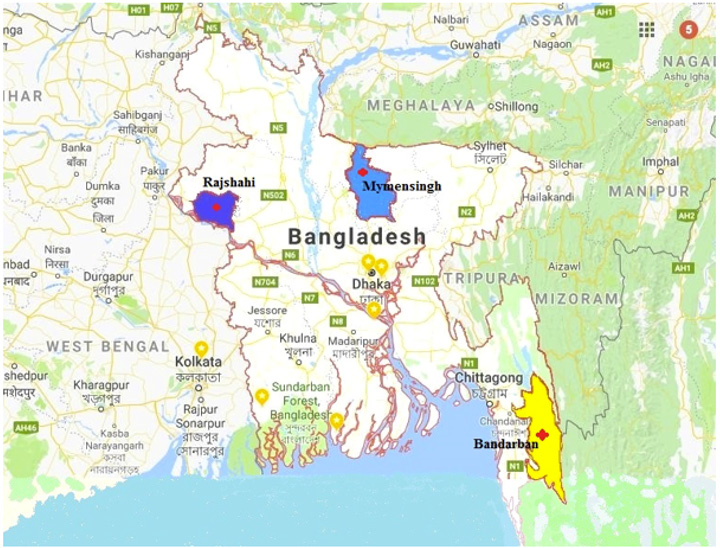
This research was performed in the laboratory of the Department of Anatomy & Histology, Bangladesh Agricultural University, Mymensingh-2202 during the outbreak report from June to November in 2016. Clinically FMD affected cattle and some healthy cattle (for control group) over 1 year of age were selected for the evaluation of effective hematological and biochemical changes at different outbreak areas of Rajshahi, Mymensingh and Bandarbon each of these districts shares common boundaries with the neighboring country India (Figure 1).

A. Study Design

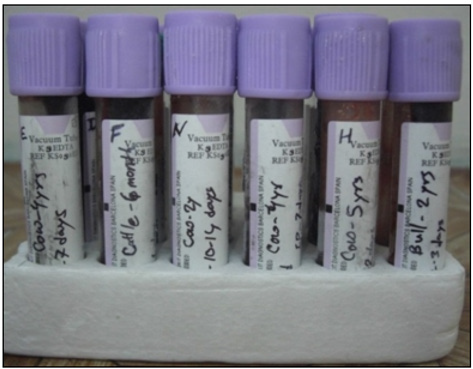
A total number of 20 cattle were used in this study, of these 15 cattle showed characteristic clinical sign of FMD. The remaining 5 cattle were apparently healthy and selected as a control group. Peripheral blood samples, 20 samples each were collected directly from the jugular vein with the help of 10ml sterile syringe and put into blood collecting vial (Vacuum Tube, K3EDTA, REF Ko3oEDE) containing anticoagulant EDTA (ethylene diamine tetra acetic acid at 2 mg/ml) to investigate the WBC, RBC, Hb. conc., PCV, MCV and MCH for hematological study (Figure 2). Another 20 samples from the jugular vein were collected and put into blood collecting vial (Vacuum Tube, K3EDTA, REF Ko3oEDE) without anticoagulant for total serum protein, albumin, globulin, BUN, calcium, glucose, phosphorus and cholesterol test for biochemical study. These collected samples were divided into four groups:
a) Group A (Control group): Group A is control group with normal physiological condition and no clinical findings.
b) Group B (Primary stage): Group B is referred to as primary stage group where animal are affected with FMD disease of 1st to 2nd days of post infections.
c) Group C (Advanced stage): Group C is referred to as advanced stage group where animal are affected with FMD disease of 3rd to 7th days of post infections.
d) Group D (Recovery stage): Group D is referred to as recovery stage group where animal are affected with FMD disease of 8th to 14th days of post infections.

B. Hematological Study

The anticoagulant added samples were examined for hematological study of red blood cells count (RBCs, 106/ μl), white blood cells count (WBCs, 103/ μl), hemoglobin (Hb, g/dl), packed cell volume (PCV%) as per method described by Mohan et al. [18]. The mean corpuscular volume (MCV,fl), and the mean corpuscular hemoglobin (MCH, pg) were calculated as mentioned by Gökçe et al. [19].

C. Biochemical Study

Through the non-anticoagulant added samples, the concentration of different serum biochemical constituents such as the average value of total protein, albumin, globulin, blood urea nitrogen (BUN), cholesterol, calcium, phosphorus and glucose were examined by standard method.

D. Statistical Analysis

All the collected data were analyzed by using IBM SPSS Statistics (version 20) software and revealed the results in necessary forms. Statistical analysis was performed using one-way analysis of variance (ANOVA) followed by post hoc Duncan’s test. Results were expressed as mean ± standard error (S.E). Differences between groups were considered significant at p<0.01 and p<0.05 level.

Figure 1: Location of study area inside Bangladesh. Rajshahi, Mymensingh and Bandanban districts share common boundaries with the neighboring country India.

Figure 2: Collected blood sample for hematological and biochemical examination.

Results and Discussion

E. Hematological Study

The concentration of different hematological indices (mean ± SE values) are presented in the Table 1. In this present study, the total number of red blood cells (RBC) count in foot-and-mouth disease cattle at primary, advanced, recovery stage groups (Group B, Group C, Group D) and apparently healthy animals (Group A) were 4.98±1.48 x10⁶/μl, 4.60±0.48** x10⁶/μl, 5.14±1.36 x10⁶/ μl and 5.5±0.29 x10⁶/μl respectively. Similarly, the hemoglobin concentration were 8.85±1.25 g/dl, 8.32±0.78** g/dl, 9.25±2.02 g/dl and 9.57±1.08 g/dl at the primary, advanced, recovery stage groups (Group B, Group C, Group D) and control group (Group A) respectively Table 1. Statistical analysis revealed that the RBCs count and Hb conc. specially at the advanced stage (group C) was significantly (p<0.01) lower than the other groups that might be due to reduction of the process of erythropoesis and hemolysis [20]. Similar findings are also observed by different workers in FMD infection [18,19,21]. On the other hand, FMD infected animals showed significant production of mean corpuscular volume (MCV) (p≤0.05) at advanced (64.27±3.94* fl) stage group as compared to the primary (60.65±2.67 fl) stage, recovery (56.20±2.48 fl) stage and control (51.80±2.86 fl) group Table 1 same findings are recorded by Gokce et al. [19], Ghanem et al. [21], Mohapatra et al. [22], Krupakaran et al. [23] and Gattani et al. [24]. These results could be attributed to endocrinopathy is reported previously by Radostits et al. [20].

Table 1: Hematological parameters (mean ± SE values) in FMD at primary, advanced, recovered stage group and control group with normal range.

Results are Mean ± SE (Standard Error) in each group. One-way analysis of variance (ANOVA) followed by post hoc Duncan’s test was performed as the test of significance. The difference was considered to be significant when **p<0.01, *p<0.05 compared to FMD control group.
NS = Not significant

Besides these, the total white blood cells (WBC) count, the mean value of packed cell volume (PCV), and the value of mean corpuscular hemoglobin (MCH) in FMD affected animals at primary, advanced, recovery stage groups did not show any significant alteration along with the control group and our findings also are corroborated with the observation made by Mohan et al. [18], Gokce et al. [19] and Al-Rukibat et al. [25].

F. Biochemical Study

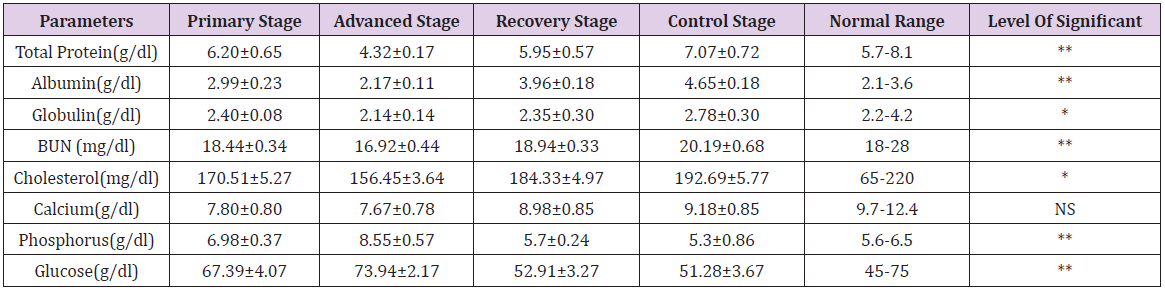
The concentration of different biochemical indices (mean ± SE values) are presented in the Table 2. This study demonstrated that the average value of total serum protein were 6.20±0.65 g/dl, 4.32±0.17** g/dl, 5.95±0.57 g/dl and 7.07±0.72 g/dl and albumin concentration were 2.99±0.23 g/dl, 2.17±0.11** g/dl, 3.96±0.18 g/ dl and 4.65±0.18 g/dl in FMD at the primary, advanced, recovery stage groups and control group respectively Table 2. The total serum protein and albumin concentration were significantly (p<0.01) decreased at advanced stage rather than the other groups. Roussel et al. [26] reports that the decrease level of total protein concentration is associated with hepatic and renal damage, starvation, enteropathies that resulting in protein loss and the presence of infection or any lesion in the body is also recorded by Meyer et al. [27]. which was inconsonance with our observation. Low albumin and protein concentrations may also be due to alterations in pancreatic β-cell functions that might have developed during the clinical course of FMD is reported by Barboni et al. [28]. As well as, serum globulin concentration showed a significant decrease (p<0.05) at the advanced stage as compared to primary, recovery stage groups and control group. The serum globulin concentration at the primary, advanced, recovery stage groups and control group were 2.40±0.08 g/dl, 2.14±0.14* g/dl, 2.35±0.30 g/dl and 2.78±0.30 g/dl respectively Table 2, that might be due to hypoglobulinemia in the affected animals, coming in parallel with mention by Gokce et al. [19], Ghanem et al. [21], Mohapatra et al. [22], Krupakaran et al. [23] and Gattani et al. [24].

Table 2: Biochemical parameters (mean ± SE values) in FMD at primary, advanced, recovered stage group and control group with normal range.

Results are Mean ± SE (Standard Error) in each group. One-way analysis of variance (ANOVA) followed by post hoc Duncan’s test was performed as the test of significance. The difference was considered to be significant when **p<0.01, *p<0.05 compared to FMD control group.
NS = Not significant

Though the blood urea nitrogen (BUN) concentrations were decreased significantly (p<0.01) at the advanced stage group (18.44±0.34** mg/dl) as compared with the primary (16.92±0.44 mg/dl), recovery (18.94±0.33 mg/dl) and control group (20.19±0.68 mg/dl). It might be due to hypoproteinemia in the affected group. As well as the mean value of cholesterol in FMD at the primary, advanced, recovery stage groups and control group were 170.51±5.27 mg/dl, 156.45±3.64** mg/dl, 184.33±4.97 mg/dl and 192.69±5.77 respectively Table 2, while the normal range is 65- 220 mg/dl. This study was revealed a significant (p<0.01) reduction of cholesterol level at the advanced stage group (Group C) and may be due to dysfunction of pancreatic β-cell is suggested by Gokce et al. [19] and Ghanem et al. [21]. Nevertheless, the mean value of calcium level at the primary, affected, recovered stages and control group was reported very little significant which is also mentioned by Mohapatra et al. [22], Krupakaran et al. [23] and Gattani et al. [24]. This research also revealed a significant (p<0.01) production of phosphorus (P) concentration between the affected and control groups. The mean value of phosphorus (P) in foot-and-mouth disease cattle at primary, advanced, recovery stage groups and control group were 6.98±0.37, 8.55±0.57**, 5.7±0.24 and 5.3±0.86 g/dl respectively. Hyperphosphatemia recorded in our result is also noted by Gokce et al. [19], Ghanem et al. [21], Mohapatra et al. [22], Krupakaran et al. [23] and Gattani et al. [24]. Similarly, Glucose concentration was significantly (p<0.01) increased at the advanced stage (73.94±2.17** mg/dl) group in analogy with the primary (67.39±4.07 mg/dl), recovered (52.91±3.27 mg/dl) stage groups and control group (51.28±3.67 mg/dl) Table 2. An increased concentration of glucose was well documented in cattle affected with FMD is recorded by Elitok et al. [29] and also a common finding in cattle affected by the stress in systemic disease is described by Gokce et al. [19], Paalberg et al. [30] and Yeotikar et al. [31].

Conclusion
From this present study, it can be concluded that the concentration of different hematological constituents revealed a significant reduction (p≤0.01) of red blood cells (RBC), hemoglobin (Hb) and significant production (p≤0.05) of mean corpuscular volume (MCV) especially at the advanced stage (group B) rather than the control groups. Similarly, at 3rd to 7th days of post infection that is in advanced stage, the serum biochemical concentration of total protein, albumin, globulin, blood urea nitrogen, cholesterol are significantly decreased and significant increase (p≤0.01) of glucose and phosphorus in FMD affected animals in comparison to the other respective groups.

For more Articles on : https://biomedres01.blogspot.com/
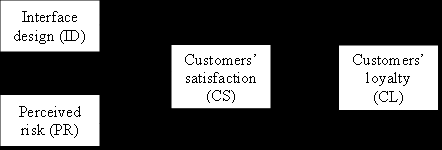
The Effect of Interface Design and Perceived Risk of Customers’ Satisfaction and Loyalty on Online Booking Application

  The Effect of Interface Design and Perceived Risk of Customers’ Satisfaction and Loyalty on Online Booking Application Introduction The ra...