Tuesday, August 3, 2021

The Influence of Time of Diagnosis on Neurodevelopmental Outcomes of Complicated Monochorionic Pregnancies


The Influence of Time of Diagnosis on Neurodevelopmental Outcomes of Complicated Monochorionic Pregnancies 

Introduction

Twin pregnancies carry an increased risk of complications relative to singleton pregnancies [1,2]. The majority of twins (approximately 80%) are Dichorionic Diamniotic (DCDA) pregnancies. Twins that are Monochorionic Diamniotic (MCDA) have an even greater risk of serious complications when compared with DCDA, of 23% vs 4% [3,4]. Approximately 20% of twins are monochorionic and whilst the majority of monochorionic twins have individual amniotic sacs (MCDA), [5] 1% of monochorionic twins have only one amniotic sac and are known as Monochorionic Monoamniotic pregnancies (MCMA) [6,7]. Associated neurological effects of complications during pregnancy may have a profound longterm effect on an individual’s health [8-10]. Monochorionic twins are 2-3 times more likely than dichorionic twins to be delivered before 32 weeks and have higher rates of congenital abnormalities and an increased risk of intrauterine (9times more likely than singletons) and neonatal death (IUD, NND) [2,11,12]. Even when prematurity and low birth weight is accounted for, monochorionicity still increases the risk for poor neurodevelopmental outcomes [13].

According to a cohort study, 41% of monochorionic pregnancies had neurodevelopmental concerns [14] with no pre-natal complications identified and who delivered in the 3rd trimester. The factors referenced as an explanation were very low birth weight, monochorionic complications, antenatal and postnatal injury and prematurity [7,10,15]. According to a prospective cohort study of monochorionic and dichorionic twins, MCDA twins had higher rates of cerebral palsy than DCDA as a result of monochorionic specific complications [13]. The commonest complication in monochorionic twins is Twin-Twin Transfusion Syndrome (TTTS), which approximately 10-15% of MCDA twins develop [16]. Clinicians use the Quintero Staging System to rank TTTS in terms of severity, Stage 1 being the least and Stage 4 the most severe [17]. Other complications examined in this study include selective Intrauterine Growth Restriction (sIUGR) and Twin Anaemia Polycythemia Sequence (TAPS ), which are peculiar to monochorionicity [18]. These complications are thought to relate directly to the Twin-Twin Transfusion environment. There are 4 treatment options for TTTS; fetoscopic laser surgery (dividing the placenta to disconnect circulations), amniodrainage (removal of excess amniotic fluid), conservative (close monitoring throughout pregnancy) [19] and delivery.

Termination is also an option. Laser is the preferred intervention as it has lower rates of morbidity, [20] but amniodrainage may be used for Stage 1, or symptomatic polyhydramnios [21]. Generally, conservative treatment has better outcomes; but this is because it is used for amniotic fluid discordance and Stage 1 TTTS pregnancies [22]. TTTS is a condition peculiar to monochorionic pregnancies that most commonly develops between 15-26 weeks of gestation. Monochorionic placenta fetuses are at risk of unequal placenta share and volume imbalance associated with placental vascular anastomoses which connect both circulations [23-25]. The complications of this include size discordancy, TTTS, TAPS and Amniotic Fluid Index (AFI) discordancy. TAPS results from chronic monochorionic fetofetal transfusion, resulting in large haemoglobin differences between twins [26]. Due to the haematological and haemodynamic instability that is associated with TTTS and TAPS, blood flow to the brain can be affected, resulting in significant neurological effects [13]. Approximately 20% of TTTS twins bear neurological disorders [27]. It has been aThe first study to evaluate the long-term neurodevelopmental outcomes in TTTS survivors who developed TAPS after laser surgery concluded that the rates of poor neurodevelopmental outcomes were comparable to those with TTTS who were treated with laser therapy (see 18 in reference list) suggested that up to 15.4% of infants with TTTS are diagnosed with cerebral palsy after amniodrainage treatment, and 8.5% when managed by fetoscopic selective laser coagulation of anastomoses (FSLCAS) [21].

Disabilities that are associated with TTTS include cerebral palsy, cognitive defects and attention deficit disorder. They can also be isolated, which means that they are often misdiagnosed, apart from when a child undergoes a neurodevelopmental screening [28,29]. Neurodevelopmental outcomes are an important sequalae of the complications that result from MCDA twin pregnancies. Numerous studies have specifically investigated the extent of poor neurological outcomes on twins with TTTS, [17,19,30] but few have compared the results of twins diagnosed before 28 weeks with after 28 weeks. There are significant gaps in knowledge regarding how far TTTS can progress without being symptomatic [31] and which gestational parameters have better outcomes. This study aims to clarify the outcomes of complicated monochorionic twins diagnosed in the 3rd trimester, as there is a paucity of research on this topic [20]. Whilst it is well understood that there are poor neurodevelopmental outcomes in twins with monochorionic complications, the exact nature of these neurodevelopmental effects is not as well understood; whether it is cognition, language or motor function that is most affected. To identify the neurological effects of monochorionic complications, neurodevelopmental assessments at 8 months and 2 years of age provide important observations about neurological deficits [22]. The Bayley’s Scale of Infant and Toddler Development (BSID-III) is currently the most research appropriate neurodevelopmental assessment available [32].

Methods

This was a single-centre prospective cohort study of 53 monochorionic twins who attended the Liverpool Hospital Feto- Maternal Unit (FMU) and were then followed up at 8 months and 2 years at the Liverpool and Campbelltown Hospital Rainbow Clinic. It retrospectively reviewed a prospectively collected dataset; every MCDA twin pregnancy with complications associated with monochorionicity from 2009 until 2015 was approached during gestation for the longitudinal study. From February 2010 until August 2018, neurodevelopmental outcomes of each twin were evaluated using the Motor Assessment of Infants (MAI) and Rossetti Language assessments at 8 months, and the BSID-III at 2 years. Corrections to gestational age for prematurity were made. Inclusion criteria for the project included a positive diagnosis of TTTS, pre-TTTS or TAPS and consent to have personal data included in the FMU administrative system. Pre-TTTS was defined as AFI discordancy with both bladders present. Each participant was required to be involved in the study for a minimum of 2½ years.

Liverpool Hospital is a tertiary referral centre in the South Western Sydney Local Health District. The FMU services this population with tertiary prenatal services for approximately 11,000 pregnancies per year in SWSLHD. There are approximately 25 monochorionic pregnancies diagnosed per year at the Liverpool FMU. Data regarding the antenatal details of the participants was sourced from the internal database of the FMU. Enrolment for this study was discussed after diagnosis of monochorionic complications during pregnancy and consent obtained after delivery. Participants were informed of the 8 month and 2-year neurodevelopmental assessments, and the option for further assessments as well.

Diagnosis of TTTS During Pregnancy

Regular monitoring of monochorionic pregnancies is recommended because of the increased risks associated with these pregnancies. Following the first visit at which the obstetrician diagnosed monochorionicity with an ultrasound (noting placental number, the “T” sign and intertwin membrane thickness), counselling and management plan was discussed, which entails fortnightly monitoring [33,34]. This is ideally late in the 1st trimester. At these fortnightly assessments, ultrasound was performed to quantify fetal bladders, amniotic fluid indices, umbilical artery and Middle Cerebral Artery (MCA) Doppler values, fetal biometry, Estimated Fetal weight and growth measurements for both twins [31]. Diagnosis with TTTS was made when the stated parameters fitted the clinical picture of TTTS; oligo-polyhydramnios, doppler abnormalities (Middle Cerebral Artery Peak Systolic Velocity (MCAPV), umbilical artery and ductus venosus) and significant fetal weight differences over a significant period of time.

Tests used to Assess Neurodevelopmental Function at 8 Months

The Motor Assessment for Infants (MAI): The MAI score is used to assess motor function in infants with a low birthweight in their first year of life. It assesses primitive reflexes, automatic reactions, muscle tone and volitional movements. Only scores that are below 16 are concerning, and those above are not concerning. The test has a sensitivity for CP of 73.5% [35]. It is considered an appropriate test to conduct to assess motor function in this age group; as correlations between the MAI assessment at 4 months were highly significant when partnered with the BSID-III at 2 years (p<0.001) [36].

Tests used to assess Neurodevelopmental Function at 2 Years

Rossetti Language: The Rossetti Language test has the advantage of being suitable for those who are from a non-English speaking background and can be used for those between 0-3 years old. Rossetti language scores are given as age brackets that correspond with levels of development, as a few months leeway is given for language outcomes [35,34]. It is often used in conjunction with other tests like the BSID-III because it is designed as a broader assessment of language by assessing both language comprehension and expression, interaction attachment, language pragmatics and play [37].

Gross Motor Function Classification System (GMFCS): THE GMFCS score was used in this study to identify cases of Cerebral Palsy (CP). This test has 5 levels of classification that tests gross motor function based on self-initiated movements. It is tested at ages 0-18. It is considered the gold standard for predicting CP, as the test has a sensitivity of 94% and a specificity of 87% [38].

The BSID-III: The BSID-III is a normative assessment that examines cognitive function, motor function, language function, social and emotional and adaptive behaviour. It uses an index mean of scores of 100 (+/-15), and for this study, a score of 75 or below was considered severe impairment, whilst a score from 75-85 was mild impairment, and a score above 85 was clinically non-concerning [39]. It uses a series of tests to quantify problem solving ability, object identification, language expression and comprehension, fine and gross motor function, and social and behavioural functioning [40]. The BSID-III uses two scores; a composite score which adds all the individual test scores together, and a bell curve score to compare the outcomes of infants of similar age brackets with each other [32]. Each particular assessment is scored and then these scores are added together to achieve a composite score which is then converted into a scaled score. The scaled score is calculated using a bell curve (Figure 1).
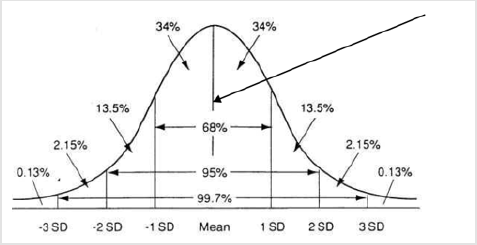
Figure 1: The bell curve: these percentiles are used to score and compare Neurodevelopmental results from the BSID-III.

Statistical Analysis

Results were collected from both the 8 month and 2-year assessments. The 2-year assessments were analysed more comprehensively, because numerous past studies have shown that data collected later in childhood is more representative of true outcomes [41]. Due to the small sample size, a primarily descriptive approach was used (means, proportions and standard deviations). A confidence interval of 95% was assumed for all tests. For the numerical scores, independent t-tests were performed. Statistical significance was given at p < 0.05. For the categorical neurodevelopmental scores (concerning, borderline and good), the Chi-Square test and Fisher’s Exact Test was used in a broad comparison of the pre and post 28-week groups, gestational age and birthweight. Both the Chi-Square test and Fisher’s Exact Test were used due to the small sample size. Effect sizes were calculated using Cohen’s d. Statistical analysis of the results was performed using IBM SPSS 25.0 statistical software.

Results

A cohort of 32 pregnancies, with 53 surviving babies, were recruited from the FMU. Initially, 72 fetuses were enrolled in the group, but 4 of these pregnancies did not participate in the neurodevelopmental study and so were not included. Unfortunately, 10 of the fetuses passed away, either in utero or neonatally. One of the pregnancies was not included in the final analysis due to diagnosis with Twin Reversed Arterial Perfusion Sequence (TRAP). This group was then followed for two years, whence upon they completed their 24-month BSID-III assessment (the earliest neurodevelopmental assessment in February 2010 and the latest in August 2018). This cohort can be seen in Figure 2 and consisted of a variety of monochorionic complications. 4 participants were diagnosed with monochorionic complications before 28 weeks but were delivered before 28 weeks (Figure 3), and so the data size available for this comparison was 49 out of the 53 participants. These participants were excluded because it is not possible to compare results of twins diagnosed before and after 28 weeks, as each participant needed to have experienced the post 28-week period by definition.
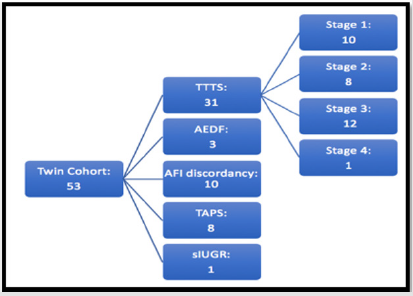
Figure 2: Breakdown of the cohort.

Figure 3: Explanation of cohort numbers.

Moreover, two participants only had results for their 8-month assessment. Due to 6 participants only having categorical neurodevelopmental scores, the cohort assessed for their numerical results consisted of the neurodevelopmental assessments at 2 years was 41 participants. Categorical assessments for 6 participants received either a good, borderline or concerning outcome based on the judgement of the assessor(s), rather than the BSID-III composite score. These scenarios occurred as a result of non-compliance during the testing. Of the 41 participants, 27 were diagnosed before 28 weeks and 14 were diagnosed after 28 weeks. Further, the discrepancy in numbers between the different components of the neurodevelopmental assessments is due to incomplete test completion by the participant.

Pregnancy Characteristics

The average BMI of the mothers was 26.18 (SD+/-6.92), and the mean age was 30.20 years, with 12.50% of mothers identifying as smokers, and 6.25% as drinkers of alcohol. The main commonest method of conception was spontaneous (87.50%). Caesarean was the most common delivery method (71.88%), with vaginal delivery at 28.13%. Complications during pregnancy included light bleeding in the first trimester (15.63%), gestational diabetes (6.25%), short long bones (3.13%), post-partum endometritis (3.13%) and cord hemangioma (3.13%). The mean birthweight of this group was 1681.8g (SD+/- 662.50), and the mean gestational age was 32.3 (SD+/- 4.06). There were 17 male twin pairs and 15 female twin pairs. The median first APGAR score was 8. There are notable cohort complications included in the table below; Patent Ductus Arteriosus in 7 participants, and 2 cases of brain injury. The cases of anaemia and polycythemia were attributed to the TAPS participants. The high number of infectious diseases (21/53) is expected in a premature twin cohort. bAppearance, Pulse, Grimace, Activity, Respiration. The majority of the twins in the study were diagnosed with one of the 4 Quintero stages of TTTS. 18.87% were diagnosed with pre-TTTS (characterised by AFI discordance or umbilical artery discordance), 1.89% with sIUGR and 15.09% with TAPS (which is considered a specific type of TTTS). In this cohort, 2 of the TAPS cases were post-laser, and the other 6 were not. Of the TTTS diagnoses, 24.53% of the entire cohort were Stage 1, 15.10% were Stage 2, 22.64% were Stage 3 and 1.89% were Stage 4.

cInsult proceeding laser treatment.

Neurodevelopmental Outcomes

Developmental concerns at 8 months

At 8 months, assessments about language and motor skills can be effectively made. For language expression, the median was in the 6-9-month range, which is the expected range for 8 months. However, a concerning number of children only achieved the 0-3 month and 3-6-month language range (12 for language expression and 14 for language comprehension). To compute the Rossetti language scores in SPSS, each Language Range was allocated a sequential number (0,1,2,3). The Pearson Chi-Square test revealed no statistical difference between the pre and post 28-week groups for Language Expression (p-value=0.345), and no statistical difference for Language Comprehension (p-value=0.065). This can also be seen in Tables 1 & 2.

dA total of 46 participants completed all sections of the language expression assessment,

eA total of 49 participants completed all sections of the language comprehension assessment,

fA total of 42 participants completed all sections of the MAI.
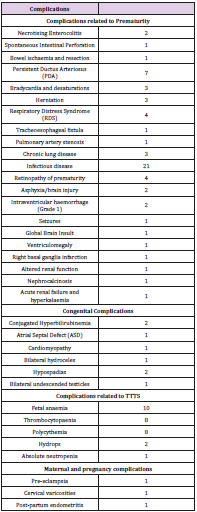
Table 1: Cohort Complications.
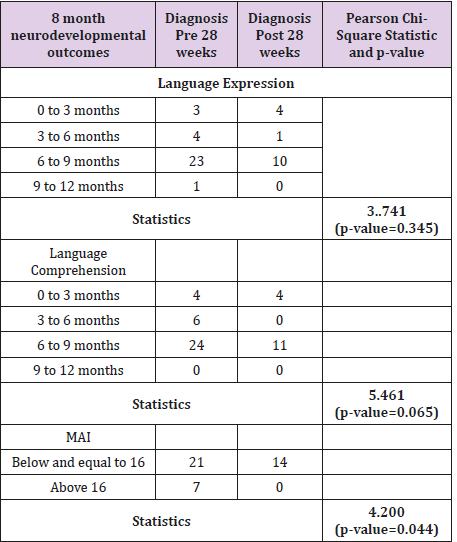
Table 2: 8 month Language and Motor Outcomes

MAI

The MAI results identified 2 participants who were likely to have cerebral palsy; these participants then underwent the GMFCS, which gave a positive diagnosis of cerebral palsy (GMFCS 1). The mean score in the motor assessment was 9.6 (SD+/-8.0). MAI scores >16 (of which there were 7, (Figures 4 & 5) is indicative of potential motor complications in the future, such as cerebral palsy (Figure 3 & Table 3). Interestingly, all of these 7 scores were from the pre 28-week diagnosis group. Categorising MAI outcomes into concerning and good, there was a Pearson Chi-Square value of 4.2, (Table 2), (p-value=0.04), denoting a statistical significance in the pre and post 28-week groups in motor outcomes.
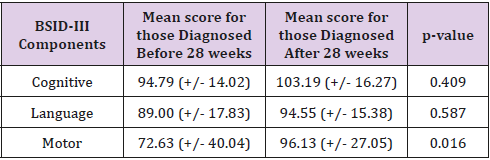
Table 3: Numerical BSID-III results for post and pre 28 week groups.
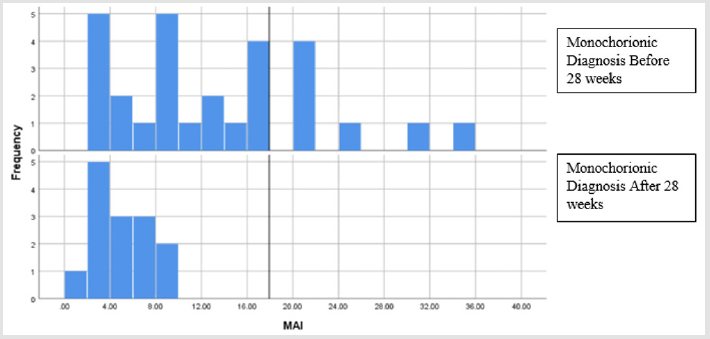
Figure 4: MAI results.
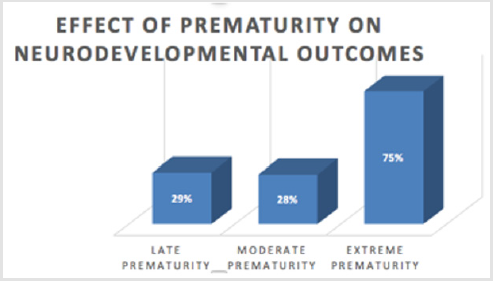
Figure 5: Effect of prematurity on Neurodevelopmental Outcomes.

Developmental Concerns at 2 years

The 2-year BSID-III scores revealed a concerning number of neurodevelopmental deficits. 45% of the cohort did not reach age appropriate outcomes for language. Levels of neurological impairment in this group was also significantly high for cognition (25%), and motor (26%).

Diagnosis Pre 28 weeks versus Post 28 weeks

A comparison between outcomes of twins diagnosed before 28 weeks versus after 28 weeks was performed. For the numerical scores, an independent t-test was performed, with Levene’s. gThe vertical line on the x-axis denotes the score ‘16’; above 16 is a pathological score, and score ‘16’ and below are non-concerning scores. Test for Equality of Variances providing p-values. The mean results for the pre and post 28-week groups were not statistically significant for cognition or language (p>0.05), but they were for motor (p=0.016). The Cohen’s d for cognition was 0.17, for language it was 0.26 and for motor it was 0.42 (small sized effects). Interestingly, the post 28-week group had higher mean scores for the motor assessment than the pre 28 week group (Table 3). For the categorical scores, the relationship between time of diagnosis with monochorionic complications and neurodevelopmental outcomes were also examined using the Chi-square test (x^2) and the Fisher’s Exact Test. This was performed so that all the results could be analysed together (categorical and numerical). Of the 47 participants, 33 were diagnosed before 28 weeks and 14 were diagnosed after 28 weeks. The categories decided upon based on discussion with the assessors of the examination were ‘good’, ‘borderline’ and ‘concerning’.

This is based on the methods by which the BSID-III scores are described to parents/caregivers/people who are interested in knowing what these scores mean. The categorical results show a statistically significant difference in pre and post 28-week language scores (Table 4). This difference from the results of the purely numerical scores can be explained by the addition of the Rossetti scores, which skewed the results. Thus, this is actually a truer portrayal of the cohort, as all scores are accounted for. 15 of the 33 participants diagnosed before 28 weeks received ‘concerning’ scores, whilst there were only 3 of the 14 participants diagnosed after 28 weeks with ‘concerning’ scores. The Pearson Chi-Square test did not show statistical significance for Cognition (p=0.535), nor for motor (p=0.082). However, for language the Chi square statistic of 9.469 was significant (p=0.009). Fisher’s test showed significance for language (p=0.01), but not for cognition or motor. There was positive correlation for Language as the Chi-Square and Fisher’s Exact Test p-value was <0.05 (Figure 6).
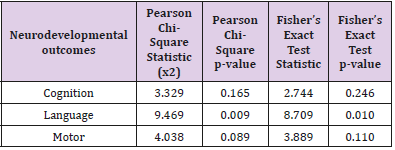
Table 4: Categorical Neurodevelopmental outcomes pre and post 28 weeks.
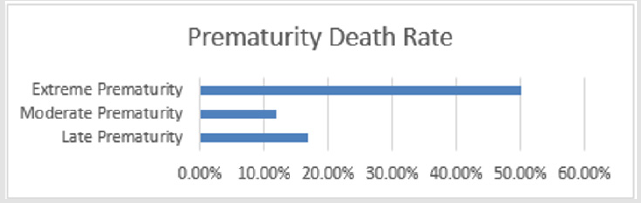
Figure 6: Prematurity Death Rate.

Gestational age and Neurodevelopmental Outcomes

This cohort was largely biased towards prematurity, due to factors such as twinning and the complications associated with monochorionicity. Statistical analysis of this cohort shows a positive Pearson correlation between gestational age and cognitive scores. The longer the gestation, the higher the level of cognitive scores. However, this is a very small correlation as r=0.093. For cognition, the Pearson chi-square value was 14.13, and there was a p-value of 0.028, thus statistically significant. The Fisher’s Exact Test value was 13.73 and the Fisher p-value was 0.012. These results favour longer gestation for better cognitive outcomes (Tables 5 & 6). For language, the Pearson chi-square value was 7.368, and there was a p-value of 0.268, thus not statistically significant. The Fisher’s Exact Test value was 6.105 and the Fisher p-value was 0. 383.These results do not show a significant difference in language. For motor, the Pearson chi-square value was 15.32, and there was a p-value of 0.020, thus statistically significant. The Fisher’s Exact Test value was 11.068 and the Fisher p-value was 0.041. There is a clear difference in the motor outcomes of the extremely premature and the term participants, with the extremely premature performing significantly worse than the term participants. hThe time of each neurodevelopmental assessment was corrected for gestational age. As a group, the extremely premature had significantly worse neurodevelopmental results, with 75% having concerning outcomes.
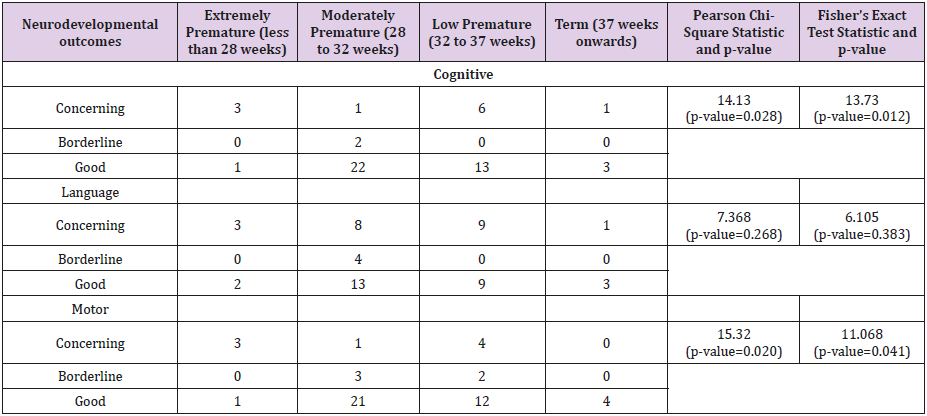
Table 5: Neurodevelopmental outcomes and gestational age.
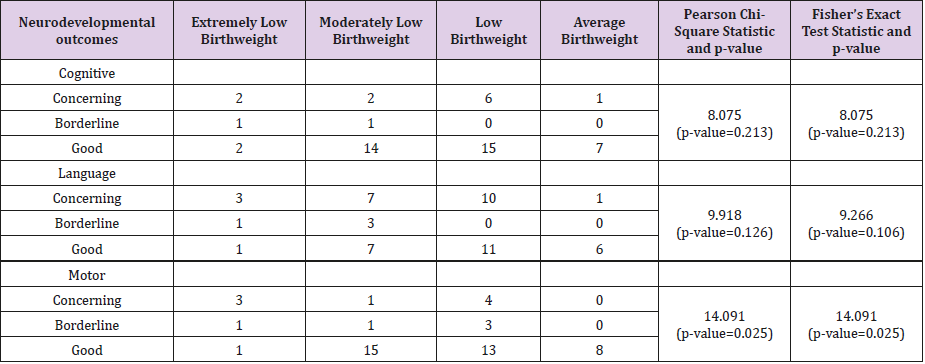
Table 6: Neurodevelopmental outcomes and Birthweight.

Extreme prematurity occurred in 8% of the cohort, and this group had neurodevelopmental problems in 75%, as can be seen in Figure 6 (IUD or NND in 50%). Moderate prematurity was present in 47%, with 28% having neurodevelopmental problems, and 12% either IUD or NND. Late prematurity (45% of the cohort) had 29% associated with neurodevelopmental problems, and a 16.7% death rate. Not only are the neurodevelopmental outcomes of premature twins concerning; there is also high incidence of intrauterine and neonatal deaths. Figure 6 shows the death rate for twins who were extremely premature (<28weeks), which was 50%. This is significantly higher than those who were of moderate or late prematurity. iVertical axis is not labelled, but it is the degree of abnormal neurodevelopment.

Birth weight and Neurodevelopmental Outcomes

This cohort was biased towards lower than average birthweight, due to factors such as twinning and monochorionic complications. For cognition, the Pearson chi-square test and the Fisher’s Exact Test were not statistically significant (p>0.05). However, for motor, the Pearson chi-square value was 14.091, and there was a p-value of 0.025, thus statistically significant. The Fisher’s Exact Test was also significant, with a value of 11.750 and a Fisher’s Exact p-value of 0.026.

Discussion

Non-Monochorionic Complications

There were a number of non-monochorionic related complications in the cohort. Common complications were Patent Ductus Arteriosus (PDA) and sepsis, which are both prevailing complications in preterm infants [42,43]. There were also a significant number of cerebral insults. The number of isolated cases of these conditions, (namely, that the other twin was not affected), is not unexpected in monochorionic complications, as the donor/ recipient relationship affects the twins differently [44-46].

Developmental Outcomes

The goal of this research was to investigate the relationship between time of diagnosis of monochorionic complications during pregnancy and future neurodevelopmental outcomes. The hypothesis was that prolonged exposure of the brain to blood flow abnormalities that occur in monochorionic complications increases the risk of abnormal neurodevelopmental outcomes. Haemodynamic imbalances associated with placental vascular anastomoses is thought to be associated with a cerebral insult, causing neurological impairment [7]. However, the hypothesis of this study was not supported by the results of this study design. In the pre-28-week group, 44.74% of the twins had concerning neurodevelopmental outcomes. This was statistically significant in comparison with overall neurodevelopmental outcomes in the post 28-week group (21.40%). The pre 28 week performed poorly in comparison to the post 28-week group, with means in motor and language being statistically different (p-value=0.044 and p-value=0.012 respectively). 3 of the post 28 week group had language scores 2SD below the BSID-III mean, whilst 7 of the pre 28-week group had scores below 2SD, and 10 had scores less than 1SD.

Reflecting on past studies, this study delivered comparable results of concerning neurodevelopment in twins with monochorionic complications; 22% of a 40-participant cohort had cerebral palsy and global cognitive delay [47]. Language and motor scores varied the most between the pre and post 28-week groups. The better outcomes in the post 28-week group can be explained through the greater number of acute and severe presentations in the pre-28-week group. Moreover, despite the risk of prolonged exposure to hemodynamic imbalance in pregnancies that are diagnosed after 28 weeks, the events that led to an acute instability and onset of Twin-Twin Transfusion (manifesting in an early, pre 28-week presentation), is likely to result in long term neurological effects. 23 Cases that present before 28 weeks are characteristically more severe and require more intensive treatment options. The higher level of prematurity that was in the pre-28-week group also affected this. Due to the increased severity of these cases, more intensive treatment is often required.

The better neurodevelopmental findings in the post 28-week Twin-Twin Transfusion group may be considered to support that the Twin-Twin Transfusion process is not chronic, but occurs acutely and if recognised and managed, then significant harm can be reduced. In most cases, this is achieved through delivery. Although complete prediction of future neurodevelopmental groups could not be achieved in this study as different neurodevelopmental tests were used at 8 months and 2 years, a correlation could be drawn between those who perform very poorly and those who perform very well in their future assessments. However, it is not possible to make a valid prediction for those in the ‘middle’ of the group.44 Poor results in an 8 month or 2 year ‘concerning’ was defined as a score that was below 75 for the BSID-III, or equivalent neurodevelopmental assessment does not necessarily mean that the child will have poor outcomes when they are older, but it does indicate that they will need more intensive support and possible intervention. That is why these neurodevelopmental tests are important, especially in twins affected by monochorionic complications [14,39,41].

Comparison with the Neurodevelopmental Outcomes of the Twins in this study and those of Other Studies

A study comparing the neurodevelopmental outcomes of twins and singletons born less than 34 weeks concluded that there was no significant difference in cognitive outcomes (referencing the BSID-III) of singletons compared with twins at 24 months [45]. The mean BSID-III cognitive and motor scores for the monochorionic complications cohort were comparable with the mean scores for DCDA twins and singletons (Table 7). Both studies had similar sample sizes and characteristics.The similarity in these results could be accounted for with the significant prematurity of the DCDA and singleton study.
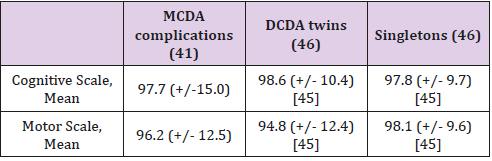
Table 7: Comparison of this study’s mean neurodevelopmental scores with those of another study.

Effect of Prematurity

A factor that must be taken into account is that a very large proportion (47/53) of the participants had some degree of prematurity; and so their neurodevelopmental means were compared with a group of singletons of similar cohort factors and sample size. Prematurity had a sizeable effect on the neurodevelopmental outcomes assessed at 2 years. However, it is important to note that in this cohort, monochorionic complications have a strong effect bias towards prematurity.46 Pregnancy complications like Twin-Twin Transfusion decrease the gestational age because it is sometimes beneficial for the outcomes of the twins to deliver before term to limit the exposure to the condition. Other factors that may cause prematurity include cervical incompetence as a secondary cause (when associated with polyhydramnios) or a primary event associated with twins [47]. Prematurity had a sizeable effect on the neurodevelopmental outcomes assessed at 2 years, such as poor language development [10,48]. Of those with extreme prematurity, 75% had neurodevelopmental concerns. Statistical significance between prematurity and cognition and motor outcomes were shown.

This study also showed statistical significance between low birthweight and poorer motor outcomes. Treatment and Neurodevelopmental Outcomes: Conservative, Laser and Amniodrainage. Before laser treatment was available (during which amniodrainage was the main form of treatment for TTTS), 15.4% were diagnosed with CP. In comparatively, 8.5% of TTTS cases treated with laser were diagnosed with CP.21 Laser surgery has greatly reduced the rates of neurological disability; however, there are still marked neurological effects in those untreated. In terms of treatment options (of which there are three categories), this cohort was predominantly treated using conservative measures (49%). This was because the cohort were not all TTTS Stage 2 or greater, where laser is considered the optimal elective treatment at less than 26 weeks [8]. Due to the neurodevelopmental effects of amniodrainage (particularly in increasing the rate of cerebral palsy), it was the least common form of treatment (17%) as it only treats the effects and not the cause, especially in TTTS Stage 2 or greater [20]. Laser treatment was performed on 34% of the cohort. Interestingly, the twins who did not undergo treatment (were treated conservatively), had the most minimal neurological concerns (7.7%). A confounding factor for this could be that those who were not treated with Amniodrainage or Laser were less severe cases of monochorionic complications.

Limitations and Further Research

There were a number of limitations identified in this study. Language, motor and cognitive facets were the only areas that were assessed, rather than the adaptive and behavioural components of the BSID-III assessment in the interest of practicality and time resources available [13]. Confounding factors include the demographic of the population, as Liverpool hospital caters to a diverse multicultural area, where English is often a second language [49]. However, this would ideally have been offset by the utilisation of the Rossetti Language Schema alongside the BSID-III Language evaluation, which primarily is designed for ‘English as a first language’ children. A common setback in neurodevelopmental tests for infants and toddlers is non-compliance in the testing scenario, as the participants generally have a lot of restless energy and a short attention span [44]. The BSID-III can be performed at 8 months, but the MAI is preferred as it is a more holistic portrayal of motor outcomes. Similarly, the Rossetti provides results for a very broad population. The difference in assessment mediums between 8 months and 2 years was reasoned due to issues with performing the BSID-III assessments at 8 months.

Thus, only the Rossetti language test and the MAI was performed. Assessment of the neurodevelopmental outcomes at later stages would be ideal, as many neurodevelopmental concerns do not present until school age. Another important limitation of this study is the apparent lack of correlation between 2 year BSID-III scores and 4.5 year scores, reported in a cohort study.41 Moreover, although developmental outcomes are often interpreted as ‘concerning’ or ‘good’, an ideal approach would include ‘a continuum of ability.’50 It is well understood that neurodevelopmental outcomes can vary greatly over time, and so a longer study period would be ideal to remedy this. A larger sample size would also be beneficial, and a control group to compare results. The heterogeneity of the group was also a concern; as there was a variety of different monochorionic complications. Although gestational age comparison was performed, the hypothesis that the earlier the diagnosis of Twin-Twin Transfusion (thus the longer the interval to delivery) translated to a longer exposure to hemodynamic imbalance is not valid in those cases that had laser treatment.

Laser treatment immediately creates a dichorionic placenta, as there are ideally no anastomoses. Placental share may also be aggravated other confounders in the TTTS laser treated group. This issue was not addressed. Moreover, the influence of prematurity was arguably undermined by excluding TTTS cases who delivered before 28 weeks. Further research into the particular factors that affect neurodevelopmental outcomes of twins needs to be performed. With a larger sample size and a longer follow up period, important conclusions could be made about the effect of time of diagnosis on neurodevelopmental outcomes.

Conclusion

This study aimed to investigate the effect that time of diagnosis had on neurodevelopmental outcomes of twins complicated by monochorionicity. It concluded that those diagnosed before 28 weeks generally had poorer language and motor outcomes than those diagnosed after 28 weeks. Proactive management and treatment of monochorionic complications as soon as possible is thus recommended.

Statement of Contribution

The creation of this study is attributed to Dr John Smoleniec (John.Smoleniec@sswahs.nsw.gov.au) and Dr Jacqueline Stack, who made contributions to the conception of the study methodology, data collection/analysis and the final paper. Data collection, analysis and manuscript development was completed by medical student Erica Longhurst (z5075764@ad.unsw.edu.au). Antenatal results were recorded by Dr John Smoleniec, and neurodevelopmental testing was performed by Dr Jacqueline Stack (Jacqueline.Stack@health. nsw.gov.au), Dr Rodney Tobiansky and Dr John

Ethics Approval

Ethics approval was attained from a request in 2009 to perform an ongoing conjoint project with the Liverpool Fetomaternal Unit (FMU) and the Rainbow Cottage Clinic. This study had ethical approval from the Human Research Ethics Committees of the South Western Sydney Area Health Service (EC00136) and the University of New South Wales.

For more Articles:  https://biomedres01.blogspot.com/


Water Quality and Effluents Generated during Rainbow Trout Culture in a Raceway System


Water Quality and Effluents Generated during Rainbow Trout Culture in a Raceway System


Introduction

Water quality and the quantification of the pollutant load generated in systems for aquaculture production are essential for the sustainable management of aquatic ecosystems and for the adoption of measures that may mitigate possible environmental impacts [1], (Period) Trout is a salmonid very sensitive to pollution, temperature increases and low amount of dissolved oxygen, being a very exigent fish with regard to the physicochemical and microbiological variables of the water [2]. However, its cultivation can generate residues related to the increase of suspended solids, phosphorus, unconsumed foods, faeces and nitrogen excreta [1], which generate enriched effluents being disposed downstream of the trout farm. The impact of intensive trout farm on downstream rivers also depends on the size of the enterprise, production practices, nature, volume of residues and also on its own self-purification capacity [3], since related activities to the use of the river basin can cause changes in water resources. According to [4], the waste load received by the body water will be proportional to the density of the fish production, which may also be influenced mainly by the quality of the feed that is used, which will determine the amount of nitrogen compounds excreted by the fish [3].

In addition, effluents generated by aquaculture activity may produce food waste and fish feces, but may also contain pathogenic bacteria, viruses, parasites and veterinary drugs [3,5]. Therefore, the contribution of contaminants in the water bodies can cause changes in their chemical and biological composition [6], and its effects depend on the quality of the effluent, which can cause eutrophication downstream of the trout farm. Periodic water samplings for raceway system evaluation are required during rainbow trout cultivation and should be performed frequently. These analyzes, in addition to providing data on water quality [7], may indicate the level of pollution of rivers and streams [8]. They are essential to predict the impacts generated by trout farm, since the discharge of water to its receiving beds must be done with a quality at least equal to that captured, according to the current brazilian legislation (CONAMA Resolution No. 357/2005 and COPAM/CERH -MG Nº1-2008) and despite continuous flow systems with high water recirculation, it can show differences between the physicochemical and microbiological characteristics of the water during the production cycle, besides being able to affect the physiological state of the trout and the water quality of the sources that receive their effluents.

In this sense, to ensure adequate fish production and environmental protection, it is necessary to keep the water quality variables within the established limits [9] for the cultivated species and also to comply with environmental legislation when it comes to the launch of effluents in the body water downstream of aquaculture activities. In view of the above, the objective was to evaluate the water quality and the polluting load generated by two commercial trout farm in a raceway system.

Material and Methods

Area of Study and Collections

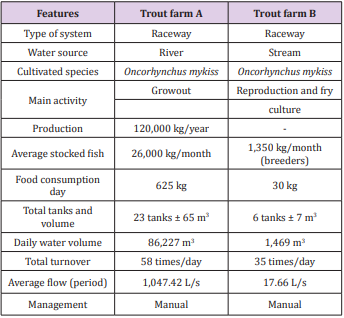
Two commercial trout farms were selected for this study with the following locations: A (22°33’16.32” S and 45°19’44.46” W) and B (22°29’25.44” S and 45°14’15.66” W) , in the city of Delfim Moreira, with an average altitude of 1,260 m, in the Mantiqueira mountain range in the state of Minas Gerais, Brazil. Both use the raceway system for the production of rainbow trout (Oncorhynchus mykiss Walbaum, 1792), in a region that combines climatic conditions ideal for the cultivation of the species. In addition to the high altitude, it has lower temperatures, more rugged land, quality and quantity of water compatible with trout farm, making the municipality of Delfim Moreira one of the largest trout producers in Brazil. The main characteristics of the two trout farms are shown in the Table 1. For the collection of water in the trout farm A were chosen 6 points, being: A1 (water inlet, tributary), A2, A3 and A4 (outlet of tanks, effluent), A5 (upstream) and A6 (downstream). Trout with slaughter weight around 300 to 500 g were kept in tanks A3 and A4, in the exit of these tanks there was a decantation tank. Point A2 (with juveniles fish) receives the effluents and did not pass through the decantation tank, flowing directly into the river.

Table 1: Characteristics of the two commercial trout farms A and B.

The trout farm A showed lower variation in flow during the year due to a derivation of a dam with floodgates that controlled the levels of water entry (more or less 200 m upstream of point A1). In the trout farm B nine collection points were demarcated, being: B1 (source, inflow), B2, B3, B4, B5, B6 and B7 (outflow of tanks, effluents), B8 (upstream) and B9 (downstream). Although the purpose of trout farm B was for the production of juveniles, there was a fish stock for growout, used for consumption on the property with a tank that could also be used as a fish and pay (B12). In this trout farm, broodstocks were kept in tanks (B5, B6 and B7) and point B2 had not been populated with fish during the experimental period. For microbiological analyzes, 4 points were chosen in the two trout farms: A1 (tributary), A4 (effluent), A5 (upstream) and A6 (downstream) and in trout farm B, the points B1 (tributary), B7 (effluent), B8 (upstream) and B9 (downstream). The samples were collected monthly from September, 2013 to August, 2015.

Among the physicochemical variables analyzed, the temperature, electric condutivity (EC), total dissolved solids, were measured with portable conductivity meter (RS-2328306), pH with portable pH meter (PH- 221 Lutron) and turbidimeter turbidity (Wv - DelLab), these parameters being measured in situ. For the other physicochemical variables, the methodologies described in the Standard Methods Water and Wastewater (APHA, 2008) were used, namely: biochemical oxygen demand (BOD, analysis 5210 B); dissolved oxygen (DO, analysis 4500 OC); NH3+NH4+ (analysis 4500 NH3); NO2- (analysis 4500 NO2 A); NO3- (Rodier, 1981); PO43- (analysis 4500 PE), alkalinity (analysis 2320 B), thermotolerant coliform group and Escherichia coli (analysis 9223 B - Colilert kit method). For the related physicochemical analyzes, polyethylene bottles (1.5 L) and sterile flasks were used for coliform analyzes. After collection, the samples were preserved on ice, transported and evaluated in the Laboratory of Environmental Sanitation of the Veterinary School of UFMG, Brazil. For the calculation of pollutant load and population equivalent, the physicochemical parameter BOD was considered, since it is the most used form for the quantification of organic matter. The calculation of the pollutant load was carried out through the product of the pollutant concentration by the flow of the lotic body and was given in kilogram per day. The pollutant potential produced by a population can be calculated by dividing the pollutant load by 0.054 and is used by the international literature to characterize the per capita contribution of BOD (Kg/inhab/day).

Experimental Design and Statistical Analysis

The experimental design was completely randomized with a 2x6 factorial arrangement, considering two treatments (rain and drought) and six months of collection in each season, to verify the influence of rainy periods (October to March) and dry periods (April to September), in the sampling points. The data were submitted to analysis of variance (ANOVA) and the parameters that presented significant difference (p<0.05) were submitted to Tukey’s test and Kruskal-Wallis for comparison of means. InfoStat version 2012 software was used.

Results and Discussion

Evaluations of the Physicochemical Parameters of the Trout Farms

The geological history of the region, type of soil in the basins, climate, geomorphology, vegetation cover and anthropic action can influence the water quality for fish production, but changes related to the periods are also relevant. In addition to water characteristics during fish culture, considerable changes in effluent quality can occur due to the characteristics of the water supply of each trout farm and the management adopted during the production cycle. In this sense, for the production of trout in a raceway system, the effluent must follow the standards required by the brazilian legislation (CONAMA Resolution No. 357/2005 and Joint Normative Resolution COPAM/CERH-MG No.1/2008), aiming at the minimum possible impact to the sources located downstream of the trout farms. The main parameters of water quality aiming at the comfort for fish in general and for rainbow trout, as well as the classification of water bodies and the discharge pattern for effluents are described in Table 2.

Table 2: Parameters for evaluation of Class II water bodies classification, launch pattern, comfort standards in the production of rainbow trout and other fish.

Note: * CONAMA Resolution No.357/2005; ** COPAM/CERH- MG 1/2008; *** Bhatnagar and Devi (2013); **** White Cachafeiro (1995); BOD5: biochemical oxygen demand; #NTU (nephelometric turbidity unit).

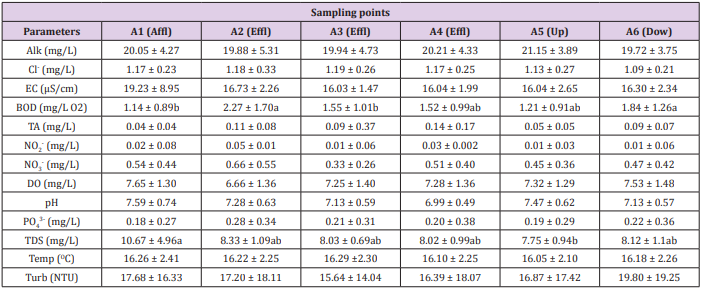
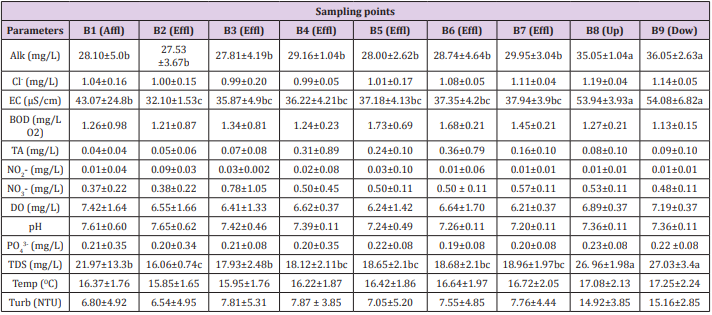
The data on the physicochemical variables of the water samples for trout farm A and B obtained during the rainy and dry periods are shown in Tables 3 and 4 and in relation to the sampling points shown in Tables 5 and 6. Results of the microbiological analyzes for the group thermotolerant coliforms are described in graphs 1 and 2, for trout farm A, and graphs 3 and 4 for trout farm B. The presence of E. coli for trout farms A and B can be observed in graphs 5 and 6. The polluting load and its population equivalent of the two trout farms are expressed in Table 6. In relation to the rainy and dry seasons there was a significant difference for the NH3+NH4+ variable in the trout farm A, however, the two trout farms presented significant differences (p<0.05) between the seasons for the variables EC, BOD, PO43-, TDS, temperature and turbidity. Specifically for trout farm B, pH and chloride levels also showed significant differences (p<0.05) (Table 3 and 4). Regarding the relation between the collection points, the two trout farms presented significant differences (p<0.05) for TDS and still the trout farm A showed significant difference (p<0.05) for BOD. For all parameters evaluated, it was possible to demonstrate the influence of the seasons on water quality, where data may have been influenced by flow, tank washing and surface runoff.

Table 3: Physicochemical parameters of water quality in trout farm A during rainy and dry seasons.

Note: Alk: Alkalinity; Cl: chlorides; EC: electrical conductivity; BOD: biochemical oxygen demand;TA: total ammonia; NO2- : nitrite; NO3-: nitrate; DO: dissolved oxygen; pH: hydrogenation potential; PO4 3-: phosphate; TSD: total dissolved solids; Temp.: temperature; Turb.: turbidity. Means followed by different letters in the line differ from each other at 5% significance.

Table 4: Physicochemical parameters of water quality in trout farm B during rainy and dry seasons.

Note: Alk: Alkalinity; Cl: chlorides; EC: electrical conductivity; BOD: biochemical oxygen demand; TA: total ammonia; NO2- : nitrite; NO3-: nitrate; DO: dissolved oxygen; pH: hydrogenation potential; PO43-: phosphate; TSD: total dissolved solids; Temp.: temperature; Turb.: turbidity. Means followed by different letters in the line differ from each other at 5% significance.

Table 5: Physicochemical parameters of water quality in relation to sampling points in trout farm A.

Note: Affl: affluent; Effl: effluent; Dow: downstream; Up: upstream; Alk: Alkalinity; Cl: chlorides; EC: electrical conductivity; BOD: biochemical oxygen demand; TA: total ammonia; NO2-: nitrite; NO3-: nitrate; DO: dissolved oxygen; pH: hydrogenation potential; PO43-: phosphate; TDS: total dissolved solids; Temp: temperature; Turb: turbidity. Means followed by different letters in the line differ from each other at 5% significance.

Table 6: Physicochemical parameters of water quality in relation to sampling points in trout farm B.

Note: Affl: affluent; Effl: effluent; Dow: downstream; Up: upstream; Alk: Alkalinity; Cl: chlorides; EC: electrical conductivity; BOD: biochemical oxygen demand; 3-TA: total ammonia; NO2-: nitrite; NO3-: nitrate; DO: dissolved oxygen; pH: hydrogenation potential; PO43- : phosphate; TDS: total dissolved solids; Temp: temperature; Turb: turbidity. Means followed by different letters in the line differ from each other at 5% significance.

The supply of the raceways of the trout farm A was carried out by a river and its flow remained more stable during the rainy periods (1,053,18 L/s) and dry (931,88 L/s), due to a derivation in the channel. The trout farm B was supplied by a stream where there was a reduction of approximately 50% of the flow, influenced by the difference between the precipitation data, being the averages for the dry and rainy period of 122.82 mm and 43.86 mm, respectively. The characteristics of the tributaries to supply the two trout farms had influence on the alkalinity, although the alkalinity did not present significant differences (p>0.05) in trout farm A. In the trout farm B significant differences were observed (p<0.05) in relation to the collection points (Table 6). Thus, alkalinity can maintain pH balance [10], providing greater comfort to the fish and in both trout farms it remained within the standards for intensive breeding of trout (>20 mg/L) because if the alkalinity remains below 20 mg/L CaCO3 it can cause stress in the fish [10]. When evaluating the alkalinity of the trout farm effluents [3] observed that the value in the tributary was 4.4 mg/L CaCO3 and there was an increase to 7.6 mg/L CaCO3 in its effluent.

In the present study there was a balance in the alkalinity between affluent and effluent in the two trout farms. However, some changes in alkalinity were verified at the upstream and downstream points of trout farm B, possibly because of the higher amount of bicarbonates and carbonates dissolved in the water. These compounds may originate in water due to soil type, geological formation of the river and erosive processes but differences in alkalinity may also be related to the entry of acids by leaching or surface runoff [8]. Nitrification may also be responsible for the decrease in alkalinity.

Chloride is found in salt form in water, being common in this environment and is useful for fish acting to maintain their osmotic equilibrium [10]. The concentration of chlorides around 20 mg/L is considered normal in salmon farming and above 50 mg/L is considered a concern (Blanco-Chachafeiro 1995), because if chloride levels rise above 100 mg/L may cause branchial lesions. Chloride content is dependent on the salinity level [10] but may also have anthropogenic and geological origin (USEPA, 2015) and on the management of feeding done in fish culture.

Only trout farm B presented a significant difference (p <0.05) for chloride between rainy and dry seasons. What could have influenced the results in trout farm B was the greater capacity of dilution of dissolved salts in the raceway system in the rainy season. In the trout farm A, the chloride contents remained constant due to the high daily exchanges of water during the year thus diluting the salts of the culture water.

The electrical conductivity (EC) is directly related to the ionic dissociation of salts dissolved in the water. It can be influenced by the variations in TDS [31], temperature [11] and dissolved ions [12]. There was a significant difference (p<0.05) in EC, between rainfall and dry seasons and at sampling points evaluated in trout farm B. These results can demonstrate the influence of the geochemical characteristics of the region and periodicity of the precipitations on the electrical conductivity [13], that can provide the dilution of ions in the water. In addition, high feed rates with possible feed leftovers can lead to increased organic matter decomposition and influence on conductivity.

In additon, it was observed that the conductivity was higher in the sampling points in relation to the tributaries and remained more stable in the effluents in the two trout farms. These data do not agree with the data obtained by other authors, such as [3,8,14,15], which found an increase in conductivity of the effluents from trout farms (39 to 83 μS/cm, 637.9 to 722.7 μS/cm, 267 to 375 μS/cm and 10.5 to 12.93 μS/cm, respectively) [16] also reported a significant increase in EC in effluent from trout production systems, being influenced by the increase of organic matter due to higher fish density. In the trout farm B, values of EC = 43.07 μS/cm were observed in the affluent, with a lower value at point B2 (always without fish), but without significant differences (p>0.05) between points B8 (upstream) and B9 (downstream). There was also an extreme point in B1 (tributary) with 108.5 μS/cm, which coincided with a rainy period in the night before the sampling, providing the largest entrance of residues in the stream.

BOD is related to total oxygen uptake by microorganisms to degrade organic matter (Bhatnagar and Devi, 2013) [10]. In both trout farms there were significant differences (p<0.05) for BOD between the seasons and between the sampling points. Although the two trout farms comply with the legislation regarding BOD levels during the study period, we noted the increase in BOD concentrations in the trout farms during the dry period, indicating the higher concentration of organic matter in the raceway system due to the decrease flow rate. In the farm A, high BOD occurred during the tank washing and especially at the point A2, where the effluent is discharged directly into the receiving stream without passing in the decantation tank, also occurring the increase in the downstream point (A6). In Trout farm B, BOD was low since there are no populations above it and in points B5 and B6, there is an increase in BOD, since the effluent came from the tanks where the biggest trout were kept, including breeding animals. It should be noted that the upstream and downstream points in this trout farm correspond to points that also has low BOD. The data obtained for the increase in BOD are in agreement with Camargo (1994) [8], from 3.0 to 4.2 mg/L O2; [3], from 0.9 to 14 mg/L O2; [17], from 0.5 to 1.3 mg/L O2; [18], from 1.4 to 4.7 mg/L O2; and Koçer and Sevgili (2014), from 4.6 to 6.2 mg/L O2, due to the increase of the organic matter in the system.

During the summer, changes in BOD may occur due to the higher production of organic matter, related to temperature and high feed rates, corroborated by [19]in the Karasu stream in Turkey where the BOD was estimated to be 3.16 ± 1.23 mg/L O2 . Aiming to reduce the organic matter load from the two trout farms, some mitigation measures could be applied, such as phytoremediation, which could efficiently remove several types of pollutants [20,21]. As an example, we highlight the use of wetlands that have the capacity to reduce BOD by up to 48.8% [22]; up to 88.7% [23] and up to 82.8% [24].

The increase of TA can occur in the production systems associated with stocking density, fish size and excess feed. Excretion raises the contribution of this nitrogen compound in the water, as well as the degradation of the feed not consumed by heterotrophic bacteria. However, the values evaluated for TA showed significant differences (p<0.05) only in trout farm A, between rainy and dry seasons. In the rainy season, changes in water bodies are common, influenced by the surface runoff, which may cause an increase in sediment transport to the water body.

According to [1], the enrichment of the effluent with TA is related to the high fish biomass and the annual means of waterflow from the rivers. Thus, the elevation of the TA load is greater with increased fish production and lower discharge (flow) of the river. In both trout farms, TA exceeded the limit of <0.02 mg/L TA for trout production, recommended by [2] and despite changes in the two trout farms, was below the standard recommended by the brazilian legislation, which is 20 mg/L TA. The increase in the level of TA in the effluents was demonstrated in trout farms [3], finding 1.46 mg/L TA; 0.5 mg/L TA recorded [17]; 0.36 mg/L TA [18]; 0.74 mg/L TA [8]; 0.60 mg/L TA [1], due to fish excretion and degradation of the nitrogen compounds of the unconsumed feed.

NO2 - is the result of the oxidation of ammonia found in the aquatic environment by nitrifying bacteria. The levels of NO2 - found at the collection points in the two trout farms did not show significant differences in this study (p> 0.05), however, the concentrations may be toxic to aquatic organisms because in high concentrations, NO2 - makes it impossible to transport oxygen to the body tissues as a function of oxidation of hemoglobin in methaemoglobin. The maximum nitrite limit recommended [2] is 0.055 mg/L NO2 - for the cultivation of trout and <1.0 mg/L NO2 - for water bodies according to the current brazilian legislation.

Some changes occurred in the concentrations of NO2 - recorded in trout farm B at points B4, B5, B6 and B7, where the largest fish were found. At the other points lower concentrations of NO2 - were observed, providing ideal conditions for trout cultivation in the period. According to [8], increased NO2 - concentrations were observed in trout farm effluents (0.08 mg/L NO2 -), similar to what occurred in trout farm B at point B2. In trout farm A, NO2 - values were low for most points as reported by [14], which was 0.022 mg/L NO2 -. On the other hand, [3] and [8] found no differences in NO2 - levels between the affluent and the effluent, probably due to the high-water changes in the system that reduce oxidation processes. In aquaculture production systems, the use of wetlands for treatment of effluents can reduce the level of NO2 - by about 35% by sequestration of this nutrient by higher plants [22].

NO3- is a nitrogen compound considered less toxic than ammonia and nitrite, but may be a problem in closed culture systems. In the case of trout breeding, NO3- is not a problem, since it is an open system with constant water renewal. Thus, in the two trout farms, no significant differences were observed (p>0.05) and NO3- levels did not exceed the recommended limits for trout production ~100 mg/L NO3- . However, high levels of NO3- may cause depression of the fish’s immune system, as observed by [25].

It is suggested to maintain levels up to 10 mg/L NO3- to avoid toxic effects. Washing the tanks can contribute to the enrichment and elevation of the NO3- in some points, as demonstrated in the trout farm A in points A2 (2,5 mg/L NO3- ) and A4 (1,4 mg/L NO3- ). However, the values found were below the effluent release standards with limits of 10 mg/L NO3- being within the comfort for fish culture. NO3- values between 1.0 to 2.2; 0.9; and 2.1 mg/L NO3- , were found in both the tributaries and effluents of other trout farms by [3,8,9] reported even higher values, ranging from 2.38 to 3.76 mg/L NO3- in the effluent from trout culture. The high levels of NO3-- in raceways are related to the oxidative nitrification process that can occur even in high hydrodynamic environments [14]. This fact is corroborated [26] in raceway of O. mykiss. However, in general it was possible to observe that the nitrogen residues of the two trout farms contained low concentration of dissolved compounds, attributed to the high dilution of the culture media.

DO is the main variable for assessing water quality, as it directly interferes with fish metabolism and survival. DO can be related to diffusive processes at the air-water interface and by phytoplanktonic activity [27] or artificially by means of aerators and by the renewal of water from aquaculture farms. The content of oxygen in natural waters may vary with temperature [11], salinity, turbulence, photosynthetic activity, atmospheric pressure and may decrease as temperature and salinity increase [11]. There were no significant differences between the two treatments (p>0.05) in all evaluations, but the mean values observed in the two trout farms were lower (in the effluents) than in the affluents, being influenced by the fish biomass and oxidation of organic matter, but remaining at the recommended concentrations for the cultivation of trout that is >5.5 mg/L DO [2] and above 6 mg/L DO, maintaining the DO required by brazilian legislation.

The low DO level (3.7 mg/L) in trout farm A at point A2 occurred during fish sampling and tank cleaning while the aerators were off. Reduction in DO concentration during rainbow trout farm may also be related to biomass and feeding levels [19] and similar results were obtained in trout farms [3] =2.4 mg/L DO; [18]= 1.26 mg/L DO; [8]= 4.4 mg/L DO and [15], who reported a decrease in saturation percentage from 125.89 to 106.16%. These results contrast with those obtained [14], who reported that DO levels did not change between affluent and effluent in the trout farms, and an increase from 11.4 to 12.7 mg/L DO in the effluents [8].

The pH is directly related to the acidity, neutrality or alkalinity of water bodies and has an influence on the metabolism of aquatic organisms. There was only significant difference (p<0.05) for pH in the trout farm B, during rainy and dry seasons, with increase of pH in the dry season probably related to changes in alkalinity in the period, possibly influenced by bicarbonate and carbonate concentrations. In the two trout farms, pH became slightly above neutrality, but remained at the level of comfort variation for trout between pH 5.5 and 9.5 [2]. However, for trout, the same author recommends a slightly acidic pH, but all samples collected were within the required standards by brazilian legislation.

Some authors [14,15,17,24] also did not find significant differences in pH between the tributaries and effluents of trout farm as occurred in trout farm A. Additionally, [28] worked with effluents from the cultivation of three species of fish, and did not find significant differences between the treatments. This pH stability probably must have occurred due to the higher alkalinity buffering effect.

Phosphorus is an essential component for the biological cycles of water bodies. It occurs in natural waters and effluents (domestic and industrial), in the form of phosphate and the increase of its concentration can lead to the increase in primary production with the consequent eutrophication, which may indicate the pollution of the water body [11].The two trout farms presented significant differences (p<0.05) for phosphorus in rainy and dry seasons. The analyzed data resulted in a low concentration of phosphates at the points evaluated, both in the affluent and in the effluents, meaning no influence of the fish culture on the phosphate concentration, but during the tank washing, the greater dilution of the residues solids in the water resulted in increased phosphate levels in the culture medium.

In the trout farm B, in the rainy season, phosphate concentration was up to 0.89 mg/L PO43-, which can be explained by the presence of cultures maintained with phosphate-based fertilizers and carried to the body of water. Consequently, levels above the limits allowed by brazilian legislation were observed (Table 2). Regarding the COPAM/CERH-MG Deliberation No.1/2008, the mean values of the two trout farms in the rainy seasons and sampling points were above the limits indicated for Class III classification of water bodies (0.15 mg/L phosphorus). The phosphorus levels indicated for Class II, class where Aquaculture fits into lotic environments, as being 0.10 mg/L. In the same way, the contribution of these residues in both trout farms was verified in relation to the phosphate levels in the effluents (Tables 5 and 6). The phosphate increase in the commercial trout farm effluents was also observed by several authors [1,3,8];[14,15]. They observed rates of 0.06 to 0.579 mg/L; 0.05 to 0.41 mg/L; 0.02 to 0.57 mg/L; 0.011 to 0.060 mg/L and 0.072 to 0.088 mg/L PO43-, respectively.

The increase in phosphate level also occurred even with treatment using wetlands, from 0.046 to 0.057 mg/L PO43- and 0.041 to 0.127 mg/L PO43-, as observed [22,23]. Pulatsu (2004) [19] also found high concentrations of phosphate being associated to the higher content of this compound in the rations used in the trout farms. Therefore, it was suggested a better control in the feeding rates in order to avoid the contribution of phosphorus in the aquatic environment. Lower concentrations of PO43- were found at the effluent point in comparison with points in the trout farm itself [8]. [29] described that the transport of water that occurs in raceway systems is responsible for the residence time of residues. The authors mentioned that in all raceways evaluated there was deposition of solids representing a significant mass of PO43- in the system. The behavior of solid particles in rainbow trout raceways by three-dimensional velocity method based on the Doppler principle, highlights zones of quiescence in the system, implying the deposition of these residues in this system [18].

Such reports may explain the higher levels of PO43- in the trout farm during tank washing, with increased levels in the aquatic environment. In the mid-1980s, [30] reported concern about raceway washes and considered that this activity accounted for the main contribution of solid waste and PO43- to the water bodies.

The TDS are related to the occurrence of organic matter and mineral salts, and these values will reflect on the EC of the aquatic environment [31]. For TDS, there was a significant difference (p<0.05) in the two trout farms in relation to the rainy and dry seasons and between the sampling points. During the study period, point A1 (tributary) had the highest level of TDS, but there was a decrease in the other points, including points A5 (upstream) and A6 (downstream). During the rainy season (June 2014), there was a rise in TDS in A1, with 27.7 mg/L being recorded, showing the relationship of the presence of organic matter, minerals and other dissolved materials found in water, also influencing the EC of the water due to slope of the terrain and transport of materials by the surface runoff.

In the two trout farms there were significant variations (p<0.05) in water temperature during rainy and dry seasons and led to differences during the period, since the interaction between the seasons and sampling points also showed significant differences (p<0.05). Thus, the strong influence of the seasons was demonstrated, due to the changes of the solar radiation on the water temperature of the springs, reflecting on the higher values in the summer. In relation to the temperature in the two trout farms, the values found are in accordance with the indicated for the comfort of fish. Temperature increases were also observed by [14,15], changes between 13.0 and 18.5°C; 16.64 and 17.60°C, respectively, between the tributary point and the points subject to release of various types of effluents. However, both trout farms have complied with the brazilian legislation regarding the effluent release conditions in the receiving body (<40OC). The concentration of suspended matter controls water turbidity, which may be related to the presence of silt, clay, fine particles of inorganic matter, soluble organic compounds, plankton and other microorganisms [11,27].

In the present study, turbidity was significantly different (p<0.05) in the two trout farms, for the rainy and dry seasons. The rainy periods in the trout farm A presented the highest value in relation to the drought and greater turbidity in the downstream point due to the reception of the effluents. However, the same did not occur in trout farm B, where higher values of turbidity were observed during the dry season, possibly influenced by the periods of animal handling. In both trout farms, both tributaries and effluents, turbidity levels were below the limit indicated by brazilian legislation, for water bodies classified as Class I (up to 40 NTU). The analyzes performed with Imhoff cone did not show the presence of sedimentable solids during all the collections, apart from collections made on rainy days. The turbidity is related to the decrease in the passage of light, which restricts photosynthesis. With the reduction of light input, there is a decrease in oxygen production and losses in fish production [33]. The extremes of turbidity found at all points analyzed coincided with the collection having been performed the morning after rainfall occurred throughout the night. All authors who evaluated this parameter showed increased turbidity, in most cases associated with biometrics and harvesting. A fact also observed in trout farm effluents [3](1.3 to 9.6 NTU), [8] (0.71 to 4.67 NTU) (1 for 149 NTU) [14].

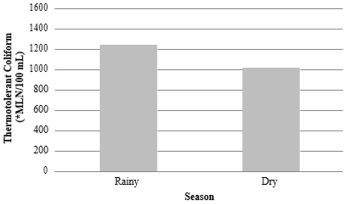
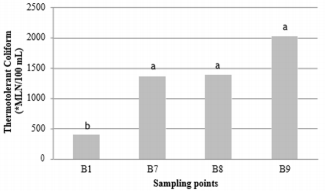
The presence of pathogenic bacteria in water can be a threat, especially if it is of fecal origin. These bacteria can cause, besides water contamination, the appearance of diseases in fish and even the mortality of these organisms. In addition, contamination of food for human consumption may occur [34]. For the samples evaluated in trout farm A, the group of thermotolerant coliforms showed significant differences (p<0.05) between rainy and dry seasons (Figure 1). However, there was no difference (p>0.05) in relation to sampling points (Figure 2). These data demonstrate the influence of the rainy season on the dispersion of bacteria by surface runoff. Similar fact was reported [35-40], who found higher values for the thermotolerant coliform group during the rainy season, which was also related to the action of the surface runoff of agricultural areas and pastures, due to the higher precipitation in the rainy season that contrasts with the dry season. During the same period, the presence in the group of thermotolerant coliforms was evaluated in trout farm B and there was no significant difference between the rainy and dry seasons (p>0.05) (Figure 3) and these values may have been influenced by the samplings made in days after off-season rains, but the fact that the B1 tributary comes from a source with little anthropogenic action, may have influenced the significant difference (p<0.05) between the sampling points in this trout farm (Figure 4), having an increase in the presence of thermotolerant coliforms at points B7, B8 and B9, when occasional rainfall occurred in the days prior to collection.

Figure 1: Thermotolerant coliforms counted in Trout farm A with means and standard deviation between rainfall season (1,425.20±1,049.81) and dry season (751.74±598.00). Means followed by different letters in the column differ from each other at 5% significance *MLN: most likely number.

Figure 2: Presence of thermotolerant coliforms in Trout farm A at the collection points A1-affluent (1,034.34±997.43), A4- effluent (1,115.44±989.67), A5-upstream (1,020.28±922.16) and A6-downstream (1,421.17±875.06). There was no statistical difference between the sampling points at 5% significance. *MLN: most likely number.

Figure 3: Thermotolerant coliforms counted in Trout farm B with means and standard deviation between rainfall stations (1,237.20±998.46) and dry (1,014.03±758.53). There was no statistical difference between the seasons at 5% significance. *MLN: most likely number.

Figure 4: Presence of thermotolerant coliforms in Trout farm B, at collection points B1- tributary (398.99±325.00), B7-effluent (1,359.93±942.63), B8-upright (1,383.57±779.48) and B9-downstream (2,031.17±719.22). Means followed by different letters in the column differ from each other at 5% significance. *MLN: most likely number.

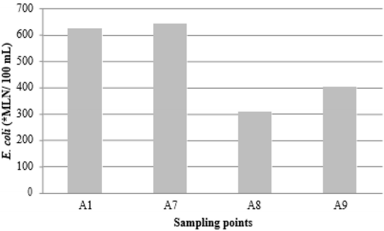
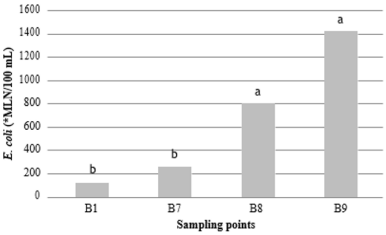
The presence of thermotolerant coliforms may increase after rainy periods and leads to avoid handling, such as biometrics, which could cause injury in fish. The values of the coliform group in the two trout farms are in accordance with the classification in Class II of the COPAM/CERH-MG Decision No.1/2008, that is, six annual analyzes of water bodies must present 80% counts below 1,000 CFU (colony forming units) per 100 mL. The increase of coliforms can occur from one trout farm to another through the discharge of effluents into the source of supply. This fact was observed [14], when studying several trout farms that used the same river. In this case, the elevation in CFU values (340 up to 22,508/100 mL) was observed. According to brazilian Resolution No.357/2005 of CONAMA, E. coli can be determined in substitution of the group of coliforms according to the limits established by the environmental agency, because this bacterium represents the most recent contamination of the environment. For this reason, in this study, water samples were collected in the two trout farms to evaluate the presence of E. coli; however, most of the samples were collected during the rainy season (year 2014) [41-43], and it was not possible to verify if there were differences between rainy and dry seasons, because of the reduced number of samples collected during the dry season.

Therefore, the presence of E. coli was evaluated only at sampling points, with no significant differences (p>0.05) in trout farm A (Figure 5), only with changes in the number of E. coli for samplings that preceded rainy days, due to the greater entrance of residues in the water body by surface runoff that can carry several types of pollutants including bacteria. In the trout farm B, significant differences (p<0.05) were recorded for the presence of E. coli, in the sampling points (Figure 6), with an increase in the average of the dry period for the upstream points (B8 ) and downstream (B9), being defined by the end of the drought period with the incidence of some rains in the region. It can be emphasized that the analyzes performed for turbidity and the values found in the group thermotolerant coliforms may be related to the inadequate discharge of effluents or their higher concentration present in the river [7].

Figure 5: Presence of E. coli in Trout farm A, at collection sites A1-affluent (623.60±441.09), A4-effluent (641.17±445.69), A5- upstream (309.46±255.06) and A6- downstream (426.76±349.43). There was no statistical difference between the sampling points at 5% significance. *MLN: most likely number.

Figure 6: Presence of E. coli in Trout farm B, at collection sites B1-tributary (118.13±89.20), B7-effluent (253.12±161.71), B8- upstream (801.78±548.75), and B9- downstream (1,421.10±1,111.29). Means followed by different letters in the column differ from each other at 5% significance. *MLN: most likely number.

Assessment of Pollution Load and Population Equivalent

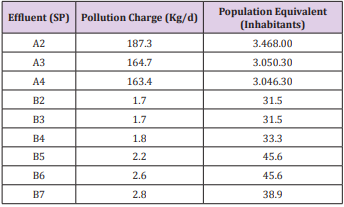
The assessment of the pollutant load aims to improve management during the trout cultivation in order to contribute to the conservation of the aquatic ecosystem. According to [7], the evaluation of the pollution impact of these effluents is necessary to avoid that the residues accumulation and nutrient contribution interfere in the sources downstream of the trout farms, causing the eutrophication of the medium. The pollutant load and the population equivalent in the three effluents monitored in Trout farm A and B are listed in Table 7. The increase in the load, from point A2 to points A3 and A4, was observed in trout farm A due to the higher BOD average for this point in relation to the others (Table 4). In the trout farm B, the pollutant load and the population equivalent in the seven monitored effluents were verified and it increased in the points where there were more fish (breeding) allocated, due to the higher stocking density and excretion of the animals (B5, B6 and B7). However, in relation to assessments of the pollutant load, the two trout farms studied represented a low risk of eutrophication to the bodies of water downstream, but it is still necessary to make a constant evaluation of water quality to ensure that these characteristics are maintained and that comply with environmental legislation.

Table 7: Pollution load of effluents and population equivalent of trout farm A and B.

SP = sampling points

Conclusion

The two trout farms are in accordance with brazilian legislation, which defines the effluent release standard through the COPAM/ CERH-MG Decision No.1/2008, regarding the physicochemical and microbiological parameters evaluated and meets the standards of comfort for the species cultivation. The changes occurring between the tributaries and effluents are related to the stocking density, the amount of feed and the excretion of the fish. The process of washing the tanks had an influence on the evaluated parameters, mainly during episodes of rainfall for prolonged periods of time generating large volumes of water. In addition to the evaluated parameters, more research is needed to evaluate the changes caused by effluents in the biological communities (mainly the benthic macroinvertebrates) and to extend the study to the downstream areas of these effluents to better evaluate their impacts on the environment. Special attention should be given to the time of washing of the tanks by removing the sediment and generating a more enriched effluent which can lead to the modification of the water quality of the receiving body and to generate eutrophication of the same.

For more Articles: https://biomedres01.blogspot.com/
Monday, August 2, 2021

On the Application of the Installation UOV-7757 “Arasan” for the Production of Biologically Active Water and Conducting the Infra-Acoustic Vibration Wave Massage Procedures


On the Application of the Installation UOV-7757 “Arasan” for the Production of Biologically Active Water and Conducting the Infra-Acoustic Vibration Wave Massage Procedures 

Opinion

Modern medicine in its development is on the way to improve pharmaceuticals with the aim of selective, targeted effects on organs and cells. All her efforts to cure are directed not at the cause of the disease, but at combating its consequences. In this regard, the urgency of identifying the causes of the disease and the influence of the side effects of drug therapy on human health is increasing worldwide. According to epidemiological studies, the side effects of drug therapy in the United States and Canada are ranked 5-6 in explaining the causes of death after cardiovascular, oncological, bronchopulmonary diseases and injuries. Every year in the US, more than 106.0 thousand patients die from side effects of drugs. In this case, we are talking about cases when the doctor correctly diagnosed, prescribed medications correctly, and the patient took them correctly. According to leading scientists, the existing technologies of the “health industry” are depleting their potential and new developments are needed on fundamentally new approaches to ensuring people’s health.

It is known that the human body is 70% water. Studies have shown the difference in the physical parameters of the aquatic environment in a healthy organ and in the same organ, but in the patient. It should be noted that getting into our body, ordinary water undergoes a number of biophysical changes and only then acquires the properties necessary for our internal aquatic environment, while spending a significant amount of energy. Under ideal conditions, the body has enough funds to convert drinking water into the necessary aquatic environment and maintain the necessary parameters of the internal fluid. But in real life, a number of serious external factors - such as nutrition, lifestyle, the environment, viruses, bacteria, etc. have a great influence on this process. And often it turns out that the body spends energy on interacting with these external factors. As a result, over time, he begins to lack internal resources to maintain the necessary parameters of the internal environment. From this point on, a person has serious health problems. They usually begin with a weakening of the immune system, hypoxia of the brain and heart muscle, metabolic disorders occurring against the background of chronic fatigue syndrome. One of the promising innovative directions for solving the above problems is the use of the method of infra-acoustic vibro-wave massage procedure of a sick organ developed in our country with the subsequent intake of biologically active water necessary for the proper functioning of all organs and body systems. The developed technology of obtaining biologically active water with given physical parameters ensures the coincidence of the pH of the produced water with the pH of the blood of a healthy person. Ingestion of such water provides minimal energy costs for obtaining the optimal range of pH values of blood pH, which is necessary for the vital functions of the body.

Only such blood is able to fully supply the body with nutrients and remove waste of cell activity. It should be noted that the technology of obtaining biologically active water is based on the use of ordinary natural water without the introduction of any activators and stabilizers. The installation of water treatment and massage device UOV-7757 “Arasan” was developed on the basis of the international Eurasian patent for the invention: Namazbaev TS, Namazbaeva ZI “Installation of water treatment by external physical impact.” Patent for the invention of the Eurasian Patent Office No. 025259, Moscow, M. Cherkassky Lane. 2. Date of publication and issuance of the patent for the invention is December 30, 2016. RSE “Committee for Technical Regulation and Metrology” of the Ministry of Investment and Development of the Republic of Kazakhstan issued a certificate No. 14396 of August 21, 2017, certifying that, based on positive test results, the type was approved: “Installation of water treatment by external physical impact UOV-7757” Arasan “ produced by JSC Kazchermetavtomatika and approved for production in the Republic of Kazakhstan. The certificate on the origin of the goods according to the ST-KZ form No. KZ 7 dated 03.03.2017 was obtained.

Regular use of biologically active Arasan water with an optimal pH value and conducting infraacoustic vibration wave massage procedures has a complex positive effect on many human functional systems: - has an immunostimulating effect; positively affects the functioning of the brain, gastrointestinal tract, endocrine and cardiovascular systems, thyroid, liver, kidneys, etc . restores violations of exchange processes, eliminating their causes; - decreases blood viscosity, improves capillary blood supply, normalizes blood pressure. The scientific novelty of the proposed infraacoustic vibration wave massage procedure based on the use of the Arasan UOV-7757 installation with the determination of the entropy coefficient by the method of bioresonant testing is confirmed by the patent of the Republic of Kazakhstan for the invention: Namazbayev TS, Namazbayeva ZI “Diagnostic and therapeutic complex”. Patent of the Republic of Kazakhstan for invention № 28386, publ. in bul. № 6 dated 15.06.2016. In the block of bioresonant testing of the installation UOV-7757 “Arasan” before the start of the massage procedures, an expert assessment of the patient’s condition is carried out with the determination of the entropy coefficient reflecting the state of the massaged organ. Based on the operational information of bioresonance testing on the condition of the patient’s massaged organ, the parameters of the infra-acoustic vibrowave effect on the massaged organ are determined.It was found that the infra-acoustic vibration wave effect on the mammary gland of variable frequency with a predetermined algorithm for changing it with the help of the installation UOV-7757 has a healing effect in mastitis.

The scientific novelty of the developed innovative technology of rehabilitation in mastopathy is confirmed by the international Eurasian patent for the invention: Z. Namazbaeva, T. Namazaev. and others. “The method of treatment of mastopathy.” Patent for the invention of the Eurasian Patent Office No. 030520, Moscow, M. Cherkassky Lane. 2. Date of publication and issuance of a patent for an invention is August 31, 2018. In our country, the diagnosis of iodine deficiency and microelementosis in the body and its prevention is carried out in accordance with the Law of the Republic of Kazakhstan No. 489-11 on the prevention of iodine deficiency diseases of October 14, 2003. It has been established that the combined use of an aqueous solution of biologically active iodine and an infra-acoustic vibro-wave massage procedure with the aid of the installation УОВ-7757 “Arasan” increases the efficiency of the patient’s recovery from diseases of the thyroid gland and allows normalizing the level of their hormones without using hormone replacement therapy. The scientific novelty of the proposed method is confirmed by the patent of the Republic of Kazakhstan for the invention: Z. Namazbaeva, TS Namazbaev, K.A. Alikhanov. “A method for the treatment of diseases of the thyroid gland.” Patent of the Republic of Kazakhstan for invention № 28427, publ. in bul.

№5 from 05.15.2014. Biologically active water “Arasan” in its parameters corresponds to the special physical state of the intercellular fluid of our body and is not a drug. If the physical parameters of the body’s fluid medium are chosen correctly, then the biochemical reactions in the cells proceed as expected. Therefore, in many cases, the regular use of biologically active Arasan water with the conduct of infra-acoustic vibration-wave massage procedures works better than any medicinal preparations, triggering the processes of self-healing and self-healing of the body. Regular use of biologically active water “Arasan” with the conduct of infraacoustic vibration-wave massage procedures creates conditions in which our body itself, if there are sufficient internal resources, is able to recover and cope with many of the ailments inherent in modern man within quite a reasonable time. With the regular use of biologically active water “Arasan”, a person’s biological age is reduced by 6-10 years. While receiving Arasan biologically active water, stresses disappear, sleep is restored.

For more Articles:  https://biomedres01.blogspot.com/
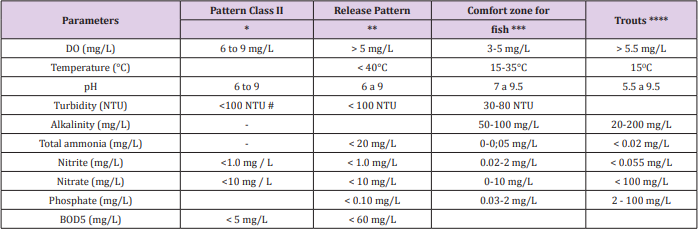
 

Disposition of Pathogenic Flora in the Development of Nonspecific Ulcerative Colitis


Disposition of Pathogenic Flora in the Development of Nonspecific Ulcerative Colitis 


Introduction

Ulcerative colitis refers to the number of diffuse chronic recidivating diseases of the colon, which mainly affected its mucous membrane [1-5]. UC meets throughout the world. In year 3 to 15 of diagnosed new observations on 100 000 of the population, and the incidence of reaches 50-80. Men and women have equally often. The first peak of the detect ability of age from 20 years old do 40, the second 60-70 years (2.7). At present, there is no clear information about the etiology and pathogenesis of this disease. It is expected that the development of wheatgrass is the breakdown of immunological tolerance to intestinal antigens. The result is a loss of immunological control of inflammation in the wall of the small and large intestines (2.6). It is believed that this pathological process normally resists low doses of endogenous Gljukokortikosteroidov (GKS), which in a cage are associated with the

This complex enters the nucleus of the cell and is in contact with DNK elements in the region are glukokortikoida specific genes. The result is a suppression gene encoding the transcription of inflammatory proteins, especially signaling molecules cascade MAPK (mitogen-activated protein kinas). Parallel synthesis inhibitor-IkBa amplifies a key transcription factor NFkB, allowing specific RNK transport education is sup-pressed (m-RNK) and shortened the period of their half-life. Since m-RNK is responsible for regula-tion of synthesis and release of inflammatory cytokines TNF-a, IFN-y, IL-23, IL-17of others in-volved in the inflammatory response, in appointing GCS level their decline [6-8]. This also reduces education arachidonic acid and its subsequent metabolism with the formation of leukotrienes and prostaglandins [9]. When UC holds a mixture of inflammatory reaction involving the t-helper cells as the 1st and 2nd types (6.8). The most often considered to be a hereditary predisposition to the development of autoimmune inflammation in the mucosa of the colon in response to sowing surface microorganisms and viruses, as well as contact the impact food. This opinion is based on the frequent combination of UC with other autoimmune processes (3.8). The discovery of same in colon mucosa of IgG-antibody to epithelial cells and p-ANCA only strengthened the position of the supporters of this hypothesis. Completed studies to determine the ratio of t-lymphocytes in the mucosa of the colon indicate violation agent’s interactions activated CD4 and CD8 lymphocytes. Normal epithelial cells stimulate the predominantly CD8-T cells. While at UC they activate CD4 lymphocytes exclusively and is accompanied by IL-2 secretion of lymphocytes and stimulation of macrophages in the complement system. Identified and family history of UC, with first-line relatives fall sick more often than the average population, as well as the risk factors they have clearly seen the use of oral contraceptives, as well as features nutrition and psychosocial problems (3.5). Literature data suggest an important role of normal intestinal microflora in the adaptation reaction of human organism to the age changing his life (3.8). In view of these data, the reason becomes clear when you change syn-drome pathological development of microflora of the colon. At a young age caused for one reason or another, intestinal symbiosis is accompanied by diarrhea, coupled with the brodilnym process. Every fifth patient in this age group are marked with allergic dermatitis, occurring against the backdrop of autonomic expressed violations.

Dysbacteriosis of the same link with a postponed intestinal infection and long treatment with antibiotics. Performed bacteriological researches in this group of patients indicate expressed growth suppression of Escherichia coli with a simultaneous settlement of the lu-men of the colon of conditionally pathogenic microflora (enterobacteria, citrobakterii, Klebsiella, Pro-teus, fungi kind Candida, gemolizirujushhie strains of Escherichia, etc.). Individuals have the same maturity (40-59 years), in which there is persistent constipation alternating with diarrhea, bacterial painting Calla proportion of functionally defective (lactosenegative and enzymatically attenuated) strains of e. coli, which occurs against the backdrop of moderate decline bifidumbakterij growth. The same persons over the age of 60 years, suffering persistent constipation, the feces noted a sharp de-cline in the obligate microflora (Lactobacillus bifidum and Lactobacillus) while increasing the level of conditionally pathogenic microflora [2]. Infections often cause the development and exacerbation of wheatgrass, because one way or another damaged mucosa easily kontaminiruetsja pathogenic microflora (3.8). UC have detected symptoms of a enteric 20% of patients. They include Nodular Erythema, gangrenoznaya Pyoderma, inflammatory eye diseases, arthritis, ankylosing spondylitis, respiratory dysfunction, Myositis, Vasculitis, Glomerulonephritis, and other pathological processes outside the walls of the colon guts (3.5). If the role is conditionally pathogenic microflora in the development of the UC clearly understood, here’s its settlement mechanism of the colon remains unclear. The definition of these ways and was the purpose of this study.

Material and Methods

Watched 38 patients with UC had expressed enteric (kostnoarticulate) symptoms manifesta-tions of the disease, which has resulted in their hospitalization in the casualty department. Only in the course of the survey, they had identified the true cause of the painful condition, i.e. the UC. All of these patients, whose age was from 42 to 68 years, suffered from distorting the artrozami joints of the lower limbs and ankylosing spondylitis. Men was 16 (42.2%). Upon admission to the hospital all patients stressed doctors’ osteoarticular pathologies and umalchivali about the problems associated with the Act of defecation. Only through the 2-3 days after hospitalization, they began to bring complaints of liquid stool mixed with blood and mucus in the stool. Frequency defekacij reaches 5-6 times per day. In patients suspected of having perpetuated was food toksikonfekcija and diagnostic measures have been made. When you run rectoromanoscopy, attention was drawn to the existence of patients with redness, maceration, and cracks in the perianal region. Endoscopic study found the typical symptoms of chronic (or relapsing, or continuously-relapsing) wheatgrass. Bacteriological study of tissue taken from the surface of the detritus Armenian revealed microbial Association of Klebsiella, Proteus, gemolizirujushhih esherihi and etc. After verification of diagnosis was assembled a de-tailed life in this direction. It was found that all patients with adolescence suffered from constipation.

The Chair was only a day, and sometimes through the 2-3 days. With age the constipation has become persistent nature and without enemas achieved defecation them failed. Patients often resorted to staging of salt, soap, oil and other enemas, which appeared in the left iliac region pain and tenesmus after defecation. In the last year before the hospitalization in the stake appeared mucus and blood veins. For medical assistance. These changes in the Act of urinating associated with frequent taking enemas. Osteoarticular diseases they have began to develop after 30 years. After ascertaining the true causes of painful condition, patients were placed in a specialized unit. During the specific treatment, with the use of corticosteroids, 2 of them (5.2%) microperforation occurred altered sigmoid colon walls. They were transferred to the Department of surgery with primary acute peritonitis phenomena. Both patients was the primary submersible kolokoloanastomoz.

Result

These 2 patients of postoperative complications were observed. After the stitches have been medication they have continued in the therapeutic Department. The remaining 36 patients of such surgical complications were observed. Treatment took place in the therapeutic Department and had a positive effect is difficult. Continued to harass pain in the joints and spine.

Discussion

Development of a pathological process in these patients can be associated with a dislocation of the virulent Microbe flora of anus the Canal in the lumen of the colon that occurred during staging enemas. Resort to this method of release of the rectum from the faeces of patients forced to constant constipation, and they had them with adolescence. The aggravation of the same they have UC on the 2-3 day after the hospital casualty department could explain the sharp changes the nature of power and of psycho-emotional loads. Duration of intensive integrated inpatient treatment ranged from 18 to 22 days, and then was an outpatient. Spring and autumn came.

Conclusion

Thus, as a factor that contributes to the development of UC may include deployment of microbial flora of the channel anus in the lumen of the colon that occurs when setting enemas. Clearly an allergic and autoimmune nature of its origin. Disease is tenacious in nature and it is difficult to treat and, for this reason, the focus should be paid to prevention. Behind the seeming enema bezobidnostju hide terrible consequences. For this reason the issue of defecation everyone should pay close attention to and follow its daily accomplishment, through a balanced diet and active lifestyle.

For more Articles: https://biomedres01.blogspot.com/
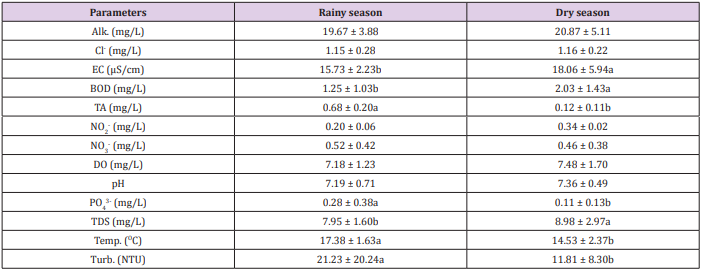
Mutual Issues of Bioprinting and Stem Cell Technologies in Neural Tissue Repair


Mutual Issues of Bioprinting and Stem Cell Technologies in Neural Tissue Repair 

Introduction

That sad-strict spirit then did not dissemble - The one who called himself the morning star - When uttered he: “Fear not the highest’s bar, - Just eat forbidden fruit, and you’ll the gods resemble” (N.Gumilev). The depressing statistical information about the high mortality of patients with brain diseases and the lack of effectiveness of classical therapies is an incentive to develop new methods of prevention, therapy and rehabilitation of patients in neurology and neurosurgery [1,2]. The authors of the article focused on cellular technologies [3-6] as additional recovery measures in the early stages of the development and progression of brain diseases. In contrast to the popular systemic injections of stem cells (SCs), which are distributed via bloodstream throughout the body [3-6], emphasis is placed on the perineural migration of mesenchymal stem cells (MSCs) along the cranial nerves to the destruction site [712]. This tactic of targeted somatotopic distribution of autologous MSCs in those damaged areas of the brain, in which reparative processes are supposed to be activated, is aimed at improving the efficiency of classical therapy for patients with strokes and brain injuries [7,9,10,12]. It is noteworthy that the bioprinting technology pursues a similar goal when it is planned to implant a bioprinting substrate, including neural networks, into the damaged brain area [13].

Neural Tissue Reconstruction using Bioprinting and Cell Technologies

When cellular technologies are used, MSCs begin to activate reparative processes in the damaged area of the brain with the help of various signaling molecules. The basis for the activation of reparative processes are endogenous SCs, which, under the influence of signaling molecules from MSCs, begin to move from the periventricular spaces, olfactory bulbs and the hippocampus to the damaged areas of the brain. Externally introduced MSCs and endogenous SCs together activate immunosuppressive processes, which are accompanied by a weakening of immune responses during the development of destructive processes in the brain [1-6]. Neurotrophic factors that are secreted from MSCs and endogenous SCs, weaken the processes of neuronal degeneration and activate reparative processes [1-6]. In the case of spheroids and other elements of bioprinting, SCs, which are contained in these substrates, also begin to activate endogenous reparative processes. However, comparing effectiveness of restoration processes when applying these two technologies, a number of differences draw attention.

In the bioprinting substrate there is no network of blood vessels and full-fledged elements of the intercellular matrix. It takes time for these biological components to appear in the damaged area of the brain. So, when using cellular technologies and a bioprinting substrate, the question of the phased restoration of the necessary elements of the mesoderm in the damaged areas of the brain remains unresolved. In particular, we are talking about microglia, the functional role of which lies not only in the manifestation of immunocompetent properties, but also in activating the growth of processes of neurons and other processes. Another unresolved issue of these two promising technologies is the restoration of the balance of neurotransmitters in a destroyed part of the brain. For example, let’s pay attention to two key neurotransmitters - Gammaaminobutyric acid (GABA) and glutamate, the receptors for which are contained on the membrane 40% of brain neurons [14]. GABA and glutamate are interconnected in a chain of neurochemical reactions.

Specifically, GABA is formed as a result of glutamate decarboxylation and controls the formation of neurite synapses and the migration of neurons from the periventricular zone to the cortical regions [14]. There is another important nuance. At the early stages of ontogenesis, GABA is known to be an excitatory neurotransmitter [14], since it controls the release of an increased amount of intracellular chloride ion (Cl¯) from the cytoplasm of neurons to the outside [14]. This pattern is observed in a wide range of brain structures and animal species, which indicates its origin and preservation throughout evolution. Consequently, at the stages of formation of new neural networks using SCs or using bioprinting technologies, it is advisable to take into account that immature neurons with a high level of Cl¯ and the natural stimulating effect of GABA are able to show increased convulsive activity characteristic of pathological conditions. But this activity of GABAergic neurons is typical of the immature brain [14]. Therefore, it is logical to develop cellular technologies and bioprinting techniques simultaneously in space and time, applying 4D, 5D, 6D innovations for harmonious interaction of neural network cells with each other, taking into account afferent and efferent electrical signals, as well as various signaling molecule.

Conclusion

The state of recovery of nervous tissue functions after a neurodestructive process is to some extent associated with an early period of ontogenesis, when newly formed neurons containing GABA are not inhibitory, but stimulating. It is clear that such problematic issues are associated in damaged areas of the brain with both the reparative capabilities of cellular technologies and the adequate implantation of bioprinting substrates. Another common problem for these two technologies is the complexity of the formation of the interaction of newly formed neural networks in the area of brain deduction with the surrounding neural networks. In addition to the neurotrophic factors in both cases, the necessary conditions for the formation of not only a single neuronal network, but also the inclusion of the local microvascular network in the intracerebral network of blood vessels, the unification of the extracellular matrix in the destructive brain regions with the surrounding biological tissues, harmonious interaction of newly formed synaptic contacts.

For example, the absence of such interaction at the level of a synapse that secretes glutamate can, without recapturing glutamate by glial elements, lead to the overstimulation of the postsynaptic membrane and the death of a nerve cell. Paradoxically, at the initial stages of the formation of neural networks, similar neuronal cell death develops when the presynaptic GABA membrane is overexcited and not glutamate, which naturally ends with the death of nerve cells [14]. Thus, the efficiency of functioning of neural networks recreated using bioprinting technologies and/or cellular technologies depends on the consolidation of the ability of nerve cells to interact not only at the neuronal level, but also at the level of macro- and microglia, the intercellular matrix, the network blood vessels, cerebrospinal fluid, neurotrophic factors and a complex of intra-and extracellular signaling molecules[15,16].

Acknowledgement

This pooled analysis was funded by OOO “Synergy”, and by innovative fund of Brest Regional Executive Committee (2017-2019).

Conflict of Interest

All listed authors concur with the submission of the manuscript; all authors have approved the final version. The authors have no financial or personal conflict of interest.

 For more Articles: https://biomedres01.blogspot.com/
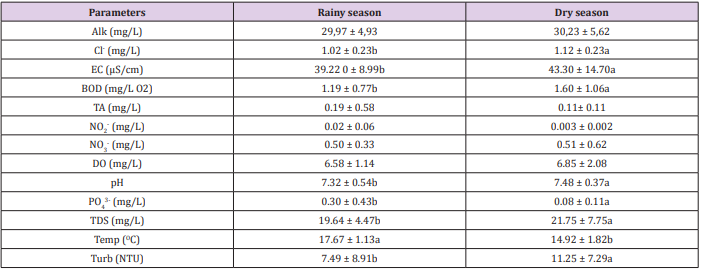


Antimalarial Aloe Compounds

  Antimalarial Aloe Compounds Introduction Among the most prevalent diseases caused by protozoan parasites, malaria is caused by parasites o...