Monday, August 18, 2025

Evaluation of Freeze-Drying Process of Aqueous Bovine Serum Albumin Dispersions


Evaluation of Freeze-Drying Process of Aqueous Bovine Serum Albumin Dispersions

Introduction

Freeze drying [FD], also known as lyophilization, is a technical process widely used for pharmaceutical preparations for many reasons, such as for improving stability and long-term storage stability, especially for temperature sensitive drugs, such as proteins, hormones, and vaccines. It is used now as a novel method for loading drugs and targeting sick cells [1-3]. Suitable parameters of process application allow us to obtain best quality products compared to products dried with traditional methods. Very good physical and chemical properties make this method the best for drying exclusive products [2,4]. Freeze drying is the process that could take days to finish, and that one of its principal disadvantages. The time depends mainly on the design and optimization of the FD process. Freeze drying works on the principle of sublimation, where free water present in the material under process is frozen and directly converted into vapor state without entering the liquid phase [4,5]. A typical freeze-drying process consists of three stages which is: Freezing, primary drying, and secondary drying [2,6,7]. The freezing stage typically takes several hours to finish. Annealing is after freezing is simply holding the product at a temperature above the final freezing temperature for a defined period to crystallize the potentially crystalline components in the formulation during the freezing stage [1,2,8]. An annealing step is frequently necessary to allow efficient crystallization of the crystalline bulking agent, such as mannitol or glycine [1,2]. Primary drying, or ice sublimation, begins whenever the chamber pressure is reduced, and the temperature is raised to supply the heat removed by ice sublimation. The primary drying stage is the longest stage of freeze drying and optimization of this stage has a large impact on process economics [4,5]. Secondary drying is the stage where water is desorbed from the freeze concentrate at elevated temperature and low pressure. Secondary drying normally takes only hours, and the opportunity for time reduction by process optimization is limited [6-8].

The stability of the drug during freeze drying and storage, and the duration of the cycle are the two major considerations for freeze drying process optimization, although other parameters such as excipients, pressure, and primary and secondary drying temperatures have a great role on the FD process design [9- 11]. To develop a successful protein formulation using freezedrying procedure, physical properties, such as glass transition temperature (Tg) and residual moisture content, and operational parameters, should be considered, as well as the selection of suitable excipients [9,10]. Sugars, for example, as sucrose, lactose, mannitol and trehalose proved to stabilize various proteins during FD. They are the cryoprotectants of choice, and their stabilization mechanisms are well described by the water replacement and vitrification/ particle isolation theories [7,9,11]. Another example, PEG conjugation masks the protein’s surface during FD and increases the molecular size of the polypeptide, thus preventing the approach of antibodies or antigen processing cells and reducing the protein’s degradation [12]. The benefits of freeze-drying mainly for conserving proteins derived from its reduction in the deleterious chemical reactions as the diffusion of protein molecules is greatly inhibited in the vitrified solid-state [11,12]. Freeze-drying technology is not only used to prepare stable proteins, but also it is suitable for a wide range of applications, such as manufacturing biocarriers (e. g. Artificial oxygen carriers to reduce the need of patients for erythrocyte concentrates) [13], or for preserving the characteristics of the initial pharmaceuticals (e. g. Attenuated virus vaccines) [14], or for conserving natural biomaterials and cells in a dry form [15,16], or conserving food with best quality [17], or for increasing drug solubility [6,8,18] or for drug targeting and controlling release [19-21]. Bovine Serum Albumin (BSA), was chosen in our study as a model of protein. It is a non-glycosylated protein of 66 kDa, produced by the liver, and it is the most abundant protein in plasma. When it is heated to 50°C or above, albumin quite rapidly forms hydrophobic aggregates which do not revert to monomers upon cooling [4,5]. The aim of this work was to prepare stable freeze-dried powder of albumin, and to evaluate the optimal freeze-drying formulation.

Materials and Methods

Bovine Serum Albumin (BSA, fraction V) was purchased from Biowest- USA. Glutaraldehyde 8% aqueous solution, mannitol, sucrose, and lactose were purchased from Sigma- Germany. Bradford reagent, ethanol, phosphate buffered saline, sodium chloride, were purchased from Merck- Germany. All other chemicals and reagents were of analytical grade and used as received. Water was used as ultra-pure.

Preparation of BSA Suspension

200 mg BSA in 10 ml of 10 mM NaCl solution, adjusted to pH= 7.4 with phosphate buffer, then were transformed into nanoparticles by continuous addition of 8 ml ethanol 96% under constant stirring at room temperature. After obtaining a clear solution, 235 ml of glutaraldehyde solution was added with stirring for 24 hours at room temperature, then the resulting particles were centrifuged (using Sigma 3-16 KL centrifuge- Germany), then separated and redispersed to 10 ml of water to obtain a concentration of 2% of BSA only before lyophilization process [4].

Preparation of Sugar Solutions

Specific quantities of mannitol, sucrose and lactose were separately dissolved in water to obtain concentrations of 2,4, and 6%.

Preparation of Albumin-Sugar Suspensions

10 ml of freshly prepared sugar solution was added, before FD, to 10 ml of freshly prepared BSA suspension with continuous stirring for 2 h.

Freeze- Drying Process

1% and 2% of BSA suspension, sugar solutions of 1%, 2%, 3%, and mixtures of them were freeze dried as the following conditions:

a) Freezing: at -60 ͦC: 3 hours.

b) Annealing: at -40 ͦC: 6 hours.

c) Primary drying: -60 ͦC →-30 ͦC. Pressure: 0.1 mbar.

d) Secondary drying: -30 ͦC →+25 ͦC. Pressure: 0.1 mbar.

e) Using FreeZone Plus 2.5 Liter Cascade Freeze Dry Systems

of Labconco apparatus. (Labconco Corp. Kansas City. MI. USA).

Determination of the Residual Moisture

The lyophilized samples (about 100 mg) were analyzed by a Karl Fischer titrator (Mettler DL 18- Mettler Toledo- USA).

Determination of Size and Size Distribution

The samples before lyophilization, were reconstituted by 10 ml of water, and analyzed by Coulter LS230-France, and this also applied to the lyophilized samples after preparation, and during storage.

Determination of yield%

Yield was determined by microgravimetry. (50 μl) of particles was put in a pan and dried for 2 h at 80 ͦC. The pans were weighed and the difference between the empty and filled pans was calculated [4,8].

BSA- Assay (Bradford Assay Method)

The Bradford protein assay, named after its developer Marion M. Bradford, is specifically used to calculate the concentration of total protein in a sample or solution.

Bradford Reagent Preparation: 100 mg of the reagent was dissolved in 50 ml of 95% ethanol and 100 ml of 85% phosphoric acid, mixed until completely dissolved, then water was added to 850 ml in volume.

BSA Standards Preparation: A set of 7 concentrations of BSA: 2, 1.5, 1, 0.75, 0.5, 0.25, 0.125 mg/ml) each was prepared by dissolving the accurate weight of BSA in the phosphate buffer (pH= 7.4), then 1.5 ml of Bradford reagent was added and incubated 10 min. The absorbance was measured at 595 nm (using T80 spectrophotometer from PG Instruments- UK), and the standard curve was performed. The blank, which is used to set the instrument to 0 absorbance was prepared in the same buffer as in the tested samples without BSA [22].

Sample Preparation: 20 mg of lyophilized BSA was dissolved in 3 ml of phosphate buffer (pH= 7.4) with stirring for 10 minutes at room temperature, then 1.5 ml of Bradford reagent was added, and the absorbance was measured [22].

Long- Term Stability

The lyophilized powders were stored at 2-8 ͦC, and 25 ͦC /60 RH for three months. Samples were characterized every month with regard of particle size, size distribution, and BSA assay. Table 1 below, shows the twelve studied formulations.

Statistical Analysis

All the data were presented as mean ± standard deviation (SD) of three separate experiments, and analyzed with t-test, p < 0.05 was indicative of significant difference between the test groups. The null hypothesis used in the statistical analyses propose there were no differences between certain characteristics of the generated data. When BSA was lyophilized without any excipient (in F1 and F2), the resulted powders were wet, sticky, and the residual moisture was nearly 5%. After reconstitution of the freeze-dried powder, large aggregates were produced (as shown in Table 2), and the cake appearance was visually evaluated especially in 2% BSA concentration. These observations ascertained the need of stabilizing the protein [4-6].

Results and Discussion

Table 2 shows the measurements of particles size: Z1 and Z2, before and after FD respectively, yield, and residual moisture. The obtained results indicated to the increasing in size of particles and decreasing in the residual moisture after freeze drying to almost the formulations. Aggregates were reduced as the particles size measurements showed, and that due to the stabilizing effect of the lactose sucrose, and mannitol. The formulations F7, F10, and F12 were selected after a statistical study for further investigations (long-term stability). These three formulations were stored either at a temperature = 4 ͦC or 25 ͦC / RH 60% for three months. The results of particles size and residual moisture are shown in Tables 3 & 4. As shown in Table 3, there is no considerable changes in size or residual moisture, which indicates the good storage conditions. The results showed, no considerable changes in size or residual moisture for F7 (Sucrose 2%), which indicates the good role of sucrose as a stabilizing agent in lyophilization process. The increase in particles size in F10 and F12 could be either because of mannitol crystallization or because of albumin aggregation. For further investigations, BSA assay in the three formulations F7, F10, and F12 was performed. BSA assay results for F7 (Figure 1) shows nearly the same results after three months of storage at 4 ͦC (97.5%), whereas a little bit less values at 25 ͦC (96.7%). This indicates no considerable change in albumin structure in both conditions, however the best values were when the temperature was at 4 ͦC. BSA assay results for F10 (Figure 2) shows nearly the same results after three months of storage at 4 ͦC (96.2%), but a decrease in values after three months of storage at 25 ͦC (from 96.5% to 92.1%). This indicates some changes in albumin structure or aggregations. BSA assay results for F12 (Figure 3) shows nearly the same results after three months of storage at 4 ͦC (96.7%), but a decrease in values after three months of storage at 25 ͦC (from 97.4% to 93.2%). This could be because of albumin aggregation or degradation.

biomedres-openaccess-journal-bjstr

Table 1: Freeze- dried BSA formulations.

biomedres-openaccess-journal-bjstr

Table 2: Particle size, yield, and residual moisture measurements.

biomedres-openaccess-journal-bjstr

Table 3: Particle size, and residual moisture measurements (Storage at 4 ͦC).

biomedres-openaccess-journal-bjstr

Table 4: Particle size and residual moisture measurements (Storage at 25 ͦC).

biomedres-openaccess-journal-bjstr

Figure 1: BSA assay for F7 during storage (T= 4 oC or 25 oC).

biomedres-openaccess-journal-bjstr

Figure 2: BSA assay for F10 during storage (T= 4 OC or 25 OC).

biomedres-openaccess-journal-bjstr

Figure 3: BSA assay for F12 during storage (T= 4 oC or 25 oC).

Conclusion

Freeze drying used to obtain stability of heat sensitive active pharmaceuticals during distribution and storage conditions. The present work shows that when BSA was lyophilized alone, without any excipient, large aggregates in the micrometer size range were observed. Stabilizing excipients in formulation, such as lactose, sucrose, and mannitol were necessary to obtain a stable freeze dried BSA both during the freeze-drying process, as well as for long term storage. Stability was assessed by aggregation state (particle diameter), residual moisture, and protein assay. The best results were with sucrose 2%, and storage temperature at 4 ͦC. In conclusion, successful lyophilization process must take into account two important factors, including the optimal formulation components and the understanding of critical parameters of the process.

For more Articles on: https://biomedres01.blogspot.com/

Tuesday, August 12, 2025

The Impact of Breastfeeding to Cognitive Functions in 5 Years Old Children


The Impact of Breastfeeding to Cognitive Functions in 5 Years Old Children

Introduction

Recently, we studied the impact of air pollution on cognitive development in 5 years old children during their prenatal period. The study was located to the Moravian-Silesian Region as it is considered the most polluted region in the Czech Republic by PM2.5 (particulate matter < 2.5 mm) and polycyclic aromatic hydrocarbons (PAHs) as B[a]P (benzo[a]pyrene] and control region Southern Bohemia. Two districts were selected: the more exposed district of Karvina (Northern Moravia) and the control district of Ceske Budejovice (Southern Bohemia) [1,2]. In the two cohorts of children, we did not observe any significant effect of prenatal PAH exposure on psychological cognitive tests results in the five years old children tested Blazkova, et al. [3], however, we observed the impact of oxidative damage associated with PM2.5 exposure during the prenatal period Blazkova, et al. [4]. Similar prospective cohort was followed in Krakow, Poland [5] for their cognitive development. Children were assessed at the age of 5 years by the Raven test (the Raven Colored Progressive Matrices, the RCPM test). According to the study results, prenatal exposure to PAHs higher than 17.96 ng/m3 decreased the RCPM scores [6]. Transplacental exposures to PAHs were related to a shorter head circumference, a lower birth weight, and a lower birth length which may be later related to lower cognitive functions and poorer school performance. In this cohort, Jedrychowski, et al. [7] observed the association between the cognitive achievements and breast feeding. Therefore, we also analyzed a possible relationship between the length of breastfeeding and cognitive development in the two cohorts of children mentioned, differing by a distinct level of air pollution: Karvina.PM2.5 mg/m3 37.7±14.7, B[a]P ng/m3 6.1±4.53, Ceske Budejovice PM2.5 mg/m3 17.1±4.8, B[a]P ng/ m3 1.19±1.28 [3].

Materials and Methods

Subjects

The cohorts were created in the summer 2013 and winter 2014 from newborns born in the Ceske Budejovice Hospital, Department of Obstetrics and Gynaecology and Department of Neonatology, and in the Karvina Hospital, Department of Obstetrics and Gynaecology and Department of Neonatology. Newborns were selected from the normal deliveries (38th-41st week) of non-smoking mothers, who signed a written consent. Cohorts included 99 newborns (summer) and 100 newborns (winter) in Ceske Budejovice, and 71 newborns (summer) and 74 newborns (winter) in Karvina. The study was approved by the Ethics Committee of both hospitals and the Institute of Experimental Medicine CAS in Prague. Between November 2018 and November 2019, 199 mothers from Ceske Budejovice district and 143 from Karvina district who provided samples from their children in 2013 and 2014, were approached to take part in psychological testing. Undertaking psychological test was optional. Out of the total amount of 342 potential subjects, 140 refused to take part in the study, and 31 were impossible to contact. In the present study, data from 80 children from Ceske Budejovice and 67 children from Karvina were collected. The final sample therefore included 147 children. This study was approved by the Ethical Committee of the Faculty of Health and Social Science, University of South Bohemia, Ceske Budejovice from June 30, 2017.

Measures of Child Visual-Motor Functioning and Intellect

To be able to examine the potential effect of breastfeeding on cognitive development in 5 years old children, two psychological assessment instruments were used, namely the Bender Visual Motor Gestalt test (the BG test) and the Raven Colored Progressive Matrices test (the RCPM test). From a variety of possible standardized tools, these two methods have been chosen considering the age of the tested children and the fact that measurement should have been successfully done in one session. Both methods are usually well received by children and help them adapt to the test situation. 5 years old children from our cohort were tested individually. The child psychologist who administered the psychological assessment instrument was unaware either of the fact whether the given child had been breastfed or how long did the breastfeeding took if relevant. In order to assess level of visual-motor functioning in 5 years old children, the Bender Visual Motor Gestalt test (BG test) was used. The test focuses on assessing motor functioning, visual perception, and potential developmental or neurological impairments in children and adults [8].

146 children at the age of 5 years completed the test. Each of our 5 years old children was presented with nine cards depicting different geometric shapes. The cards were presented individually and the tested children were asked to copy the design, trying to make the best reproduction possible. Test results were scored based on the organization and accuracy of the reproduction. This drawing test was well received by children and helped them considerably to get used to and feel comfortable with the test situation. Once the BG test was completed, the children were presented with a non-verbal intelligence test called Raven Colored Progressive Matrices (RCPM test) [9] that was also used in a similar study in Krakow, Poland [6]. The test has been developed and widely used for assessing reasoning and problem-solving ability in children between 5 and 11 years, including those suffering some kind of physical or mental impairment. The RCPM test consists of three sets of twelve matrix designs with increasing level of difficulty. 145 children at the age of 5 years completed the RCPM test.

Questionnaire for Mothers

Mothers engaged in the study provided us with information regarding social environment of the family, breastfeeding and eating habits, and child´s medical history. Similarly, the data regarding gestational age, birth weight, birth length, head circumference, and Apgar score were collected in order to be taken into account while analyzing psychological test results. Breast feeding details from maternal questionnaire has been in form of 3 particular questions: if the mother breastfed, how long she breastfed the baby fully and for how long the mother breastfed the child at least partially.

Statistical Analysis

The length of breastfeeding has been standardized into months and split into two groups, breast feeding up to 6 months and more than 6 months. Both groups have been compared with each other using Mann Whitney U-test in total and in particular groups by regions and children gender. Other potential values from the questionnaire have been tested as potential confounders – see in Table 1.

Results

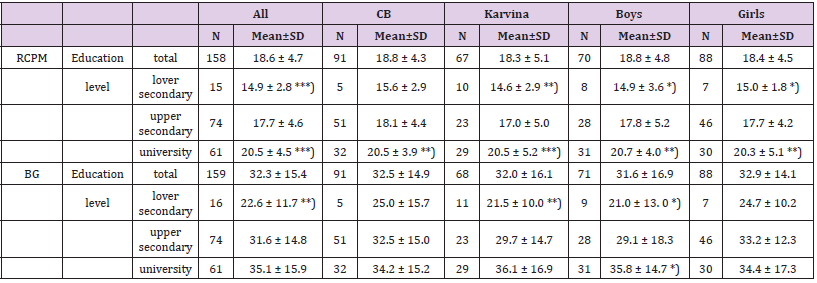
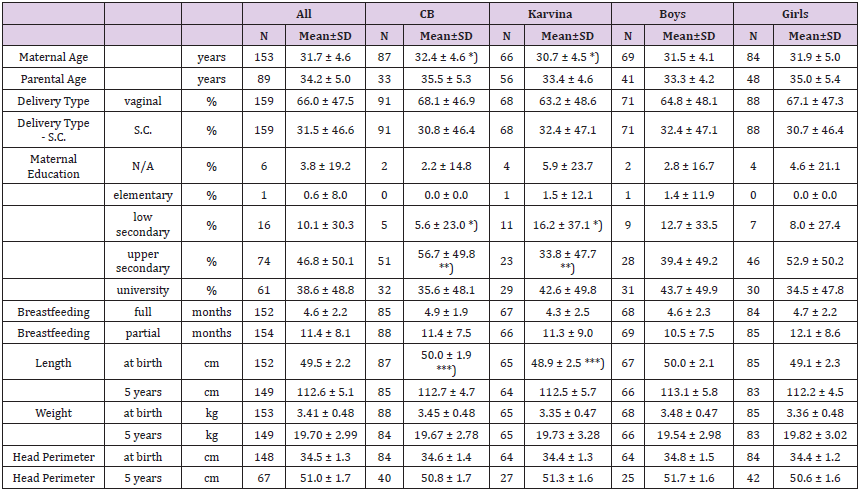
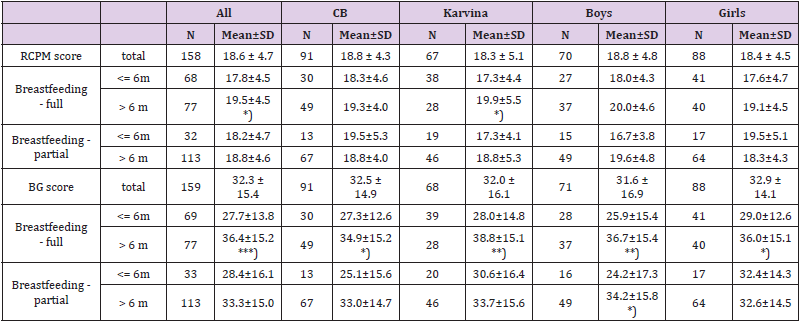
The tested confounders are shown in Table 1. The district of Karvina differed from the district Ceske Budejovice as follows: mothers from Karvina were younger (p < 0.05), children length was shorter (p~0.001), maternal lower secondary education is more often (p < 0.05), higher education is less often (p < 0.01). The birth length and head perimeter was lower in girls vs. boys (p < 0.01) in both cohorts. No differences in the length and weight at 5 years was observed between Karvina and Ceske Budejovice as well as between boys and girls. The RCPM scores as well as the BG scores did not correlate either with respiratory or with all diseases in examined children during analyzed 5 years. The results of psychological tests affected by breastfeeding are presented in Table 2. For the RCPM test of full breastfeeding for 3 months, the correlation was positive in the RCPM test results in Karvina (p < 0.05) and in boys (p < 0.05). 6 months of full breast feeding correlated positively with higher results in the RCPM test (p < 0.05) and in Karvina (p < 0.05). Using the BG test, the full breastfeeding for 3 months correlated positively with higher test results in all study (p < 0.05), and in boys. 6 months of full breastfeeding correlated positively with better results in the BG test in all study (p < 0.001), Ceske Budejovice (p < 0.05), Karvina (p < 0.001), boys (p < 0.01) as well as girls (p < 0.05). Obtained results indicate generally more significant effect of full breastfeeding lasting 6 months and longer. It may be also speculated that the full breastfeeding may have more significant effect on future cognitive development in children living in district of Karvina which is more exposed to air-pollution Table 3. illustrates impact of maternal education levels on result of cognitive testing. Children of university graduated mothers have significantly higher level of RCPM score in all groups. For BG test score is this impact significant only for boys, but there is significantly lover score levels for mother’s lover secondary in all.

biomedres-openaccess-journal-bjstr

Table 1: Overview of tested confounders.

Note: Results of Mann Whitney U-test compare by region *) p ~ 0.05, **) p ~ 0.01, ***) p ~ 0.001 and by gender +) p ~ 0.05, ++) p ~ 0.01, +++) p ~ 0.001.

biomedres-openaccess-journal-bjstr

Table 2: Impact of breastfeeding on cognitive functions.

Note: Results of Mann Whitney U-test compared by Breastfeeding length *) p ~ 0.05, **) p ~ 0.01, ***) p ~ 0.001

biomedres-openaccess-journal-bjstr

Table 3: Impact of maternal education to cognitive functions.

Results of Mann Whitney U-test compared by Education level *) p ~ 0.05, **) p ~ 0.01, ***) p ~ 0.001

Discussion

Horta, et al. [10] reviewed the relationship between breastfeeding and intelligence. This meta/analyses shows that breastfeeding is related to improved performance in intelligence test. This conclusion is also supported by our results using the BG test. Jedrychowski, et al. [7] assessed the effect of exclusive breastfeeding for birth cohort in Krakow, which was exposed to higher concentrations of PAHs in polluted air. Their study provides evidence about the beneficial effect of exclusive breast feeding for 3 months on cognitive development of children at a preschool age, the benefit for children breastfed for > 6 months was more pronounced. Therefore, they support the WHO expert recommendation on exclusive breastfeeding for six months [11]. On the other hand, another Polish mother cohort study did not show that exclusive breastfeeding for > 6 month was associated with a psychomotor development in 1 year old children [12]. Von Stumm and Plomin [13] analyzed the benefits of breastfeeding on cognitive development in British twin study through adolescence up to 16 years. They proposed that breastfeeding was slightly associated with early life intelligence but not with later cognitive growth. Also Girard, et al. [14] did not observe the effect of breastfeeding > 6 moths on cognitive development of children at age 5 years. They suggested that earlier observed benefit for breastfeeding may not be maintained once children enter the school. Pang et al. study [15] advocated that nutrients in breast milk may improve general child cognition compared to infants fed formula only. Kim and Choi [16] studied associations between the breastfeeding and cognitive function in children up to 8 years. Children breastfed > 3 months scored significantly higher on communication and problem solving. Similarly, Lenehan, et al. [17] demonstrated in children breastfed > 2 months increased IQ and nonverbal IQ at 5 years of age.

Study by Lopez, et al. [18] identified a strong association between breastfeeding duration and general Ability scores in children aged 9 / 10 years, with the greatest effect found in those breastfed for more than 12 months. Longitudinal cohort study in Australia [19] examined the relationship between duration of breastfeeding and motor development outcomes at 10, 14, and 17 years. Breastfeeding for more than 6 months was positively associated with improved motor development outcomes. Our results suggest a positive effect of breastfeeding lasting 6 months and/or longer on cognitive development in 5 years old children. This effect was more pronounced in the BG test results focusing on visual-motor skills compared to the RCPM test results measuring problem-solving skills.


For more Articles on: https://biomedres01.blogspot.com/

Abducens Nerve and Facial Nerve Palsy in the Setting of an Extracranial Mass and Vascular Disease


Abducens Nerve and Facial Nerve Palsy in the Setting of an Extracranial Mass and Vascular Disease

Case Report

I present a case of a 59-year-old female patient who presented to a primary care clinic in August 2021 after she woke up from a nap with sudden onset horizontal binocular diplopia that worsened on far vision. She also reported a severe left side headache that worsened with loud noises. Gait instability was also noted. Physical exam revealed significant right eye esotropia and left eye CN 6 palsy which did not cross the midline on lateral gaze. Signs of right cranial nerve 7 palsy were seen with right side facial drop and ptosis apparent on inspection. Cranial nerves two and three were deemed to be intact as both pupils reacted equally to light and accommodation. She denied any history of trauma. At this initial visit, the etiology was suspected to be a viral auto-immune sequala and a steroid dose pack was prescribed. Her medical history is significant for hypertension, dyslipidemia, diabetes mellitus, and hypothyroidism. She has a 60-pack year smoking history. CTA in August 2021 was negative for any large vessel occlusion or hemorrhage. MRI was negative for any significant occlusion but revealed an extra-cranial mass, which measured 1cm and impacting the right trigeminal nerve. Subsequent follow up visits in August 2021 revealed no improve after corticosteroid therapy with persistent 6 and 7th nerve palsy, worsening alternating esotropia and further balance issues. No surgical intervention was made and a repeat MRI in 6 months was planned. At that time, the focus of treatment was to improve glycemic control, more tightly control lipids levels, and advise smoking cessation. Nearly three months to the date of onset, the patient awoke with restored lateral gaze and absent diplopia. Her facial palsy improved in subsequent weeks.

Discussion

Even in the presence of a facial palsy mass, vascular risk factors for patients with abducens nerve palsy must be evaluated. In adults, vascular disease constitutes a majority of abducens nerve palsy as shown by a retrospective chart review in 2014 [4]. Major risk factors for cranial atherosclerosis include diabetes mellitus, hypertension, metabolic syndrome, smoking, and a sedentary lifestyle [5]. The right extra-cranial mass was considered a possible etiology of both cranial neuropathies but was subsequently ruled out based on imaging and patient presentation. The patient’s right cranial nerve 7 palsy improved making the compression from a growing mass an unrealistic etiology. In relation to the left abducens nerve palsy, its contralateral location and sudden improvement highlighted the vascular nature of her etiology. A clearly defined etiology for facial palsies proves difficult to find. 70% of unilateral facial palsies are idiopathic with trauma, infection, and neoplasia as the remaining most common causes. In idiopathic cases, a viral prodrome period occurs before the onset of palsy [6].

The patient denied any preceding symptoms making a viral cause less likely but not impossible cause. The facial nerve has a robust vascular supply due to its thick epineurium; this vascular dependency proposes an ischemic connection to facial nerve palsy [7]. Although the facial nerve vascular supply has many anastomoses, this system can be compromised by diabetes mellitus, which is present in this case, especially at certain points along its tract that do have as proficient collateral perfusion as in the stylomastoid and petrosal branches [8]. Concurrent abducens and facial nerve palsies are a very uncommon finding. A 51-patient prospective study on bell’s palsy found that the most common concurrent cranial nerve palsies involved the trigeminal, glossopharyngeal, and hypoglossal nerves [9]. At this time, it is difficult to predict the long-term outcome for the patient presented in this case report but the prognosis for isolated abducens nerve palsy is encouraging. A 213-patient review found that 78.5% experience spontaneous recovery of their symptoms, with 36.6% by 8 weeks [10].

Conclusion

Patients that present with cranial neuropathies require a comprehensive vascular assessment in addition to the evaluation of neoplasms, trauma, and infectious causes. In the setting of a facial palsy, the etiology should not be immediately assumed to be of viral or auto-immune origin especially in diabetes mellitus, which predisposes the facial nerve to microvascular infarct. Multiple concurrent cranial neuropathies further stress the need for the evaluation of vascular risk factors.


For more Articles on: https://biomedres01.blogspot.com/

Thursday, August 7, 2025

Possibilities of Compositions “Epoxy Resin - Nano Silica - Water-Binding Fillers” for Out-of-Clinical Prevention and Self-Treatment of Carious and Traumatic Lesions of Teeth


Possibilities of Compositions “Epoxy Resin - Nano Silica - Water-Binding Fillers” for Out-of-Clinical Prevention and Self-Treatment of Carious and Traumatic Lesions of Teeth

Mini Review

We all know this unfortunate situation: the toothache (it chipped, fell out, became hypersensitive) just for the weekend or on a voyage There is no time to treat him in the coming weeks... Your dentist was on vacation, in the next turn for 3 days, and in private dentistry a filling is expensive… In the nearest district clinic, the dentist did not want to treat the “hopeless case”, and wrote out a referral for removal to the surgeon ... Queues, uncertainty, spending money ... These troubles, familiar from childhood, haunt most people all their lives, right up to old age. Subsequently, you have to pay for implants, dento-bridges, crowns ... but they bring new problems - prolapse, gums-inflammation, bad bite ... Is it really supposed to be like this forever, and our teeth will be such a “5th column” for us all our lives, on which we should keep a constant guard familiar dentists and a separate wallet? Or try not to reckon and endure all disorders, caries, gumboils, and irritation of the teeth? This is also not a solution, but a path to tooth loss at 40-45 years old. But it shouldn’t be like this forever. The progress of biomedical and technical research will help to solve this problem, analogically to skin or and bone diseases. From ancient times until the 1940s-60s, people were horrified by any cuts, bites and punctures of the skin. At every step they were threatened then by gangrene, tetanus, malaria, rabies, blood poisoning and other (long forgotten by us) diseases going through the blood. And more recently, in medical institutions one could see posters with recommendations to immediately go to the “emergency room” after the initial treatment with iodine or formalin at the site of a cut or bite. But does anyone do this today - in the era of Panthenol, Iodoform, BF-6, medical cyanoacrylates, and solution of “Brilliant Green”? And now, in the 21st century, does anyone run to the ambulance after being bitten/scratched by a street cat, a tick, or even a dog (not to mention mosquitoes, bees and wasps)? This is a fact - 95% of people have learned to heal skin damage that has recently threatened with terrible consequences – personally by own hands, with the latest and very effective cheap ointments and sprays. So, medicine has solved similar problems in related fields. This applies to biomedicine in general, in almost all of its areas. For half a century, medicine and prophylaxis have taken cardinal steps forward. If back in the 1930s and 1950s epidemics of cholera, measles, diphtheria, malaria, and even typhoid and plague were considered normal, now we don’t even mention them.

However, Dentistry and Dental Diseases are More Conservative

Their methods are still somewhere in the 1930s ... except that the drills are not so painful and noisy, the chairs are more beautiful, the anesthesia is better, and fillings are more durable. But this is not a breakthrough, but only an improvement on traditional methods. Dentistry has also experienced a rebirth, with emergence of new polymeric materials. From the 60’s and 70’s. began the widespread introduction of polymer cements, and from the late 80s - photopolymers. Now, highly filled, fast curing dental polyacrylates have been brought to perfection. And up to now the quality of these materials is constantly improving. Obviously, a typical medical inertia and often political processes have stood in the way of progress in dentistry. In particular, mass practical dentistry remains on the foundation of the methods of the 1940s and 1950s, according to which the treatment of caries remains a nerve-, time-, and money-consuming procedure - and often with side effects and complications. The reforms of medicine in the post-Soviet period led to the curtailment of mass free (and good) polyclinics of the times of the USSR, and their replacement with paid ones (often with a dubious effect) - especially in the field of dentistry. At the same time, such paid private points are a rarity in the regions.

The Chuiko Institute of Surface Chemistry of the National Academy of Sciences was among the first institutions in the world to create its own Laboratory of Biocompatible Materials. It developed some of the first in the USSR and the world photopolymer highly filled compositions for prosthetics and filling, recorded by a number of articles, patents and dissertations [1-3]. Accordingly, the Ukrainian SSR and then Ukraine became the workplace for the first introduction of both innovative brakes of photo-polymerizators (Sakura, Polident) and photopolymer dental pastes (Oxomat, Stomadent, Esta, etc.). All of them focused on acrylic monomers and oligomers and went to replace conventional filling masses. At the same time, in our opinion, the main direction in the development of dentistry of the future should be the prevention of dental diseases, and their treatment with minimal surgical intervention. We already have a positive experience in creating therapeutic prophylactic powders for damaged teeth [4-5]. However, work on the creation of epoxy composites for fillings represents a new special cycle, which has no analogues in the scientific literature so far.

One Drawback of Dental Materials Science Should Be Pointed Out

Since first investigations in 1980-90 s, it has followed the path of using polyacrylates - toxic substances, which however, were allowed for fillings and prosthetics. Many other polymer matrices, in particular polyepoxides, were not considered then, apparently due to their “bad image” as technical and eco-suspicious materials. Indeed - for example, epoxy hardeners are toxic. However, in polyepoxides, they are completely polymerized to an eco-friendly plastic. Acrylic monomers and oligomers do not always harden by 100% (for example, photopolymers), and subsequently the products of underhardening come out of the filling directly into the oral cavity (which sometimes causes sensitivity of the gums and only filled teeth, as well as headaches). The first polyacrylic dentofillings allowed headaches, gum disease and other reactions to the release of uncured components into the mouth. Now the quality of dental polymeric compositions has improved, but…the nature of monomeric acrylates and esters remains unfriendly to health. Even in smell-tests, comparisons of acrylic (pungent bad odor) and epoxy (odorless) resins are in favor of epoxies. Of course, “both they are all unnatural chemical synthetics”, but whoever sniffed acrylic oligomers (resins for dental polymers) - will no longer want to be in the same room with him. Epoxy resins are odorless, and that’s worth something. Of course, technical resins (including those sold in supermarkets) have a poisonous hardener (polyamines, less often anhydrides or sulfur-containing substances). But it’s all polymerizing to plastic mass. Meanwhile, polyepoxides are a unique restorative material both in engineering and medicine (prosthetics, inventory, etc.).

The possibilities and open new properties of epoxy composites are far from being exhausted and are constantly expanding. Finally, polyepoxides (with the right filling and curing technique) turn out to be a unique material for filling and restoring teeth - even without a dentist and outside of clinical conditions! It is necessary to know how and when an epoxy compound becomes an effective «cold weld» for a wet and moving surface. Another “negative” against polyepoxides is that they do not like water and wet surfaces. But acrylates don’t like them either. That is why costly and even painful procedures for drying reamed teeth with compressed air (quite aggressive for dentin irritated). Our experiments have shown that with a special curing epoxy resin is resistant to moisture, and even on the aquatic environment. It’s all about aging - after holding the mixed composition for 2-3 hours until it thickens (if it’s not hot, otherwise you need to act faster), it can be safely used as a «putty» for dental chipping or as glue for gluing a fallen crown or part of a tooth. Of course, before that, you need to rinse well, disinfect and (preferably but not necessary) dry the place of application a little (for example, biting a napkin - like a tampon at a dentist).

The Results of Experiment

The first experiments on non-clinical (including self-tested) filling and gluing of chipped teeth were carried out. For work, an epoxy composition was used: Epoxy520+ resin, fresh PEPA hardener (5:1), filled with 65% gypsum and white cement (gives a nice “dental” color but can be replaced with ordinary grease\black cement). After adding the hardener, the composition was kept for 3+-0.5 h - until a semi-solid consistency with high stickiness. After that, for 30+-10 min the composition was still suitable for strong adhesion (within 1-2 min) with a wet tooth surface. In all cases, priming of the tooth surface was not carried out (since the priming composition of the same composition for the most part turned into a weakening layer). Tooth surface preparation was also simplified to a series of rinses, followed by a soft brush with nano-silica (or another desiccant) and a swab snack. The filling (or crown) was applied immediately after such drying, with a certain pressure and holding for 1-2 minutes. After that, the patient personally selfcorrected the bite and the shape of the filling or the glued part of the tooth. Subsequently, for 3-7 hours (including for a night’s sleep), the operation site remained at rest, and only self-corrections of the bite and shape were carried out (and the separated parts of the glue were also removed).

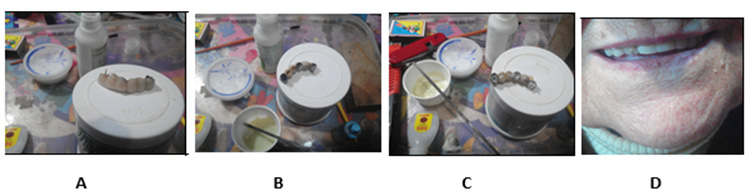
As a result of the tests, it was found that these compositions can effectively glue the fallen fragments of dental crowns, artificial jaws, or teeth (Figure 1). In the future, they hold well in this position and withstand all loads.

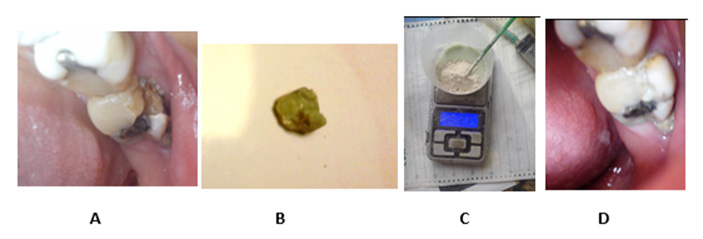
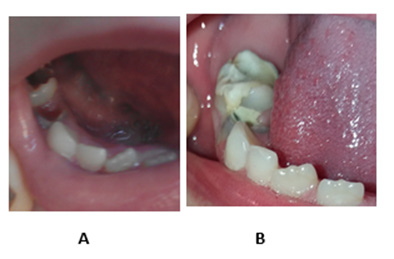
They are no less effective when gluing fallen fragments of living teeth - for example, broken or broken ones (Figure 2). At the same time, the preparation procedure is simplified as much as possible - since it is limited to simple pre-rinsing and wiping the place of gluing (sealing) with a light antiseptic. These restorations may require repeating the gluing procedure (under non-optimal operating conditions or errors in the post-curing process in the mouth), after which the composite is firmly embedded and well withstands dental loads for many years (Figure 2). It is effective to use these compositions in home and family conditions for the restoration of damaged children’s teeth (Figure 3). At the same time, an important problem is solved - the fear (or even panic) of the child in the doctor’s office. (Figure 3) shows an example of a completely destroyed tooth 4 and a severely affected molar 5. They were not accepted for treatment by any doctor and were sent for urgent removal (because they were periodically sick). But after restoration at home (by our parents during our observation), the polyepoxy mass stood firmly on the affected surface. At the same time, the ideal bite-compatibility with the upper teeth was restored, respectively, the problem of chewing on the left side of the jaw was solved. Such an operation (Figure 3) has been successfully performed on the teeth of several patients. The effectiveness of these composites can be seen from (Table 1).

biomedres-openaccess-journal-bjstr

Figure 1:

A. The drop-down “crown” of an old patient, in the states – initial.

B. Prepared.

C. Smeared with the composition and

D. Inserted back.

biomedres-openaccess-journal-bjstr

Figure 2:

A. Damaged.

B. By a marginal chip of enamel.

C. And rejected for further treatment of the 7th tooth of a man; filling composition at the time of mixing the resin with the filler.

D. Restored tooth one month after the chip was glued back.

biomedres-openaccess-journal-bjstr

Figure 3: Shows examples of restorations implemented in 2020-2021 by our epoxy-composites.

A. Extreme milk teeth (molars) of a schoolgirl in a completely degraded (not accepted for treatment) condition.

B. And their appearance after a month of self-filling with our composition.

biomedres-openaccess-journal-bjstr

Table 1: The number of recorded effects according to the results of the first out-of-clinical restorations with epoxy composites.

Conclusion

1. On the basis of well-known analogies with the phenomena of self-rehabilitation in wildlife and in industrial and construction industries, the first foundations for the theory of dental selfhealing, while complying with a number of hygiene rules, and epoxy compositions with nano- and micro-fillers.

2. On the example of specific experimental works, the possibility of the existence of highly filled epoxy-mineral compositions capable of filling and restoring lesions and mechanical damage to teeth, independently and outside of clinical conditions, is shown. The resulting composites are generally available and harden in the conditions of the dental cavity into biocompatible polymer fillings of high strength and resistance. This allows them to serve for a long time on a par with commercial dental ambulances.

3. These results will be very useful for people and communities who, for various reasons (remoteness from cities, business voyages, poverty, workload, war), are temporarily or regularly left without access to quality dental services.


For more Articles on: https://biomedres01.blogspot.com/

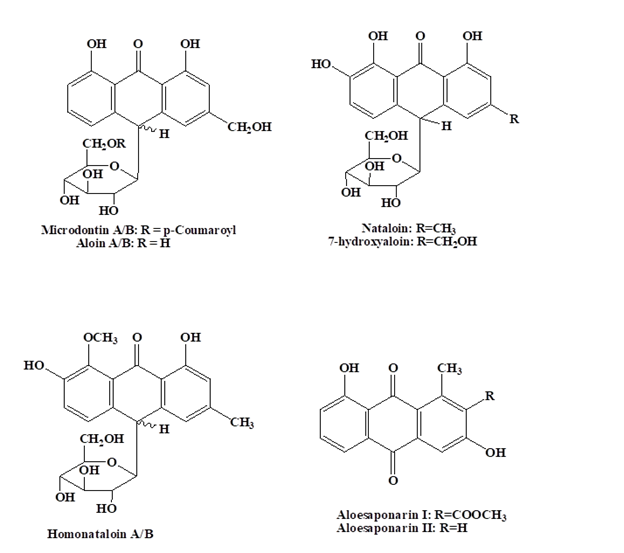
Antimalarial Aloe Compounds

  Antimalarial Aloe Compounds Introduction Among the most prevalent diseases caused by protozoan parasites, malaria is caused by parasites o...