Wednesday, January 25, 2023

Mortality Due to Suicide in Viet Nam: Time Trend and Related Socio-Economic Status in A Province and Nationwide from 2005 to 2014


Mortality Due to Suicide in Viet Nam: Time Trend and Related Socio-Economic Status in A Province and Nationwide from 2005 to 2014

Introduction

Suicide was defined as a self-imposed death where people kill their selves deliberately and voluntarily (Pilgrim, 2014). Suicide has been acknowledged as a significant social and public health problem with approximately 800,000 people dying due to suicide every year. Suicide accounted for 1.4% of all deaths worldwide, making it the eighteenth leading cause of death in 2016. WHO reported that 79% of suicides occurred in low- and middle-income countries in 2016 WHO [1]. Social inequality has been recognized as a significant risk factor for suicidal behaviors in both developed and developing countries. A previous study indicated that arealevel socioeconomic disadvantage increased the risk of attempting suicide among adolescents in the US Yildiz, et al. [2]. A systematic review from 14 different European countries found that there was a significant association between socioeconomic disadvantage and suicidal behavior from 2005 to 2015 Cairns, et al. [3]. Another review revealed a constituent trend at the individual level indicating that poverty is linked with suicidal ideations and behaviors among people living in low- and middle-income countries Iemmi, et al. [4]. Vietnam is among developing countries located in South East Asia having drastic changes in socio-economic conditions in the past decade.
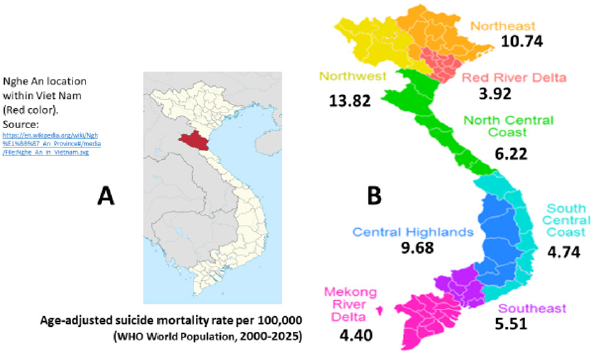
The Vietnam average population has reached 94,666 thousand persons in 2018. The gross domestic product of Vietnam has increased from 1,064 USD per capita in 2011 to 2,389 USD per capita in 2017 General Statistics Office of Vietnam [5]. The crude death rate of Vietnam was 6.8 per 1000 people in 2015 Ministry of Health [6]. However, the mortality due to suicide and related factors are unknown in Vietnam. As suicide is preventable, understanding the changes, consequences and the impact of socioeconomic status is vital to provide evidence-based recommendations. This study aims to examine the changes in mortality due to suicide from 2005 to 2014 in a province and the link between socioeconomic status and mortality due to suicide at the provincial level and national level (Figure 1).
biomedres-openaccess-journal-bjstr

Figure 1:

(A) Nghe An location within Viet Nam and
(B) Age-adjusted suicide mortality rate per 100,000 by social-economics status.

Methods

Study Design

This is a descriptive study of the registered death case series due to suicide (ICD-10: X60-X84) in the Nghe an province during 2005-2014 (1,695 cases) and nationwide in 2005 (3,808 cases).

Study Setting

We annually collected data of population by sex and causes of death to suicide for the present study through the A6 mortality registration system. In this study, we selected the Nghe an province to collect data at the provincial level because the database was available for ten year-period from 2005 to 2014. The Nghe an province is located in the North Central Coast with an average population of 3,080,000 people in 2015, ranked as the fourth most populous province in the country General Statistics Office of Vietnam [5]. The number of deaths collected in the Nghe an province covered the period of ten years from 2005-2014. Data at the national level were collected across all 64 provinces/cities in 2005. This year, Viet Nam had 10,769 commune health stations (CHS) of 671 districts within all 64 provinces/cities. There was 67.8% of all 10,769-commune health stations employed physicians. Therefore, this existing advantage official grass-root health system network provided a favorable environment to report the cause of death in general as well as suicide in particular for the present study. The average population number of each commune in Viet Nam was about 7,617 residents. According to the estimated crude death rate of 500 per 100,000 per year, the estimated number of deaths per month at one commune was three cases. Therefore, the head of the commune health station can registry into the A6 book actively as the requirement by the ministry of health Le, et al. [7].

Data Collection

In Vietnam, the national mortality registration system, officially named A6 mortality registration, established by the Ministry of Health in 1992, recorded all deaths from commune-level by each CHS. We annually collected data through A6 mortality registration from 2005-2014 for the Nghe An province and the whole year of 2005 for all 64 provinces and cities. The designated data collection form was yearly sent to 10,769 CHSs of 671 districts within all 64 provinces/cities in 2005. The heads of CHSs were data collectors who recorded all dead cases including death due to suicide including five variables of name, age, sex, date of death, and cause of death. These variables were presented in the data collection form named “Mortality registration”. A guideline of mortality registration and the causes of death including the underlying cause, immediate cause, and a contributing cause of death recommended by WHO was prepared WHO [8]. The printed data collection form with a guideline, each CHS receiving at least one set, was sent to the directors of 64 provinces/cities Health Department with a request letter of data collection. In 2005, we had received 10,184 completed forms of “Mortality registration” (94.6% of all 10,769 CHSs nationwide). Data was inputted into an Excel file for 671 districts within all 64 provinces/cities in 2005. The cause of all deaths was code ICD-10 and suicide (ICD-10: X60-X84) for the present study.

Data Quality Validation

For data validation, after obtaining the mortality database, all causes of death were determined by using the WHO Verbal Autopsy questionnaire that was referred to as “the goal standard” WHO [8]. In Nghe An province, data quality was validated for completeness and accuracy of mortality registration in a District for 1,581 deaths occurring in 2014. For all causes including suicide cases, the estimated completeness was excellent reaching as high as 97% Thuong NV, et al. [9]. The estimated Kappa was excellent for the group of injury including suicide, reaching as high as 81%; the reference group was Verbal Autopsy’s database (unpublished data).

Data Analysis and Statistical Methods

All obtained data about deaths as well as demographic information was computed using Excel software. We checked for a health event and the cause of death and code following ICD-10. The Excel data were exported to STATA 10.0 for analysis. Mortality rates ratios and 95% confidence interval (MRR, 95%CI) were estimated by performing logistic regression analysis, adjusting for sex, age groups (0-9, 10-19, 20-29, 30-39, 40-49, 50-59, 60-69, 70-79, and 80+), the proportion of unknown underlying cause of death (ICD- 10: R01-R99) and all-cause mortality rates. For the time trend during the period 2005-2014, we divided it into five sub periods of two years (2005-2006: reference group, 2007-2008, 2009- 2010, 2011-2012, and 2013-2014). For socioeconomic status, we divided 64 provinces/cities into nine regions from the highest to lowest social-economic developments. Region 1 (reference group) includes the two most populous cities (Hanoi and Hochiminh City). Regions from 2-9 include Red River Delta, Mekong River Delta, South Central Coast, Southeast, North Central Coast, Central Highlands, Northeast, and Northwest.

Ethical Approval

The research protocol was approved by the Ethics Committee of Hanoi Medical University on 25 November 2008.

Results

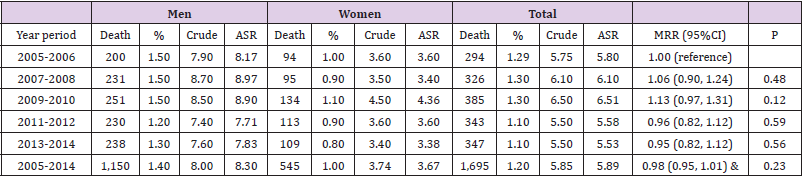
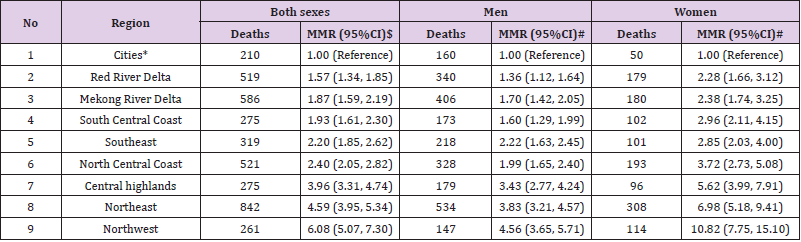
(Table 1) presents data for the Nghe an province. During the ten years of 2005-2014, the system recorded 1,150 dead cases among males, 545 cases among females, and a total of 1,695 deaths due to suicide. After age-adjusted, the suicidal mortality rate per 100,000 for males ranged from 7.40 (in the years of 2011-2012) to 8.70 (in the years of 2007-2008); for females ranged from 3.38 (in the years of 2013-2014) to 4.36 (in the years of 2009-2010). When compared to the period 2005-2006, the risk of death from suicide during 2013-2014 was not significantly changed, MRR, 95%CI: 0.95 (0.82, 1.12), p=0.56. Per increments time-period MRR (95%CI): 0.98 (0.95, 1.01), p for trend=0.23. (Table 2) shows the number of deaths due to suicide for the whole country in 2005 in total and by sex. The system recorded 3,808 dead cases of which 65.0% accounted for males. The suicidal mortality rate per 100,000 among males (7.89) was two times higher than females (3.53), giving a men-to-women ratio of 2.24 (Table 3) presents the number of deaths due to suicide, mortality rate ratios, and 95% confidence interval by nine socioeconomic regions throughout the country in 2005. Nine regions were ordered from the highest to the lowest socio-economic conditions. It is significant that the lower level of socio-economic conditions, the higher the mortality rate ratios. This trend was similar for males and females.
biomedres-openaccess-journal-bjstr

Table 1: Number, crude and age-standardized rate per 100,000 by sex and time during 2005-2014 in the Nghe An province.

Note: ASR: Reference to the WHO World Standard (2000-2025) & per increments time-period MRR (95%CI): 0.98 (0.95, 1.01), p for trend=0.23.

biomedres-openaccess-journal-bjstr

Table 2: Number, crude and age-standardized rate per 100,000 by sex in all 64 provinces/cities in 2005.

Note: ASR: Reference to the WHO World Standard (2000-2025)
biomedres-openaccess-journal-bjstr

Table 3: Risk of suicide by social-economic status in 2005.

Note: *Hanoi and Ho Chi Minh cities (The reference group)
MMR (95%CI): Mortality rates ratio and 95% confidence interval
$ adjusted for age and sex; # adjusted for age

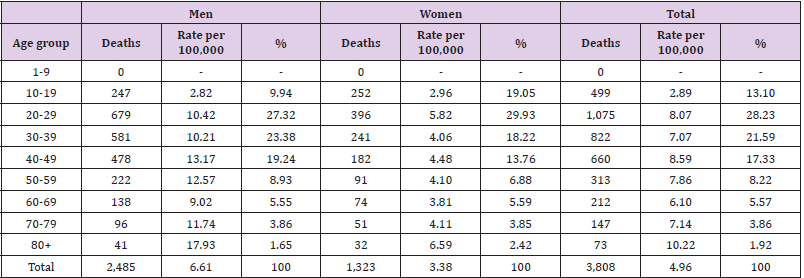
The lowest MMR was found in the Red River Delta (excluding Hanoi) (MMR=1.57; 95%CI=1.34-1.85 in total after being adjusted for age and sex; MMR=1.36; 95%CI=1.12-1.64 for males; MMR=2.28; 95%CI=1.66-3.12 for females; age-adjusted for males and females). The highest MMR was observed in the Northwest (MMR=6.08; 95%CI=5.07-7.30 in total after being adjusted for age and sex; MMR=4.56; 95%CI=3.65-5.71 for males; MMR=10.82; 95%CI=7.75- 15.10 for females; age-adjusted for males and females). Compared to the region with the highest level of socio-economic condition, the individual living in the lowest region had an increased risk of 6.08 times higher to die by suicide. A similar risk was 4.56 times higher for males and 10.82 for females. (Table 4) presents the number of deaths due to suicide and the mortality rate per 100,000 people by age group. The highest mortality rate was found in the age group of 80 and over (10.22 in total, 17.93 for males, and 6.59 for females). The lowest mortality rate was found in the age group of 10-19 (2.89 in total, 2.82 for males, and 2.96 for females). No dead cases due to suicide were recorded for the age group of 1-9. We did not find a particular change in the suicide mortality rate by age group. The men-to-women ratio remains different at all age groups, except a group of 10-19. Among working-aged from 20 to 59, there were 2,870 deaths due to suicide or 75% of 3,808 suicide cases occurred at the working ages.
biomedres-openaccess-journal-bjstr

Table 4: Percent distribution and age-specific suicide mortality per 100,000 by sex and age groups, deaths reported from 64 provinces/ cities in 2005.

Discussion

The main findings have shown a whole country’s suicide status in 2005 and the fatal health event has not been changed during ten year-period from 2005 to 2014 in the Nghe An province, pointing out of suicide being a neglected serious mental health problem. Social determinants of low socioeconomic status or poverty were significantly increased the risk of suicide at disadvantage areas. The other important findings were suicide occurred among senior citizens and about three-fourth of total cases of premature death at working ages. To the best of our knowledge, this is the first study in Vietnam examining the mortality rate due to suicide and the association between suicide and socio-economic status nationwide. The sources of data are reliable because they were collected from the national registration system. The mortality rates are adjusted by age and sex as appropriate. The most important findings from our study are that socio-economic status was negatively associated with suicide mortality rate ratios. Compared to the region with the highest level of socio-economic condition, the individual living in the lowest region had a significantly increased risk of suicide. This finding is in line with previous studies that reported that socioeconomic disadvantage increased the risk of suicide at both the individual level and area-level in many countries Cairns, et al. [2-4].
The suicide dead cases for the whole of Vietnam was 3,803 with an overall mortality rate (ASR) per 100,000 was 5.53, men 7.89 and women 3.53, giving men-to-women ratio 2.24. This mortality rate in Vietnam is much lower than the suicide death rate reported in India (22.0 cases per 100,000) Patel, et al. [10]. The suicide death rate was higher among males that were consistent with findings from other studies Patel, et al. [10,2,4]. We found a significant number of 2,870 deaths due to suicide (75%) occurred during the working ages. This finding raises a concern about adult mental health care in Vietnam and further studies on the causes and risk factors at different occupations. Research worldwide supposed that low socioeconomic conditions, especially unemployment are strongly related to suicidal mortality, and poor psychosocial working conditions associated with suicide Guseva Canu, et al. [11- 13]. Suicidal behaviors include the complex process of thoughts, planning, and attempts. Social support plays an important role in preventing suicide from the beginning of suicidal ideation. Help-seeking behaviors are reported to be correlated with the effectiveness of preventing suicide among working ages Ko, et al. [14].
In Vietnam, researches focus on suicide in the young population more than in the elderly. The highest suicide mortality accounted for the age group from 80 years old in our study suggested that health care for the elderly in Vietnam needs to be studied further. Sociodemographic including social isolation, becoming a widow/ widower, bereavement, health conditions, and mental health problems such as dementia are recognized as risk factors of suicidal behavior in older adults in many countries Conejero, et al. [15]. Along with economic development, Vietnam is facing with challenges of an aging population and social disparities that may increase the prevalence of suicidal behaviors in older people. One of the leading causes of suicide is depression and mental illnesses. One possible explanation for the high suicide mortality at low socioeconomic regions may be that mental health problems have been neglected in these regions with the lack of mental health care and mental health education. Although Vietnam has a good healthcare system from the grassroots level as commune health stations, mental health services are not available and accessible for local people in disadvantaged regions. Individuals with mental illnesses or individuals with suicidal behavior can place a significant financial and social burden on communities. Therefore, understanding mental health problems among different age groups or different socioeconomic conditions is necessary to propose comprehensive preventive programs.
Despite these findings, it is important to note some limitations associated with the study. There were potential under-reported deaths due to suicide because people want to hide this sensitive health event and most of the suicide cases were not admitted into hospitals. The other limitation was that there was no available full information on causes of suicide that occurred among the working ages and senior citizens. Our research project is continuing and these limitations will be fixed in the next updated study.

Conclusion

The findings suggest that there was a big gap in mental health care between social-economic status and input support from domestic and international aids to avoid preventable suicide in disadvantaged regions in Viet Nam is highly needed.

For more Articles on: https://biomedres01.blogspot.com/

Tuesday, January 24, 2023

Ivermectin for Early Treatment and Prophylaxis of COVID-19 When Exposed to Patients: Author’s Perspective


Ivermectin for Early Treatment and Prophylaxis of COVID-19 When Exposed to Patients: Author’s Perspective

Editorial

The world is currently facing a great challenge of the current COVID-19 pandemic that has swept the world’s population and affected all aspects of life including health and economic affairs. This forced many countries to take measures, including preventing popular gatherings and aspects of life in clubs, universities and schools, and closing their borders, in addition to taking physical distancing measures and wearing face masks to prevent the spread of infection [1]. In this regard, we tried to investigate the effect of ivermectin as a prophylaxis in close contacts of confirmed cases of COVID-19. This depended on some previous reports about potentiality of the medication against viruses and our noticing of its effect in treating or reducing infections among patients particularly those in the early stages of the disease. Furthermore, it is previously approved by WHO and US FDA as a safe drug having no serious reported side effects. Moreover, it has been used previously on large scales for mass prophylaxis against some parasitic diseases such as filariasis in epidemic areas.
Then, we have registered the first clinical trial allover the world in this regard by date of May 2020 after taking the institute approval and; thereafter, a consent was provided from the participants whom in close contact of cases after discussing the trial and clarifying that it’s the first investigation all over the world [2,3]. Then, more than 65 clinical trials and studies have been done. Nearly, all of them proved positive results of ivermectin use not only for prophylaxis but also in treatment of COVID-19 disease [4]. Moreover, another meta-analysis study proved efficacy of ivermectin for combating the current pandemic [5,6]. Ivermectin is a safe, non-expensive and available drug. It has been previously approved by US FDA as a well-tolerable safe drug used previously for treatment and even mass prophylaxis of several parasitic drugs. It has been investigated in the current pandemic and proved a high effectiveness for chemoprophylaxis against SARS-CoV-2. Use of ivermectin can provide temporary protection that is not longterm immunity as occurs with a vaccine. Therefore, its use may be repeated. Ivermectin could be one of the hopes for ending the current dilemma of SARS-CoV-2 pandemic if used properly under medical supervision [7,8].
It can be used for mass prophylaxis of the whole population at the same time especially for poor and middle-income countries that do not have the facilities to deliver good effective vaccines. Otherwise, it can be used as an emergency in case of exposure or contact with the patient and even used at the onset of infection. However, it may not be useful in treating severe cases because the virus can cause many organs to fail [9,10]. We recommend further studies to confirm the effectiveness of ivermectin in preventing COVID-19 rather than dismiss it on the basis of insufficient evidence. Studying is very easy, does not take much time and does not cause economic or health burden. This also does not require special equipment or abilities except for volunteers to join through the investigation.


For more Articles on: https://biomedres01.blogspot.com/

Monday, January 23, 2023

Docking Study of Modified Acetohaxamide and Modified Metformin with IRAK Protein


Docking Study of Modified Acetohaxamide and Modified Metformin with IRAK Protein

Introduction

In the recent years much of the scientific efforts have been shifted towards computer and its applications to assist explorations in the area of biology sciences and developed a new discipline as bioinformatics [1-3]. One of the important aspect of this area of research the designing of drugs based on the in-silico methods, which ultimately are validated through wet laboratory techniques [4]. Objective of the present study was to evaluate the docking study of modified acetohexamide and modified metformin with IRAK protein, which is involved in diabetes mellitus.

Materials and Methods

Protein sequence which is responsible for diabetes mellitus retrieved from NCBI. This IRAK protein has been used in the sequence. Briefly, acetohexamide and its modified structure; moreover metformin and its modified structure were docked with IRAK protein. The protein data bank was used to retrieve the structure of the protein. Both the protein and ligands were present in sdf files and were converted into pdb in the discovery studio, then these files were convert into pdbqt files in the auto dock software. And finally all the structures were docked with IRAK protein by using vina tool. Detailed dodifications of the parent compounds/ drugs are given here.

Modified Acetohaxamide

Acetohaxamide was modified as:
a) We change H45 to S45
b) Then attached O34 to N1

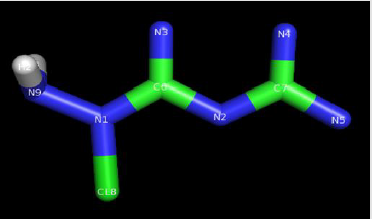
Modified Metformin

Metformin was modified as:
a) Changed H9 into N9.
b) Then H8 was changed into Cl8.
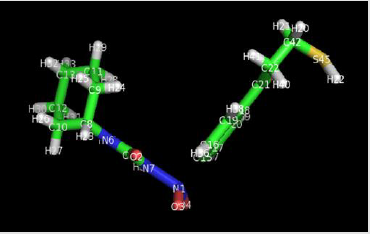
Structure of modified acetohaxamide and modified metformin are given in Figures 1 & 2.

biomedres-openaccess-journal-bjstr

Figure 1: Modified acetohexamide.

biomedres-openaccess-journal-bjstr

Figure 2: Modified metformin.

Results and Discussion

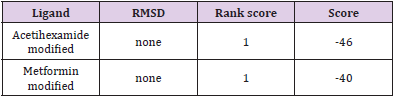
Docking results of our study are given in Table 1. There were 9 pockets in total. Modified acetohaxamide in pocket 5 gave lower bonding energy while modified metformin gave lower bonding energy in many pockets.

biomedres-openaccess-journal-bjstr

Table 1: Docking results of our study.

ADMIT Properties

ADMIT Properties of the candidates are given in Table 2.

biomedres-openaccess-journal-bjstr

Table 2: ADMIT Properties of the candidates.

Drug Scoring by DSX-Online

Drug scoring of the modified drugs are given in Table 3 which were obtained by DSX-online. When we discuss the results of our study, we have come to know that modified metformin was a very good option to develop in real structure and go through wet laboratory validation. It showed very worthy outcome as it showed lower (-4.9) bonding energy as compared to the original compound.

biomedres-openaccess-journal-bjstr

Table 3: Drug scoring of the modified drugs.

Conclusion

Molecular docking study provides an opportunity to identify good drugs that may further be used for validation in actual.


For more Articles on: https://biomedres01.blogspot.com/


Friday, January 20, 2023

Effect of Phosphorous Fertilizer on the Functioning and Functioning Component of “Brassica Napusl (B.N.) in Rain Fed Agriculture, in Different Groups Phosphorous Soil Fertility


Effect of Phosphorous Fertilizer on the Functioning and Functioning Component of “Brassica Napusl (B.N.) in Rain Fed Agriculture, in Different Groups Phosphorous Soil Fertility

Introduction

“Brassicsa napusl” is oil producing plant which plays important role in the human nutrition with its oil production, and it also has an important role in the food for animals and birds [1]. This plant contains more than 40% oil in its seeds and about 40% protein in its meal and that is why this plant is considered very important [2-4]. High amount of oil contamination in canola and also suitable corrected acidic fat mixture cause its dominance in the world market. Since, more than 90% of the country’s eating oil is imported from abroad, therefore it is important to value this plant [4]. Sandhu, et al. [5] reported in their research shortage of phosphor caused stop in the growth and formation of reproductive organs and grows very slowly and therefore the plant is short in branches and the number of saddles, weight in every 1000seeds. MaJumdar and Sandhu[5]reported that the phosphor fertilizer in the number of seeds in saddle, weight of 1000 seeds has been increased a little but their results did not have any effect in the increase of the functioning. Holmes, et al. [6-7] showed in their research that phosphorous seeds very rarely have high effects on the rape seed’s function and the height of this effect depend on the amount of phosphor in the soil. In Indian soil it has been reported that the phosphorous fertilizers have positive reaction on the functioning and functioning component but its 3effect is little [5,8- 10]. Sajed, et al. [1] in an analysis on the Zucchini with thin layer seeds reported that using of phosphorous fertilizer caused increase in the number of lateral shoots, functioning, number of fruit and the amount of seeds production.

Materials and Methods

The test has taken place in Behbahan in southeast of Khozistan state with the longitude 12`, 15° east and latitude of 36`, 30° north and the height of 320 meters from the sea level. Behbahan is an area with semi deserted climate which located in hot steppe climate. Average of rainfall and 10 years temperature is equal to 313.5 milli meters and 25 degrees centigrade respectively. To understand the effect of phosphorus fertilizer on the functioning and sub functioning of component of canola in the rain fed agriculture in different groups of soil phosphorous fertilizing, 16 tests have been conducted in 4 areas. In each area 4 tests in 4 groups of phosphors usable in soil (less than 3ppm, between 3-6ppm, between 6-10ppm and more than 10ppm) have been repeated in 4 treatments of phosphorous fertilizer in the form of complete random block (0, 25, 50, 75 k.g. p2 o5 in hectare) from the triple super phosphate. It means that in each group of soil fertilizing by the amount of phosphate used in the soil for test in the form of complete random block plan in 4 treatments of phosphoric fertilizer in 4 repetitions. The space between these 4 areas are about 35 to 50 kilo meters and the space from the fields to each area was between 3 to 5 kilometers therefore each test consists of 16 terraces. Each terrace with the length of 5 meters with 8 implant lines with 30 centimeters space between them and the space between the bushes on each row was 5 centimeters, the space of terraces in relation to each other in each side was 1.5 meter and the repetitions space also was 1.5 meter. The date of implanting was fixed on the date of the first rainfall in the autumn in the area. Hayolla 401 was used in the test. Method of cultivation was serial and the amount of used seeds was 8 kilograms in hectare. In all the treatments 60kg/ha pure nitrogen (1/2 base +1/2 at the time of shooting (stemming) from the urea source and 50 kilograms of K2 O in each hectare from the potassium sulfate were used as the base. Gain for removal after ripening of saddlebags from an area equal to (1.5*4 meters or 6 meters) from each terrace was done and seed’s functioning has been determined at the moisture of 10%in hectare. The numbers of bushes in unit, number of seeds in saddlebag, number of saddlebag in bush in unit and the weight of one thousand seeds were measured. In this research MSTAT software was used for statistical analysis. Comparisons of averages have been conducted according to LSD test. Variance analyses of 2 agricultural years have been conducted according to composite variance analysis.

Results and Discussion

Functioning and Functioning Components

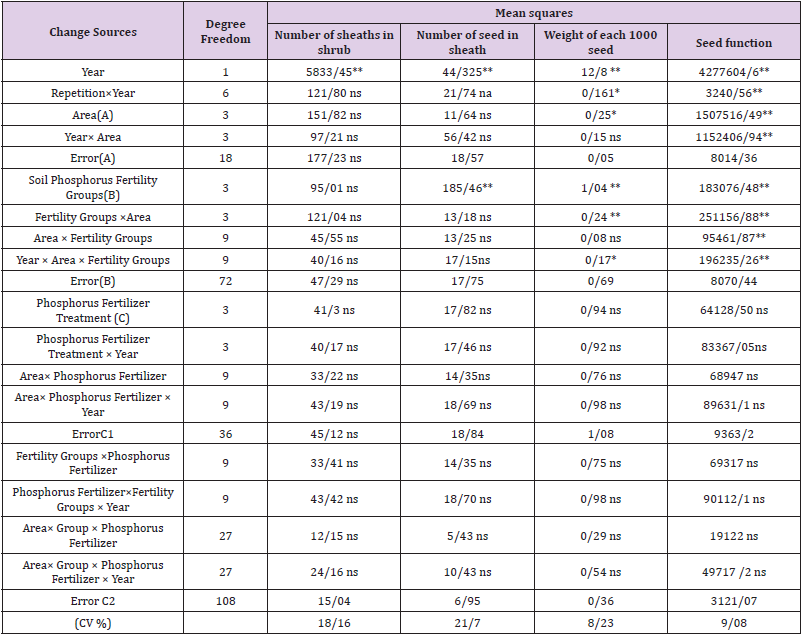
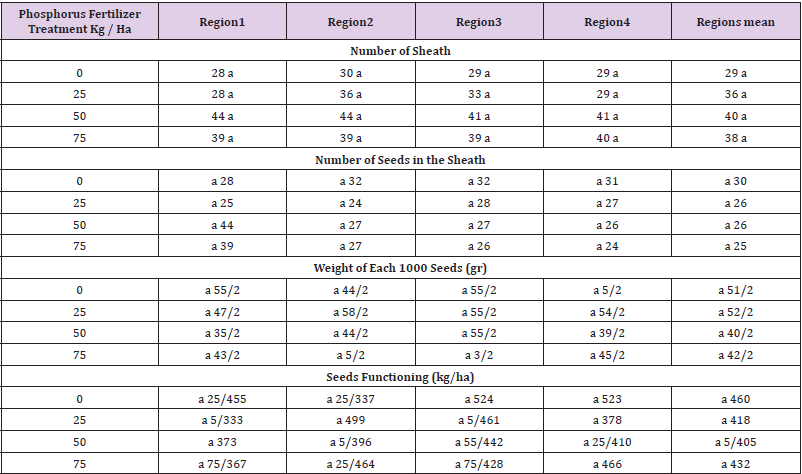
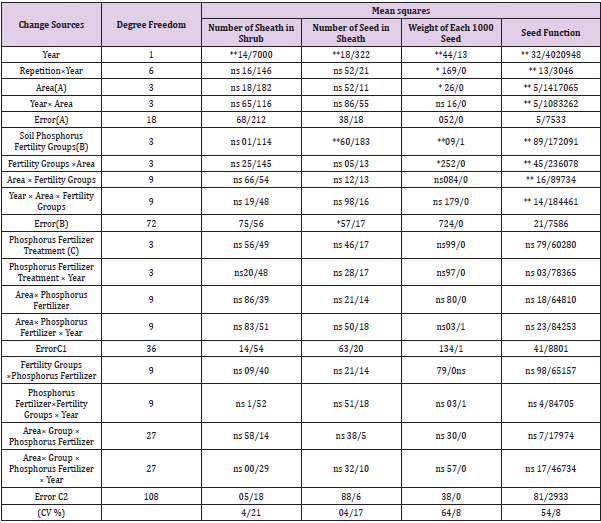
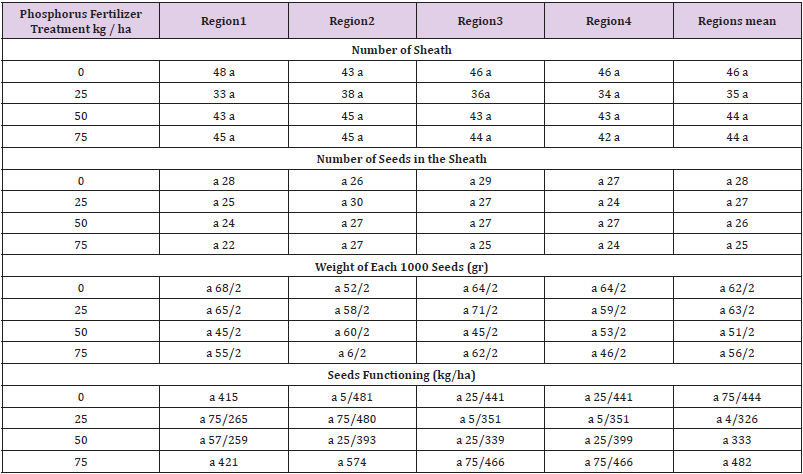
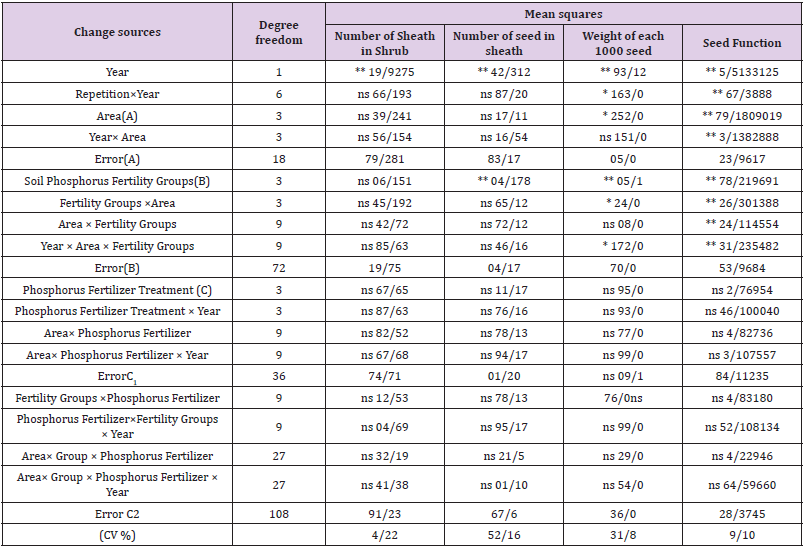
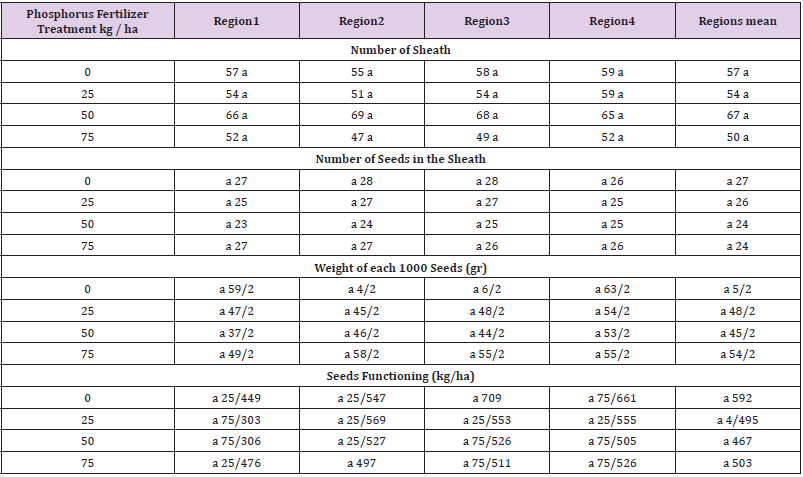
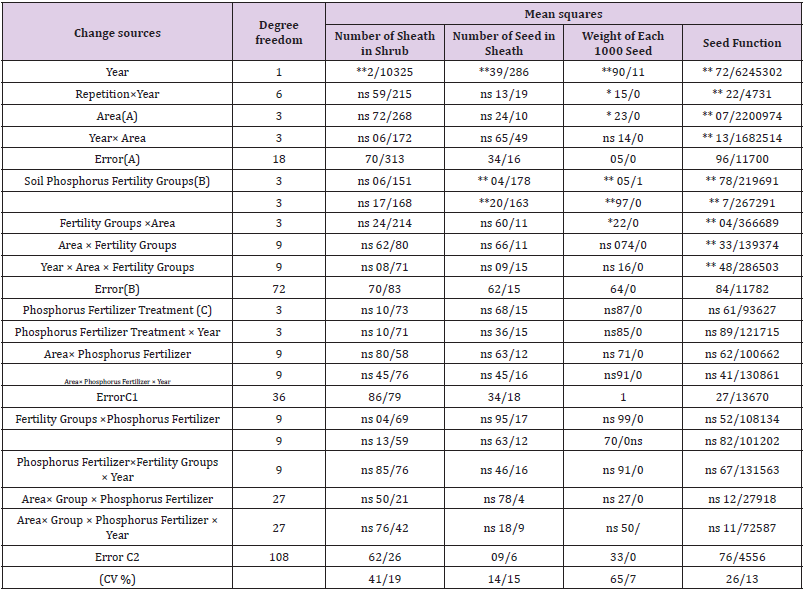
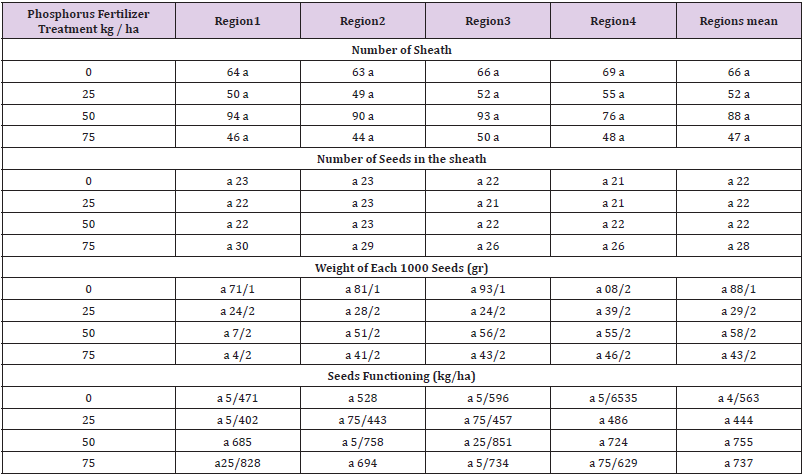
Results of composite variance analysis of 2 agricultural year on the functioning and functioning components showed less than 3 percent ppm in the fertilizing group of phosphorous soil which shows that the effect of phosphorous fertilizer’s treatment on the seed, saddle, number of seeds in the saddle and weight of 1000 seeds isn’t meaningful but the mutual effect (area *fertilizing group) on the seed functioning is meaningful (Table 1). Results obtained from (Table 2) for comparison of fertilizer treatment with witness treatment according to “LSD” test show that there isn’t a meaningful difference through the seed functioning, number of saddle, number of seeds in saddle and thousand seeds weight between witness treatment with the fertilizing and all are located in one group. In 3-6 ppm soil phosphor of fertilizing group, effects of phosphorous fertilizer treatment on the seed functioning, number of saddles, number of seeds in a saddle and weight of 1000 seeds could be found which was not meaningful. The mutual effect (phosphorous fertilizer * fertilizing group) of this group on the seed functioning is meaningful but, on its components, it isn’t meaningful and mutual effect (areas * fertilizing group) on the seed functioning is meaningful (Table 3). According to LSD test there isn’t a meaningful difference between phosphorous fertilizer treatments with phosphorous fertilizer with witness treatment (Table 4).

biomedres-openaccess-journal-bjstr

Table 1: Compound variance analysis functioning and functioning component rape in fertility group soil absorption phosphorus < 3ppm.

biomedres-openaccess-journal-bjstr

Table 2: The mean comparison two-year, number of sheath bags, number of seeds in the sheath, weight of each 1000 seeds, seeds functioning, in phosphorus deferment treatments, in regions with fertility (<3ppm) for applied test (L.S.D).

Note: The effect treatment no significant for properties no mention amount (L.S.D).

biomedres-openaccess-journal-bjstr

Table 3: Compound variance analysis functioning and functioning component rape in fertility group soil absorption phosphorus between 3-6ppm.

biomedres-openaccess-journal-bjstr

Table 4: The mean comparison two-year, number of saddle bags, number of seeds in the saddlebags, weight of each 1000 seeds, seeds functioning, in phosphorus deferment treatments, in regions with fertility (3-6ppm) for applied test (L.S.D).

The composite variance analysis in phosphorous fertilizer treatment absorbable in the soil during two years showed ppm of between 6 to 10. The effect of phosphorous fertilizer treatment and the mutual effect in this group (phosphor fertilizer * fertilizing group) on the functioning and its components was not meaningful. But mutual effect (areas * fertilizing group) on the seed functioning was meaningful. On one hand according to LSD test there wasn’t a meaningful difference between fertilizing treatments with witness treatment in the group. (Tables 5 & 6). In phosphorous soil of fertilizing group of more than 10 ppm results of composite variance analysis for two agricultural years were shown. Phosphorous fertilizing treatment and their mutual effect (phosphor fertilizer * fertilizing group) on the seed’s functioning was meaningful. (Table 7). Results of table 8 show that there isn’t a difference between phosphorous fertilizing treatment with a witness treatment according to LSD test. Considering the results of the test, it can be said that phosphorous fertilizer very rarely have much effects on the seed functioning of Brassica napuls. on the other hand, some of the soil specifications such as organic materials, moisture and the amount of phosphor absorbable in the soil are effective. In the soil with higher amount of organic materials and more suitable moisture the functioning is difference in relation to witness treatment even though it isn’t meaningful.

biomedres-openaccess-journal-bjstr

Table 5: The mean comparison two-year, number of saddle bags, number of seeds in the saddlebags, weight of each 1000 seeds, seeds functioning, in phosphorus deferment treatments, in regions with fertility (3-6ppm) for applied test (L.S.D).

biomedres-openaccess-journal-bjstr

Table 6: The mean comparison two-year, number of saddle bags, number of seeds in the saddlebags, weight of each 1000 seeds, seeds functioning, in phosphorus deferment treatments, in regions with fertility 6-10ppm for applied test (L.S.D).

Note: The effect treatment no significant for properties no mention amount (L.S.D).

biomedres-openaccess-journal-bjstr

Table 7: Compound variance analysis functioning and functioning component rape in fertility group soil absorption phosphorus over >10 ppm.

biomedres-openaccess-journal-bjstr

Table 8: The mean comparison two-year, number of sheath bags, number of seeds in the sheath, weight of each 1000 seeds, seeds functioning, in phosphorus deferment treatments, in regions with fertility (over 10ppm) for applied test (L.S.D).

The amount of phosphor absorbable in soil in group of (3-6) and (6-10) ppm in relation to phosphor group absorbable (less or very high) has suitable effect on the seed functioning. In some of the soil phosphor fertilizing group (medium or high), the amount of fertilizing phosphor, number of saddles and weight of 100 seeds increases a little but their 3effect on the seed functioning is not enough in research on the Brassica napuls plant it has been reported that phosphorous fertilizer does not increase the seed functioning but the height of the plant, number of intial subshrubs and number of saddles will increase a little and also the phosphorous fertilizer has no effect on the number of seeds and weight in 1000 seeds. Mojumdar and Sandhu [5] reported that phosphorous fertilizer increases the number of seeds and weight of 1000seeds a little. But their results have no effects on the increment of seed function. Holmes and AInseley [7-8] mentioned that the phosphorous fertilizer very rarely causes effects on the B.N seed functioning and its effect depends on the amount of phosphor in the soil.
In India regarding the effect of phosphorous fertilizer on the function and its components no positive reaction was noticed. The reason for it is due to the soil condition. Singh, et al [9-14] regarding Indian soil reported that the phosphorous fertilizers have positive effect on the functioning and its components, but it is a little. On research on the medical plant of paper seed pumpkin reported that more phosphorous fertilizer showed the number of seeds in the bush, weight of dried seed in bush and maximum weight of dried seed in each square meter. Also, the use of phosphorous fertilizer causes increase in the number of lateral shoots, functioning and the number of fruit and amount of medical pumpkin seed’s production [1,15].

Conclusion

Different treatment of phosphorous fertilizer in all groups of soil phosphorous fertilizing have no meaningful effect on the functioning and functioning component of B.N. (number of saddles, number of seeds in the saddle and weight of 1000 seeds.


For more Articles on: https://biomedres01.blogspot.com/

The Mosquitoes (Diptera: Culicidae) and their Medical and Veterinary Importance in an Arid Zone of Central Iran


The Mosquitoes (Diptera: Culicidae) and their Medical and Veterinary Importance in an Arid Zone of Central Iran

Introduction

More than 17% of infectious diseases are vector-borne diseases that cause 700,000 deaths annually [1]. About 60% of emerging and re-emerging infectious diseases are zoonoses. In the last three decades, more than 30 new human pathogens have been identified, 75% of which are of animal origin [2]. In the Eastern Mediterranean Region of WHO, zoonoses are a public health threat [3]. Mosquitoes are considered the most important arthropods in medicine and health due to the transmission of pathogens causing some important infectious diseases such as malaria, filariasis, and arboviral diseases [4-6] and are present worldwide except Antarctica [7]. Mosquitoes belong to the order Diptera, suborder Nematocera, and family Culicidae [8]. Culicidae has two subfamilies Anophelinae and Culicinae and 70 species in Iran. Mansonia uniformis was the newest genus and species that was added to the mosquito fauna in Iran [9]. Mosquito larvae are found in a variety of environments, including natural and man-made habitats, with temporary or permanent water sources, stagnant or running water, contaminated or clean water, with or without vegetation. Mosquito larvae are also found in small places where water collects, such as pots, used tires, and animal footprints [4,5]. According to the latest study conducted of mosquito fauna in Kashan, there are 3 genera and 13 species in this county including Anopheles. claviger, An. maculipennis s.l., An. superpictus s.l., An. turkhudi, Culex deserticola, Cx. hortensis, Cx. mimeticus, Cx. perexiguus, Cx. pipiens, Cx. theileri, Culiseta annulata, Cs. longiareolata, Cs. subochrea [10], also Cx. torrentium larva has been found at an ovitrap in Kashan County [11], and species of Anopheles multicolor, Culex modestus, Aedes caspius, and Ae. pulcritarsis have been reported from previous studies in this county [12,13]. Susceptibility to mosquito-borne diseases has increased due to globalization and led to the spread of emerging and re-emerging pathogens in new and old habitats. Economic and social factors, global trade, transport and tourism have caused the spread of vectors and diseases transmitted by them [7,14]. In livestock, mosquito bites may cause stress and pain, resulting in reduced livestock fitness. In addition, mosquitoes can also transmit pathogen between livestock reservoirs (episodic) and, humans (zoonotic diseases) [7]. Mosquitoes can transmit pathogens in Iran, including causes of arboviral diseases (avian pox, bovine ephemeral fever, dengue fever, Rift Valley fever, West Nile fever), bacterial diseases (Anthrax, Tularemia), helminthic diseases or helminthiases (mosquito-borne filariasis), protozoans (Avian malaria, Human malaria) [6]. Due to global climate change, more animal and human populations will be exposed to these pathogens [7]. Due to the importance of mosquitoes in human and animal health, the present study was performed to evaluate diseases transmitted by mosquitoes and the status of these diseases in Kashan County

Mosquito- Borne Diseases in Kashan County

To find diseases transmitted by mosquitoes, we searched the terms “mosquito-borne pathogens”, “mosquito-borne diseases”, “mosquito-borne infections”, “mosquito-borne viruses”. Data were extracted from all articles. An intensive search of scientific literature was reviewed using the search term in the following databases: “PubMed”, “Web of Knowledge”, “Scopus”, “Google Scholar”, “SID”, etc. Mosquito-borne disease names including ‘malaria, avian malaria, West Nile (WN) fever, Dengue (DEN) fever, Sindbis (SIN) fever, lymphatic filariasis, tularemia, tularaemia, anthrax’, lumpy skin, and mosquito-borne pathogens such as Plasmodium, Dirofilaria, Flavivirus, Alphavirus, Phlebovirus, Orthobunyavirus were reviewed. Also, cases of mosquito-borne diseases identified in Kashan, were inquired from Kashan University of Medical Sciences and Kashan Veterinary Organization.

Protozoal Diseases

Human Malaria

Malaria is a health threat. This disease is caused by a parasite that is transmitted to humans through the bite of infected Anopheles mosquitoes and can be prevented and treated. In 2019, almost half of the world’s population was at risk for malaria. Most deaths occur in sub-Saharan Africa. However, Southeast Asia, Eastern Mediterranean, Western Pacific, and Americas also have the case of diseases and deaths. In 2019, cases and the number of deaths due to malaria were 229 million and 409,000, respectively. Plasmodium falciparum and Plasmodium vivax are the most important parasite species of human malaria [15,16], which are biologically transmitted by some anopheline mosquitoes [17]. Many effective efforts have been done for malaria control in the past that caused decreased morbidity and mortality in Iran [18,19]. At the present, malaria has been eliminated in most parts of Iran [20]. A malaria pre-elimination program started in Iran in 2009, restricted the local transmission of this disease [21]. The results of a study showed that the imported cases (from the eastern neighboring countries) have increased from 2009 onward, compared to indigenous cases [20]. WHO (2020) reported the Islamic Republic of Iran had no indigenous malaria cases in 2018 and 2019[15].
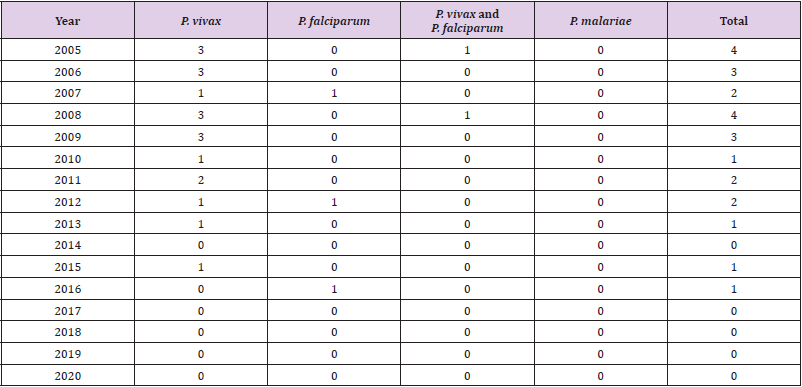
Kashan County is located in the central plateau region of Iran, where have a lower risk of malaria infection compared to southern/ southeastern parts. Seven Anopheles species (An. maculipennis Meigen s.l., An. sacharovi Favre, An. culicifacies Giles s.l., An. dthali Patton, An. fluviatilis James s.l., An. stephensi Liston, An. superpictus Grassi s.l.) are malaria vectors in Iran [22]. Anopheles superpictus s.l. species is the most abundant and distributed among Anopheles in Kashan County [10,12,13], and is one of the seven species of malaria vectors in Iran [22,23], also An. maculipennis s.l. [10,12], An. claviger [10,12,13], An. multicolor [12,13], and An. turkhudi [10] have been reported from Kashan County. An. maculipennis s.l. is the main vector in the Caspian coast in northern Iran [24]. In Kashan County, from 1986 to 1997, a total of 498 malaria patients have been reported, of which 95% were Afghan immigrants and 5% were Iranian travelers or immigrants from other parts of the country [13]. There are malaria cases from 2005 to 2020 and parasite species in Table 1, all malaria cases in these years were reported from Afghan immigrants.

biomedres-openaccess-journal-bjstr

Table 1: Human malaria cases and parasite species from 2005 to 2020 in Kashan County.

Avian Malaria (Bird Malaria)

Culicidae mosquitoes belonging to different genera (Culex, Coquillettidia, Aedes, Mansonia, Culisetta, Anopheles, Psorophora) transmit many species of avian Plasmodium [25-29]. Bird malaria has been reported in some provinces of Iran including Fars Province [30,31], and Mazandaran Province [32,33]. Kalani et al. for the first time, reported two hematozoa, including Aegyptianella and Plasmodium in Isfahan Province [34]. But no information is available about the vectors of this disease in birds in these provinces. Culex pipiens is the main vector in some countries including Austria [35], Japan [28], Portugal [36], Spain [37], and Turkey [38]. In Austria Cx. torrentium is also main vector [35]. Culex theileri in Portugal and Spain are known as a vector [36,37]. Aedes caspius s.l., Cx. modestus and Cx. perexiguus are vectors in Spain [37]. No avian malaria has been reported from birds in Kashan County, but there are species of Aedes caspius s.l, Cx. pipiens, Cx. torrentium, Cx. theileri, Cx. modestus and Cx. perexiguus in different districts of the county [10-12].

Mosquito-Borne Viruses (Arboviral Diseases)

Bovine Ephemeral Fever

Bovine ephemeral fever is an arthropod-borne disease of cattle and water buffaloes. The disease agent is from the genus Ephemerovirus within the Rhabdoviridae family. Biting midges (Diptera: Ceratopogonidae) and mosquitoes Aedes, Anopheles and Culex are known as the main vectors [39-42]. There is no information about the vectors of the virus in Iran [6]. In Iran, bovine ephemeral fever virus has been found in cattle and water buffalo in provinces Razavi Khorasan [43], Khuzistan [44], Fars, Tehran, West Azerbaijan [45], and Qazvin [46]. The virus has not been reported in Kashan County.

West Nile Fever

West Nile Virus (WNV) distributed in Africa, Europe, the Middle East, North America, and West Asia, is a member of the family Flaviviridae, Flavivirus genus, and belongs to the Japanese encephalitis complex. Human is most often infected by infected mosquito bites. Genus Culex is the principal vector of WNV, in particular Cx. pipiens. Birds are the reservoir hosts of WNV, In Europe, Africa, Middle East, and Asia [1,47]. In nature WNV is held in a mosquito-bird-mosquito transmission cycle and Culex spp. are the main vectors [48]. In a study, Cx. pipiens infection with WNV was reported in Guilan Province, north of Iran [49]. Also, it has been reported that Aedes caspius to be infected with the virus in the northwest of Iran [50]. West Nile virus has been identified by ELISA in horses in at least 26 of the 31 Iranian provinces and is the most important and most widespread mosquito-borne arbovirus in Iran [51-53]. Culex perexiguus, and Cx. modestus have also been reported as the principal vectors of WNV in Asia and Europe [54]. These mosquitoes have been reported from Kashan County [10,12], but no information is available about them, and birds infected with WNV in this County.

Lumpy Skin Disease (LSD)

Lumpy skin disease is a vector-borne pox disease of domestic cattle and Asian water buffalo and is characterized by the appearance of skin nodules [55]. Lumpy skin disease virus (LSDV) is a member of the genus Capripoxvirus and the family Poxviridae and is one of the most warning diseases in cattle from the perspective of OIE (Organization for World Health Animal Diseases), so it is mandatory that disease-free countries report it to OIE within 24 hours of confirmation of the disease [56]. The original vector is probably different in geographical areas, including the common stable fly (Stomoxys calcitrans), mosquitoes such as Aedes aegypti, and some species of African mites Rhipicephalus and Amblyomma spp. [55]. Lumpy skin disease (LSD) outbreaks in Kenya were caused incidence of Aedes natronius and Culex mirificus mosquitoes [57]. Culex spp. mosquitoes that feed multiple times on different hosts can increase the probability of transmission [58]. Lumpy skin disease was first seen in Zambia in 1929, then spread to all parts of the Sub-Saharan Africa as well as Madagascar. This disease was first observed in 2014 in western Iran. The outbreak of the disease in Iran followed the spread of the disease in neighboring western countries, including Turkey and Iraq. This disease has been reported from 31 provinces of the country with different prevalence percentages and epidemiological data of the disease indicate that the disease has spread epidemically among cattle and calves of different breeds. High risk provinces were including the provinces of West Azerbaijan, Kurdistan, Ilam, Khuzestan, and Kermanshah. Epidemiological data of the disease in the country show that the prevalence is less than 1% (0.55%) [59]. This disease has not been observed in Kashan so far, but due to the presence of the disease in livestock of neighboring provinces, there is a risk of disease for Kashan.

Mosquito-Borne Filariases

Dirofilariasis

Dirofilaria is a long, slender parasitic worm that infects a variety of mammals. The infection is transmitted by mosquito bites. There are many species of Dirofilaria, but infection in humans is usually caused by three species: D. immitis, D. repens, and D. tenuis. Dogs and wild dogs such as foxes and wolves are the main natural hosts of these three species. Dirofilaria immitis is also known as “heart worm” [60]. Dirofilaria repens and D. immitis infection has been found in humans and dogs in 16 provinces of Iran including Guilan [61], Garmsar [62], East Azarbijan Province [63], Gilan, Mazandaran, Golestan, East, and West Azerbaijan, Ardebil, Markazi, Isfahan, Khorassan, Khuzestan and Hormozgan [64,65], Ahvaz City [66,67], Kerman [68], and Meshkin-Shahr [69]. Vector of D. immitis in Ardebil Province is Cx. theileri [61,70]. There is no information about this disease in Kashan County.

Setariasis (Setariosis)

Setaria (Nematoda: Spirurida: Onchocercidae: Setariinae) infects ruminants. Species of Setaria digitata, S. equina, S. labiatopapillosa, S. marshali, S. cervi have been reported in horses, cattle, sheep, goats, donkeys, wild sheep, and water buffalo in 10 provinces [71-82]. This nematod is transmitted by mosquito species of the genera Aedes, Anopheles, Armigeres Theobald, Culex and Mansonia [83]. Setaria equine has been found from Anopheles maculipennis females in Ardebil Province [70]. There is no information about this disease in Kashan County.

Checklist of Mosquitoes (Diptera: Culicidae) of Kashan County

A checklist of mosquitoes of Kashan County is presented as follow:
Family Culicidae Meigen, 1818
Subfamily Anophelinae Grassi, 1900
Genus Anopheles Meigen, 1818
Subgenus Anopheles Meigen, 1818
1. An. (Ano.) claviger (Meigen, 1804)
2. An. (Ano.) maculipennis s. l. Meigen, 1818
Subgenus Cellia Theobald, 1902
1. An. (Cel.) superpictus s. l. Grassi, 1899
2. An. (Cel.) multicolor Combouliu, 1902
3. An. (Cel.) turkhudi Liston, 1901
Subfamily Culicinae Meigen, 1818
Tribe Aedini Neveu-Lemaire, 1902
Genus Aedes Meigen, 1818
Subgenus Ochlerotatus Lynch Arribálzaga, 1891
1. Ae. (Och.) caspius (Pallas, 1771) s.l. [Oc. caspius (Pallas) s.l.]
2. Ae. (Och.) pulcritarsis (Rondani, 1872) [Oc. pulcritarsis (Rondani)]
Tribe Culicini Meigen, 1818
Genus Culex Linneaus, 1758
Subgenus Barraudius Edwards, 1921
1. Cx. (Bar.) modestus Ficalbi, 1889
Subgenus Culex Linneaus, 1758
1. Cx. (Cux.) pipiens Linnaeus, 1758 (see Note 26)
2. Cx. (Cux.) torrentium Martini, 1925
3. Cx. (Cux.) perexiguus Theobald, 1903
4. Cx. (Cux.) theileri Theobald, 1903
5. Cx. (Cux.) mimeticus Noè, 1899
Subgenus Maillotia Theoald, 1907
1. Cx. (Mai.) deserticola Kirkpatrick, 1924
2. Cx. (Mai.) hortensis Ficalbi, 1889
Tribe Culisetini Belkin, 1962
Genus Culiseta Felt, 1904
Subgenus Allotheobaldia Broelemann, 1919
1. Cs. (All.) longiareolata (Macquart, 1838)
Subgenus Culiseta Felt, 1904
1. Cs. (Cus.) annulata (Schrank, 1776)
2. Cs. (Cus.) subochrea (Edwards, 1921)

Conclusion

Information about the role of mosquitoes in the transmission of pathogens in Kashan County is limited. Due to the construction of bird garden in Qamsar, and entry of birds from 17 different countries into this area, and importance of mosquito-borne diseases in the country, vector-borne disease surveillance, is necessary for the best integrated vector management. The life cycle of mosquitoes requires two types of environments: aquatic habitats (eggs, larvae, and pupae) and terrestrial ecosystems (adults) [17]. Control strategies of mosquitoes may be to controlling adults or larvae at the breeding sites. Methods of insecticide-treated bed nets (ITN) and indoors residual spraying (IRS) are used to control adult mosquitoes [84]. But these methods are not effective in controlling exophilic and exophagic mosquitoes [85]. Environmental management is one of the most effective and sustainable methods for controlling of vectors of diseases. The concept of environmental management for mosquito control is a range of methods including long-lasting physical transformation of larval habitats, temporary changes of larval habitats, which makes the environmental conditions unsuitable for vector breeding, and reduce human/vector/ pathogen contact [86]. Application of these methods depending on the type of larval habitat can reduce mosquito populations and reduce the risk of disease transmission.


For more Articles on: https://biomedres01.blogspot.com/

The Effect of Interface Design and Perceived Risk of Customers’ Satisfaction and Loyalty on Online Booking Application

  The Effect of Interface Design and Perceived Risk of Customers’ Satisfaction and Loyalty on Online Booking Application Introduction The ra...