Friday, December 6, 2024

Effect of Spacer on the Fabrication and Properties of TiZr-Based BMG Foams for Bio-Implant Applications


Effect of Spacer on the Fabrication and Properties of TiZr-Based BMG Foams for Bio-Implant Applications

Introduction

Titanium-based alloys have become a basic choice of metallic materials for orthopedic implants because of their attractive properties, such as excellent mechanical properties, high corrosion resistance, and good biocompatibility [1-3]. However, there are compilations in many cases after implantation of orthopedics for example aseptic loosening and prosthetic joint infection. Also, it was reported that Al and V ions released from Ti-6Al-4V alloy thus causing long-term health problems like Alzheimer’s disease, neuropathy, and osteomalacia [4]. Further, another main issue that makes Ti-based alloys unsuitable for bio-implant materials is a mismatch in Young’s modulus between implants and natural bone. The Young’s modulus of this alloy over 100 GPa, which is this value higher than human bone’s (1-35 GPa) [5]. This mismatch could cause stress shielding, resulting in bone resorption and loosening of the implant after a period of implantation [6].

Recent studies have found that lower Young’s modulus can be obtained by the development of titanium-based BMG since amorphous alloy shows special properties than conventional crystalline materials such as higher mechanical strength, corrosion resistance, and wear resistance [7-8]. Even though Ti-based BMG indicates good mechanical properties with high strength (1800-2500 MPa) and low Young’s modulus (90-110 GPa), but the glass-forming ability (GFA) of most Ti-based BMG alloys still need to improve [9-11]. Some studies show that adding the Zr element in TiZr-based BMG alloy can make GFA increased without reducing other properties [12-14]. Our previous studies [15-16] reported biocompatible TiZr-based BMGFs with the composition of Ti42Zr35Si5Ta3Co12.5Sn2.5 were fabricated by the hot-pressing method. The spacer holder method was selected for fabricating bulk samples and then removed to generate porous samples. Both mechanical properties and biocompatibility results show this material has similar properties to human bones. The purpose of this study is to continue the above studies were before use NaCl and Al particles as spacer holders. The Cu particle is chosen for the new spacer particle because of its higher thermal conductivity than NaCl and Al particles. Then, we can conclude that using higher thermal conductivity as a spacer particle during hot pressing can strengthen the bonding interface between BMG particles.

Materials and Methods

Sample Fabrication

The TiZr-based MG powders with a chemical composition of Ti42Zr35Si5Ta3Co12.5Sn2.5 and particle sizes of less than 25 μm are selected to fabricate porous samples. Then, the spacer holders (Cu particles) with a larger size (100-120 μm) are mixed in with a determined ratio of volume fractions. Based on the previous studies, the optimal parameter to fabricate TiZr-based BMG foam samples using a hot pressing machine are 300 MPa of hot pressing pressure, 520°C of hot pressing temperature, and 5 minutes of holding time [15-16]. Finally, the prepared sample needs to remove the spacer holder to produce a porous sample using a 50:50 concentrated HNO3:H2O mixed solution at room temperature for 3 days.

Morphology

The SEM equipment (Inspect F50, Thermo Fisher Scientific Inc.) which operated at 20 keV was used to observe the pore sizes and morphology of TiZr-based BMG foams. Each porous sample of TiZr-based BMG foams is then taken SEM images with 500× magnification during the SEM experiment. From the result of SEM images, the pore size and morphology of each sample known by observing the diameter of the connecting cavity.

Microstructure Characterization

The XRD (D2 PHASER X-ray diffractometer; operated at 40 kV) and transmission electron microscopy (TEM; JEOL JEM2100; operated at 200 keV) were used to characterize an amorphous structure of the TiZr-based BMG foams. A focused ion beam system (FEI Versa 3D Dual Beam; operated at 30 kV) is used to prepare a thin foil specimen from the aforementioned porous sample. Thin foil sample then carry out by FIB milling at 4 keV and angle incident of 5°.

Mechanical Properties

The MTS machine (HUNG TA Instrument HT-9102) was used to determine the mechanical properties of the TiZr-based BMG foams, including compressive strength and Young’s modulus. The porous samples for the compression test were cut in a rectangular shape with a size of 2.5 × 2.5 × 5 mm (±0.1 mm) by using a low-speed diamond saw machine (ISOMEC, BUEHLER). Then, the sample was put into the steel mold to perform a compression test with a constant strain rate of 1 × 10⁻⁴ mm/s at room temperature.

Biocompatibility Test

MC3T3-E1 pre-osteoblasts were used to performed cell viability by 3-(4,5-dimethythiazol-2-yl)-2,5-diphenyl tetrazolium bromide (MTT) assay with the indirect method. MC3T3-E1 preosteoblasts were first cultured in α-MEM with 10% fetal bovine serum (Gibco®). 100 μl of MC3T3-E1 pre-osteoblast suspension was added into a 96-well culture plate with the cell density of 5000 cells/well and preincubated for 24 h at 37°C in a 5% CO2 atmosphere. After cell attachment, replaced culture medium by 100 μl of one of three precipitate media for incubation in the same environment for 1, 3, and 7 days. Subsequently, 10 μl of MTT solution (Invitrogen, US) was added to each well and incubated for 3 h. After that, removed all of the solutions and added 100 μl of dimethylsulfoxide (DMSO) to dissolve formazan crystals, and the optical density (OD) was detected by a microplate reader with the wavelength of 560 nm (Multiskan FC; Thermo, Waltham, MA, USA).

The migration capacity of MC3T3-E1 pre-osteoblasts was executed by scratch assay with the simulation of the precipitate medium. MC3T3-E1 pre-osteoblasts suspension (5000 cells) was added into a 24-well culture plate for 24 h incubation. A straight line was scratched by the tip of a 1000-μl pipet along the monolayer of cells. Removed the cell debris with culture medium gently. 500 μl of the precipitate medium was added to each well for incubation. After 8 h of incubation, observed and captured the cells images by optical microscope (Primovert; Zeiss, Germany). Extracellular calcium deposition of MC3T3-E1 pre-osteoblasts was analyzed by alizarin red S (ARS) staining. First, 500 μl of MC3T3-E1 preosteoblasts suspension was seeded into a 24-well culture plate with a cell density of 5000 cells/well. After 24 h incubation, replaced the culture medium with the precipitate medium for 21 days of incubation. Before staining, removed the precipitate medium and gently rinsed with PBS three times. After that, fixed the cell with 4% of paraformaldehyde for 15 minutes at room temperature. Removed the fixative and stained the ECM calcium with ARS dye for 20 minutes at room temperature. The ARS dye has been removed and captured by the images of an optical microscope (Primovert; Zeiss, Germany).

Results and Discussion

Removal of Spacer Particles

The Cu particle from the prepared samples was removed with a 50:50 concentrated HNO3:H2O mixed solution at room temperature for 3 days. However, the bigger size of the samples needs more time to completely remove the Cu particle. So, some of the experiments require the porous samples removed up to 7 days, such as SEM, TEM, and biocompatibility test. The porous samples were cleaned in immersed ethanol by using an ultrasonic cleaner to avoid contamination with the chemical reaction after the spacer particles removal process (Figure 1).

Morphology

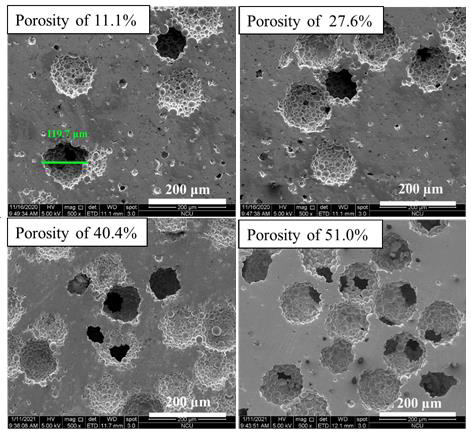
The morphology of the TiZr-based BMG foams was observed with SEM. The morphologies with real porosity of 11.1%, 27.6%, 40.4%, and 51.0% which fabricated by using Cu spacer particles are shown in Figure 1. SEM images show that the pore size and morphology of the TiZr-based BMG foams were similar to the size of Cu spacer particles (100-120 μm). Furthermore, the resulted pore size of porous samples in this study in line with the optimal implant-bone for scaffolds in vitro which range pore size from 100- 325 μm [17] (Figures 2 & 3).
biomedres-openaccess-journal-bjstr

Figure 1: SEM images of TiZr-based BMG foams with different real porosities.

Microstructure Characterization

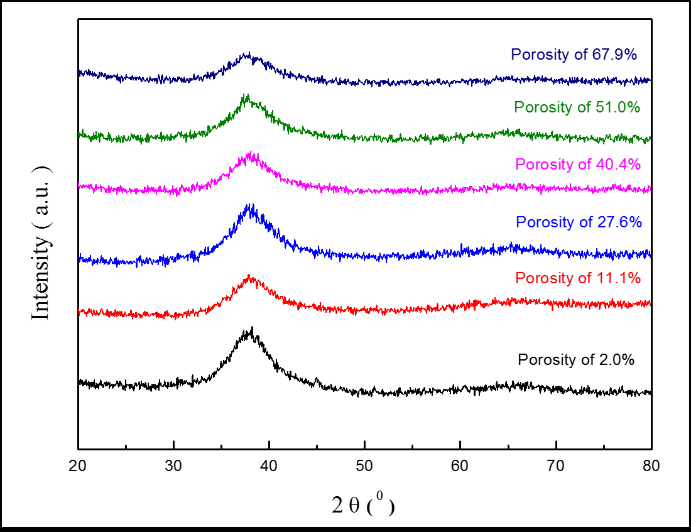
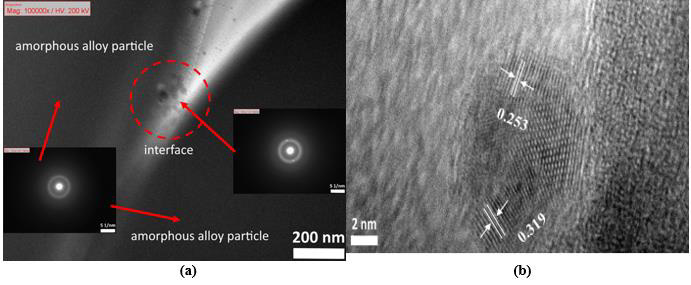
The XRD patterns of TiZr-based BMG foams fabricated by using Cu spacer particles were presented in Figure 2. The porous samples were prepared for XRD after hot pressing and spacer particles removal process. All of the samples with different porosities resulting natural amorphous structure with normal broad humps over the 2θ of around 30°-50°. This shows that the selected hot pressing parameters were successfully to avoid crystalline transformation after the hot pressing process. Figure 3 shows the bonding interfaces between amorphous alloy particles by TEM images of TiZr-based BMG foams with real porosity of 11.1%. Figure 3a resulted in selected area electron diffraction (SAED) patterns which show typical hollow rings. This proves that the amorphous structures from the fabricated sample retained their amorphous structures during hot pressing. Moreover, the TiZr-based BMG foams forming a strong bonding-force interface between the amorphous alloy particles after the hot pressing process. However, a few lattices appeared in the almost fully amorphous phase. This means that the observed sample cannot avoid the occurrence of nanocrystallization based on the selected hot pressing parameter. The nanocrystallization zones were observed along with the interfaces between the amorphous alloy particles in the nearly amorphous phase. These nanocrystalline phases contained the normal α-Ti phase (hcp structure) and β-Ti phase (bcc structure) with a lattice constant of 0.253 and 0.319 nm, respectively, as shown in Figure 3b, (Figure 4 and Table 1).
biomedres-openaccess-journal-bjstr

Figure 2: XRD patterns of TiZr-based BMG foams with different real porosities.
biomedres-openaccess-journal-bjstr

Figure 3: TEM images of TiZr-based BMG foam in real porosity of 11.1% which showing

(a) SAED patterns and

(b) Nanocrystallization zone.

Mechanical Properties

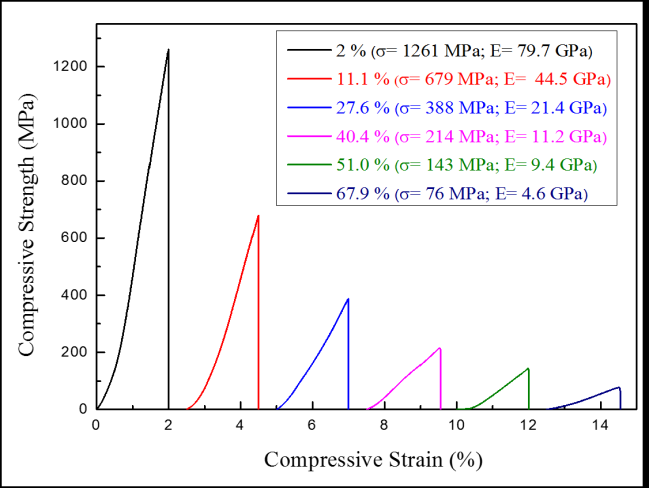
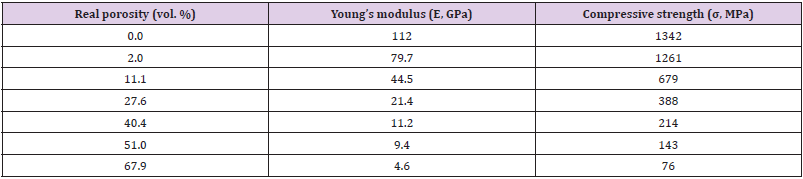
Figure 4 presents the compression stress-strain curves of the TiZr-based BMG foams in various porosities. Whereas, the mechanical properties showed in Table 1. These results indicate that increasing porosity of the samples can decrease compressive strength and Young’s modulus. The increasing porosities from 2% to 67.9% resulting in decreased compressive strength and Young’s modulus from 1261 to 76 MPa and from 79.7 to 4.6 GPa, respectively. The aforementioned results indicate that the desired mechanical properties can be obtained by controlling the porosity of the samples (Figure 5).
biomedres-openaccess-journal-bjstr

Figure 4: Compression stress-strain curves of TiZr-based BMG foams in various real porosities.
biomedres-openaccess-journal-bjstr

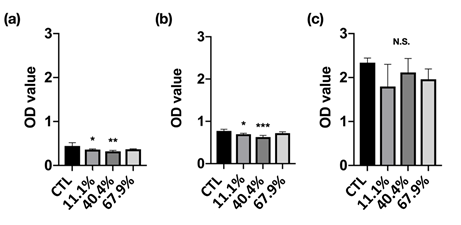
Figure 5: Cell viability of MC3T3-E1 pre-osteoblasts culture in standard medium and different precipitate media from immersion for (a) 1, (b) 3, and (c) 7 days incubation.
biomedres-openaccess-journal-bjstr

Table 1: Mechanical properties of TiZr-based BMG foams.

Biocompatibility Test

Cell Viability: Cell viability is used to determine the overall health of cells with a measure of the proportion of live and healthy cells in a population. The cell viability of MC3T3-E1 pre-osteoblasts cultured in the different precipitate medium was shown in Figure 5. The 11.1% and 40.4% groups demonstrated significantly lower cell viability at 1 and 3 days incubation. However, the cell viability at 7 days incubation has shown no difference compared with the control group (CTL). Fortunately, the OD value of each group has increased with incubation time increased, which means the cells were growing continuously, moreover, all groups can be classified as the first-level cytotoxicity according to ISO 10993-5 [18] (Figure 6).

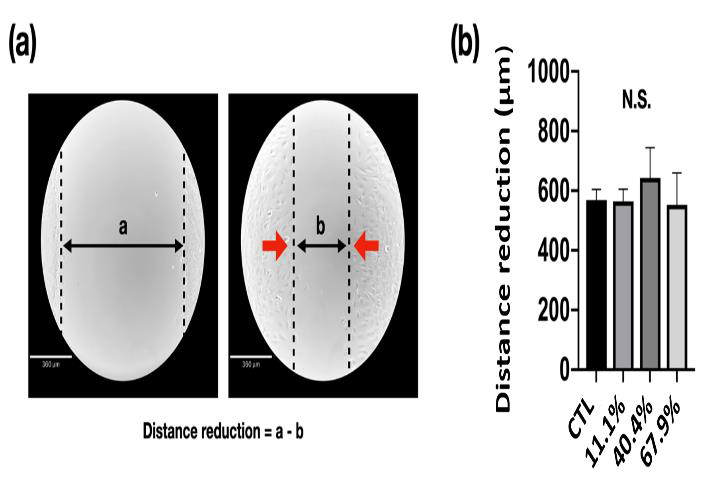
Migration Capacity: Cell migration is an essential process involved in the major developmental stages of all complex organisms and results in the arrangement of cells into proper architecture, regulation of the nervous system, and formation of specialized organs and tissues. Figure 6 shows the migration capacity of MC3T3-E1 pre-osteoblasts culture with standard and different precipitate medium after scratch and 8 h after incubation. The gap distance was measured by Image J software to realize the migration of MC3T3-E1 pre-osteoblasts (Figure 6a). After 8 h of incubation, the gap distance has been reduced to around 600 μm. However, there was no significant difference be found between each group (Figure 6b).
biomedres-openaccess-journal-bjstr

Figure 6: Migration capacity of MC3T3-E1 pre-osteoblasts cultured with alpha–minimum essential medium:

(a) Cell migration at first scratch and after 8 h of incubation (CTL), and

(b) The distance of gap has been reduced due to migration after 8 h of incubation.
biomedres-openaccess-journal-bjstr

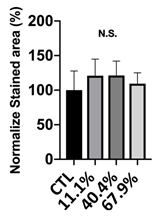
Figure 7: Extracellular matrix calcium and mineral deposition from MC3T3-E1 pre-osteoblasts treated with 11.1%, 40.4%, and 67.9% precipitate medium and stained by alizarin red S staining.

Calcium Deposition: For potential application as a bone implant in orthopedic fields, calcium deposition is the first cell functional response for testing. The quantitative analysis of the staining area by ARS dye after normalization is shown in Figure 7. The normalized calcium deposition rate of 11.1%, 40.4%, and 67.9% precipitate medium simulation was 120 ± 24%, 121 ± 20%, and 109 ± 15%, respectively (Figure 7). Yet, the statistical result shows that there was no significant difference between each group. The aforementioned results show that the calcium deposition rate of all groups always higher than 100% and this proves that the samples can positively be applied as bio-implant materials.

Conclusion

In this study, the porous samples of TiZr-based BMG foams with porosities ranging from 11.1% to 67.9% were successfully fabricated by Cu spacer particles. The pore size and morphology of TiZr-based BMG foams were similar with selected Cu spacer particles (100-120 μm) were confirmed after performing SEM examination. The TiZr-based BMG foams retain their amorphous structure after the hot pressing process based on XRD and TEM analysis. The mechanical properties of fabricated porous samples decreased with increasing the porosity of the samples. The cell viability increased with increasing incubation time and confirmed that the cell was growing continuously. The observed cell migration shows that the distance reduction is approximately 600 μm after 8 h of incubation. In the calcium deposition rate, the values are always higher than 100% show that the samples are biocompatible to be applied to the human body.


For more Articles on: https://biomedres01.blogspot.com/

Monday, December 2, 2024

Oral Hygiene Status and Practices Among Children Attend Dental Hospital in Dhaka City


Oral Hygiene Status and Practices Among Children Attend Dental Hospital in Dhaka City

Introduction

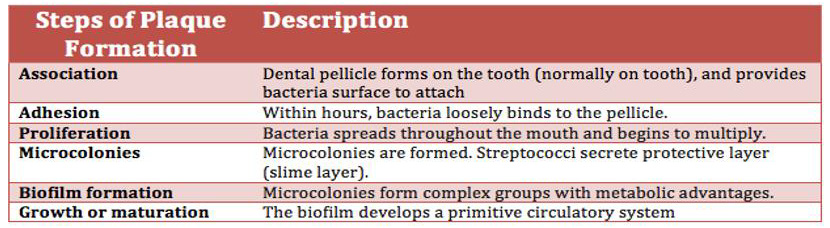
Good oral hygiene is an indicator for good body health. Oral diseases have been a persistent public health problem globally, with almost every individual experiencing poor oral health at least once in their lifetime [1,2]. Globally, poor oral hygiene occurring due to increasing plaque and calculus deposits with increasing age have been reported among children and adolescents. Only a minor proportion of school going children in Bangladesh has good oral hygiene compared to larger population among developed countries [3]. Poor oral hygiene not only affect the oral cavity but also a risk factor for initiation of many systemic diseases. Presence of dental plaque is an indicator of poor oral hygiene and if not treated properly can change into dental calculus which will further deteriorate the situation. Oral hygiene is a state of oral and related tissues and structures that contribute positively to physical, mental and social wellbeing and to the enjoyment of life possibilities by allowing an individual to speak, eat and socialize unhindered by pain, discomfort or embarrassment [4]. Dental plaque is a biofilm or mass of bacteria that grows on surfaces within the mouth. It is a sticky colorless deposit at first, but when it forms calculus, it is often brown or pale yellow. Dental plaque is also known as microbial plaque, oral biofilm, dental biofilm, dental plaque biofilm or bacterial plaque biofilm [5].

Plaque largely is made up of commensal species in the mouth. Dental plaque formations involve an ordered pattern of colonization by many different bacteria like Streptococcus mutans and other anaerobes include Fusobacterium and Actinobacteria which cause dental caries and periodontal diseases. Children who have dental caries in their primary dentition are more likely to have dental caries in permanent dentition. Permanent teeth erupt during the school age years, good dental hygiene and regular attention to dental caries are vital parts of health supervise [5]. Worldwide, approximately 2.3 billion people (32% of the population) have dental caries in their permanent teeth [6]. The WHO estimates that nearly all adults have dental caries at some point in time. In baby teeth it affects about 620 million people or 9% of the population [7]. They have become more common in both children and adults in recent years [8]. The disease is most common in the developed world due to greater simple sugar consumption and less common in the developing world [9]. A previous study reveals that in Bangladesh, children were affected most by dental caries than adults at age of 18 and 35 to 45 years in all socioeconomic groups [10]. The prevalence of dental caries is of great interest for long and is a principal subject of many epidemiological research carried out all over the world [10]. A limited survey was done with children, but real scenario was not reflected in Bangladesh regarding this crucial condition, actual data is not available. According to the health importance of dental caries, the aim of this study is to identify oral hygiene practices pattern and oral hygiene status among children.

Methods and Materials

Study Design

Cross sectional descriptive study was carried out. The study was conducted in Dhaka Dental College and Hospital, Mirpur-14. The study was conducted during the period of January 2019 to June 2019. The study population consisted of child patient whose age was 4 to 14 years, came for examination and treatment purpose in Dhaka dental college and hospital. Data was checked for the completeness and consistency on daily basis of data collection and then coded and recoded, entered in SPSS, MS-Excel, Epi-info was used.

Measurement of Dental Caries, Oral Hygiene Status and Gum Bleeding

Dental Caries: Using the decayed missing and filled teeth (dmft) index for primary (4-5years) and early mixed (6-10years) and Decayed, Missing and Filled Teeth (DMFT) index for permanent dentitions. A tooth was considered decayed when there was frank carious cavities on any surface of the tooth. A tooth was as classified missing in the index if it was extracted due to caries.

Oral Hygiene Status

Using the Simplified Oral Hygiene Index (OHI-S) of Greene and Vermillon. The oral hygiene of each child was classified as ‘good’ when the OHI-S score was 0 to 0.06, ‘fair’ when it was 0.07 to 1.89 and ‘poor’ when it was 1.9 to 3. The criteria described by GREEN & VERMILLION, 1960 and 1964 were selected. Calculus was excluded. For the ages 4 to 6 years selected labial surfaces of the 54, 61, 82 and the lingual surface of 75. For the mixed dentition added the labial surface of 26 and the lingual surface of 46 [11]. Gingival bleeding: Gum bleeding was measured by slightly probing along with gingival sulcus. After probing it was resulted according to presence and absence of bleeding.

Ethical Issues

The approval letter for the conduction of research on specified topic was taken from the AIUB and Dhaka Dental Hospital. Informed consent was taken from each respondent, that was included objective of the study, time duration, privacy and confidentiality of information taken and information about participant can withdraw anytime.

Results

Socio-Demographic Factors

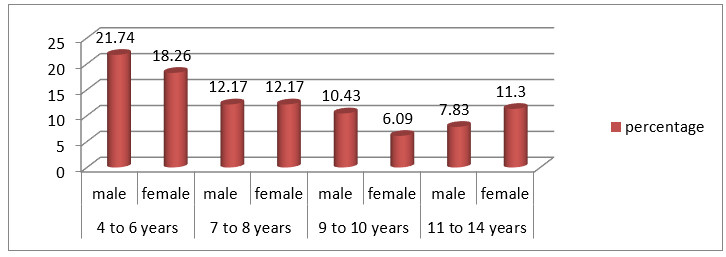
The purpose of the study was to find out practices and oral hygiene status among the children who were aged between 4 to 14 years. The present observation reveals that 40% of children were between 4-6 years of age, 24.35% between 7-8 years of age, 16.52% between 9 to 10 years and 19.13% between 11-14 years of age. Among the total study participants, there were 52.17% male respondents and 47.83% female respondents. In the present investigation, among 4 to 6 years children 21.74% was male and 18.26% was female, among 7 to 8 years children 12.17% was male and 12.17% was female, among 9 to 10 years children 10.43% was male and 6.09% was female and among 11 to 14 years children 7.83 was male and 11.3 was female (Figure 1).

biomedres-openaccess-journal-bjstr

Figure 1: Distribution of the respondents according to their age and gender.

Educational Level of the Children

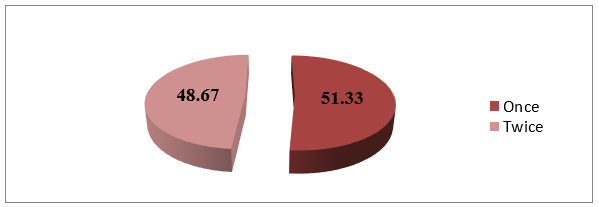
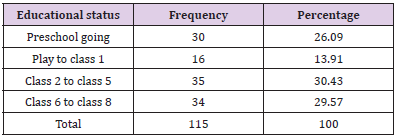
In the present study, 26.09 percent were preschool going, 13.91 percent of respondents had education from play to class 1, 30.91 percent of respondents have education from class 2 to class 5 and 29.57 percent of respondents have education from class 6 to class 8 Table 1. Out of the 115 children 51.33% brushed their teeth once daily and 48.67% brushed their teeth twice daily (Figure 2).

biomedres-openaccess-journal-bjstr

Figure 2: Habit of daily tooth brushing.

biomedres-openaccess-journal-bjstr

Table 1: Distribution of the children by their educational status.

Factors Related to Oral Hygiene Practices

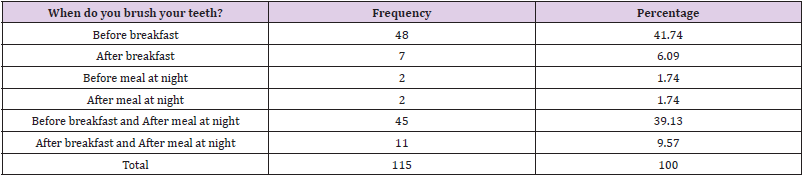
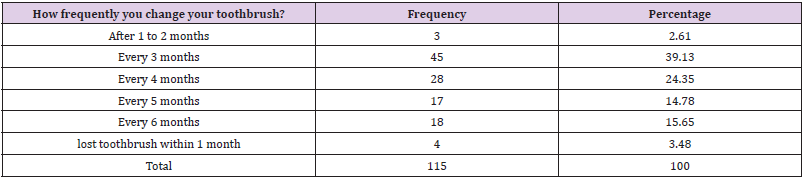
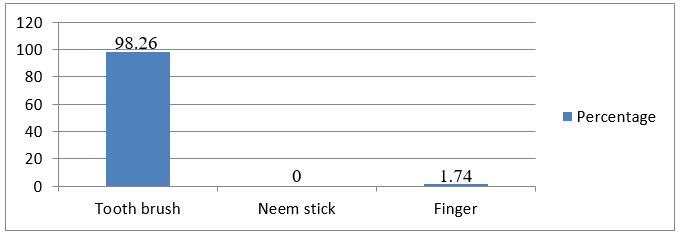
It was observed that, 41.74% respondents brushed their teeth before breakfast, 6.09% brushed their teeth after breakfast, 1.74% brushed their teeth before meal at night, 1.74% brushed their teeth after meal at night, and 39.13% brushed their teeth before breakfast and after meal at night and 9.57% brushed their teeth after breakfast and after meal at night Table 2. Study shows that 98.26% respondents use toothbrush for brushed their teeth, 0% use Neem stick for brushed their teeth and 1.74% use finger for brushed their teeth (Figure 3). This study Table 3 reveals that 2.61% respondents changed their toothbrush after 1 to 2 months, 39.13% changed their toothbrush every 3 months, 24.35% changed their toothbrush every 4 months, 14.78% changed their toothbrush every 5 months, 15.65% changed their toothbrush every 6 months and 3.48% were lost their toothbrush within 1 month Table 3. Table 4 reveals that 0% respondents used mouthwash, 0% used floss, 0% used toothpick, 40% did simple gurgle after dinner at night and 60% used nothing Table 4.

biomedres-openaccess-journal-bjstr

Table 2: Time schedule of tooth brushing.

biomedres-openaccess-journal-bjstr

Table 3: Duration of toothbrush changing.

biomedres-openaccess-journal-bjstr

Table 4: Material used for clean teeth after dinner at night.

biomedres-openaccess-journal-bjstr

Figure 3: Tools used for cleaning teeth.

Factors Related to Visit to a Dentist

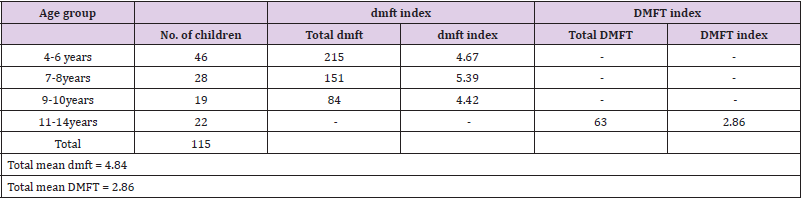
It was found that, 70.43% children visited dentist that day has also visited earlier and 29.57% visited for the first time. Study shows that out of the 81 children who visited dentist that day has also visited earlier 14.81% visited dentist regularly, 66.67% visited whenever there is a problem and 18.52% answered don’t know. It was observed that out of 115 children the oral hygiene status was good in 15.65%, oral hygiene status was fair in 37.39% and 46.96% had poor oral hygiene status Table 5. Study shows that out of 115 children, dental caries was present in 92.17% of them .Out of 115, children 46 were 4 to 6 years children and among 4 to 6 years children total decayed (d), Missing (m), and filled (f), Teeth (t) was 215 which indicated dmft index 4.67, 28 were 7 to 8 years children and among 7 to 8 years children total decayed (d), Missing (m), and filled (f), Teeth (t) was 151 which indicated dmft index 5.39, 19 were 9 to 10 years children and among 9 to 10 years children total decayed (d), Missing (m), and filled (f), Teeth (t) was 84 which indicated dmft index 4.42 and there were 22 children between 11 to 14 years of age and among them total Decayed (D), Missing (M), Filled (F), Teeth (T) was 63 which indicated DMFT index 2.86. the total mean dmft among age between 4 to 9 years was 4.84 and total mean DMFT was 2.86 Table 6.

biomedres-openaccess-journal-bjstr

Table 5: Distribution of the respondents according to oral hygiene status.

biomedres-openaccess-journal-bjstr

Table 6: Mean dmft/ DMFT of the study population according to age group.

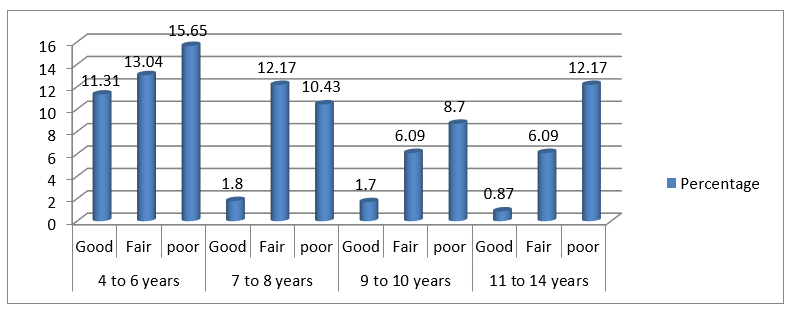
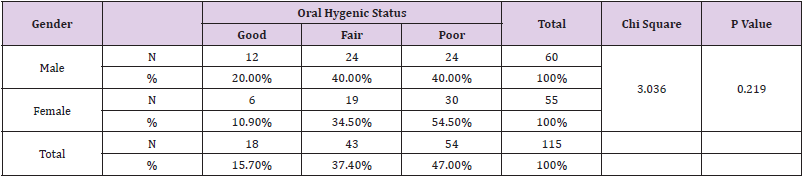
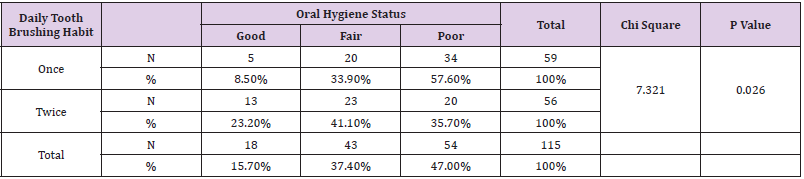
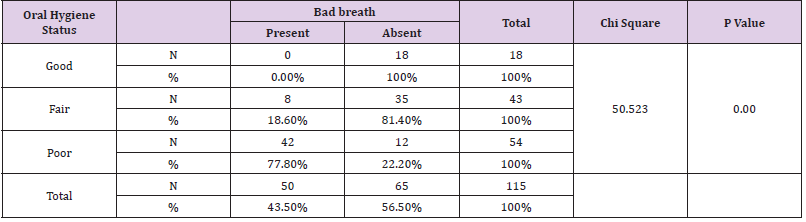
In Figure 4, it was observed from the figure that among 4 to 6 years children the oral hygiene status was good in 11.31%, fair in 13.04%, good in 15.65%, among 7 to 8 years children the oral hygiene status was good in 1.8%, fair in 12.17% and poor in 10.43%, among 9 to 10 years children the oral hygiene status was good in 1.7%, fair in 6.09% and poor in 8.7% and among 11 to 14 years children the oral hygiene status was good in 0.87%, fair in 6.09% and poor in 12.7%. The study reveals that out of 60 male respondents 20.0% had good oral hygiene status, 40.0% had fair and 40.0% had poor oral hygiene status and out of 55 female respondents 10.9% had fair, 34.5% had and 54.5% had poor oral hygiene status (p>0.05). Therefore, there was no statistically significant relationship between gender and oral hygiene status Table 7. Study reveals that 57.6% respondents who brushed their teeth once daily had poor oral hygiene status and 35.7% respondents who brushed their teeth twice daily poor oral hygiene status (p<0.05) (Figures 5 & 6). So, the respondent who were brushed their teeth once daily had greater level of poor oral hygiene status than the respondent who were brushed their teeth twice daily. Therefore, there was statistically significant relationship between frequency of daily tooth brushing habit and oral hygiene status Table 8. Study reveals that 77.8% respondent who had poor oral hygiene status bad breath was present and bad breath was absent in 22.2% respondent who had poor oral hygiene status (p<0.05). So, the respondent who had bad breath oral hygiene status was poor. Therefore, there was statistically significant relationship between oral hygiene status and bad breath Table 9.

biomedres-openaccess-journal-bjstr

Figure 4: Distribution of the respondents according to their age group and oral hygiene status.

biomedres-openaccess-journal-bjstr

Figure 5.

biomedres-openaccess-journal-bjstr

Figure 6.

biomedres-openaccess-journal-bjstr

Table 7: Relationship between gender and oral hygiene status.

biomedres-openaccess-journal-bjstr

Table 8: Relationship between frequency of daily tooth brushing and oral hygiene status.

biomedres-openaccess-journal-bjstr

Table 9: Relationship between oral hygiene status and bad breath.

Discussion

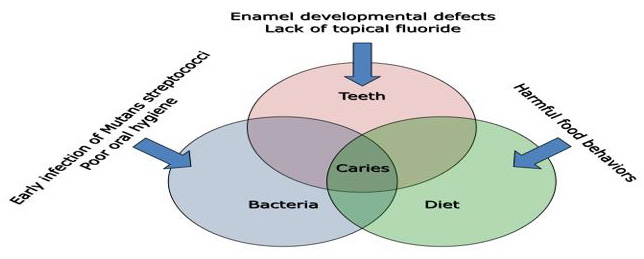
Dental caries is a multi-factorial microbial infectious disease characterized by demineralization of inorganic and destruction of the organic substances of the tooth. Complications may include inflammation of the tissue around the tooth, tooth loss, and infection or abscess formation [12]. The cause of caries is acid from bacteria dissolving the hard tissues of the teeth (enamel, dentin and cementum). Simple sugars in food are these bacteria’s primary energy source and thus a diet high in simple sugar is a risk factor. If mineral breakdown is greater than build up from sources such as saliva, caries results. Gingivitisis a form of gum disease that happens when plaque, a naturally occurring sticky film containing bacteria, builds up on teeth and causes the inflammation of the surrounding gum tissue. Plaque produces toxins that irritate the gums [13]. The most common form of gingivitis, termed plaque-induced gingivitis is reversible with good oral hygiene; however, without treatment, gingivitis can progress to periodontitis, in which the inflammation of the gums results in tissue destruction and bone re-absorption around the teeth, ultimately lead to tooth loss [14]. Lack of awareness about the dental disease and proper treatment facilities are the main cause of poor dental condition [15,16]. Dental caries and periodontal disease are still the most important problems that are frequently seen and observed among children attending to the dental hospitals [17].

Factors related to oral hygiene practices: And it is evident in some study that most of the children brushed their teeth once daily and mainly brushed their teeth before breakfast [3,15]. According to American dental association the ideal tooth brushing time is 2 minutes and 2 times daily after breakfast and after meal. In the present study 98.26% respondents use toothbrush for brushed their teeth, 0% use neem stick for brushed their teeth and 1.74% use finger for brushed their teeth. 98.26% respondents use toothpaste for brushed their teeth, 1.74% use cinder for brushed their teeth and 0% use toothpowder for brushed their teeth. It was observed that most of the respondents didn’t use any tooth cleaning material after dinner at night only 40% respondent did simple gurgle at night after dinner.

Association

Lack of maintenance of proper oral hygiene practices are mainly responsible for poor oral hygiene status. In this study out of 115 children gingival bleeding was present in 41.74% and absent in 58.26%. Therefore, there was statistically significant relationship between oral hygiene status and parents’ total monthly income of the respondent. In India a study found that lower grade participants had poor oral hygiene status compared to higher grade participants [18]. Out of 60 male respondents, 20.0% had good oral hygiene status, 40.0% had fair and 40.0% had poor oral hygiene status and out of 55 female respondents 10.9% had fair, 34.5% had and 54.5% had poor oral hygiene status (p>0.05) [19- 22]. Therefore, there was no statistically significant relationship between gender and oral hygiene status. Respondents (57.6%) who brushed their teeth once daily had poor oral hygiene status and 35.7% respondents who brushed their teeth twice daily poor oral hygiene status (p<0.05). So, the respondent who were brushed their teeth once daily had greater level of poor oral hygiene status than the respondent who were brushed their teeth twice daily. Therefore, there was statistically significant relationship between frequency of daily tooth brushing habit and oral hygiene status [23-28]. Majority respondent (77.8%) who had poor oral hygiene status, had bad breath was present and bad breath was absent in 22.2% respondent who had poor oral hygiene status (p<0.05). So, the respondent who had bad breath oral hygiene status was poor. Therefore, there was statistically significant relationship between oral hygiene status and bad breath.

Conclusion

The findings have resulted from a cross sectional descriptive study done to assess the practices and oral hygiene status among 115 children aged 4 to 14 years attend to Dhaka Dental College and Hospital, Dhaka, Bangladesh. Bad breath was present in 43.48% children and was absent in 56.52% children out of 115 children. Study reveals that 77.8% respondent who had poor oral hygiene status bad breath was present and bad breath was absent in 22.2% respondent who had poor oral hygiene status. So, the respondent who had bad breath oral hygiene status was poor. Therefore, there was statistically significant relationship between oral hygiene status and bad breath. It was observed in this study that most of the children were fond of sugary and carbohydrate foods and drinks and took this kind of food almost every day and they also did not wash their mouth with water after taking any sugary and carbohydrates foods and drinks. In this study out of 115 children dental caries was present in 92.17% and absent in 7.83%. The survey revealed that in the age group 4 to 6 years the dmft index was 4.67, 7 to 8 years the dmft index was 5.39, 9 to 10 years the dmft index was 4.42 and among 11 to 14 years the DMFT index was 2.86. Sugary and carbohydrate foods are main reason of dental caries formation and did not clean mouth with water after taking any sweet and carbohydrate food increase dental caries formation.

Most of the children visited dentist second time and they visited whenever there is a pain or troubles with teeth or gums and for extraction of tooth. To maintain proper oral hygiene practices and oral hygiene status it is necessary to visit a dentist or dental hospital regularly. To maintaining good oral hygiene status simple preventive measures should be followed like proper brushing techniques and brushing the teeth twice daily and eating of less sticky food and avoidence of suger containing food as far as possible and rinsing of the mouth properly after taking sweet food and regular visit to a dentist and dental hospital is beneficial for children.


For more Articles on: https://biomedres01.blogspot.com/
The Effect of Interface Design and Perceived Risk of Customers’ Satisfaction and Loyalty on Online Booking Application

  The Effect of Interface Design and Perceived Risk of Customers’ Satisfaction and Loyalty on Online Booking Application Introduction The ra...