Thursday, July 29, 2021

Saponins from Tribulus Terrestris Linn Plant: Potentials and Challenges for Prevention of Solar Ultraviolet Radiation-Induced Damages and Malignant Transformation


Saponins from Tribulus Terrestris Linn Plant: Potentials and Challenges for Prevention of Solar Ultraviolet Radiation-Induced Damages and Malignant Transformation

Introduction

One of the goals of anticancer therapy and prevention is the discovery of bioactive compounds that are relatively selective to tumor cells and therefore have reduced effects on normal cell growth. In addition, herbal therapy was used for thousands of years for the care of the inflammatory processes. The plants that contain saponins possess a broad range of bioactivities and were been commonly used in folk medicine for their health-promoting properties [1-4]. The genus Tribulus, belonging to family Zygophyllaceae, comprises about 20 species in the world [5] and among them, Tribulus terrestris Linn (TT) is a best-known officinalis herb by alternative medicine [6]. The TT is a perennial creeping plant which grows in subtropical areas and it is also distributed along a wide geographic perimeter that includes China, Japan, Korea, the western part of Asia, the southern part of Europe and Africa. The plant is used both as an individual therapeutic agent or in combination to other formulations of many compounds and food supplements [7]. The fruits of TT were used in traditional oriental medicine for the treat ment of the eye inflammation, skin irritation, abdominal pain, hypertension, cardiovascular disease and to improve sexual function and physical performance in men [8-12].

It is also a very potent diuretic and tonic drug [13,14]. Many active compounds from TT extract have been identified [15-17]. A literature survey showed that TT contains steroidal saponins, natural glycosides, which possess a wide range of pharmacological properties including a strong antioxidant effect, cytotoxic activity, and anti-inflammatory and anticarcinogenic capacities [18,19]. Therefore, the TT saponins have shown a potential photoprotective effect when the human skin cells were exposed UVB irradiation [20]. The numerous biological activities associated with saponins have led to great interest in their characterization and in the investigation of their pharmacological and biological properties. Information on the biological capacities of saponins from variety of sources provided important guidelines for the development and design of new drugs. The focus of this review is to provide an updated overview of various aspects of the biological properties of the saponins extracts of the TT plant, to highlight a photoprotective effect against UVB-induced skin carcinogenesis, and to demonstrate the molecular mechanisms through which TT saponins regulate cell death.

Bioactive Compounds of Tribulus Terrestris

A wide range of compounds have been extracted from TT such as saponins, flavonoids, glycosides, alkaloids and tannins [17,21-31]. Among these compounds, a number of phytochemical studies have demonstrated that saponins are responsible for the biological activities of TT extracts [32-34] and a wide range of pharmacological applications. Structurally, saponins are composed of a lipid-soluble aglycone that consists of a steroidal or triterpenoid skeleton and a water-soluble moiety, composed of sugar residues. The amphiphilic or surfactant properties of saponins derive from hydrophilic properties of the sugar part and lipophilic properties of the aglycone part; this, in turn, determines the ability of saponins to compose the stable aqueous foams and form complexes with membrane steroids and lipid compounds (Figure 1) [35]. Focusing on the phytochemical characteristics of the whole plant extract led to the identification of eleven new furostanol saponins, one new spirostanol saponin, and seven known steroidal saponins [13,21,36].
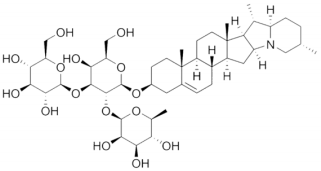
Figure 1: Chemical structure of saponin.

TT Saponins Properties in Cancer Prevention and Treatment of Inflammatory Conditions

Inflammatory diseases are a major cause of morbidity worldwide and non-steroidal anti-inflammatory drugs and steroids are the most common widespread drugs used for the treatment of acute or chronic inflammatory conditions. These drugs possess different side effects such as a gastrointestinal injury that is one of the most common side effect associated with the currently use of the nonsteroidal anti-inflammatory drugs which limit their application. This may be contributing to the current move by wide part of world population towards the officinalis herbs for the treatment of inflammation that characterizes numerous diseases. Actually, herbal medicine is still widely used by about 75-80% of the whole population for primary healthcare because of their efficacy, safety and very little side effects. However, the last few years have seen a major increase in their use in the developed world [37]. A number of medicinal plants were used in developing countries for the management of a number of disease conditions including cancer and inflammatory conditions.

The validation of the traditional assertions of these medicinal herbs will provide scientific basis for the conservation of oriental and tropical medicinal resources, the deployment of the beneficial ones as phytomedicine in the primary health care and the development of potential bioactive constituents as novel key compounds or precursors in drug design. At the class of phytoconstituents belong saponins that are heterogeneous group of naturally occurring surface active glycosides common in a large number of plants [38-39]. Growing evidence for natural products linked with their physicochemical features and numerous biological activities has led to the emergence of saponins as commercially significant compounds with expanding applications in the field of nutrition, cosmetics and pharmaceutical industries [40]. Steroidal saponins are important bioactive compounds for the production of steroidal hormones and drugs [41]. Saponins are used as immunological adjuvants in the formulation of vaccines due to their immune enhancing properties [39].

Later studies have allowed identifying saponins as inductors of cell death by means of several molecular mechanisms. The steroidal saponin constituents obtained from TT are well known to exhibit antimicrobial and cytotoxic effects [19,32,42,43], to induce apoptosis in liver cancer cells [44], as well as having antihyperlipidemic properties [45,46] and improving reproductive function, libido and ovulation [17,47]. Saponin extracts from TT show strong antioxidant effects and some also show the biochemical effects in human cells, such as enzyme inhibition, antiinflammatory and anticarcinogenic capacities [47]. Recently, it was demonstrated the anti-inflammatory effect of saponins from extracts of TT on the pathological process of atherosclerosis. In this study, one of the more significant results was that TT suppressed proliferation of the Vascular Smooth Muscle Cells (VSMCs) induced by angiotensin II [48]. The VSMCs proliferation induced by various growth factors contributes to a variety of pathological processes including atherosclerosis [49]. The VSMC contribute to vessel wall inflammation and to the formation of the fibrous cap providing stability to the plaque [49].

Angiotensin II is the active protein of the renin-angiotensin system and it is involved as a potent growth factor for VSMCs, and it has been reported to be implicated in the VSMCs proliferation and promotes the generation of ROS [50]. TT acts as a potent antioxidant inhibiting the increase of the intracellular ROS and subsequently suppressing the VSMCs proliferation. These findings provide a new insight into the anti-atherosclerotic and antiinflammatory properties of the TT yielding a pharmacological basis for the clinical application in the atherosclerotic process. Tribulusin, gross saponins derived from TT was demonstrated to have a significant protective role against ischemia/reperfusion injury documented in rat hearts and brains in vitro and in vivo [51-54]. Anti-inflammatory effects have been investigated in vitro also with the aqueous extract of TT. In fact, TT extract blocks proliferation and triggers apoptosis in human liver cancer cells through the NF-κB signalling inhibition [55]. A recent study examined the effects of TT extracts demonstrating a strong inhibition of COX-2 and iNOS activity in cultured mouse macrophage cells stimulated with lipopolysaccharide [56]. Some evidence indicates that TT consumption may be useful in lowering serum cholesterol levels and the cardiovascular damage associated with hypercholesterolemia. A recent study examined the effects of TT extracts on the lipid profile and vascular endothelium of the abdominal aorta in New Zealand rabbits fed a cholesterol-rich diet [57]. The serum lipid profiles of animals treated with TT were significantly lower than those fed a high cholesterol diet without TT treatment. In the TTtreated rabbits, TT seems to protect from endothelial damage, indicating that dietary intake of TT can significantly modify serum lipid profiles, decrease endothelial modifications and rupture and may partially repair the endothelial dysfunction resulting from hyperlipidemia [57]. Furthermore, the anti-inflammatory activity of TT has been studied in the arthritic rats revealing a marked decrease of the acute inflammatory response [58], and, in the last years, recent studies demonstrated that the saponins have a conspicuous role in cancer prevention because of their antioxidant, anti-inflammatory, and growth-inhibitory effects [39,59] and are considered of the potent candidates for photoprotective applications [18]. The bioactive characteristics of TT saponins are summarized in Figure 2.
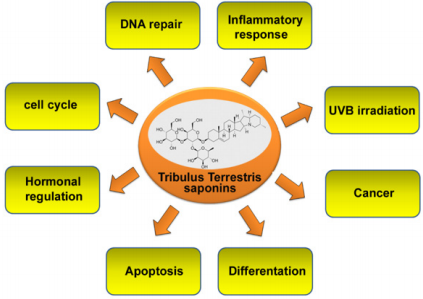
Figure 2: Multiple properties of saponins derived from Tribulus terrestris Linn.

UVB-Dependent DNA Lesions

The production of Reactive Oxygen Species (ROS) that derives from UV skin exposure can cause oxidative damage reacting with DNA and other cellular components proteins, resulting in the alteration of cell metabolism, morphology, differentiation, proliferation and apoptosis of skin cells [60]. These processes can lead to photoaging and skin cancer development. The photoprotective effect of antioxidant is now generally accepted and recently naturally occurring herbal compounds have received notable interesting contributing to the beneficial health effects [61]. UV radiation, in particular the middle wavelength (UVB, range 290- 320 nm), can be harmful to human health because it induces cancer, premature skin aging, immunosuppression, and cell death [62-64]. UV-induced DNA damage is the crucial molecular trigger for many UV-induced effects, such as apoptosis, immunosuppression, and carcinogenesis [65-67]. Although UVB radiation has less than 1% of total solar energy, the major types of DNA damage in the skin are provoked by UVB [68]. To exert its biological effects, UVB must be first absorbed by cellular chromophore, which transforms the energy into a biochemical signal. Subsequent photobiochemical reactions provoke changes in cell and tissue biology resulting in increased photoaging and skin cancer occurrence.

The bases of nucleic acids (DNA and RNA) and proteins are good cellular chromophores [69]. The major classes of UVBinduced DNA lesions are represented by cyclobutane-pyrimidine dimers and pyrimidine-pyrimidone photoproducts. Under normal conditions these photolesions are removed by the Nucleotide Excision Repair (NER) [70]. Xeroderma pigmentosum is a disease which reflects genetic defects in different components of the NER complex. Consequently, patients suffering from this disease are hypersensitive to the induction of genomic mutations by UV and show a dramatically increased incidence of skin cancer [71]. To limit the survival in the presence of irreparable DNA damage, cells die by apoptosis [72]. To induce programmed cell death, UVB uses a variety of cellular signalling pathways. In this case the induction of nuclear DNA damage appears to be the main pathway, since experimental suppression of DNA damage was linked to a strong reduction of apoptosis [72]. UVB was found to directly activate cell surface death receptors, thus inducing the apoptotic pathway. UVB induces the formation of the ROS associated to the mitochondrial damage and furthermore, cytochrome c release was demonstrated to be additionally involved in the apoptotic machinery.

The possibility to add exogenous DNA repair enzymes into the cell contributed highly to the elucidation of the critical role of UVBinduced DNA altered in mediating the various biological effects of UVB, including apoptosis. Following irradiation of cells with UVB, the tumor suppressor gene p53 was found to be upregulated proportionally to the amount of cyclobutane pyrimidine dimers inserted into genomic DNA [73]. p53 appears to be critically involved in the formation of apoptotic keratinocytes [74]. In this context the mitochondrial apoptotic pathway and the regulatory bcl-2 protein family appear to play an important role. The balance of proapoptotic and antiapoptotic members of the bcl-2 protein family addresses whether apoptosis is promoted or prevented [75]. In this scenario, antiapoptotic proteins avoid mitochondrial permeability transition and subsequent release of cytochrome c as well as of ROS into the cytoplasm [76-78]. In addition, UVB is known to be a potent inducer of ROS within the cell. These products have shown themselves to initiate cellular damage and apoptosis [79]. Therefore, ROS have been implicated in cutaneous aging as well as in the pathogenesis of inflammatory skin diseases and of skin cancer [80]. The cytotoxic potential of ROS involves lipid peroxidation leading to an alteration in the structure of cytoplasmic membranes [81] and impairment of the inner mitochondrial membrane resulting in dysfunction of the membrane potential and consequently in cytochrome c release into the cytoplasm [82].

TT Saponins in the Prevention of UVB-Induced Skin Damage: Effect on Apoptotic Pathways

UVB-induced DNA damage is a crucial molecular trigger for sunburn cell formation and skin cancer. The exposure of the skin to solar UVB on earth has both short-term and long-term deleterious wavelength-dependent effects on skin. Short term effects after sun exposure cause tanning and sunburn while, in contrast, long-term exposure to UVB provokes photoaging and photocarcinogenesis. UV radiation is the major etiologic factor in skin cancer because of its potent ability to induce DNA lesions. If the latter are not removed, they can cause mutations and subsequently skin cancer. There have been considerable efforts to search for naturally occurring substances that intervene in photodamage and photoaging. Interestingly, some of these anticancer drugs are developed from natural sources such as plants. Recently, it was found that ginsenoside Rb1, pharmacologically active components of ginseng, a steroidal saponins, inhibits cell apoptosis induced by UVB. This inhibition of ginsenoside Rb1 appears to be caused by a marked reduction in UVB-induced DNA damage, protecting cells through the induction of DNA repair, most likely NER system [83]. Likewise, latterly, it was demonstrated that glycyrrhizic acid, a triterpenoid saponin glycoside, to protect against UVB-mediated photodamage by inhibiting the signalling cascades triggered by oxidative stress, including NF-κB activation, as well as apoptosis in human keratinocyte cell line [84].

The TT saponins may have an important role in cancer prevention because of their antioxidant, anti-inflammatory, and growth-inhibitory properties [13]. Recently, Sisto et al. [20], investigated TT saponins effects on some parameters such as apoptotic pathway in Normal Human Keratinocytes (NHKs) as well as in malignant keratinocytes after exposure to physiological doses of UVB [20]. It has been amply demonstrated that human keratinocytes undergo programmed cell death following UVB exposure. The induction of apoptosis is considered to be a protective function against skin cancer, and the intrinsic apoptotic mechanism has been shown to be critical in this protective mechanism, ensuring the removal of UVB-damaged human keratinocytes and potentially transformed cells [85]. The authors, to demonstrated the protective effect of TT saponins, investigated cell survival of human epithelial keratinocytes derived from normal skin tissue (NHEK) after UVB irradiation demonstrating that TT saponins significantly increased their resistance to UVB and seem to help NHEK to preserve the typical epithelial morphology. Since a controlled apoptotic response is vital for skin cells, as it prevents the replication of cells containing damaged DNA, TT saponins determine cellular survival by inhibiting apoptosis.

Infact, TT saponins decreased the levels of caspases involved in the intrinsic apoptotic pathway induced by UVB irradiation and prevented both the leakage of cytochrome c from mitochondria and UVB-induced DNA fragmentation [20]. To investigate the diverse effect of TT saponins treatment in normal keratinocytes and malignant cells after UVB irradiation, Sisto et al. [20], tested the effects of TT saponins on the apoptotic pathway in human Squamous Cell Carcinoma (SCC), demonstrating that TT saponins treatment reduced viability of the SCC cell and increased the DNA ladder formation following UVB exposure. These data suggest that saponins exert a wide range of differential activities in normal versus malignant cells determining the inhibition of the tumor growth of cancerous cells and triggering a selective apoptotic process [20]. This mechanism was reported in Figure 3.
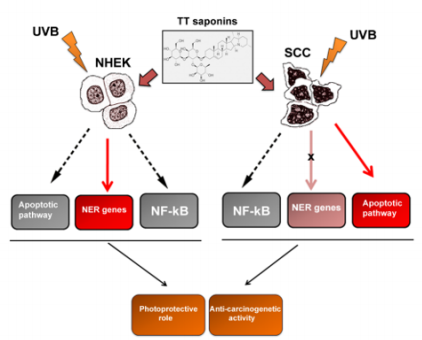
Figure 3: Schematic representation of the hypothetical mechanisms adopted from TT saponins to prevent UVB radiationinduced DNA damages, apoptosis and malignant transformation. The scheme shows that, in Normal Human Epithelial Keratinocytes (NHEK) exposed to physiological doses of UVB, TT saponins inhibit the activation of the intrinsic apoptotic pathway, determine an enhancement of NER genes expression to repair DNA damages, and block UVB-mediated NFκB activation. In already transformed Squamous Cell Carcinomas (SCC), TT saponins provoke an enhanced apoptosis in response to UVB irradiation, a block of the proliferation of human cancer cells through inhibiting NF-κB signalling, although an unchanged expression of the NER genes was revealed.

Efficacy of TT Saponins DNA Damage Repairing Mechanism in UVB-Exposed NHEK

UVB exposure cause, as major event, the trigger of apoptotic pathway of keratinocytes and this results into epidermis sunburn cells induction [73]; The formation of sunburn cells in UV-exposed skin indicates the severity of DNA damage and this underlines the importance of DNA repair mechanisms in UVB-exposed skin cells. If cells are not repaired, they may continue to replicate and may lead to cutaneous malignancies. This means that DNA repair process is a protective mechanism [86]. The NER system is one of the major mechanism of DNA repair in mammalian cells [87]. NER is an excision mechanism that removes DNA damage induced by Ultraviolet Light (UV) characterized by the generation of thymine dimers and 6,4-photoproducts. Recognition of the damage leads to removal of a short single-stranded DNA segment that contains the lesion. The undamaged single-stranded DNA remains and DNA polymerase uses it as a template to synthesize a short complementary sequence. DNA ligase realized the final ligation to complete NER and form a double stranded DNA [87]. There is a list of major proteins involved in NER in mammalian cells, and, between these, Xeroderma pigmentosum, complementation group C, also known as XPC and Xeroderma pigmentosum, complementation group A, also known as XPA, are two proteins which deficiencies are linked to alterations in the NER system [87,88].

Importantly, TT saponins were demonstrated to have the capacity to repair DNA damage in UVB-exposed cells in the early phase of exposition. When NHEK were exposed to UVB and treated or not with TT saponins, the levels of XPA and XPC NER genes expression increased significantly as compared to non-UVB-exposed control NHEK and the protective effect of TT saponins against UVB irradiation resulted in a selective DNA damage response [20]. On the contrary, in already transformed malignant SCC, the levels of the XPA and XPC genes expression resulted not significantly altered following UVB irradiation, thus demonstrating that TT saponins increase the abundance of NER transcripts in UVB-irradiated healthy keratinocytes, but not in malignant transformed cells [20]. Therefore, TT saponins, acting on the NER system as molecular target, may have a preventive action on the risk of developing UVB-induced skin cancer, allowing the cells more able to repair the photodimers through nucleotide excision repair system (Figure 3).

NF-κB as Molecular Target of TT Saponins

In many cell types, the activation of the NF-κB signalling cascade serves to protect cells from a variety of cellular stresses that could lead to malignant transformation [89,90]. In most tumors, there is higher NF-κB expression and activity when compared to the adjacent normal tissues, but such expression strongly depends on the tumor cell types and stage of development [91]. Many evidence support the fact that alteration of the NF-κB signalling pathway lead to changes in keratinocytes cell growth and epidermal thickness, causing a homeostatic breakdown, resulting in a loss of function [92]. Furthermore, a variety of agents which determine tumorigenesis (such as UVB radiation, phorbol esters and TNF-alpha), are noted to modulate NF-κB signalling, suggesting that NF-κB plays a role in suppressing carcinogenesis [93-95]. In this contest, TT saponins, through inhibiting NF-κB signalling, have been shown to block the proliferation of human cancer cells [55]. Recently, Sisto et al. [20] demonstrated that the inhibition of the NF-κB pathway could be responsible for the chemopreventive properties of TT saponins against UVB-mediated skin carcinogenesis [20]. Exposure to UVB irradiation provokes an activation of NF-κB, both in normal and malignant cells, as measured by an increase in specific DNA binding and, like in normal cells, also in malignant cells, an inhibition of NFκB activation occurs following TT saponins treatment that demonstrate an anti-tumorigenic activity of T. Terrestris L. (Figure 3) [20].

Conclusion

Tribulus terrestris L. is a well-known plant used in indigenous medicine especially in urogenital system, nervous, cardiovascular, and musculo-skeletal system disorders. Modern literature recognizes multiple beneficial properties to TT biologically active phytoconstituent and saponins, in particular, have antitumor effect on many cancer cells; actually, there are significant scientific reports and data available regards the photoprotective efficacy of these TT constituents and recent research demonstrated that TT saponins resulted to have a dual-efficacy to prevent malignant transformation of epithelial cells caused by UVB exposure. In fact, TT saponins, on one hand, protect healthy keratinocytes by UVB irradiation-dependent damage and, on the other, enhance UVBcaused apoptosis in squamous cell carcinoma, thus suggesting that TT saponins possibly work as UVB-damage sensors to exert their biological action. Together, these findings encourage further mechanistic and in vivo studies for developing TT saponins as a promising chemopreventive and/or chemotherapeutic agent against UVB-caused skin alteration and tumors in humans

Acknowledgement

We are grateful to M.V.C. Pragnell, B.A., for critical reading of the manuscript. This study was supported by Grant (No: 20216000056) from the Italian Ministry for Universities and Research.


For more Articles: https://biomedres01.blogspot.com/


Influence of Industrial Noise on Prevalence of a Chronic Pathology at Workers of the Metallurgical Enterprise, Depending on Age


Influence of Industrial Noise on Prevalence of a Chronic Pathology at Workers of the Metallurgical Enterprise, Depending on Age 


Opinion

Considerable contingents of workers of all industries are exposed to influence of industrial noise. Therefore studying of influence of noise on various categories of workers actually and socially significantly. As a research objective studying of influence of noise on prevalence of a chronic pathology at workers of various age categories by results of medical inspection of 2018 with use of methodology of the analysis of professional risk of scientific research institute of medicine of work of a name of academician N.F. Izmerov served [1]. In total 11497 persons, including, working in the conditions of noise above the specification 80 А - 3501 are examined. Prevalence of a chronic pathology (РCP) at working in the conditions of the raised noise levels and without influence of noise of the same age was compared. For criterion of communication of disease with noise influence the indicator of relative risk - RR is taken. By research it is established that accumulation of cargo of illnesses at working in the conditions of noise occurred advancing rates in comparison with other population of workers of the same age groups that was expressed in value RR> 1 in the majority of groups.

At young workers about 25 years are elderly at the work experience in noise of 0,5-7 years already the raised relative risk of development of a pathology of systems of blood circulation, respiratory organs, kostno-muscular, endocrine systems, a skin (RR 1,1-1,3 is observed; small degree of communication with working conditions); РCP digestion systems (RR=1,7; communication of average force, Р <0,05). At this age prevalence of hyperglycemia in 1,6 times, new growths - in 2,0 times above, then in control; prevalence (43,6 %) and relative risk (1,3) gynecologic pathologies maximum from all age groups. Persons of age group of 26-35 years, to the changes specified above, have raised in 1,7 times, in comparison with control, risk РCP of an ear and in 1,6 times - mental frustration (average degree of communication); were observed maximum of all groups РCP of illnesses of nervous system (31,1 %) and risk of new growths (RR=2,2; Р <0,05), the raised risk of prevalence of significant risk factors chronic diseases (cardiovascular, oncological): the raised arterial pressure, superfluous weight of a body, hyperglycemia and hyperholesterinemia (RR 1,1-1,5; degree communication with working conditions small). At workers of an age category of 36-45 years at noise influence, along with growth РCP of the majority listed above diseases, it is revealed the greatest РCP and relative risk of formation of a pathology of respiratory organs (14,2 % and 1,7; communication of average force, Р <0,05), considerable growth of risk of a pathology of an ear and a skin (RR 3,1 and 3,7; communication degrees high and very high).

At the age of 46-55 years higher prevalence РCP of respiratory organs, systems of blood circulation, digestion, kostno-muscular system, diseases of an ear, a skin, the raised arterial pressure and blood glucose (RR 1,2-2,2 is revealed authentically; degree of communication from small to high, Р <0,05), and РCP systems of digestion and new growths, РCP all chronic diseases in the sum are maximum (19,0 %, 5,1 % and 99,6 % accordingly). At persons at the age of 56 years also is more senior it is marked maximum РCP blood circulation systems (65,4 %), kostno-muscular (65,0 %), endocrinal systems (32,5 %), eyes (94,5 %), skin (14,8 %), raised weights of a body (78,5 %), arterial pressure (62,0 %), blood glucose (30,8 %) and cholesterol (72,2 %). Sharp jump РCP of a pathology of an ear, in comparison with group of 46-55 years (from 5,6 % to 16,0 % is revealed; RR=3,1, high degree of communication with working conditions, Р <0,05). In the senior age group the risk of a pathology of organs of vision (1,1) is marked raised, in comparison with control. High prevalence of a chronic pathology and biological risk factors does senior citizens by the most vulnerable to influence of harmful production factors.

The raised risk of development of a pathology of an ear starts to be shown at the work experience in noise of 8 years and more when significant become combinational changes from noise and age influence. In all age groups prevalence of a pathology of system of blood circulation, kostno-muscular system, a skin, raised blood glucose, in 4 of 5 groups - an ear, respiratory organs, system of the digestion, the raised arterial pressure, and distinction between exposed to influence of noise and not exhibited persons on РCP an ear (RR 2,1-3,1 were observed raised, in comparison with control; high degree of relationship of cause and effect of infringements of health with work) and the raised arterial pressure (RR 1,2-1,3; small degree of communication) at workers were more senior 36 years are statistically significant (Р <0,05). The resume. Noise has proved as harmful production factor, increasing risk of occurrence of a pathology of many bodies and organism systems in all age groups, since first years of work. Traditionally improvement programs join, first of all, workers with a long standing. Proceeding from results of our research, young workers need improving actions in the conditions of noise influence also.

For more Articles: https://biomedres01.blogspot.com/
Ovarian Failure with Absent Uterus in A Rare Mosaic Turner’s Syndrome (45, X/47, XXX)

 Ovarian Failure with Absent Uterus in A Rare Mosaic Turner’s Syndrome (45, X/47, XXX)

Introduction

Turner’s syndrome (TS) is one of the most common sex chromosomal disorder, affecting one in 2000 live-born females [1]. Forty-five% of patients were associated with the classical monosomic form (45, XO), while the remaining are various mosaic forms [2-4]. The severity of clinical manifestation is in part related to the type of chromosomal abnormalities, the time at which chromosomal disjunction occurred and the proportion of compromised cells in each tissue [5]. The development of uterus, fallopian tubes, and vagina are usually normal [4-5]. We report a rare case of a 14-year-old girl who presented with short stature. She was found to have phenotypic features of turner syndrome, and ovarian failure with absent Mullerian structures with Karyotyping of 45XO/47XXX.

Case Report: A 14-years-old female presented to the pediatric endocrine clinic, King Khalid University Hospital, Riyadh, Saudi Arabia with short stature and stunted growth. She was the product of preterm delivery of a 35 weeks gestation with birth weight of 1.8kg. Her parents are not consanguineous and all of her siblings are healthy individuals.

At that time, her height was 114cm (far below the 3rd centile for normal population growth chart). Her weight was 25kg (on the 3rd centile). She was found to have phenotypic features of turner syndrome in the form of short stature, short fourth metacarpal bone, ptosis, shield chest, webbed neck and cubitus valgus. Her breast and pubic hair development were Tanner’s stage I at age of 10 years then progressed to tanner 3 over the last 4 years. her external genital is of normal female phenotype. Examination of the cardiovascular, respiratory, and neurological systems was normal. Laboratory investigations revealed normal hematological and biochemical parameters. She was investigated with a provisional diagnosis of Turner syndrome. Thyroid panel was normal, Lipid profile was normal and celiac antibodies were within normal rang. Ovarian failure is reflected in the form of marked elevations in serum follicle stimulating hormone (FSH) 41.86IU/L, luteinizing hormone (LH) 16.25IU/L with low ESTARDIOL 18.35nmol/l and TESTOSTERN 0.09nmol/l.

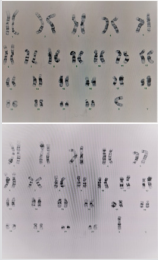
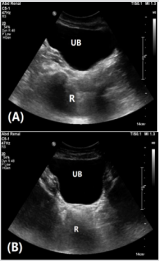
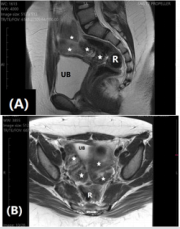
Echocardiography was normal. Chromosomal analysis (Figure 1): identification of the Karyotyping was made by G-banding or Q-banding method. The karyotype of all of the 45 cultured peripheral lymphocytes using a high-resolution technique revealed 45 chromosomes with one X chromosome missing (45, X monosomy). fluorescent in-situ hybridization (FISH) in peripheral blood lymphocytes was carried out using the CEPX (DXZ1) and Y (SRY) DNA Probe panel (Abbott USA) to screen for the copy number of chromosomes X and Y and the presence of the SRY gene region. A total of 500 interphase nuclei were scored for each chromosome signal pattern suggests the presence of two clones (45X/ 47XXX). Clone with monosomy for chromosome X which is consistent with Turner’s syndrome in 88% of scored nuclei. Clone with three copies of X chromosome in 12 % of scored nuclei. No detected SRY gene. Her pelvic ultrasound revealed uterus, and cervix (Figure 2). These findings were confirmed by MRI of the pelvis (Figure 3). Other organs like kidneys, pancreas, liver, and adrenals were normal.

Figure 1: Karyotype, showing Chromosomal Pattern of Turner’s syndrome (mosaic, 45XO, 47XXX).

Figure 2: Ultrasound pelvis in mid-sagittal (A) and axial (B) planes demonstrating absent uterus and ovaries. Urinary bladder (UB) and rectum (R).

Figure 3: MRI pelvis in mid-sagittal.

A. and axial

B. planes demonstrating absent uterus and ovaries with bowel loops (stars) filling the space between urinary bladder (UB) and rectum (R).

Discussion

Turner syndrome (TS) is one of the most common sex chromosomal disorders, affecting 1 in 2000 live births females. It is characterized by short stature, cubits valgus, webbed neck, nail dysplasia, shield-like chest, widely placed nipples, lymphedema of hands and feet, low set ears, genus valgus, horse-shoe kidney, and congenital heart disease and the most common of which is coarctation of aorta Other clinical features include streak ovaries that leads to primary amenorrhea or premature ovarian failure. The ovaries usually develop normally at first, but the egg cells die prematurely and most of the ovarian tissue degenerates. Premature ovarian failure is confirmed by failure in the progress of puberty and primary amenorrhea which was supported by hormonal studies of low estradiol and very high gonadotrophins levels and was confirmed by ultrasonography (US) and magnetic resonance imaging (MRI) [1-7]. Ultrasonography and magnetic resonance imaging (MRI) have been shown to be useful in the evaluation of pediatric patients with Turner’s syndrome [8-10].

Conclusion

Ultrasonography and MRI of pelvis are necessary tools in the assessment of patients with Turner’s syndrome.

Acknowledgment

The authors would like to than Mr. Abdulrahman N. AL-Jurayyan for his help in preparing this manuscript.

For more Articles: https://biomedres01.blogspot.com/


Wednesday, July 28, 2021

Associations Between Health Education, Hygiene Facilities, Handwashing Knowledge and Practice Related to Diarrheal Disease Prevention among Schoolchildren after Typhoid Outbreak in Rumphi District, Malawi: A Cross Sectional Survey


Associations Between Health Education, Hygiene Facilities, Handwashing Knowledge and Practice Related to Diarrheal Disease Prevention among Schoolchildren after Typhoid Outbreak in Rumphi District, Malawi: A Cross Sectional Survey

Introduction

Prominence of Typhoid Fever

Typhoid fever is a global health challenge and burden. Crump, Luby [1] estimated that morbidity and mortality of typhoid fever were more than 21,650,000 and 216,000 respectively. High incidence of typhoid fever (> 100 /100,000 cases per year) were estimated to prevail in Central Asia and South-East Asia [1]. Ochiai, Acosta [2] conducted a surveillance of typhoid fever in China, India, Indonesia, Pakistan and Vietnam between 2001 and 2004. The incidence of typhoid fever ≥ 3 days for those age > 0 and 5-15 were 108/100,000 and 171/100,000 respectively. The incidence of contracting Salmonella Typhi for fever cases aged > 0 and 5-15 were 2.2% and 2.4% respectively. Pakistan, India, and Bangladesh were the three countries in the world that together account for about 85% of the world’s cases of typhoid fever identified [3]. The Middle East, North East Asia, Latin America, Caribbean and Africa were regarded as regions of medium incidence of typhoid fever (10-100/100,000 cases per year) [1]. In Africa, incidence of typhoid fever of 50 /100,000 cases were reported in 1994 [4]. However, the figure may not reflect undiagnosed cases. There were limitations on the study of incidence and burden of typhoid fever in Africa due to few laboratories to carry out clinical bacteriology to perform blood culture, and inadequate cheap reliable rapid laboratory diagnostic tools [5].

Risk Factor of Typhoid

Consumption of water contaminated with Salmonella Typhi and social gathering were found associated with a higher risk of contracting typhoid. Farooqui, Khan [6] conducted a cohort study of typhoid fever cases (n = 100) with temperature > 38°C since the onset of outbreak, abdominal discomfort, diarrhoea, vomiting and weakness in Karachi, Pakistan in 2004. Salmonella enterica serovar Typhi was found in 65% and 100% of the household and well water samples in the cases’ living area. Salmonella Typhi was also found in 22% of clinical stool samples. Muti, Gombe [7] conducted a casecontrol study of suspected cases (n = 115) and their neighbour as controls (n = 115) in Dzivaresekwa Suburb of Harare City, Zimbabwe between October and December 2011. Social gathering (OR = 11.3, 95% CI [4.3-29.95]), drinking well water (adjusted OR = 5.8, 95% CI [1.90-17.78]) and sewer pipe burst at home (adjusted OR = 1.20, 95% CI [1.10-2.19]) were associated with higher risk of contracting typhoid. Salmonella Typhi was found in 21% of stool, urine or blood samples of cases. Contamination of water and hands were found associated with higher risk of contracting typhoid. Anand and Ramakrishnan [8] conducted a retrospective cohort study of Indian in a village with typhoid outbreak in Thar Desert of Rajasthan in May-July 2007. The incidence of typhoid fever for those aged > 0 and 10-14 were 10% and 28% respectively. Drinking water from government tanks was associated with higher risk of contracting typhoid (RR = 11.1, 95% CI [3.7-33]), while faecal material was found in 67% of water sample from government tanks. Widal agglutination tests were found positive in 61% of serum samples. Mbakaya, Mukora-Mutseyekwa [9] conducted a case-control study of cases suffering from typhoid (n = 50) and controls (n = 50) in Kaziwiziwi coal mine in Rumphi District, Malawi between May and June, 2012. Untreated water from a nearby river (OR = 2.7, 95% CI [1.2, 6.3], p = 0.0176) and a lack of handwashing facility after toilet (OR = 2.6, 95% CI [1.1, 6.1], p = 0.0236) were associated with higher risk of contracting typhoid.

Population at Risk

Schoolchildren should be a target population in disease prevention because they are one of the most vulnerable groups in the community. Results from literature indicated that typhoid is wide spread across much of the continent, such that in Egypt, Kenya and South Africa, typhoid has been described as a major health problem in schoolchildren [5]. Students clustered in the same setting during school days, which increase the chance of disease transmission. Therefore, school is one of the target settings of infection control in the public health agenda.

Intervention for Infection Control

Experimental studies showed that water treatment and hand hygiene education were effective in reducing illness and sick leave rate. Talaat, Afifi [10] conducted an RCT of grades 1-3 (n = 44451) in elementary schools (n = 60) in Cairo, Egypt between February and May, 2008. Hand hygiene campaign (wash hands twice each day, receiving health messages) was associated with lower odds of absenteeism due to influenza-like illness (OR = 0.68), diarrhea (OR = 0.55) and conjunctivitis (OR = 0.49). Patel, Harris [11] conducted an experimental study of grades 4-8 (n = 327) among ordinary schools (n = 42) in Nyanza province, Kenya between 2007 and 2009. School-based hygiene and water treatment programs was associated with lower estimated median of any kinds of illness (diarrhea, cough/difficulty breathing, rhinorrhea/coryza, or fever) (EDM = −3, 95% CI [−4, -1]) and acute respiratory illness (fever and cough) (EDM = −2, 95% [−3, -1]) in intervention group.

Typhoid Outbreak Control in Malawi

A typhoid outbreak occurred from 21st May to 15th June in 2012 at Kaziwiziwi coal mine and the surrounding villages situated in the eastern and mountainous part of the Rumphi District, Malawi. It was declared by the Malawi Ministry of Health (MoH) after lab confirmation. An outbreak investigation was launched and infection control was implemented. During the period, residents of surrounding villages and schoolchildren were given treatment, prophylaxis and health education on how to prevent typhoid and diarrheal related infections such as endemic malaria, irregular events of diarrhoea and respiratory tract infections which were common in the area throughout the year [12]. Intervention for the public included components such as health education on typhoid fever to raise awareness among public; distributing chlorine for water treatment for those who were affected; construction of pit latrines since there were few and some homes did not have pit latrine; constructing hand washing facility near toilet and in homes; banning the sale of locally prepared sweet beer; and use of treated water as people were using untreated water from a river. Key messages of health education in schools in the catchment area for Kaziwiziwi coal mine were using potable drinking water (treated with sodium hypochlorite, commonly known as chlorine); using pit latrines; washing hands with soap at the 5 critical times such as after using latrine and before food preparation; and consumption of thoroughly cooked foods. There was no follow up, however, on the effects of the interventions on hand hygiene knowledge and practice among the schoolchildren. Results from the follow up may inform improvement, development and generalisability of interventions for children and adolescents, whose incidence of typhoid was higher than general public according to literature.

Aim

The study aim was to investigate the associations between health education, hygiene facilities, handwashing knowledge and practice related to diarrheal disease prevention among schoolchildren after typhoid outbreak in Rumphi District, Malawi.

Objectives

The study objectives are to investigate

a) The location of students’ school (outside/inside catchment area for Kaziwiziwi coal mine) at the time of typhoid fever outbreak (within academic year of 2012-13) and at the time of data collection (within Nov-Dec 2017).

b) The reception of education about diarrheal disease (including typhoid) prevention among schoolchildren at the time of typhoid fever outbreak (within academic year of 2012- 13) and within 2 years preceding data collection (within NovDec 2015- Nov-Dec 2017).

c) The hygiene facilities, handwashing knowledge and practice among schoolchildren at the time of data collection (within Nov-Dec 2017).

Hypothesis

The alternative hypotheses are that

a) The school location by time interaction has a significant effect on the reception of education about diarrheal disease (including typhoid) prevention.

b) The reception of education about diarrheal disease (including typhoid) prevention has a significant effect on the handwashing knowledge.

c) Hygiene facilities has significant effect on handwashing practice.

d) Handwashing knowledge has significant effect on handwashing practice.

Methods

Design

The study design was cross sectional survey.

Ethical Considerations

Ethical approval was obtained from the National Health Sciences Research Committee, Malawi (Approval number: 1805). Clearance was obtained from the District Education Management Office (DEMO), Malawi and the headmasters of the schools. Participants were informed of the study nature, purpose and objectives. Participants were informed that participation is voluntary and they can freely withdraw without penalty. Written informed consents were obtained from participants’ parents or guardians prior to data collection. Informed consents were also obtained from students. Privacy, anonymity and confidentiality were ensured. Real name of student was not required and students were identified with code. Access of data was restricted to primary researcher and research assistants.

Sampling

A research assistant recruited schools and their students by using convenience sampling method. The recruitment period was within the Nov-Dec 2017 in Rumphi District, Malawi. Between the time of typhoid fever outbreak (within academic year of 2012-13) and the time of data collection (within Nov-Dec 2017), school of students may change, either located outside or inside the catchment area for Kaziwiziwi coal mine in the Rumphi District.

Inclusion

The inclusion criteria at school level were schools within catchment area for Kaziwiziwi Coal Mine, and received health education about diarrheal disease (including typhoid) prevention in 2012. The inclusion criteria at student level were students studying grade 7-8, and without physical, mental or learning disability. These are students who were supposed to be in junior classes during the typhoid outbreak in 2012/2013 academic year.

Assessment

A research assistant delivered the self-administered questionnaires to students recruited. The data collection was done within the Nov-Dec 2017 in schools recruited. Questionnaires were completed in school setting for the convenience of mass delivery and collection of questionnaires.

Instrument

The questionnaire used was semi structured. Students were required to fill in the blanks for items related to demographic characteristics such as school, grade, age, gender, religion, as well as items related to perceived activities for diarrheal disease (including typhoid) prevention and handwashing steps/technique. Dichotomous and Likert scales were used to assess items related to domains of health education, hygiene facilities, handwashing knowledge and practice. Knowledge score and practice score were sum of item scores within a domain respectively

Translation

The primary researcher and research assistants developed and translated the questionnaire. The target population was Malawi students therefore the questionnaire was prepared in local language and an English version for international readers. The English version was translated into Tumbuka by the primary researcher. Then, the Tumbuka version was translated back into English by a research assistant. Both English versions were compared by another research assistant who found no major discrepancy between the versions.

Analysis

IBM SPSS 21 was used for data analysis. All of the items have missing < 7.2%. There were 87.5% of items with missing < 3%. No imputation was done for missing < 10%. The significance level was set at .05. Age of respondents was analysed with one way ANOVA. Gender, grade and religion between schools were analysed with Pearson’s chi square test.

Model

Mixed model was adopted to fit data. The calculation of df was based on residual method. Robust covariance estimator was used. Reception of education about diarrheal disease (including typhoid) prevention from health personnel was a dichotomous variable. Binomial distribution and logit link function were specified. The fixed effects were academic year, school location, and their interaction. The covariance type of repeated measures was specified as first order autoregressive. Histogram of Knowledge score was checked, the score roughly followed a normal distribution. Normal distribution and identity link function were specified. The fixed effects were reception of education about diarrheal disease (including typhoid) prevention from health personnel (2012-13) (HP1), health personnel (Nov-Dec 2015- Nov-Dec 2017)(HP2), other people (Nov-Dec 2015- Nov-Dec 2017)(OP2) and their interaction. The covariance type of random intercepts among schools was specified as diagonal.

Histogram of Practice score was checked, the score followed a normal distribution. Normal distribution and identity link function were specified. The fixed effects were Well as source of water at home, Well as source of water at school, River as source of water at home, River as source of water at school, Pipe as source of water at home, Pipe as source of water at school, Borehole as source of water at home, Borehole as source of water at school, Handwashing facility at home, Handwashing facility at school, Knowledge score. There were 100% and 99.2% of the respondents reported having latrine at home and at school respectively. Therefore, latrine was not included as fixed effect of Practice score. The covariance type of random intercepts among schools was specified as diagonal.

Assumption Check

Boxplots of Pearson residuals between schools, Q-Q plot of Pearson residuals, scatterplot of Pearson residuals against predicted values, and LOESS curve calculated with Epanechnikov’s kernel fitting through 50% of points on the scatterplot were checked. There were no significant violations of assumptions of independence of observations, normality, homoscedasticity and linearity.

Results

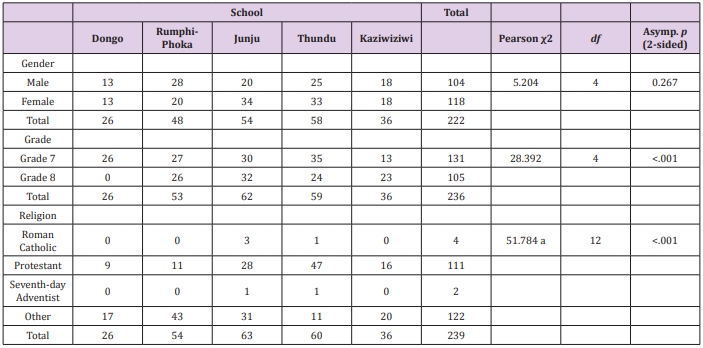
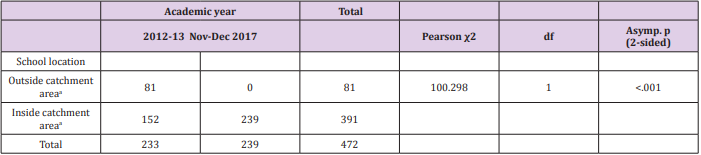
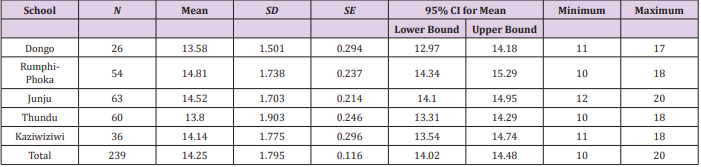
The mean age of respondents in Total was 14.25 (95% CI [14.02, 14.48], SD = 1.795, range = 10-20) (Table 1). There was no heterogeneity of variance (Levene (4, 234) = 0.964, p = 0.428) (Table 2). There was significant difference in age of respondents between schools (F (4, 234) = 3.763, p = 0.005), supported by robust test of equality of means such as Welch (4, 99.385) = 3.934 (p = 0.005) and Brown-Forsythe (4, 211.118) = 3.902 (p = 0.004). There were significant differences in Grade (Pearson χ2 (4) = 28.392, p <.001) and Religion (Pearson χ2 (12) = 51.784, p <.001) between schools (Table 3). However, there were 10 cells (50.0%) having expected count less than 5 in the crosstab of religion between schools. There was significant difference in school location (Pearson χ2 (1) = 100.298, p <.001) between academic years (Table 4).

Table 1: Descriptive statistics of age of respondents (Nov-Dec 2017).

Table 2: Inferential statistics of age of respondents (Nov-Dec 2017).

Note: a Asymptotically F distributed.

Table 3: Crosstab of demographic characteristics between schools (Nov-Dec 2017).

Note: a10 cells (50.0%) have expected count less than 5. The minimum expected count is 22.

Table 4: Crosstab of school locations between academic years (2012-13, Nov-Dec 2017).

Note: afor Kaziwiziwi coal mine.

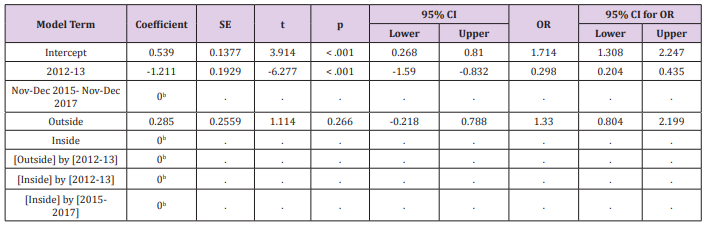
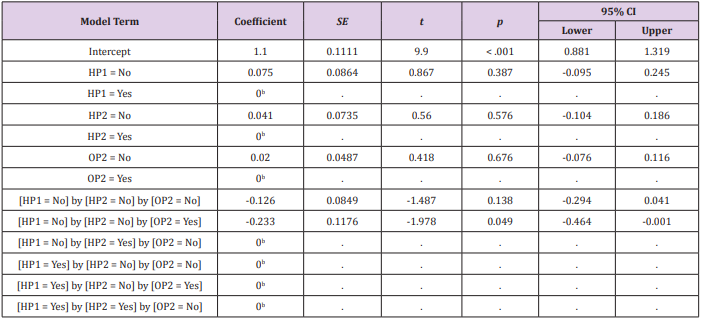
The fixed effect of Academic year (2012-13/ Nov-Dec 2015- Nov-Dec 2017) (F (1, 446) = 39.397, p < .001) was significant while controlling for other fixed effects (Table 5). Compared with NovDec 2015- Nov-Dec 2017, 2012-13 (OR = 0.298, 95% CI [0.204, 0.435], p < .001) was significantly associated with lower odds of reception of education about diarrheal disease (including typhoid) prevention from health personnel (Table 6). The fixed effect of OP2 (F (1, 213) = 10.621, p = 0.001) was significant while controlling for other fixed effects (Table 7). [HP1 = No] by [HP2 = No] by [OP2 = Yes] interaction (B = -.233, 95% CI [-.464, -.001], p = .049) was significantly associated with lower (worse) Knowledge score (Table 8). The random effect of intercept (σ2 = .012, 95% CI [.002, .069], Z = 1.107, p = .268) was insignificant.

Table 5: Fixed Effects a on reception of education.

Note: Probability distribution: Binomial

Link function: Log

a) Target: About diarrheal disease (including typhoid) prevention from health personnel

Table 6: Fixed Coefficients a on reception of education.

Note: Probability distribution: Binomial

Link function: Log

a) Target: About diarrheal disease (including typhoid) prevention from health personnel

b) This coefficient is set to zero because it is redundant.

Table 7: Fixed Effects a on Knowledge score.

Note: Probability distribution: Normal

Link function: Identity

a) Target: Knowledge score

Table 8: Fixed Coefficients a on Knowledge score.

Note: Probability distribution: Normal

Link function: Identity

a) Target: Knowledge score

b) This coefficient is set to zero because it is redundant.

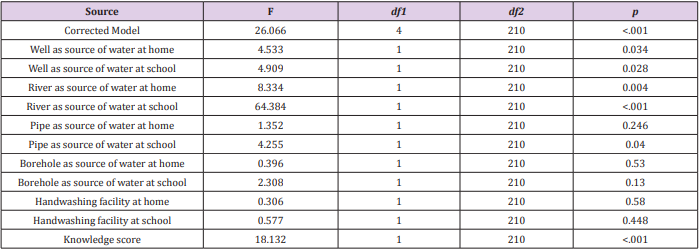
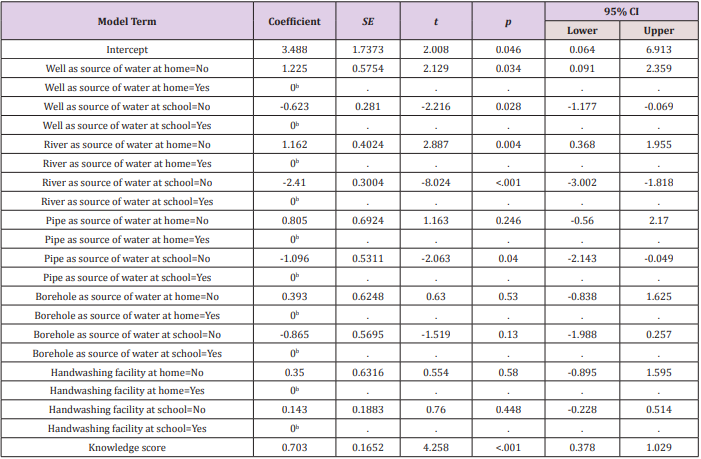
The fixed effects of Well as source of water at home (F (1, 210) = 4.533, p = 0.034), Well as source of water at school (F (1, 210) = 4.909, p = 0.028), River as source of water at home (F (1, 210) = 8.334, p = 0.004), River as source of water at school (F (1, 210) = 64.384, p <.001), Pipe as source of water at school (F (1, 210) = 4.255, p = 0.04), Knowledge score (F (1, 210) = 18.132, p <.001) were significant while controlling for other fixed effects (Table 9). Compared with Well and River as source of water at home=Yes, Well as source of water at home=No (B = 1.225, 95%CI [0.091, 2.359], t = 2.129, p = 0.034) and River as source of water at home=No (B = 1.162, 95%CI [0.368, 1.955], t = 2.887, p = 0.004) were significantly associated with higher (better) Practice score (Table 10).

Table 9: Fixed Effects a on Practice score.

Note: Probability distribution: Normal

Link function: Identity

a) Target: Practice score

Table 10: Fixed Coefficients a on Practice score.

Note: Probability distribution: Normal

Link function: Identity

a) Target: Practice score

b) This coefficient is set to zero because it is redundant.

Compared with Well, River and Pipe as source of water at school=Yes, Well as source of water at school=No (B = -0.623, 95%CI [-1.177, -0.069], t = -2.216, p = 0.028), River as source of water at school=No (B = -2.41, 95%CI [-3.002, -1.818], t = -8.024, p <.001), Pipe as source of water at school=No (B = -1.096, 95%CI [-2.143, -0.049], t = -2.063, p = 0.04) were significantly associated with lower (worse) Practice score. Knowledge score (B = 0.703, 95%CI [0.378, 1.029], t = 4.258, p <.001) was significantly associated with higher (better) Practice score. The random effect of intercept was redundant.

Discussion

The hypothesis of significant effect of school location by time interaction on the reception of education about diarrheal disease (including typhoid) prevention was not supported. According to the study results, the location of students’ school across time did not have a significant effect on the reception of the education. On the other hand, compared with 2015- 2017, 2012-13 academic year was significantly associated with 70% lower odds of reception of the education. Therefore, time has a significant effect on the reception of the education. There could be two reasons of the results. First, the school outside Kaziwiziwi catchment area might have had a chance to be exposed to hygiene education too after learning that there was an outbreak of typhoid in Kaziwiziwi. Second, there could have been a general education awareness on radio and other forms of media by government and other stakeholders on water, sanitation and hygiene (WASH) which is advocated by UNICEF Malawi in response to seasonal outbreak of diarrhoeal diseases in the country.

The hypothesis of significant effect of reception of education about diarrheal disease (including typhoid) prevention on the handwashing knowledge was supported. According to the study results, the fixed effect of the education from other people within 2015-2017 was significant. Therefore, the education from other people within 2015-2017 has a significant effect on handwashing knowledge. On the other hand, No education from health personnel in 2012-13 by no education from health personnel in 2015- 2017 by education received from other people in 2015- 2017 was significantly associated with a lower knowledge score by 0.23. Therefore, under the situation of no education received from health personnel, education received from other people was associated with a lower knowledge score when compared with other combinations of situations. There may be two reasons of the results. First, the category of the other people was not specific. There may be a specific occupation such as teacher or relationship with the student such as mother who has a significant effect on students’ handwashing knowledge.

Second, without education from health personnel, even the education received from other people may not be effective in increasing students’ handwashing knowledge. Health education should be delivered by qualified personnel. The findings of this study are similar to previous study in which the educational intervention offered by trained personnel significantly increased knowledge of students on prevention of infectious diseases [13]. Health workers are expert in health issues. As such, they are better positioned to provide hand hygiene education to primary school students. The hypothesis of significant effect of hygiene facilities on handwashing practice was supported. According to the study results, the well and river as source of water at home and school, pipe as source of water at school and handwashing knowledge score have significant effects on handwashing practice score. Compared with those using well and river as water source at home, those not using well and river as water source at home were significantly associated with higher (better) practice score. Therefore, the use of a well and river as water source at home was associated with a worse handwashing practice. Compared with those using well, river and pipe as water source at school, those not using well, river or pipe as water source at school were significantly associated with lower (worse) practice score. Therefore, the use of well, river and pipe as water source at school were associated with a better handwashing practice. Students who have readily sufficient water to use may have higher frequency of handwashing in different circumstances and therefore better handwashing practice.

It could be that the school setting provided a conducive environment for students to learn from each other and got motivated, hence practiced hand washing more regardless of the source of water. Unlike in the home setting where some children could be alone without observing other practice handwashing. Most parents get their income through farming and mining in Kawiziwi area hence could be out of home and busy most of the time. In school setting, teachers might have played a greater role in reinforcing the hand hygiene practice after the education was delivered in schools by health workers during the outbreak. The results of this study (at school) conquer with previous studies which found positive link between availability of resources and hand hygiene practice [11,14-16]. In situations where resources are not available, people do not prioritize hand hygiene [17,18]. Availability of resources is associated with better handwashing practice, because resources act as a motivation to practice hand hygiene.

However, there is a contraction with this study (at home) where the use of resources such as a well and river as water source at home was associated with a worse handwashing practice. The setting of the school and home could have played a greater role for the prevailing difference in this study. The hypothesis of significant effect of handwashing knowledge on handwashing practice was supported. Knowledge score was significantly associated with higher (better) Practice score by .70. Therefore, more handwashing knowledge was associated with a better handwashing practice. Health education influences self-efficacy by raising positive awareness, influencing their knowledge, attitude and practice/ behaviour on hand hygiene [19]. Communities in developing countries need to be encouraged to practice proper hand hygiene using the available resources while taking necessary caution to treat unsafe water sources with locally available treatment such as chlorine, Ultraviolet (UV) light, water guard in order to avoid crosscontamination.

Limitations

In this survey, there may be recall bias of students about the reception of education. At the time of data collection, students may forget the reception of education in 2012-13. Categories of certain variables were not specific such as the other people who delivered health education. Household income, assets and education level of individuals, as well as financial status, manpower and assets of schools had not been assessed. Their associations with target variables could not be tested.

Recommendations

In future studies, data should be collected for assessment and baseline reference before and after implementing intervention with planned follow up. Categories of nominal measurement should be as specific as possible. More relevant background information of respondents and schools should be obtained so as to generate a clearer picture of the sample at different levels and to estimate population parameters of target variables.

Implications

The study findings may be generalised to developing countries to prevent outbreaks of typhoid and other diarrheal diseases. The results are expected to have an influence on health policy, planned program services, health education and evidence based interventions on hygiene practices. It helps to inform the public health workers such as Environmental Health Officers, Health Surveillance Assistants (HAS), community health nurses and stakeholders in adopting evidence based interventions that work best in relevant circumstances to prevent infectious disease outbreaks in the community. This may in return improve the public health of the entire community, yet specifically benefit schoolchildren in terms of their health, school attendance and school performance, as well as contributes towards their growth and development.

Conclusion

The hypotheses of significant effect of reception of education about diarrheal disease (including typhoid) prevention on the handwashing knowledge, as well as significant effect of hygiene facilities and handwashing knowledge on handwashing practice were supported. Our findings amplify the global public health agenda which emphasizes the significance of health education to influence self-efficacy by raising positive awareness, influencing knowledge, attitude and practice/behaviour on hand hygiene. Future studies should obtain more relevant information of target population and collect data pre and post intervention.

Funding

No specific grant was received from any funding agency in support of this research.

For more articles: https://biomedres01.blogspot.com/
Radiotherapy as Prophylactic or Sole Treatment of Heterotopic Ossifications - About Two Case Reports

Radiotherapy as Prophylactic or Sole Treatment of Heterotopic Ossifications - About Two Case Reports

Introduction
 

Heterotopic ossification (HO) is an abnormal process that leads to the formation of lamellar bone in soft tissue, such as muscle, nerves or connective tissues [1-4]. There are some risk factors namely male gender, pre-existing ipsi- or contralateral HO, ankylosing spondylitis (Bekhterev’s disease), disseminated idiopathic hyperostosis of the skeleton (Forestier disease), osteoarthritis and others [3,5]. Despite those, in general HO can be differentiated into three main categories: traumatic HO (eg. hip replacement, fracture, etc.), nontraumatic HO (mediated by genetic disorders like fibrodysplasia ossificans pregressiva), and neurologic HO (eg. myelitis; brain tumors) [1,6,7]. It has been postulated that HO pathogenesis is probably related to an inappropriate differentiation of mesenchymal stem cells into osteoblastic stem cells; however the definitive pathophysiologic causal factors remain uncertain. Although some authors identified some molecular and signaling pathways such as BMP-SMAD, Wnt/β-catenin, Hedge hog and HIF-1α, which can be activated by different stimuli like tissue damage, inflammation, hypoxia, central nervous injury or others and ultimately led to HO [8].

a) Islands of bone within the soft tissues about the hip;

b) Bone spurs in the pelvis or the proximal end of the femur with at least 1cm between the opposing bone surfaces;

c) Bone spurs from the pelvis or proximal end of the femur with less than 1cm between opposing bone structures;

d) Radiographic ankylosis. The latter two are clinically symptomatic leading to motion impairment at the involved joint, pain and rarely to inflammatory signs like warmth, swelling and local erythema [2,3,9]. When HO causes symptoms it may decrease patient’s quality of life in a meaningful manner. The two major treatment options are nonsteroidal anti-inflammatory drugs (NSAIDs) like indomethacin and radiotherapy, and most reports use them as prophylactic agents before or after surgery in high risk patients [1,4,10,11].

External beam radiation therapy (EBRT) is frequently delivered in a single fraction of 700-800 cGy within 4h before surgery in the preoperative setting or within 72h from the end of surgery when applied postoperatively. Studies didn’t find any difference on efficacy of prophylactic radiotherapy given before or after surgery, and rates of 77-90% of complete response has been reported [2,3,12,13]. DEGRO practical guidelines recommends a singlefraction dose of 700-800 cGy or fractionated radiation with five fractions of 350 cGy for HO prophylaxis [3]. Data regarding the use of EBRT as sole treatment is more limited. Morcos et al. reported that low dose radiotherapy as an effective treatment in preventing the progression of HO in patients who unexpectedly develop significant HO following total hip arthroplasty, avoiding evolution to Brooker IV HO, with no patients presenting significant pain or limited hip motion after treatment [13]. Tao et al. also described a case successfully treated with EBRT, in which the patient achieved satisfactory pain relief and improvements in overall quality of life after a single fraction of 800 cGy [14]. In this article we describe two cases of HO where EBRT was used as prophylactic strategy before surgery (case 1) and as the only therapeutic approach for palliate HO symptoms (case 2).

Case 1

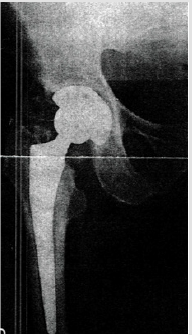
Male patient with 83 years of age, with history of total hip replacement 3 years ago, presenting HO Brooker III of the ipsilateral hip (Figure 1). He presented with pain and claudication. He underwent a single fraction of 750 cGy few hours before revision of the arthroplasty with substitution of the prosthesis on July of 2015. A 2D planning was done with AP-PA field toward the entire coxo-femoral joint (Figure 2). Treatment delivery was done on linear accelerator with photon energy of 18MV. Following treatment, patient experienced a significant improvement of his condition, with decrease on pain and regains the ability to do his daily activities by his own. On a radiograph taken 6 months after radiotherapy and surgery there are no signs of HO (Figure 3). Unfortunately he passed away three years later (July of 2018) of a mesothelioma diagnosed in 2017.

Figure 1: Right hip radiograph showing a Brooker III heterotopic ossification 3 years after total hip replacement.

Figure 2: EBRT planning using a 2D technique with an AP-PA field.

Figure 3: Control hip radiograph after radiotherapy and surgery showing no signs of HO.

Case 2

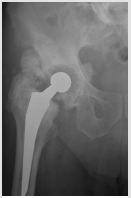
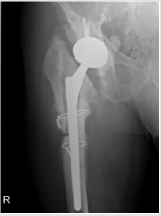
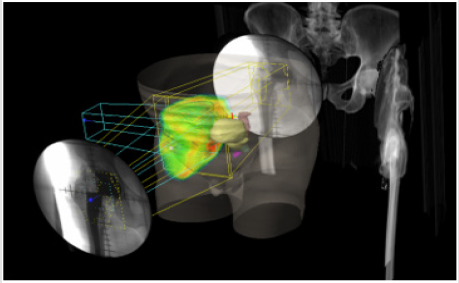
Male patient with 67 years of age, with previous total hip replacement 7 months ago. His comorbidities were osteoporosis, heart valve replacement and diabetes induced kidney injury. One month after surgery his radiograph showed smoldering signs of HO (Brooker I/II – Figure 4). Patient gradually developed pain, which got worse with time and decrease joint motion with progressively inability to flexion and elevation of the leg. On the control radiograph taken 5 months after surgery there were signs of HO Brooker III (Figure 5) and patient became more symptomatic with pain level 10 out a scale of 10. He presented to our department on February 2019 with functional impairment, depression, pain and inability to perform his daily activities like driving. We performed a CT simulation on supine positioning, followed by a 3D conformal RT planning and treatment was delivered with a single fraction of 800 cGy on linear accelerator using photon energy of 18MV covering the entire joint (Figure 6). On the follow-up visit, one month after treatment, patient showed a decrease on his pain level (from 10 it decrease to 5 out a scale of 10) and regain some level of joint motion that allowed him to drive again and do some of his life activities.

Figure 4: Control radiograph one month after right hip arthroplasty showing only mild signs of HO (Brooker I/ II).

Figure 5: Brooker III HO found 5 months after surgery on hip radiograph.

Figure 6: 3D conformal RT planning using 3 fields (AP, PA and lateral).

Discussion

HO is a well described condition, first reported in 1883 by Reidel, which leads to functional impairment and significant decrease in quality of life when symptomatic [15]. It may be caused by multiple factors such as traumatic injury, neurologic damage or burns that act as triggers to bone formation at ectopic sites. Most often it occurs at the hip after total arthroplasty, and there is a classification to grade the severity of HO based on radiograph findings. Typically Brooker III-IV HO are clinically relevant and symptomatic [1,9]. Both of our cases are classified as Brooker III of the hip and both developed following total hip arthroplasty. Treatment options include radiotherapy and NSAIDs or a combination of both. When performed EBRT tend to take place immediately before or after surgery as a prophylactic strategy to avoid recurrence of HO. Seegenschmied, randomized patients to receive EBRT either preoperatively (< 4h before surgery) or postoperatively (< 72h after surgery). Patients receiving preoperative treatment received 700 cGy in one fraction while patients receiving postoperative treatment received 17.500 cGy in 5 fractions. Within the first group (n=80) there were 19 treatment failures, and in the later (n=81) there were 4 treatment failures.

The difference between the groups was statistically significant (p<0.05), but the authors stated that this difference was unapparent when comparing patients who preoperatively had Brooker grades 0-2 [16]. On another randomized study, Gregoritch, compared the results of 122 patients that received 700-800 cGy in one fraction either before or after surgery and concluded that the preoperative and postoperative regimens are similar in efficacy [17]. Nowadays, prophylactic radiotherapy can be used before or after surgery, although some authors prefer the preoperative setting advocating that on postoperative setting there may be some obstacles related to transport difficulties and maneuver due to pain and the need to keep the mobilization of the joint minimized immediately after surgery [1].Regarding fractionation, several studies have been done in order to establish the optimal dose. Liu, randomized 147 high risk patients to receive either 400 cGy or 700 cGy on a single fraction one or two days after total hip arthroplasty. They found that 700 cGy was superior to 400 cGy in preventing HO formation following surgery [11] Similarly,

Healy, examined single dose irradiation with 700 cGy in comparison to 550 cGy and concluded that the later dose is not sufficient for HO prophylaxis [18]. In an editorial about a systematic review published by Milakovic, Roos and Smith also defended that if EBRT is the chosen strategy for HO prophylaxis, treatment with a single 700-800 cGy fraction pre- or postoperatively seems optimal [4,10]. On the other hand, compared to fractionated treatments, single fraction have the advantages of causing less pain and risk of dislocation if given post-operatively or, in the pre-operative setting, RT can be completed a few hours immediately before surgery. One of the cases we report here, received a single fraction of 750 cGy immediately before surgery and there were none postoperative complications related to wound healing and the patient didn’t experience local failure and a significant improvement of his life quality was achieved. In fact, according to DEGRO guidelines for the radiotherapy of non-malignant disorders, prophylactic radiotherapy is well tolerated and impaired wound healing has not been reported [3]. Pohl, also obtained excellent radiographic and functional outcomes after a single fraction of 700 cGy administered before surgery [19].

Redda, retrospectively analyzed 30 patients after pre- or postoperative EBRT and obtained complete responses in 23 patients with excellent results in terms of joint mobility (the majority of patients received single fraction EBRT of 700 cGy) [2]. The use of radiotherapy as a prophylactic strategy is well established on the literature, and seems an efficient way of preventing the re-formation of ectopic bone, when delivered immediately before or after surgery. However its role on the treatment of this condition without surgery is less known. Morcos, studied the effect of late radiotherapy (delivered > 6 weeks after surgery) on HO radiographically proven in 9 patients. They found that 89% of patients demonstrated no further progression in the amount of bone formed after EBRT treatment.13 This study contradicted the previously held belief that there were no role for radiotherapy in the management of HO more than 72h after total hip arthroplasty. In fact several studies had demonstrated that EBRT after 72h is ineffective for HO prophylaxis, but radiotherapy can be successfully used to prevent significant progression of the already forming HO [5,20,21].

Kantor, also achieved no further HO progression after EBRT treatment in patients with significant HO diagnosed more than 6 weeks after surgery [22]. Based on this postulated, we report a case of a patient treated only with single fraction of 800 cGy for a Brooker III hip HO, 6 months after surgery and he had a significant improvement of his pain and mobility, which ultimately led to an improved quality of life. Similarly, Tao et al. reported a case of a patient with extensive HO treated with a single fraction of 800 cGy and, at the 6-month follow-up visit, the patient also reported significant palliation of symptoms without signs of HO progression on radiographic images [14]. In terms of EBRT technique it seems that CT based EBRT allows more accurate delineation of the tissues and better clinical outcomes according to Mourad et al. [23]. In this article we reported two cases, one of them received 2D treatment and the other 3D conformational treatment. Both of them achieved relief of their symptoms and none experienced any immediate complications. However CT based EBRT is associated with additional cost which should be taken in consideration when treating these conditions.

It is also important to note that radiotherapy is not innocuous, and some authors manifested their concerns about second tumors risk and fertility issues, following radiotherapy. However, there have been no documented cases of radiation-induced tumors after EBRT for HO prevention [1]. This may be related, in part, to the relatively low dose used for treatment. On the other hand, these types of tumors are extremely rare and only arise after latencies of 10-30 years. In addition, the median age of patients presenting HO is 65 years, so, the risk of radiation-induced tumors is not relevant in this population.3 Regarding fertility issues, it is well known that doses as low as 1.200 cGy can confer permanent azoospermia and furthermore radiation-induced hereditary effects. Testicular shielding has been reported to reduce dose to the testis by about 54%, thus this technique is strongly recommended in younger patients and all of those who manifest childbearing wishes [1,2]. On both of the cases that we described, testicular shielding was not used because the patients manifest no concerns regarding sperm count or infertility.

Conclusion

HO impairs quality of life causing several functional limitations. Radiotherapy can successfully be used to prevent its recurrence after surgery on the prophylactic setting, or to palliate symptoms on non-operative setting. One single fraction of 700-800 cGy can be delivered either before or after surgery, as well as the sole treatment of symptomatic HO, with satisfactory results in terms of pain control and joint motion.


For more articles:  https://biomedres01.blogspot.com/
Antimalarial Aloe Compounds

  Antimalarial Aloe Compounds Introduction Among the most prevalent diseases caused by protozoan parasites, malaria is caused by parasites o...