Wednesday, December 7, 2022

Biomass Yields and Nutritive Composition of Leucaena Varieties in Irrigated Lowland of Dassench Woreda of South Omo, South-Western Ethiopia


Biomass Yields and Nutritive Composition of Leucaena Varieties in Irrigated Lowland of Dassench Woreda of South Omo, South-Western Ethiopia


Introduction

“The overall productive and reproductive performances of livestock in Ethiopia are generally very low” [1-3]. Likewise, the poor-quality feeds and inadequate supply of feed biomass from the grazing-land (natural-pasture) to livestock in South Omo Zone are one of the important element that are contributing to low outputs (milk, meat and growth rates) from the livestock [4,5]. It seems that the nutritive values generated from the grazing-lands are seriously affected by dynamics of pasture-forages [5,6]. Hence, nutritive values from the extensive-grazing-lands do not realize the crude protein and energy demands of livestock. “This is activating to escalation great slow growth rates, high mortality, longer calving intervals and substantial weight loss” [7,8].
The supplementary feeding system is the addition of some feeds that are rich with vital nutrients to low-quality-forage to improve the intake and digestibility of low-quality forages aimed for higher outputs from animals. The evaluating and familiarizing of locally adaptable improved forages-crops to supplement the extensive-pasture-grazing system for pastoral and agro-pastoral areas is only the way to engulf feed shortages [4,5]. The Leucaena species is one of legume fodder trees, which is evergreen, highly branched and have a fast-growing potential, which grows up to a height of 5m to 20m [9]. It well adapted and better yielded in a wide range of rainfall environments which ranging from 650- 3,000mm with warm temperatures ranging from 25°C to 30°C [10]. The average dry biomass yields of Leucaena species are ranges from 3-30 tons/ha depending on soil, temperature, and moisture conditions [9]. The dried leaf of Leucaena species contained crude protein and metabolizable energy values which ranging from (230- 288.6g/kg DM) and (10.27MJ/kg DM), respectively [11,12]. The sheep groups fed on basal diet of grass-hay and supplemented with diets contained dried Leucaena leaves with inclusion levels, ranging from 25-50%, showed higher daily feed intake and weight gain over non-supplemented sheep group [11]. “The Leucaena leaves meal or fresh leaves can also replace concentrate diets, since it increases total daily dry matter and protein intake, and thus improving growth rate of animals” [13,14]. Also, it was reported that the Leucaena foliage inclusion levels between 500g/kg, DM and 750g/kg, DM can be replaced concentrate diet without adversely affecting the growth and milk production performances in goats [15,16]. However, with this notable potential of species, different Leucaena varieties have not been evaluated under irrigated condition for biomass yields and nutritive values. Thus, this study aimed to evaluate the biomass yields and nutritive values of Leucaena varieties for the drought prone areas in South Omo Zone.

Materials and Methods

Experimental Site

On-farm evaluation was carried out from June-December 2019 main planting season. The Sermemiret has laid at 5014’N latitude and 36044’E longitude, and far about 230km from Jinka town (Capital city of South Omo Zone). The area has annual temperature and average rainfall which ranging from the 25-40oC and 350- 600mm, respectively, with erratic rainfall distribution. The altitude of the study area is in the range of 350m to 900m above sea level and soil of planting site is alluvial soil.

Agro-Pastoral Research Extension Group (APREG) Formation

One APREG that comprised about 25 Agro-pastoralists was established with vigorous envelopments of experts from Woreda Livestock and Fisher Development Office by considering irrigationaccess, interest and irrigation capabilities of trial agro-pastoralists. The selected trial Agro-pastoralists and experts were trained on forage agronomy and irrigation water management techniques.

Experimental Design and Variety

The five Leucaena varieties such as DZ-0032, DZ-321, DZdismounts, DZ-235 and DZ-032 were obtained from DZARC. A plot area sized 4m by 3m = 12m having about four rows and two seed per hole planted after treated seeds in water boiled at1000C for one minute to break dormancy of seeds. The spaces between plots and plant were 1m, respectively and the total area of trial site was 12x26m (312m2). Thus, a total of about fifteen plots which each measured 12m2 sized were used in the present study. The randomized completed block design comprising three repetitions each variety was used and plots in each block were randomly assigned per variety. The 3kg/ha seeding rate were used without fertilizer application [17]. The surface irrigation was used, and all the plots were irrigated uniformly as per the intended irrigation schedule [17].

Experimental Site and Data Collection

The trial site was always kept weed-free by hand weeding and hoeing, and agronomic data like plant height and branches per plant were recorded when plants was at 50% blooming stages (28 weeks after planting) by taking nine plants from middle of three rows per plot. The average plant height was recorded from ground to the pitch of the main stem. To measure the biomass yields at 28 weeks, all leaves and sprouts were contemplated from the three collected middle row per plot, and fresh sample was recorded in field by using spring weight balance, and 500g sub-sample per plot was brought to laboratory and cut into small pieces. Then 300g of sub-sampled sample was allocated into oven dried set at 105oc temperature for 24hours for biomass yields determination [18].

Where TFW = total fresh weight kg/plot, DWss= dry weight of sub-sample in grams, FWss = fresh weight of sub-sample in grams, HA = Harvest plot area in square meters and 10 is a constant for conversion of yields in kg/m to t/ha. The BPP for each variety was calculated by counting all main braches on sampled trees and average of sampled branches was considered.

Chemical Analysis

The nutritive values analysis was done at DBARC. Three leavessamples of each variety were put into oven dried which set at 65°C for 48h and crushed to pass comprehensive 1mm sieve size for chemical analysis. The laboratory analysis was conducted for different nutritive values (DM, Ash, CP, NDF and ADF). DM, CP and ash were investigated by “technique of [19]”. The NDF value was evaluated by [20] while the ADF value was evaluated by process of [21].

Data Analysis

The data such as plant height, branches per plant, biomass yields, and nutritive values were subjected to analysis of variances using the Generalize Linear Model (GLM) [22]. The significant differences among the means of varieties were declared at p<0.05 and means were separated using LSD test with following model:
Yijk = μ + Vi + eijk,where, yijk = all dependent variables; μ = overall mean; Vi = the effect of variety; and eijk = random error.

Results and Discussion

Biomass Yields and Agronomic Parameters

The result on biomass yield, plant height and branches per plant of Leucaena varieties at Dassench Woreda are presented in Table 1. The result revealed that DZ-321 variety yielded higher (p<0.05) biomass yields than DZ-dismounts variety, but the biomass yield was similar (p>0.05) to DZ-032 and DZ-235. However, the biomass yield was not significantly (p>0.05) varied among DZ-032, DZ- 0032 and DZ-235 varieties. Moreover, the DZ-321 had taller plant height than DZ-032, DZ-0032, DZ-235 and DZ-dismounths, and but it was not significant (p>0.05) varied among the varieties. Relating to branches per plant, the more (p<0.05) branches per plant were recorded from DZ-0032 variety than DZ-235 variety, but plant height was similar (p>0.05) among the DZ-dismounths, DZ-321 and DZ-032 varieties.

biomedres-openaccess-journal-bjstr

Table 1: Biomass yields, plant height and branches per plant of Leucaena varieties that grown at Dassench Woreda in 2019 planting season.

Note: (Means with the different letters (a, b) in across column for biomass yields, plant height, branches per plant at 50 percent blooming periods are not similar at p<0.05; SEM=Standard error of mean).

The reason for higher biomass yields for DZ-321 variety was justified that variability genomic potential. In supports to result from the present study, the studies stated by [23] and [24] were showed that the difference in biomass yields among the forage crops is ascribed due to variances in hereditary potential of forage species. Moreover, “biomass yields variability for forage species could be reported due to varietal or biological potential” [25]. “These effects have been widely described for legumes in general [26] and Leucaena variety in particular” [27]. The biomass yields obtained from present study for all varieties were similar to reported average biomass yields which ranges from 10-30 tons/ ha under well fertile soil [28]. Also, similar biomass yields were perceived from this study to reported biomass yields of 2-13 tons/ ha in Australia, 14-16 tons/ha, in Brazil, 15-50 tons/ ha, in New Guinea 15-19 tons/ha, in Taiwan from 3-21 tons/ha, in Virgin Islands [29]. However, the biomass yields from this study were higher than previously reported values range from 1.5-10tons/ha under tropical condition [17]. The lower branches per plant for DZ- 235 variety over other varieties are due to lower varietal potential of variety. Similar result to present study was reported for branch per plant by Minson and Hegarty [27], which is indicating that there are variations in branches per plant among species, varieties and eco-types of the Leucaena species.

Nutritive Values

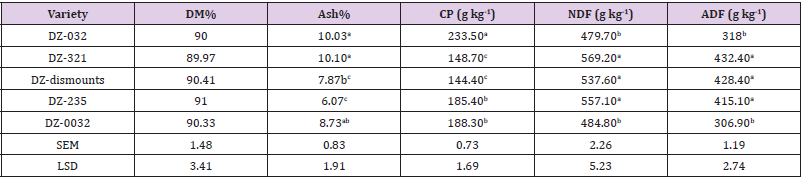
The nutritive values of Leucaena varieties in Dassench Wored are presented in Table 2. The Leucaena DZ-032 and DZ-321 varieties had higher (p<0.05) crude protein (CP) content than DZ-235 variety, but the ash content was similar (p>0.05) to DZ- 0032 variety. Moreover, the DZ-032 contained higher (p<0.05) CP content than DZ-321, DZ-dismounths, DZ-235 and DZ-0032 varieties. However, the DZ-321 and DZ- dismounts varieties had lower (p<0.05) CP content compared to DZ-235 and DZ-0032 varieties, but the CP content was in significant (p>0.05) between DZ-321 and DZ-dismounts varieties. Similarly, DZ-032 variety had low (p<0.05) NDF and ADF than DZ-321, DZ-dismounths, DZ-235 and DZ-0032 varieties, but the DZ-321, DZ-235 and DZdismounths were insignificant (p>0.05) for NDF and ADF content. The higher CP content and lower NDF and ADF for variety DZ-032 in study area is due to “higher-genetic-potential which might be accounted to accumulate the high nitrogen contents from the given environments”. The result on CP content obtained from our study for DZ-032 Leucaena variety was in agreement with the previously reported value of (23%) by Juma, et al. [30], while the CP content values form this study for all Leucaena varieties was lower than previously reported values of 28.86% and 25.7%, respectively, [12,31] for the dried leaf Leucaena species. The protein content of all Leucaena varieties from this study is quite adequate to realize the smallest requirement of ruminant-animals (8–12%) which is suggested by Dhok, et al. [32]. The deficiency of protein can be a major limitation in animal diet that affects the intake and utilization of most tropical forages by animals. Thus, it was suggested that “the minimum CP content required for lactation and growth in cattle is 150g/kg, DM [33], whereas the NRC [34] recommended the minimum requirement of CP is 75g/kg, DM for adequate rumen function in ruminant animals. Moreover, “the feeds sources that containing less than 60g/kg, DM are considered as CP deficient and such feeds cannot provide the minimum level of ammonia (50- 80mg-l) required for maximum microbial growth in the rumen”. Conversely, in the study district the CP content of the range forages were can not provide adequate CP to meet the requirements of the ruminant animal especially during dry period’s higher fibers and lower crude protein contents from our study for DZ-321 and DZ dismounths varieties might be due to environmental factors. “The soluble carbohydrate contents in neutral detergent do not depend only on species, but also on their responses to the environment” [35]. Hence, the CP content reported from our study is higher than minimum recommended level for ruminant production in pastoral and Agro-pastoral production systems. The result from this study is also presented a good opportunity for pastoral and Agro-pastoral communities to overcome the CP deficiency if the communities are participated voluntary to supplement their animals by planting the Leunaena species at farmyard and around homesteads by using irrigation or rain fed. Besides, the physical characteristics of the samples, the responses to the environmental conditions, the genetic-factors and the differences in the phonological development of these eco-types could have influenced [36]. In this respect, “the great diversity in the Leucaena genus exists in the content of NDF (21.5-56.8%) and the cellular content [37]”. The NDF and ADF values obtained from this study were higher than previously reported values which ranged from 31.70-35.74% and 18.20-22.60%, respectively for NDF and ADF by different scholars [31,38,39].
biomedres-openaccess-journal-bjstr

Table 2: Nutritive values of Leucaena varieties grown-up under irrigation at Dassench Woreda in 2019 planting season.

Note: (Means with the different letter (a, b, c) in across column for nutritive values are significantly differed at p<0.05 at 50 percent blooming periods; DM%= Dry matter percent, Ash%= Ash Percentage; CP= Crude Protein; NDF = Neutral Detergent Fiber; ADF= Acid Detergent Fiber; SEM= Standard error of mean).

Conclusion

The DZ-321 variety gave higher biomass yields, while DZdismounts variety gave the lower biomass yields. However, the DZ- 032 variety had higher CP and lower fibers (NDF and ADF), while DZ-dismounts and DZ-321 varieties were giving the lower CP. Thus, it can be concluded that herders in study areas can be planted DZ- 321 variety for higher biomass yields, while DZ-032 variety for higher CP content.


For more Articles on: https://biomedres01.blogspot.com/

Tuesday, December 6, 2022

Effect of Hydrothermal Treatment on the Yield and Quality of Spelt Flour


Effect of Hydrothermal Treatment on the Yield and Quality of Spelt Flour


Introduction

Spelt refers to non-traditional types of plant raw materials, promising for expanding the range of healthy foods, as well as for the manufacture of food additives for functional purposes, including biomodified spelt flour and biomodified spelt cuts [1]. A promising and relevant direction of scientific research is the use of methods of biotechnological impact on spelt processing products with the production of food products for general, functional and therapeutic and prophylactic purposes [2-9]. Spelt grain is superior to wheat, rye and triticale in terms of protein, essential amino acids, vitamins, macro- and microelements, biologically active substances. Spelt flour is limited to lysine and threonine, but it contains lysine 1.7 times more than in wheat baking flour [3]. The protein content in spelt grain is 5% higher than in wheat grain. A sufficiently high protein content makes spelt a valuable source of vegetable protein for the production of various foods based on its processed products. This is especially true in view of the lowcalorie content and imbalance of the diets of the majority of the population of our country [10]. At the same time, a significant drawback of the unpretentious to the conditions of growing cereal culture of spelt is the difficulty of its threshing and subsequent post-harvest processing. The fact is that the grain of spelt, unlike wheat grain, is not completely ground from the ear, but together with the flower and spike shells attached to it, as a result of which certain difficulties arise in the processing of grain into baking flour. It is in connection with this drawback, as well as in connection with low yields, that drought- and cold-resistant spelt has now been replaced by new varieties of high-yielding holozer wheat, more demanding than ordinary spelt, to soils, climate and other growing conditions. Consumption of such a useful crop as spelt is unreasonably low, which is largely due to the limited scientifically based technologies for its processing and the range of products from its processing. The purpose of the research is to determine the optimal parameters of hydrothermal processing of spelt grain in the production of baking flour.

Research Materials and Methods

In experimental studies conducted at the Department of Grains, Bakery and Confectionery Technologies of the Federal State Educational University of Higher Educational Enterprise “Moscow State Unitary Enterprise”, I.S. Turgenev State University of Higher Learning and Federal State Educational Enterprise “N.V. Parakhin OsAU”, spelt of the Runo variety of the 2019 harvest grown in the Oryol region was used as an object of research to achieve this goal. A distinctive feature of the object of research was that the original grain of spelt was passed through a peeling machine with the removal of 10% of the flower and seed membranes. Baseline indicators of the quality of the original spelt grain are presented in Table 1. Grinding of the original spelt grain was carried out on grinding and sorting units MLP-4 with rifled rollers and MLP-4 with smooth, microrolling rollers. Sieving of intermediate grinding products was carried out in laboratory sieving for 90 seconds. The parameters and modes of grinding corresponded to the recommended “Rules for the organization and conduct of the technological process at flour milling enterprises” operating in the Russian Federation. The strip systems use grooved rollers with a grooved back along the back. All grinding and grinding systems use roller machines with micro-rolling rollers. The modes of grinding spelt grain on the I drednaya system are 25-30%. Due to the fact that the initial grain of spelt was peeled, the total extraction of intermediate grinding products on I-III draught systems was increased and amounted to at least 85%. The extraction mode on 1-3 grinding systems is at least 50%. The whiteness of spelt flour was determined according to GOST 26361-2013, ash content according to GOST 27494-87, humidity according to GOST 13586.5-2015.

biomedres-openaccess-journal-bjstr

Table 1: Initial quality indicators of the initial grain of spelt.

Results and Discussions

Cold conditioning was used as a TGT, as the most common method. To study the effect of hydrothermal treatment (GTO) on the yield and quality of spelt baking flour, the initial peeled grain of spelt was moistened to a process humidity of 16-16.5% and served, respectively, 2, 4, 6, 8 and 10 hours. The technological scheme for processing spelt grain into baking flour was based on a patented method for producing flour from triticale grain [11]. The technological scheme of grinding the peeled grain of spelt consisted of 4 dredged (other vessels), 5 grinding (r.s.) and 1 grinding system (ext.s.). The ripped process of the scheme of processing spelt grain into baking flour consists of a stage of cereal (I-III striped systems) and a stage of grinding (IV stripe system). When grinding the original peeled spelt grain, the mechanical and kinematic parameters of roller machines with rifled and microsched shafts, sieving schemes, the dimensions of both flour sieves and the dimensions of the sieves for sifting intermediate grinding products remained unchanged. After the end of each grinding of spelt into baking flour, all the streams of flour were weighed, and the grinding balance was made. Next, the ash content, humidity and whiteness of each stream (a total of 10 streams of spelt flour) were determined. Based on the results of the obtained data on the quality indicators of flour flows, the weighted average ash content and whiteness of spelt flour were calculated, and cumulative ash and whiteness curves were constructed. The process of grinding and forming the quality of flour from the peeled grain of spelt is shown in the form of cumulative ash curves (Figure 1). The presence of 2 stages of flour formation during grinding of spelt grain according to the developed technological scheme was established, which is quite clearly seen from the graphs of cumulative curves of spelt flour.

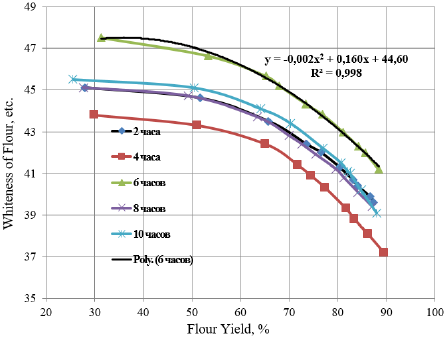
The first stage in the formation of spelt flour consisted in the extraction of the central part of the endosperm with an output of 70-72% and an ash content of 0.77-0.85%. At the second stage of the formation of spelt flour occurs due to the extraction of the peripheral part of the endosperm and the subaleuronic layer with an output of 15-20% and an ash content of 0.85-1.01%. Analyzing the cumulative whiteness curves (Figure 2), it was revealed that the weighted average whiteness of spelt flour is higher at 6 hours of agitation of the original grain and is 41.2 units of the device. When the initial grain of spelt is 4 hours, the lowest weighted average whiteness of spelt flour is established, which is 37.2 units of the device [12].

biomedres-openaccess-journal-bjstr

Figure 2: Rice. 2 - Cumulative whiteness curve of spelt flour.

Conclusions and Recommendations

1. The optimal time for peeling off the flaky grain of spelt sent for processing into baking flour is 6 hours.
2. When grinding the peeled spelt grain into baking flour, the total yield of spelt flour was 87.4-90.0%, depending on the spelt time from 2 to 10 hours, while all spelt flour obtained in all 5 modes of hydrothermal treatment corresponded to 1 grade of spelt flour.
3. The obtained results can be recommended for use in the construction of a flour mill when calculating bunkers for the removal of spelt grain entering for processing on the roll machine of the I dredal system.

For more Articles on: https://biomedres01.blogspot.com/

Monday, December 5, 2022

Influenza


Influenza


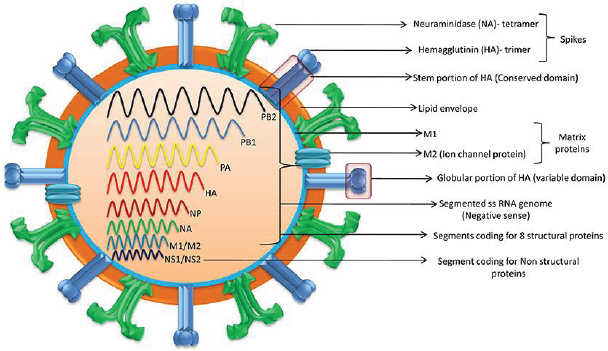
In the US, influenza (flu) causes 9 to 45 million illnesses, leading to 12,000 to 61,000 deaths annually (10.1001/jama.2020.14772). The World Health Organization estimates that annually there are about one billion infections, 3-5 million severe illnesses, and 300,000-500,000 deaths worldwide (10.1038/s41572-018- 0002-y). Influenza is caused primarily by influenza A and influenza B viruses [1]. Influenza A is the cause of pandemics. A schematic diagram of the influenza A virus is presented in Figure 1. Influenza will continue to be prevalent because current vaccines are safe but only 30-60% efficacious. In contradistinction, COVID-19 vaccines have an efficacy of about 90%. Additionally, unlike coronavirus, new zoonotic influenza strains intermittently migrate to humans. Influenza is a major part of “The New Normal.”

biomedres-openaccess-journal-bjstr

Figure 1: A schematic diagram of influenza A virus.

Co-infection

Overlapping spread of COVID-19 and influenza could be a major strain on the health care system [2]. Their coinfection is not common but may cause more severe disease. Influenza vaccination and therapy are important in addition to COVID-19 vaccination and therapy, especially in persons at increased risk.

Incubation

Influenza’s median incubation period is 2 days. Patients are infectious for a day before and 5 to 7 days after symptoms. COVID-19 has an incubation period of 4-12 days, a median of about 5 days [3]. Patients are most infectious from 2 days before symptom onset. Influenza symptoms peak in 3-7 days. COVID-19 symptoms peak in second or third week. The spread of both viruses is facilitated by transmission by asymptomatic patients.

Transmission

About one-half of influenza A cases are due to aerosol transmission (10.1038/s41598-019-38825-y). Adequate ventilation can reduce it. Used appropriately, surgical masks reduce the concentration of aerosolized influenza virus by about ten-fold and are adequate for prophylaxis against influenza (10.1016/j.jhin.2013.02.007; 10.7326/M20-3213). Transmission by respiratory droplets can also be reduced by masking [4-9]. Transmission by direct contact can be reduced by hand and general hygiene. COVID-19 is transmitted in a similar manner. Social distancing reduces transmission by all the mechanisms. According to the Centers for Disease Control and Prevention (CDC), the precautions utilized for COVID-19 reduced the positivity rate for influenza tests from 16.8% in 2019-20 to 0.15% in 2020-21. Influenza is less contagious and causes less severe disease than COVID-19. Quarantine recommended for COVID-19 patients is not necessary for those with influenza. As children play an important role in transmitting influenza, opening of schools is likely to increase transmission. Healthcare providers should take precautions to avoid infecting themselves and others.

Influenza-Like Illness (ILI)

CDC defines ILI as fever 100°F (38°C) or greater and cough or sore throat that is not due to another known cause such as streptococcal pharyngitis (strep throat). ILI’s causes can be benign such as common cold, i.e., nasopharyngitis caused by rhinovirus or other viruses. ILI’s severe causes include sepsis, meningitis, COVID-19, and SARS. Often there is an abrupt onset. SARS leads to severe disease in most of the infected persons. Influenza and COVID-19 cause mild disease in most of the infected persons (10.1016/S1473-3099(20)30484-9). SARS is currently not prevalent [10]. Severe disease due to COVID-19 and SARS occurs primarily in the elderly. Influenza is more evenly distributed across the age groups. ILI can cause immunosuppression, leading to bacterial pneumonia, necessitating antibiotic treatment (10.1097/ QCO.0000000000000347). After general anesthesia, children with influenza have a longer hospital length of stay and increased risk of requiring intensive care (10.1186/1471-2253-11-16). Routine surgery should be postponed for about four weeks in a patient with ILI. Unvaccinated patients should be offered influenza vaccination after the acute phase of ILI has passed and before the surgery. Before performing urgent surgery, severe causes of ILI should be excluded [11].

Upper Respiratory Tract Infection (URI) Excluding ILI

In cold weather URI is common, especially in children. Often it is due to a common cold, or noninfectious allergic or vasomotor rhinitis. Less commonly, it can be an early presentation of more serious illness including ILI, COVID-19, strep throat, and herpes simplex. Early in infection it is difficult to distinguish between different etiologies of URI. URI may cause sneezing, coughing, headache, malaise, rhinorrhea, sore throat, sinusitis, and bronchitis. Subsequently, bronchi may be hyperreactive for about six weeks. Pulmonary complications associated with surgery in a patient with URI are bronchospasm, laryngospasm, coughing, breath holding, postintubation croup, episodes of desaturation, atelectasis, and pneumonia. Anticholinergics and bronchodilators may not be beneficial. If ILI and other serious illnesses are unlikely, routine surgery can be performed with caution. Perioperatively, adequate hydration and humidification should be maintained. There are no pediatric or adult anesthesia closed claims that implicate URIs including influenza with serious adverse events.

Cardiac Effects

There is a very small incidence of viral myocarditis in patients with URI including ILI. It may lead to serious arrhythmias and refractory heart failure (10.1016/j.jcrc.2018.06.001; 10.1038/ s41569-020-00435-x). Cardiac abnormality should be excluded before performing non-emergent surgery.

Diagnostics Tests

These include nucleic acid amplification via polymerase chain reaction (PCR) and antigen-based immunological assays [12]. A PCR test can be performed even at the point-of-care with results available within an hour (10.1016/S2213-2600(20)30469-0). This can facilitate infection control and utilization of antiviral thrapeutics. It is especially useful for patients who have severe symptoms or are hospitalized. Test for COVID-19 may also be performed if indicated.

Influenza Vaccine

It is the best preventive measure. Despite moderate efficacy, it substantially reduces morbidity and mortality because of the high prevalence of influenza. It is recommended for anyone over 6 months of age. It is especially beneficial in the presence of age <2 years or >65 years, pregnancy, and pre-existing conditions (10.1001/jama.2020.14772). Lack of vaccination in pregnancy not only increases the risk to the mother but also increases risk of preterm birth, fetal death, infant respiratory infections, and hospital admission [13]. The T cell response vaccines elicit is substantially weaker than the antibody response. Children may need two doses of the vaccine, at least four weeks apart. The vaccine should be administered at least one week before surgery. It takes two weeks to develop full effect. As the protection wanes over time, mid- September to mid-October is preferred for vaccination. Influenza and COVID-19 vaccines may be administered together. The vaccine may be administered to surgical inpatients (10.7326/M15-1667).

Available Vaccines

The influenza virus mutates frequently. Quadrivalent vaccines protect against four of the currently most prevalent strains of influenza. The vaccines are altered every year for the predicted prevalent strains. Nine vaccines from four manufacturers are available in the US. Inactivated influenza vaccine is most commonly used. It is approved for persons above 6 months of age. As older individuals have a reduced response, vaccines that have a higher dose or are adjuvanted are recommended for persons above 65 years of age [14]. The vaccine is usually administered intramuscular, but a lower dose intradermal vaccine may be non-inferior (13-10.1001/ jamanetworkopen.2020.35693). Live-attenuated influenza vaccine is administered via nasal spray. It is approved for ages 2-49 years. It may be preferable in some situations such as vaccinating many persons in a community. It should be avoided if the patient or someone nearby has a suppressed immune system. Hence, it is not suitable for inpatients. Recombinant vaccine and cell culture vaccine do not contain egg products. They are especially suitable for persons who need to avoid eggs because of allergy or dietary preferences.

Future Vaccines

Universal vaccines that provide durable response against all influenza strains are in human trials (10.1038/s41591-020- 1118-7). These vaccines generate antibodies against the viral hemagglutinin protein stem (stalk) domain (HA2). Current vaccines generate antibodies against the immunodominant globular head domain (HA1), which is variable and mutates much more frequently [15]. Vaccines utilizing mRNA are also in human trials. They are likely to have greater efficacy but more side effects than current vaccines. A major advantage of the mRNA vaccines is that they can be readily modified to match mutations in the virus.

Benefits of Vaccination for Adults

Influenza vaccine reduces the risk of respiratory and cardiovascular adverse outcomes and mortality among adults, especially in the presence of pre-existing conditions and advanced age. This was confirmed in a meta-analysis of studies on all adults (10.1016/j.arr.2020.101124). Another meta-analysis found that vaccination reduced the risk of adverse cardiac outcomes, especially in patients with more severe cardiac disease (10.1001/ jama.2013.279206). Preoperative vaccination is beneficial. A large study of elderly patients who had major surgery found preoperative vaccination reduced by about one-half the risk of pneumonia, intensive care admission, and death (10.1093/infdis/jix616). Patients also had shorter hospital stays and reduced resource utilization.

Influenza Therapeutics

These include neuraminidase inhibitors oseltamivir, zanamivir, peramivir, and laninamivir; cap-dependent endonuclease inhibitor baloxavir; and matrix protein M2 ion channel blockers (10.1001/ jamanetworkopen.2021.19151). They attenuate viral replication. They provide postexposure prophylaxis. When started within 2 days of symptom onset, they reduce duration and severity of the disease, and complications. They also reduce transmission of influenza virus. However, their efficacy is limited, especially in patients with serious illness [16]. They are expensive and not widely utilized. Although influenza and COVID-19 have similar initial symptoms, their therapeutics are different. Thus, dexamethasone reduces mortality for hospitalized COVID-19 patients on respiratory support but may increase mortality for hospitalized influenza patients (10.1001/ jama.2020.15260).

Influenza Pandemics

They are usually caused by zoonotic influenza A virus strains migrating to humans. The 1918 “Spanish flu” pandemic caused by influenza A H1N1 virus led to more than 40 million deaths worldwide. H1 denotes haemagglutinin subtype 1 and N1 denotes neuraminidase subtype 1. The pandemics of 1957, 1968 and 2009 were caused by influenza A H2N2, H3N2, and H1N1 viruses, respectively [17,18]. The 2009 “swine flu” influenza A H1N1 virus that originated from pigs was antigenically different from previously dominant influenza A H1N1 viruses. It caused 150,000- 600,000 deaths worldwide. Avian influenza “bird flu” caused by H5N1 and H7N9 is not prevalent. Overlapping occurrence of influenza pandemic and COVID-19 could be devastating. Vigilance and prompt action are essential to prevent zoonotic influenza A virus strains from migrating to humans.

Conclusion

Influenza is a prevalent respiratory disease that will continue to affect anesthesia practice in the foreseeable future. Vaccination reduces risk. With appropriate management, the risk of adverse outcomes is low.


For more Articles on: https://biomedres01.blogspot.com/
Friday, December 2, 2022

The Alarming Toxicity of Ruta Graveolens


The Alarming Toxicity of Ruta Graveolens


Introduction

Worldwide use of Ruta Graveolens as an herb and as alternative medicine has increased dramatically in the past decades without any increased effort to compensate for the toxicity and the unsafe human consumption. While pharmacological studies on drugs that cause cardiac, hepatic, and nephrotoxicity have resulted in drug termination, the same type of studies on herbal medicine are ignored and actions have not been taken to protect the youth from this herb in their productive stages of life. The endemic production of Ruta Graveolens is in India [1], Ethiopia [2], and South Africa [3] where there is a dramatic growth in population that masks the toxic and infertility effect on the younger population. The purpose of this study is to bring awareness that Ruta Graveolens is a toxic plant and should be handled with caution.

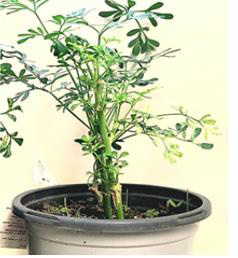
Scholarly articles have reported their findings on the abortifacient properties of herbs resulting in miscarriages followed by a likely chance of organ failure, especially kidney failure in pregnant mothers. In herbal medicine, Ruta is an emmenagogues herb that is taken by women to induce and increase menstrual flows and to cleanse the body. It is reported that Ruta has been used as an abortifacient in Europe, Asia, Africa, and South America and is found to be endemic in the Mediterranean countries. Studies over the past twenty-one years on both female and male mammals have shown abortive effects, specifically implantation, premature infant losses, and paralyzing sperm activities. The chemical composition analysis of Ruta Graveolens listed 50-120 different compounds among which Kuzovkina in his 2004 publication found coumarins and xanthotoxins as the toxic infertility drugs known to man. The most active component of Ruta Graveolens extract is chalepensin, widely known as an anti-fertility drug in mammals. In cultural medicine, Ruta Graveolens is still used as an anti-inflammation, anticancer, antioxidant, antidiabetic, antibacterial, and antifungal medicine. Figure 1 shows a picture of Ruta Graveolens grown in our laboratory.

biomedres-openaccess-journal-bjstr

Figure 1: Ruta Graveolens.

Methodology

biomedres-openaccess-journal-bjstr

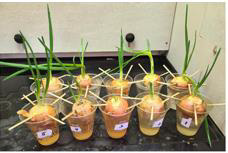
Figure 2: Treated Onion bulbs with Rue.

In this study, Ruta was extracted by diethyl ether, hydrochloric acid, and sodium hydroxide solutions and was used on the commercially purchased organic onions and the growth rate of onion roots was observed. Rationally, we used onion roots to avoid animal sacrifice. The three extracts were administered in the solution where the onions were grown in the amount of 1, 2, 5, 10, 15, 25 milliliters and the growth rate were measured. Pure water was used in the control sample. A review of literature lists several methods of extraction of phytochemical compounds like coumarins and xanthotoxins which is effectively done with a hot water extract and or a variety of pure and mixed organic solvents of ethanol, hexane, chloroform, acetone, and a combination of these solvents. Separation of the essential oil and other chemicals from the stem, leaves, roots, and seeds of Ruta was done by several planned extraction steps and the results were successful. Figure 2 is the setup of the onion bulbs hanging on sticks and the roots were submerged in water. The submersion water was replenished every day and onions were exposed to open air sunlight. At the end of 15 days, the roots and stems were shaved, dried, and weighed along with the control group.

The following research approach is reviewed below to show that the extraction of Ruta Graveolens by different solvents and different testing methodology compliments the method we chose in this study. Kong et al [4]. performed solvent extraction of 10.4 Kg of powdered whole plant of Ruta Graveolens with petroleum ether and chloroform that percolated overnight. The extracts from the root, stem, and leaves were separated into its components using benzene and methanol. They succeeded in isolating chalepensin, a toxic compound among furanocoumarin which is a pharmacologically active compound in Ruta Graveolens. They purified chalepensin and the yield was 9 grams of the crystal that was tested and confirmed with proton NMR and mass spectroscopy. The effects of infertility due to Ruta Graveolens were tested on 10 Sprague Dawley rats that were randomly selected from a large selection of genetically identical 8 weeks old females. The pregnant rats were kept in an environmentally controlled room, with minimized infections, and a supply of nutrition. Solvent enhanced chalepensin extract was administered to the experimental group and the control group.

Hale et al [5]. studied Ruta Graveolens leaves, seeds, flowers, and stems obtained from credible sources and separated for extraction. The sample was blended, the extraction was conducted by several volatile liquids, and the isolated crystals were separated into fractions and tested using TLC and proton and carbon 13 NMR, and UV-VIS spectroscopic methods. Fresh leaf extraction was purified and isolated using several steps in the extraction process. All the extracts from their experiment inhibited cell division in the root tip of duckweed. Gonçalves de Freitas [6]. studied Ruta Graveolens grown in Brazil. These were air-dried, grounded, and extracted using 70% ethanol with a 25% yield. The selected CF1 mice were supervised in a controlled environment with nutritional supplies and an environmentally controlled laboratory. They administered 1000 mg/kg of extract per body weight to the experimental group and only the vehicle was administered to the control group. The extract was administered to the 10 mice per group at different stages of pregnancy. The mice were sacrificed and checked for the condition of the fetus in their ovaries.

Indian [1] grown Ruta Graveolens was collected, and aerial parts and the roots were separately, dried, and powdered, and made as a paste with water. The plant gave a 20% slurry extract, and the paste was administered to rats and hamsters. The ingestion dose was 8g/kg, and it was administered to rats and hamsters within two weeks of pregnancy. Then healthy female rats and hamsters were used in a controlled environment and experimental and controlled groups were used. At the end of the experimental comparison of body weight, before and after the trial was used, the effect of the toxicity of the Ruta Graveolens on the inner body organs was investigated. Statistical significance using (P,0.05) chi-square analysis was obtained. The results showed increased toxicity and a high rate of fetus mortality. The chloroform extract chalepnisin was found in all parts of the plant, and its toxicity was reported in the pregnant rodents. The results showed a significant increase in infertility effect in the pregnant rats, and the experiment revealed chalepnisin, as the specific compound that has a significant effect on fertility. Finally, Ruta Graveolens leaves grown in Peru [7] were stove dried, pulverized into powder, and produced the collected extract using water as a solvent. The extracted liquid was evaporated and administered as 10 mL injection per mouse. Most of these methods that are published in the literature used rodents and animals’ specimen for their study investigation, and our experimental study of the toxicity of Ruta on plants is a good complement to the collection.

Results and Discussion

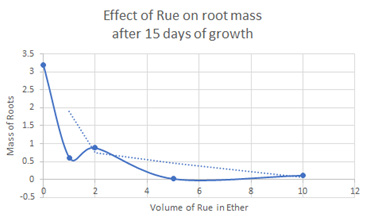
This study showed significant effect in the retardation of onion root cell growth in our laboratory. Onion root growth that was treated with different concentrations of ether extracts were graphed in Figure 3. The ruta extract showed its growth inhibitory effect in all three extracts. All the variables like the pH (6.0 + 0.5), temperature (23 + 1oC), and atmospheric pressure were the same for the control group and the experiment. The experiment was stopped after 15 days, the roots and stem were shaved from the onion bulb, and the dried sample was weighed for the 1-10 mL ether extract solution of Ruta Graveolens. The onion bulbs died when any significant Ruta Graveolens extract was added to the water where the plant was partially immersed. In other studies, the toxicity of the Ruta extract has also prohibited other researchers from coming to a firm conclusion Y. C. Kong et al. [4] did not come to a clear conclusion in the Ruta’s anti-infertility and abortion effect, and their results didn’t produce any clear-cut conclusion. The amount of Ruta Graveolens they used in rats was far too toxic to the specimen and organ failure resulted before the infertility rate was observed. The chlorophyll-water extract they used was less toxic, but the cumrain and specifically chalepensin’s anti-implantation and infertility has not been proven.

biomedres-openaccess-journal-bjstr

Figure 3: Root Growth of onion bulb after addition of different volumes of Rue extract by ether.

Anderson Gonçalves de Freitas et al. [6] also found that Ruta Graveolens did not result in infertility and anti-implantation in pregnant mouse. However, their results showed good evidence of fetotoxicity after the seventh DOP pregnant mouse that received the herbal extract. The use of Ruta Graveolens resulted in organ failure, and they concluded that the herb should not be used in humans as a medicinal herb or as a contraceptive. Manoj Gandhi et al. studied the effect of Ruta Graveolens in rats and hamsters for infertility activities. They used methanol and petroleum ether extracts and found that the herb caused acute toxicity in both the rats and hamsters used. In their study, the toxicity effect interfered with the result. Gutiérrez-Pajares et al. [7] exposed pregnant mice to Ruta Graveolens during the first four days of pregnancy. The super ovulated pregnant mice different amounts of the aqueous extract. The administration of Ruta Graveolens to goats was found to attack the kidneys and higher doses were toxic resulting in death. The oil extract from the leaves has the potential toxicity that will result in uterine hemorrhaging. They were cautious to advise that their finding in animals cannot be transferred to humans. Their studies showed that ingested Ruta Graveolens is toxic enough to create an unfavorable environment for embryo implantation and will also retard fetal growth at any stage of fetus development. They isolated the alkaloid components of the herb like flavonoids, acridones, and furanocoumarins that are known growth inhibitors, and they concluded that the herb reduces implantation and growth development in mice. In our experiment, the toxicity level that will kill the onion was determined to be 5 mL of ether extract of Ruta, and we used 1-4 mL of volumes to gather our conclusions. Figure 3 showed 99.4% retardation of onion root growth while 1- and 2-mL extract resulted in 72.4% and 80.8% respective retardation [8,9].

Conclusion

The use of Ruta Graveolens, an unclassified drug, reported in this paper shows that the dosage level used for experimentation can very easily reach the toxic level before recognizing its anti-cell growth characteristics. We were successful to show the growth retardation of Ruta Graveolens in onion bulbs by plant-based research and applying the toxicity of a plant against another plant. The growth rate inhibition may be the root cause of the herb’s damage to unborn babies. In the studies reviewed, the toxicity of the chalepension which is extracted from the herb, led to organ failure and death in rats before any meaningful infertility result was achieved. It will be interesting to see further studies to implement Ruta Graveolens as an organically grown safe and herbal alternative to currently available hormone contraception. Ruta Graveolens is shown here as a plant-growth inhibitor, and this property of the herb may open the door for the development of future organic herbicide development. Furthermore, Ruta’s cell growth inhibition has been studied in anticancer melanoma, and it will be beneficial to see further research in implementing Ruta for other medicinal purposes. In conclusion, the toxicity of Ruta Graveolens is alarming, and this study showed that onion cell growth inhibition was demonstrated.

For more Articles on: 
https://biomedres01.blogspot.com/
Thursday, December 1, 2022

A Tensional Network in the Knee


A Tensional Network in the Knee


The Medium of Haptic Perception

In contrast to the widespread assumption that the neural system generates impulses to the motor units in the skeletal muscle fibers, Turvey [1] place high importance on the fibrous collagenous connective tissues in the body; these are seen as providing a tensional network throughout the whole body, the biomechanical properties of which provide the framework for muscular force transmission as well as for the haptic sensory system. To identify the haptic system’s medium, Turvey focused on connective tissue and the conjunction of muscular, connective tissue net, and skeletal as the body’s proper characterization Turvey [1]. Myers has also posed the medium as a body-wide responsive physiological network—the myofascial meridian Myers [2]. Taking on ‘geometry’ first, cell biologist Donald Ingber placed one final piece of the puzzle: to view the body’s architecture in the light of ‘tensegrity’ geometry Ingber [3]. ‘Tensegrity’ was coined from the phrase’ tension integrity’ by the designer R. Buckminster Fuller (working from original structures developed by artist Kenneth Snelson Skelton [4]. As Snelson describes it Snelson [5], “The sculpture could be put into orbit in outer space, and it would maintain its form. Its forces are internally locked. These mechanical forces, compression, and tension or push and pull are invisible—just pure energy—in the same way that magnetic or electric fields are invisible.”
The tensegrity principle describes precisely the relationship between the connective tissues, the muscles, and the skeleton. For example, weight applied to shank/thigh bones would cause it to slide off its knee joint if it were not for the tensional balances that hold it in place and control its pivoting Swanson [6]. The invariant feature of tensegrity structures encompasses those that stabilize themselves through a phenomenon known as pre-stressing. Architects call this type of pre-stressed structural network, composed of opposing tension and compression elements that self-stabilize its shape by establishing a mechanical force balance, a tensegrity structure. Bio tensegrity is a term introduced by Dr. Stephen Levin and denotes the application of tensegrity’s principles to biological structures Hutson [7]. Tensional forces naturally transmit over the shortest distance between two points, so the elastic members of tensegrity structures are precisely positioned to withstand applied stress. For this reason, tensegrity structures offer a maximum amount of strength for any given amount of material Myers [2]. Furthermore, the invariant feature of a knee tensegrity system (specified by a given set of external forces such as the ground reaction force (GRF)) is a stable equilibrium if the structure returns to the initially given configuration after the application of arbitrarily small perturbations with respect to the functional knee axis (FKA) anywhere within the configuration Ingber [3].
Kim [8] showed how the knee tensegrity system manages the balance between tension and compression during locomotion by utilizing a unique combination of the FKA and GRF stimuli Kim [8]. When deformed by the shank to the ground via GRF, the strain is distributed over the whole structure, not locked into the joint itself by virtue of the assembly Phillips [9]. Thus, a reaction torque is zero on the knee joint if the GRF line of action intersects the joint axis. The configuration can exert a significant force on the ground without overloading the knee joint. This study aims to introduce the conception of the tensional network in muscles, i.e., the action lines that satisfy the given condition as the tensegrity’s structure is characterized by transmitting forces across the bones Kim [10]. Thus, we hypothesized that tensional forces in muscles are derivable from a scalar function, the work function.

N-lines as the Medium of Haptic Perception

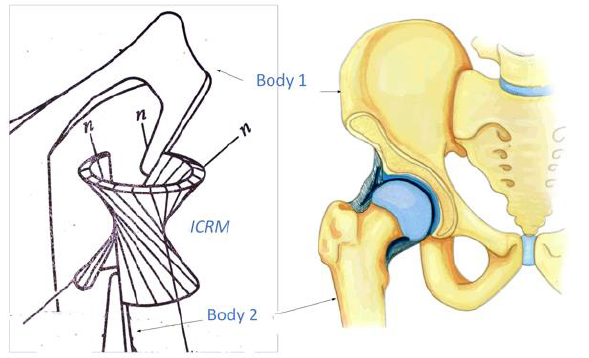
Neurophysiologist Nikolai Bernstein (1967) defined coordination as mastering the many degrees of freedom (DOF) of a particular movement by reducing the number of variables to be controlled Turvey [11]. Recently, a contemporary perspective on Bernstein’s concept of synergies has been proposed Profeta [12]. The muscle synergy is equivalent to the complexity of lines, a manifold approximated by individual fibers Kim, et al. [13]. Muscles are not functional units, even though this is a common misconception. Instead, most muscular movements are generated by many individual motor units distributed over some portions of one muscle, plus portions of other muscles. The tensional forces of these motor units are then transmitted to a complex network of fascia sheets, bags, and strings, which convert them into the final joint/body movement Myers [14]. We define an n-line in a body as a member of the tensional network by virtue of some constraint upon the body Phillips [9]. This will mean that, whereas all n-lines in a body will immediately become a tensional network as soon as the body begins to move, not all members in a tensional network in a moving body will have been n-lines before they began to move. The whole regulus of n-lines is a tensional network for the three constraints at the instant (Figure 1a). This single infinity of n-lines are the generators of the regulars of lines, a linear ruled surface, upon the hyperboloid. Given any three lines in a body (protectively independent) which are bespoken by virtue of some existing constraints to be n-lines in the body, the whole regulus of lines to which the three bespoken lines belong are also n-lines in the body.
In (Figure 1), if any four forces along the n-lines are in equilibrium, their lines of action will reside in space as the lines of some regulus. What makes this remarkable is that, while any three of the lines of action are enough to define the hyperboloidal surface, the fourth line of action will be found, not to miss or to intersect that surface, but to lie automatically and exactly upon it. The object of the illustrated apparatus in (Figure 1) is to set up body 2 with 3 DOF with respect to body 1 in such a way that, within it, three n-lines do exist. The 3 DOF speaks about a body’s ICRM, its instantaneous capacity for relative motion with respect to some other body. It should next be clear that, given this infinity of n-lines in (Figure 1a), there is a corresponding infinity of hinges, which are the generators of the other regulus upon the same hyperboloid. The articulation between bones in (Figure 1b) is ball-and-socket type, which can take up the single infinity of hinges as the ICRM, which seem to be continuously registered by the joints; the changes of the angles seem to be episodically registered by their input to the nervous system Gibson [15]. The question to be answered is this: How does a perceiver feel what he is touching instead of the cutaneous impression and the bone posture as such Gibson [15]? Now to answer the question. In brief, The ICRM of the body (with its 3DOF) can be exactly reproduced by the substitution of (6DOF-3) direct points of contact between the body and its frame.

biomedres-openaccess-journal-bjstr

Figure 1:

(a) A regulus of n-lines represents the tensional network. It physically connects bodies 1 and 2. The whole regulus of hinges is an equivalent mechanical substitution for the three n-lines at the instant
(b) The articulation of bones is the ball-and-socket type.

Tensional Network

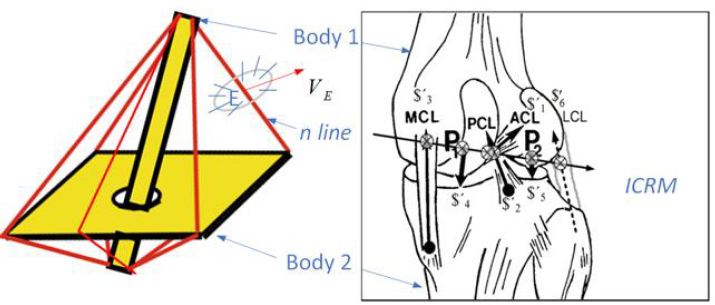
Skelton [16] defined a tensegrity configuration of rigid bodies as follows Skelton [16]. In the absence of external forces, let a set of rigid bodies in a specific configuration have torque less connections (e.g. via frictionless ball-joints). Then this configuration forms a tensegrity configuration if the given configuration can be stabilized by some set of internal tensile members, i.e. connected between the rigid bodies. The configuration is not a tensegrity configuration if no tensile members are required and/or no set of tensile members exist to stabilize the configuration. (p. 1) which are conjointly reciprocal to the ICRM as indicated by their intersections (at the ⊗ ’ s). A balance of forces happens when the virtual coefficient vanishes, being it the necessary and sufficient condition for knee equilibrium. The original anatomic schematics and lines of action were published previously Kim, et al. [17-19] and are used with the permission of Professor Michele Conconi. The video is available:
h t t p s : / / d r i v e . g o o g l e . c o m / f i l e / d / 1 8 _ Y t s z z T 3 _ IvNIken5uxObj4jmSd0Zs_/view?usp=sharing
Attached to body member 1, in (Figure 2a), by mean of five taut strings, there are five n-lines, exhibiting a body with 1 DOF. It follows that body 2 suffers constrained motion as the tensegrity system moves that the paths in body 1 of all pints in body 2 are predetermined. (Figure 2a) is a stable embodiment of the same tensegrity configuration, hence a tensegrity system, exhibiting a torque less connection between body 1 and body 2. The line n-E-n in (Figure 2a) is an n-line by this definition, for it is a tensional network by virtue of a constraint. A member in the tensional network in a moving body is any straight line that joins two points in the body whose linear velocities are perpendicular to the line. The instantaneous velocity at point E,, is not yet known without analysis. Still, we know that it will occur in one or another of the directions indicated by the planar pencil of possible directions vectors drawn upon the flat surface perpendicular to the n-line at the point there, E (Figure 2a). The intra-articular structures of the tensegrity system of the knee include the muscles, the anterior cruciate ligament (ACL), posterior cruciate ligament (PCL), medial collateral ligament (MCL), lateral collateral ligament (LCL), and articular contact in the medial (P1) and lateral (P2) compartments (Figure 2b) Kim [18]. We have shown that six n-lines or constraints are members of the “tensional network” and are spatially oriented in such ways that by imposing an internal tension or “pre-stress” to reduce the play in the system; this ensures immediate mechanical responsiveness (all others feel, i.e., that movement of one element) and reduces impact fatigue at the joint.

Please refer to the authors ‘ previous works towards a visualization of the linear complex set Kim [13]. Let us look at the case next of six forces in equilibrium. When six forces are in equilibrium, their lines of action in the n-lines in the tensional network will be members of the same linear complex. Line manifold contraction is a linear line complex Jessop [20] defined by screws ICRM (Figure 2b). Using the superposition principle of infinitesimal quantities of DOF Kim [21], we can apply these two types of displacement as a body twist around a screw called Instantaneous Screw Ball [22]. The lines remain within the complex in any screw motion along a line axis, forming a linear complex. Additional cognitive processes or internal representations are not needed to explain these phenomena, as perception and action are coupled. Perceptual systems are active sets of organs designed to reach equilibrium through synergies Smart [23]. Our previous research Kim, et al. [24] introduced the concept of measurable invariance of the knee perceptual organ. In such invariant, six constraints ($) are collectively reciprocal to the instantaneous knee screw (ICRM) indicated by ⊗ (Figure 2b). These metrics predicted the knee synergy model based on synergies Turvey [25]. Moreover, this perspective defines torque-free pure forces based on the tensegrity structure Kim, et al. [26,27,21,24].
It is important to note that this configuration is a tensegrity configuration, as the system is pre-stress able in the absence of external forces, such as ground reaction forces during actual locomotion Skelton [16]. It was shown the knee tensional network (KTN) has six constraints and that it can balance the forces between tension and compression in the joint such that no work results Huang [28]. The KTN can be pre-stressed to obtain the same configuration as if external loads were applied. The selected pre-stress may yield the same configuration in the swing phase (external forces are absent) as in the stance phase (external forces are present) Skelton [9]. Notably, preparedness is not only a reactive aspect of the movement apparatus, but it also relates to anticipatory adjustments that predispose a system to behave in a particular way Profeta [12].

biomedres-openaccess-journal-bjstr

Figure 2:

(a) A set of rigid bodies in a specific tensegrity configuration have torque less connections.
(b) The knee joint synergy is represented by six constraints ($' , 1,..,6 i i = ).

Ensembles of a Geometric Pattern

It has been shown that a special kind of line in a body, which is determined by the constraints, namely n-line, is a regularly occurring and probably useful kind of line in bio tensegrity. Moreover, an important theorem about the overall layout or tensional network of n-lines in a body has been presented: the beginnings of a geometric pattern that emerged; it has been found in some special cases only, that associated 1 DOF and 3 DOF of a body in tensegrity, there are ensembles of n-lines existing which are, respectively, linear complex and regulus. This study has shown that the appearance or otherwise of n-lines in a body is a mystery. Still, it can be said that throughout the knee tensional network run two forces in the two types of n-lines: the one is mechanically operated by direct contact between bodies Lanczos [29]; the other is the living force exerted by the neuromuscular mechanism. Sylvester has shown that when six n-lines in (Figure 2) are so situated that forces acting along them equilibrate when applied to a free rigid body, a certain determinant vanishes, and he speaks of the six lines so related as being in involution Ball [22]. We shall see in a later investigation that these ensembles of lines figure largely and continuously in the theory of freedom and constraint of the tensegrity.

For more Articles on: https://biomedres01.blogspot.com/
Effectiveness of Simulation Training for Vaginal Hysterectomy, Using a Low-Cost Model

  Effectiveness of Simulation Training for Vaginal Hysterectomy, Using a Low-Cost Model Introduction Vaginal hysterectomy (VH) is the prefer...