Thursday, August 22, 2019

Free Medical Journal - BJSTR


Abstract
#Epidemiologic studies have indicated that vitamin D might play a protective role against breast cancer. Incidence of breast cancer and mortality rate considerably vary worldwide and reveal a geographic pattern. The lowest rates of breast cancer generally occur in countries close the equator. With increasing latitude reported breast cancer incidence and mortality rates also increase. A negative correlation between available sunlight and breast cancer death rates has been shown. Because sunlight exposure is a measure of vitamin D produced in the skin, it has been hypothesized that vitamin D formed in the skin may reduce the risk of breast cancer [1-3]. Breast cancer is the most frequent cause of cancer death in women in the western world. Many studies have tried to identify the casual factors responsible for the uncontrolled growth of the tumor cells. A variety of biochemical and genetic changes have been identified in #breast carcinomas and have been found to be related to breast cancer growth. However, especially because of the heterogeneity of the disease on the clinical, biologic and genetic levels, the exact mechanism of breast cancer development and progression is still unclear. During the last 15 years, it has become evident that 1, 25-dihydroxyvitamin D3 (1,25(OH)2D3), the biologically most active form of vitamin D3, exerts effects on a variety of tissues which are apparently unrelated to calcium #homeostasis. 1,25(OH)2D3 has been shown to induce cellular differentiation and inhibit proliferation of #hematopoietic cells and cancer cells. In addition, studies with animal cancer models have shown that 1,25(OH)2D3 application can prolong the survival of #leukemic mice and suppress the growth of tumors of different origins including breast [4,5]. These newly discovered properties suggest a possible role of the hormone in the treatment of cancer. However, a major drawback for a clinical application is that high doses are needed.

For more articles on BJSTR Journal please click on https://biomedres.us/

For more Free Medical Articles on BJSTR


Journals on Medical Informatics - BJSTR Journal

Abstract

The nuclear disaster medical system in Japan has been greatly re-examined by the revision of the Nuclear Emergency Response Guideline for 2015 and has reached the current system. In the current system, "Nuclear Emergency Core Hospitals” are specified as being located mainly in prefectures with nuclear facilities, and 'Advanced Radiation Emergency Medical Support Centres” are designated to support dose assessment and medical treatment for serious pollution/radiation exposure patients. #"Nuclear Emergency Medical Support Centres” and "Nuclear Emergency Medical Assistance Teams” are designated to provide information/medical care at nuclear disasters nationwide. The two support centres are providing basic training services, such as radiation exposure medicine and patient reception training etc., in various regions and medical institutions. In this paper, I summarize the situation of the establishment of new nuclear disaster medical system in Japan after the accident of Fukushima Daiichi Nuclear Power Plant and summarize the activities of Hirosaki University designated as Advanced #Radiation Emergency Medical Support Centres and Nuclear #Emergency Medical Support Centres. Guidelines and laws of radiation emergency medicine have been developed in Japan due to the influence of Three Mile Island Nuclear Power Plant (NPP) accident in 1979, Chernobyl NPP accident in 1986, Tokai village JCO accident in 1999 [1]. However, with the Fukushima Daiichi NPP accident following the Great East Japan Earthquake that occurred in 2011, the radiation emergency medical system in Japan has been transformed into a system to prepare for multiple disasters (nuclear disasters) including radiation accidents. After the Fukushima accident, the Japan Nuclear Regulation Authority released the #"Nuclear Emergency Response Guidelines" in 2012, and nuclear power companies, local governments and related medical institutions began to develop disaster management systems [2]. Then, according to the revision of the guideline in 2015, the policy toward the concrete development of the medical system at the time of nuclear disaster was shown, and medical institutions development and personnel training for medical staff are now beginning nationwide.

For more articles on BJSTR Journal please click on https://biomedres.us/

For more Biomedical Informatics Articles on BJSTR 


Wednesday, August 21, 2019

Journals on Biomedical Imaging - BJSTR Journal

Abstract

#Amino acids are small organic molecules having both amino and carboxylic acid groups bound to the a-carbon, with a general formula NH2- CH(R)-COOH. Their side chains, R, can vary - saml our bulky, #hidrophobic our #hydrophilic, polar, charged or neutral. If the a-carbon is bound to four different chemical groups, the amino acid is chiral and two isomers exist labeled with L our D. Furthermore, the parameters characterizing the motions of amino acids in crystal can be comparable with those describing this dynamics in #biopolymers. Therefore, possessing information on the strusture and dynamics of single amino acids is important in biochemistry, biophysics, medicine and pharmacy. The structure and dynamics of crystalline amino acids can be followed in a wide temperature and pressure range by diffraction and various spectroscopic techniques and the results can be interpreted, giving the characteristic times of selected motions and the values of related energy barriers. #L-methionine (Figure 1) is an essential amino acid important in the #methylation process playing a key role in the immune system affected by HIV [1] and other diseases (like Alzheimer and Parkinson [2]) . However very few studies crystalline L- methionine have been reported in the literature [3] thus very little is known about its #physical properties. The aim of this study is to investigate the stucture-property relations in L- methionine as a function temperature, because of according to recent experiments, including Raman spectroscopy, #thermal analysis, neutron diffraction and inelastic neutron scattering, changes in the conformational states of L-methionine induce a variety of structural arrangements between 220 and 340 K.

For more articles on BJSTR Journal please click on https://biomedres.us/

For more Biomedical Imaging Articles on BJSTR


Journal on Medical Genetics - BJSTR Journal

Abstract

Aim: The #ideal flexor tendon repair should be a simple procedure and should provide enough strength to the tendon in order to ensure a good anatomical stumps connection. The #surgery must be performed without impairing either the tendon shape or the gliding process, particularly in zone II. Many experimental attempts have been made by using a barbed suture in the repair of the finger flexors focusing particularly on the mechanical properties of the suture. All the devices previously used had either a circular cross-sectional area or were designed to be used on the skin and #subcutaneous tissues. The aim of our research is to define the anatomical properties of the digital flexor system in order to set the ideal shape and dimensions for a barb wire, that can be used for the digital flexor tendon repair.
Methods: Twenty-four hands from fresh cadavers were dissected exposing the different finger flexor systems. The length of the different annular pulleys and the distance from the distal insertion of each pulley to the distal insertion of the #Flexor Digitorum Profondus (FDP) were both recorded. In addition, the width, heights and cross-sectional diameter of all the FDP tendons were documented.

For more articles on BJSTR Journal please click on https://biomedres.us/

For more Medical Genetics Articles on BJSTR


Journals on Psychology - BJSTR Journal

Abstract

Objective: To assess quality of life and #pain in patients with venous leg ulcers treated with acupuncture.
Design: A #multicenter, prospective, comparative, descriptive, controlled trial was conducted between May 2013 and April 2014.
Settings: Three health care facilities in Brazil
Patients: Eighty consecutive patients with venous leg ulcers were allocated to either the AC group (acupuncture treatment, n = 40) or control group (conservative treatment, n = 40). Most patients in both groups were women, #Caucasians and smokers, with no significant differences between groups. The majority of patients had the ulcer from 6-10 years. Main Outcome Measures: Quality of life and pain were assessed at inclusion and after 3 and 6 weeks of treatment using the Flanagan Quality of Life Scale (FQOLS) and a visual analog scale (VAS), respectively.
Results: After 3 weeks of treatment, VAS pain scores were significantly lower in the AC group compared with controls (P = 0.028), but not after 6 weeks of treatment (P = 0.597). A significant decrease in mean VAS pain scores (P < 0.001) was found in the AC group at 6 weeks (mean, 0.85) compared with baseline (mean, 6.55). Controls had significantly higher FQOLS scores (mean, 90.05) than patients in the AC group (mean, 73.15) at baseline, but not after 6 weeks of treatment (controls' #mean score, 45.76; AC group's mean score, 85.58; P = 0.001).

For more articles on BJSTR Journal please click on https://biomedres.us/

For more Psychology Articles on BJSTR


Tuesday, August 20, 2019

Nano Medicine - BJSTR Journal

Abstract

Background & Aims: #Diabetes is one of the #health problems in the world with many complications like diabetic foot that can be resulted in gangrene and amputation and it creates economic and #psychological problems which can reduce the #quality of life. On the other hand, the effects of patient education as one of the nurses' duties are emphasized. Therefore, the present study is carried out to compare the effects of Positive thinking on quality of life in the patients with diabetic type 2 in 2017.
Materials & Methods: This semi experienced cross-sectional study was carried out to study the quality of life in 60 patients with diabetic type 2. In this study, simple sampling was used. The instrument for data gathering was SF-36. Positive thinking was trained in 8 sessions of 90 minutes to the Intervention group. The data were analyzed through SPSS software (version 16).
Results: The results of this study showed that positive-thinking education could increase quality of life in the patients with diabetic type 2 and the subjects participating in the post-test had significantly higher quality of life (P < 0.01).
Conclusion: In sum, the results of this study confirm the usefulness and effectiveness of positive thinking in increasing quality of life in the patients with #diabetic type 2.

For more articles on BJSTR Journal please click on https://biomedres.us/

For more Nano Medicine Articles 'on BJSTR


Preventive Medicine - BJSTR Journal

Abstract

The term "herpes" creates panic among the general population. Oral herpes simplex virus is most commonly seen affecting the oral soft tissue region the perioral area [1,2]. They have been categorized into #HSV -1 and HSV -2, wherein HSV-1 affects the #orofacial region, most commonly above the waist region and HSV-2 affects the genital region below the waist. However, change in sexual practices have been the basis for the variations of the virus, affecting the non-conventional regions of the body [3,4]. The primary oral form is most commonly seen in children with prodromal symptoms manifesting as malaise, fever and #lymphadenopathy followed at the later phase as vesicles or ulcers or both within the oral cavity and usually resolves within duration of two weeks [3]. The history, sign and symptoms are sufficient to reach a diagnosis. The use of laboratory investigations is usually not mandatory [2,5]. Palliative and supportive care remains the mainstay of the #treatment [3].

For more articles on BJSTR Journal please click on https://biomedres.us/

For more Preventive Medicine Articles on BJSTR


Journals on Emergency Medicine - BJSTR Journal

Abstract

One of the most common diseases in men in the second period of adulthood, in elderly and old ages is "#Benign prostatic hyperplasia (BPH).” Moreover, if at the age of about 40-49 years, it occurs in 11.3% of men, after 80 years it is found in 95.5% [7]. The etiology of #prostate adenoma (BPH) exists in the form of hypotheses and it's in many respects controversial. To establish the most common #somatotype of patients with prostatic adenoma (PA) according to the index of Tanner and Rees- Eysenck body index. We examined 150 patients with morphologically confirmed diagnosis who were operated in the urology departments of Krasnoyarsk hospitals. The patients' age was 61-74 years (mean age 67,7 ± 1,3). Standard anthropometry was made to all of them in 27 parameters [1-3] with the calculation of osteometric indices of Rees-Eysenck [3-4] and Tanner according to the known formulas [1-2]. #Anthropometric data taken from the healthy men of the same age were used as a comparison group [5,6]. Statistical data management was made using the Student's test and x2. Differences were considered significant at p <0.05. Determination of patient somatotype by Rees-Eysenck index showed that men of pyknic somatotype made up 47,4% (men of the population - 78,6%; P<0,05), normosthenic type -40,6% (13,9%P<0,05), asthenic type - 12% (7,5%; P<0,05). 

For more articles on BJSTR Journal please click on https://biomedres.us/

For more Emergency Medicine Articles on BJSTR


Monday, August 19, 2019

Journals on Neuro Imaging - BJSTR Journal

Abstract

One of the most common #oncological diseases in men is prostate cancer (PC). According to the frequency of occurrence among the causes of cancer death in men, it ranks second to #bronchogenic lung carcinoma [1]. During the last 30 years, the incidence of prostate cancer increased significantly worldwide. Moreover, a change of the existing paradigm takes place at the present moment, according to which prostate cancer is highly androgen-dependent disease [2]. 42 patients with morphologically confirmed diagnosis of prostate cancer were examined in the urology departments of Krasnoyarsk hospitals. Age of the patients - 46-91 years (middle age 69,3 ± 2,6). #Standard anthropometry was made for all of them in 27 parameters [3-5] with the calculation of #osteometric indices of Rees-Eysenck [3-4] and Tanner according to the known formulas [3,4,6]. Anthropometric data taken from the healthy men of the same age were used as a comparison group [5]. Statistical data management was made using the Student's test and x2. Differences were considered significant by criteria t (Student's test) and x2 at p <0.05 [7,8]. Determination of #patient somatotype by Rees-Eysenck index showed that men of pyknic type suffering from PC made up 41.5%, normosthenic type -39%, asthenic type - 19.5%. When comparing the frequency of patient somatotypes and men of the population there is a significant difference. These comparisons are shown on (Figure 1). By distributing the patients into the somatotypes by index of Tanner - the index of sexual dimorphism - it was found out that gynaecomorphic males amount 65.6%, mesomorphic ones - 31.8% and andromorphic group made up 2.6%. Compared with the population norms - a striking contrast. Among the patients #gynaecomorphic males prevail and andromorphic males are virtually absent (Figure 2).

For more articles on BJSTR Journal please click on https://biomedres.us/

For more Neuro Imaging Articles on BJSTR


Neurological Disorders - BJSTR Journal

Abstract

This article contemplates creative writing as #psychotherapy. It represents the human society as #neurotic and suggests creative writing as an important mechanism to control the ailment. The article describes the three ways in which creative writing can act as check to neurosis and they include free association, substitute gratification and transference. The human mind is the engine house of all #human activities. It is responsible for how humans think, react, and understand things. Hence, in its process of trying to grapple with the challenges of life, the human mind can be plunged into some kind of anxiety, or unreasonable fear, and behaviour or may get stressed up as a result of the need to repeat unnecessary actions. When the human mind finds itself in this kind of situation, the consequence is that it results to what is called neurosis. Terry Eagleton [1] explains that neurosis is caused by some kind of conflict in the human mind. He argues that the neurotic is a person whose "unconscious is most #damagingly at work” or a person with "psychological disturbance of one form or the other” (158). Martin Gross [2] also notes that neurosis is mostly caused by stress which root-cause is anxiety. Gross explains further that "anxiety is the chief characteristic of neuroses” (320). Of course, no human mind is free from the challenges of life. As a matter of fact, this is the fact that has earned the human race its description as neurotic. This description is also evident in Eagleton's explanation of the term and his argument that the human society is peopled with persons who are faced with one challenge or the other.

For more articles on BJSTR Journal please click on https://biomedres.us/

For more Neurological Disorders on BJSTR


Immunological Diseases - BJSTR Journal

Abstract

#Helicobacter pylori (H. pylori) infection is the most common #chronic bacterial infection worldwide and it plays a very important role in the #pathogenesis of peptic ulcer, gastric carcinoma, and lymphoid #tissue lymphoma. High reinfection rates after successful eradication treatments make the oral cavity a possible reservoir area for the survival of the bacterium. Therefore, the relationship between H. pylori and oral/gastric diseases is being investigated and has become a remarkable issue in recent years. In the oral cavity, H. pylori was first isolated from a dental plaque sample of a patient with gastric H. pylori in 1989. Investigation into the relationship of H. pylori with oral diseases has shown that oral H. pylori may cause halitosis, #glossitis, recurrent #aphthous stomatitis and dental caries. Hence, the aim of this review is to demonstrate the relationship between H pylori and oral diseases in the context of the previous/latest research. Helicobacter pylori (H. pylori) is a spiral-shaped, gram-negative, urease-producing and highly #pathogenic microaerophilic bacteria which causes development of highly serious gastrointestinal disorders and is mainly acquired in childhood [1-4]. Almost 50% of the global population is affected by the gastric H. pylori infection. The infection is more prevalent in developing countries in comparison to developed nations [5]. The prevalence of H. pylori infection mainly depends on age, geographic area and ethnicity [6].

For more articles on BJSTR Journal please click on https://biomedres.us/


Sunday, August 18, 2019

Behavioral Medicine Journals - BJSTR Journal

Abstract

The application of nanotechnology in the medical field has been growing year by year, reflecting the advances of #nanomaterials as #theranostic agents for the detection and treatment of diseases, especially in oncology. However, there are several barriers that inhibit the efficiency in the use of these materials for medical applications, for example, #opsonization and phagocytosis processes, low biodistribution, and especially, lack of specificity and selectivity. Natural cell membrane nanoparticle coating is one of the newest and most innovative strategies for solving such problems by offering highly selective surfaces that are difficult to achieve using traditional synthetic products. Combined with advances in nanoparticle camouflage are drug delivery and therapies, as #photothermal, which makes use of the surface plasmon resonance effect of nanoparticles to generate a rapid localized heating, ideal for favoring the death of cancer cells. In this context, the emphasis of this mini review is presenting some successful research in theranostic nanomaterials camouflaged with cell membranes for therapies and delivery. In the last years, numerous studies have focused on improving #nanomaterials to be applied as theranostics agents for cancer therapy; some design strategies to obtain this was illustrated in Figure 1. But the therapeutic efficacy of nanomaterials is still a challenge in nanomedicine due to poor delivery route and biodistribution.

For more articles on BJSTR Journal please click on https://biomedres.us/


Journals on Emergency Medicine - BJSTR Journal

Abstract

#Insulin access has been challenging for many patients as the insulin price has been nearly tripled between 2002 to 2013. The #ADA released a white paper on insulin access and affordability and the authors concluded that there is a lack of transparency in the insulin supply chain and patients with diabetes are financially harmed with increasing insulin prices and prescribing patterns favored more expensive #insulin analogs. The ADA recommended healthcare providers including pharmacists should educate patients about the cost of insulin, pros, cons and its financial implications. Pharmacists are uniquely situated in community, ambulatory care and institutional settings to guide patients and other healthcare providers on various resources available for patients with diabetes to obtain insulin at no cost to reduced cost based on patient's #health plan, income level and Medicare Part D coverage gap and uninsured patients. Majority of these resources are web-based and available for both patients and other healthcare providers by a click of a button. Educating patients with diabetes about various options to obtain insulin with the lowest price possible is only a short-term solution. #Pharmacists need to be part of the long-term solution as it relies on multiple approaches including call for increase transparency in the insulin supply chain, conducting clinical research comparing human insulin vs insulin analogs and being part of the #legislative changes.

For more articles on BJSTR Journal please click on https://biomedres.us/


Preventive Medicine - BJSTR Journal

Abstract

#High-dimensional data analysis requires variable selection to identify truly relevant variables. More often it is done implicitly via regularization, such as penalized regression. Of the many versions of penalties, SCAD has shown good properties and has been widely adopted in medical research and many more areas. This paper reviews the various #optimization techniques in solving SCAD penalized regression. High-dimensional data analysis has been a common and important topic in biomedical/genomic/clinical studies. For example, the identification of genetic factors for complex diseases such as lung cancer implicates a variety of genetic variants. For high-dimensional data, there is the well-known problem of curse of #dimensionality arising in modeling. Therefore, variable selection is a fundamental task for high-dimensional statistical modeling. The "old school" way of doing variable selection is to follow a subset selection procedure prior to building the model of interest. The procedure commonly adopts AIC/BIC as evaluation metric and often iterates in a #stepwise fashion. Yet this is independent of the subsequent modeling task hence the effectiveness might be less desirable. A more natural way is to integrate the variable selection into the modeling itself, i.e., the penalized regression, which simultaneously performs variable selection and coefficient estimation.

For more articles on BJSTR Journal please click on https://biomedres.us/


Friday, August 16, 2019

Immunological Diseases - BJSTR Journal

Abstract

Banana is an important crop and fruit in many developing countries. China is one of the main banana-producing countries. China's banana production was always heavily affected by typhoon. The physical strength of #banana pseudostem was mainly determined by the content of lignin. 4-coumarate: CoA ligase (4CL) is a rate-limiting enzyme for lignin synthesis. There were 25 4CL genes in banana A genome. Mu4CL15 was the main gene for encoding 4CL in banana pseudostem. The substrate that Mu4CL15 preferred can be ordered as the followed: 4-coumaric acid, caffeic acid, #ferulic acid and #sinapic acid from the most to the least. After Mu4CL15 was transformed into tobacco, the lignin content in the stem of the transgenic plant was significantly higher than that of the wild type. The stem strength of the transformed seedlings was higher than that of the wild type. After banana embryogenic suspension cells were transformed with Mu4CL15, the lignin content in pseudostem of the transformed plant was significantly higher than the control. The physical strength of the transformed-plant pseudostem was also distinctly higher than the control. Enhancing banana plant's lodging resistance by transforming 4-coumarate: #CoA ligase gene is feasible. Besides transgenic method, screening and identifying the #germ plasm resource of banana can also breed new cultivars with higher resistance to lodging.

For more articles on BJSTR Journal please click on https://biomedres.us/


Thursday, August 15, 2019

Journals on Emergency Medicine - BJSTR Journal

Abstract

#High-dimensional data analysis requires variable selection to identify truly relevant variables. More often it is done implicitly via regularization, such as penalized regression. Of the many versions of penalties, SCAD has shown good properties and has been widely adopted in medical research and many more areas. This paper reviews the various optimization techniques in solving SCAD penalized regression. High-dimensional data analysis has been a common and important topic in #biomedical/genomic/clinical studies. For example, the identification of #genetic factors for complex diseases such as lung cancer implicates a variety of genetic variants. For high-dimensional data, there is the well-known problem of curse of dimensionality arising in modeling. Therefore, variable selection is a fundamental task for high-dimensional statistical modeling. The "old school" way of doing variable selection is to follow a subset selection procedure prior to building the model of interest. The procedure commonly adopts AIC/BIC as evaluation metric and often iterates in a stepwise fashion. Yet this is independent of the subsequent modeling task hence the effectiveness might be less desirable. A more natural way is to integrate the variable selection into the modeling itself, i.e., the #penalized regression, which simultaneously performs variable selection and coefficient estimation. Theoretically, the "best" penalty for the penalized regression is the number of non-zero variables, to push as many variables to zero as possible.

For more articles on BJSTR Journal please click on https://biomedres.us/

For more Emergency Medicine Articles on BJSTR


Tuesday, August 13, 2019

Physical Medicine and Rehabilitation - BJSTR Journal

Abstract

The application of nanotechnology in the medical field has been growing year by year, reflecting the advances of #nanomaterials as #theranostic agents for the detection and treatment of diseases, especially in oncology. However, there are several barriers that inhibit the efficiency in the use of these materials for medical applications, for example, opsonization and phagocytosis processes, low #biodistribution, and especially, lack of specificity and selectivity. Natural cell membrane nanoparticle coating is one of the newest and most innovative strategies for solving such problems by offering highly selective surfaces that are difficult to achieve using traditional synthetic products. Combined with advances in nanoparticle camouflage are drug delivery and therapies, as #photothermal, which makes use of the surface plasmon resonance effect of nanoparticles to generate a rapid localized heating, ideal for favoring the death of cancer cells. In this context, the emphasis of this mini review is presenting some successful research in #theranostic nanomaterials camouflaged with cell membranes for therapies and delivery. In the last years, numerous studies have focused on improving nanomaterials to be applied as theranostics agents for cancer therapy; some design strategies to obtain this was illustrated in Figure 1. But the therapeutic efficacy of nanomaterials is still a challenge in nanomedicine due to poor delivery route and biodistribution. It is a consensus in the area, no matter what type of surface functionalization, active or passive, more than 99% of nanoparticles administered invivo are phagocytized by the #biosystem. However, these problems have been apparently solved by the use of natural cell membrane coating the surface of nanomaterials.

For more articles on BJSTR Journal please click on https://biomedres.us/


Journals on Medical Drug and Therapeutics - BJSTR Journal

Abstract

#Insulin access has been challenging for many patients as the insulin price has been nearly tripled between 2002 to 2013. The ADA released a white paper on insulin access and affordability and the authors concluded that there is a lack of transparency in the insulin supply chain and patients with #diabetes are financially harmed with increasing insulin prices and prescribing patterns favored more expensive insulin analogs. The ADA recommended healthcare providers including pharmacists should educate patients about the cost of insulin, pros, cons and its financial implications. #Pharmacists are uniquely situated in community, ambulatory care and institutional settings to guide patients and other healthcare providers on various resources available for patients with diabetes to obtain insulin at no cost to reduced cost based on patient's health plan, income level and #Medicare Part D coverage gap and uninsured patients. Majority of these resources are web-based and available for both patients and other healthcare providers by a click of a button. Educating patients with diabetes about various options to obtain insulin with the lowest price possible is only a short-term solution.

For more articles on BJSTR Journal please click on https://biomedres.us/


Nano Medicine - BJSTR Journal

Abstract

#High-dimensional data analysis requires variable selection to identify truly relevant variables. More often it is done implicitly via regularization, such as penalized regression. Of the many versions of penalties, SCAD has shown good properties and has been widely adopted in medical research and many more areas. This paper reviews the various optimization techniques in solving #SCAD penalized regression. High-dimensional data analysis has been a common and important topic in biomedical/genomic/clinical studies. For example, the identification of genetic factors for complex diseases such as lung cancer implicates a variety of genetic variants. For high-dimensional data, there is the well-known problem of curse of #dimensionality arising in modeling. Therefore, variable selection is a fundamental task for high-dimensional statistical modeling. The "old school" way of doing variable selection is to follow a subset selection procedure prior to building the model of interest. The procedure commonly adopts AIC/BIC as evaluation metric and often iterates in a #stepwise fashion. Yet this is independent of the subsequent modeling task hence the effectiveness might be less desirable. A more natural way is to integrate the variable selection into the modeling itself, i.e., the penalized regression, which simultaneously performs variable selection and coefficient estimation.

For more articles on BJSTR Journal please click on https://biomedres.us/

For more Nano Medicine Articles on BJSTR


Monday, August 12, 2019

Journals on Regenerative Diseases - BJSTR Journal

Abstract

Deficiency of solutions of key issues of initiation, development, #prophylaxis and #therapy of many somatic diseases results in the search for new external and internal causes of pathological processes manifestation in various functional systems of the organism. Recently researchers paid attention to internal - not external - cause of obesity, diabetes, atherosclerosis, cardiovascular syndrome, allergy, asthma, and #neurodegenerative diseases development [1-4]. It was suggested that this trigger mechanism is localized in microbiota of human gastrointestinal tract [1]. This opinion is based on facts of pronounced #dysbiosis and intestinal #dysbacteriosis revealed in patients with these somatic diseases [14]. What is the initial cause - development of pathological processes in the intestine accompanied with initiation of somatic pathology or, alternatively, developing somatic pathology is accompanied with intestinal dysbiosis? Researchers' opinions divided, however more and more blame intestinal dysbiosis for initiation of somatic pathological processes [1,5]. The amount of microorganisms in the intestine is compatible with the amount of cells in human body and reaches 37 trillion units [1].

For more articles on BJSTR Journal please click on https://biomedres.us/

For more Regenerative Diseases Articles  on BJSTR


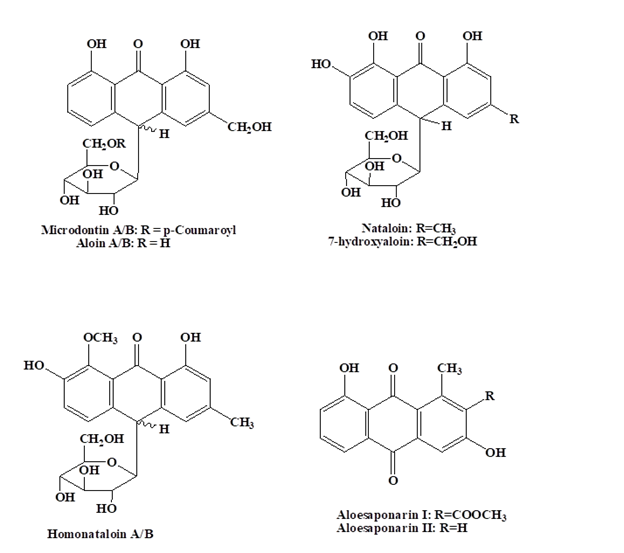
Antimalarial Aloe Compounds

  Antimalarial Aloe Compounds Introduction Among the most prevalent diseases caused by protozoan parasites, malaria is caused by parasites o...